


Most founders sign up for LinkedIn, post once or twice, get 47 likes mostly from their college friends, and then quietly give up.
Meanwhile, another founder in the same niche, selling the same product, at the same price point, is closing deals every week directly from LinkedIn — without running ads, without cold calling, and without a massive marketing budget.
The difference isn’t luck. It’s not even talent.
It’s how they’ve built their LinkedIn network — and what they do with it every single week.
In 2026, LinkedIn has crossed 1 billion members. But raw numbers don’t tell the full story. What matters is that B2B buying behavior has fundamentally shifted. Before a prospect picks up the phone or books a demo, they’ve already Googled you, checked your LinkedIn, read your posts, and formed an opinion. Your LinkedIn network is now your first impression, your credibility signal, and your sales pipeline all rolled into one.
This guide breaks down exactly how to grow your LinkedIn network from zero — with 12 founder-tested plays, real frameworks, tools, and a repeatable growth engine you can start using today. Whether you’re sitting at 200 connections or pushing toward 5,000+, there’s a clear path forward. Let’s walk it.
What the Winning Founders Are Doing Differently on LinkedIn
Before diving into tactics, it’s worth understanding the mindset shift that separates founders who get real results from LinkedIn versus those who just “maintain a presence.”
The founders winning on LinkedIn in 2026 are not necessarily the most talented writers or the most charismatic personalities. What they share is a fundamentally different relationship with the platform.
They treat LinkedIn like a growth channel, not a social obligation.
They log on with intention. They know who they’re trying to reach, what they want those people to think, and what action they want them to take. They’ve stopped asking “what should I post today?” and started asking “what does my ideal customer need to hear this week?”
Here’s what that looks like in practice:
| Passive Founder | Growth-Minded Founder |
|---|---|
| Posts when inspired | Posts on a consistent schedule (3–5x/week) |
| Accepts all connection requests | Sends targeted, personalized requests to ICP |
| Writes about their product | Writes about their customer’s problems |
| Checks vanity metrics (likes, views) | Tracks profile visits, DMs, and call bookings |
| Thinks of LinkedIn as a resume | Treats LinkedIn as their #1 sales and content channel |
| Engages randomly | Strategically comments on accounts their ICP follows |
| Goes viral once, disappears | Builds slow, compounding authority |
The other thing winning founders understand is that network quality beats network quantity every time. 5,000 connections that include your ICP, relevant operators, investors, and ecosystem partners will outperform 20,000 random connections every single time.
They’re not chasing follower counts. They’re building a network with density — a web of relationships where the right people know who they are, what they do, and who they serve.
How to Grow Your LinkedIn Network with 4 Proven Motions B2B Founders Are Using in 2026
There are essentially four ways to grow your LinkedIn network with intention. The best founders don’t pick one — they stack them. But if you’re starting from scratch, master them one at a time.
Approach 1: Connection-Led Growth
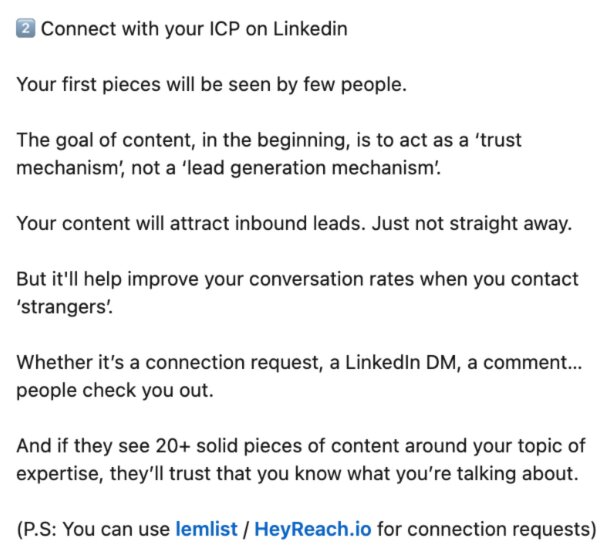
This is the most direct way to answer the question of how to grow your LinkedIn network fast — you go out and build it proactively, one targeted connection at a time.
The keyword here is targeted. The goal is not to hit 500+ connections so that little badge disappears from your profile. The goal is to build a network that maps directly to your business — your ideal customers, your potential partners, your industry peers, and the people who influence the buyers you’re trying to reach.
Who to connect with
- Decision-makers with your ICP title (VP of Sales, Head of Growth, Founder/CEO of companies in your target segment)
- Operators and practitioners in adjacent roles who influence buying decisions
- Fellow founders in complementary (non-competing) niches
- Investors, advisors, and community builders in your space
- People who engage with your competitors’ content
How to find them
LinkedIn’s search filters are genuinely powerful when you use them right. Filter by job title, industry, company size, geography, and even activity (people who’ve posted recently). Also look at:
- Who commented on a popular post in your niche
- Attendees of LinkedIn Events in your space
- Members of LinkedIn Groups relevant to your ICP
- Second-degree connections of your best customers
The 3-line connection request formula
Generic connection requests get ignored. Here’s a simple format that works:
“Hi [Name] — I came across your comment on [post/topic] and really appreciated your take on [specific thing]. I’m building in the [space] and would love to connect with other founders/operators thinking about this.”
That’s it. One reference point. One genuine observation. One human reason to connect. Keep it under 300 characters.
Daily habit: Send 10–15 targeted, personalized connection requests per day. At a 40–50% acceptance rate (which is achievable with personalization), that’s 50–100 new relevant connections per week — or 2,500 to 5,000+ in a year.
| Activity | Weekly Volume | Estimated Acceptance Rate | Monthly New Connections |
|---|---|---|---|
| Generic requests (no note) | 100 | 20–25% | 80–100 |
| Personalized requests (with note) | 70 | 45–55% | 126–154 |
| Requests to post engagers | 40 | 55–65% | 88–104 |
| Event/community members | 30 | 50–60% | 60–72 |
Bonus: Copy This Clay Social Ecosystem Tracker
One of the biggest reasons LinkedIn outreach stalls is poor organization. You connect with someone, forget to follow up, and a warm relationship goes cold.
A simple Social Ecosystem Tracker fixes this. Here’s what to track:
| Field | Purpose |
|---|---|
| Name + LinkedIn URL | Quick access |
| Title + Company | ICP qualification |
| Connection Status | Sent / Accepted / 2nd degree |
| How You Found Them | Post / Event / Search |
| Last Touchpoint | Date of last comment, DM, or interaction |
| Warmth Score | Cold / Warm / Hot |
| Next Action | DM, comment on their post, invite to event |
| Notes | Anything personal or relevant from their content |
You can build this in Notion, Airtable, or Google Sheets. Clay users can automate the enrichment — pulling LinkedIn data and syncing with your CRM so nothing falls through the cracks. Review it every Monday morning. Spend 15 minutes moving people forward.
Approach 2: Posting-Led Growth
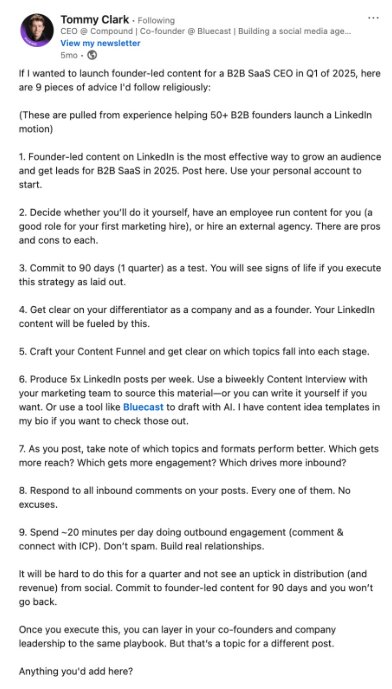
If connection-led growth is outbound, posting-led growth is inbound. Instead of going out to find your network, you create content that pulls the right people toward you.
This is where how to grow your LinkedIn network gets truly scalable — because a single post can put you in front of thousands of people who’ve never heard of you, and turn a percentage of them into connection requests, profile visits, and DMs.
Here’s the truth about LinkedIn content in 2026: the algorithm rewards genuine engagement, not production value. A raw, honest observation from a founder who’s in the trenches will almost always outperform a polished corporate update.
Content types that consistently perform for founders:
| Format | Best For | Avg. Engagement |
|---|---|---|
| Short punchy text posts | Hot takes, lessons, observations | High reach, quick to write |
| Carousels (PDF slides) | Frameworks, how-tos, listicles | High saves and shares |
| Long-form posts | Stories, case studies, rants | Deep engagement, trust-building |
| Polls | Generating comments and opinions | Fast reach with low effort |
| Video (native) | Personality, behind-the-scenes | High watch time, strong reach |
| Document posts | Data, reports, visual breakdowns | High saves, repeat traffic |
What to write about:
The simplest content strategy for a founder is the Problem-Insight-Story triangle:
- Problem posts: Talk about a pain your ICP faces. Show you understand it deeply.
- Insight posts: Share a non-obvious observation, framework, or lesson from your work.
- Story posts: Tell a real story — a win, a failure, a pivot, a customer conversation.
Mix these in a 70/20/10 ratio: 70% educational/insightful, 20% personal/storytelling, 10% soft offers or CTAs.
Posting cadence and algorithm mechanics:
The LinkedIn algorithm amplifies posts that get engagement in the first 60–90 minutes. This means your existing network is the distribution engine for reaching new people. Post when your audience is most active (typically Tuesday–Thursday, 7–9am or 12–2pm in your target timezone), and make sure you have 5–10 people ready to engage early — more on this in the systems section.
The compound effect of consistent posting:
A founder posting 4x per week for 12 months won’t just gain followers. They’ll become known in their niche. By month 6, inbound connection requests start outpacing outbound ones. By month 12, prospects come to sales calls already sold on the founder’s POV — because they’ve been reading their posts for months.
Bonus Tip
Your best-performing posts from 6–12 months ago still hold value. Every 90 days, revisit your top 5 posts by engagement and either repost them with a fresh intro (“I wrote this 6 months ago and it’s even more true today…”) or turn the insight into a new format — a carousel, a video, or a longer piece. Most of your current audience never saw the original.
Approach 3: Conversation-Led Growth
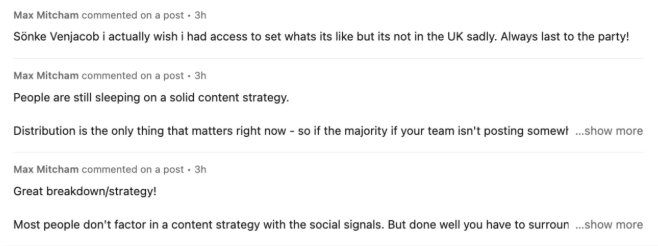
This is the most underrated growth motion on LinkedIn, and the one most founders completely skip.
Strategic commenting — done right — is one of the fastest ways to grow your LinkedIn network with high-quality connections because it puts you directly in front of someone else’s audience. When you leave a genuinely insightful comment on a post by someone your ICP follows, you’re not just engaging with the author. You’re being seen by every person who reads that post.
The “comment as mini-content” framework:
Most comments on LinkedIn are noise: “Great post!” “So true!” “Totally agree!” These are invisible. They help no one and build nothing.
A powerful comment does one of the following:
- Adds a data point or example that supports the author’s argument
- Offers a counterpoint or nuance that sparks further discussion
- Shares a personal story that relates to the post’s theme
- Asks a question that deepens the conversation
When you do this consistently on 5–10 accounts your ICP follows, three things happen: the author notices you, their audience notices you, and your profile views spike. Profile views lead to connection requests — from people who sought you out. These are among the warmest leads you can generate on the platform.
Building your commenting list:
Identify 10–15 accounts in your niche that your ideal customers follow and engage with regularly. These could be:
- Thought leaders writing for your ICP
- Adjacent tool founders with the same target customer
- Industry analysts or journalists
- Community builders in your space
Set a daily alarm for 15 minutes. Go through their recent posts. Leave 3–5 genuinely valuable comments. Do this every weekday for 60 days and watch what happens to your inbound connection rate.
The DM follow-up:
When a comment thread gets traction — when the author responds, or when someone else jumps in and tags you — that’s a warm signal. Follow up with a short DM: “Really enjoyed that exchange on [topic] — your take on [X] was something I’ve been thinking about too. Would love to stay connected.” No pitch. No ask. Just a human continuation of a real conversation.
Approach 4: Partner / Community / Collab-Led Growth
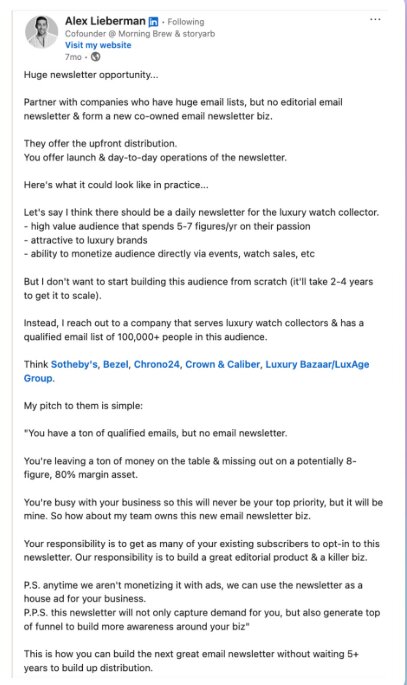
The fastest way to reach a new audience isn’t to build one from scratch — it’s to borrow trust from someone who’s already built it.
Partner and collab-led growth means working with complementary founders, creators, and community builders to create content, events, or experiences together that both of your audiences benefit from.
High-leverage collaboration formats:
- Co-authored posts: You and a partner each share the same post to your respective audiences. Both get reach, both get new connections.
- “I asked 5 founders…” posts: Aggregate insights from multiple voices. Everyone tagged shares it. Your reach multiplies.
- LinkedIn Audio or Live Events: Host a 30-minute conversation on a topic your ICP cares about. Promote it together.
- Joint carousels: Build a framework or playbook together. Both audiences get value.
- Newsletter mentions: If you or your partner has a newsletter, cross-promote LinkedIn content.
How to find the right partners:
The criteria are simple. You’re looking for:
- Same ICP, different product (non-competing)
- Roughly similar audience size (within 2–3x of each other)
- Content quality and voice that aligns with your brand
Reach out with a specific, low-effort proposal. Don’t ask for a vague “collab.” Say: “I’m planning a post on [topic]. Would you be open to sharing one quote or insight I can include? Happy to do the same for you.” Low friction, high value, easy yes.
Community involvement compounds this further. Being visibly active in 2–3 online communities where your ICP hangs out — LinkedIn Groups, industry Slack channels, niche Discord servers — keeps you top of mind and drives steady LinkedIn traffic to your profile.
Before You Scale: Is Your Profile Ready?
Here’s the brutal truth: if you drive a thousand people to your LinkedIn profile and it doesn’t immediately communicate who you are, who you help, and why they should care — all that network-building effort is wasted.
Before you pour energy into growing your network, run your profile through this six-point audit:
The LinkedIn Profile Audit Checklist
1. Banner Image Does your banner reinforce your positioning? It should either communicate your value proposition, your company’s brand, or a specific niche signal. A blank grey banner in 2026 says “I’m not paying attention to this.”
2. Headline Your headline is the highest-visibility real estate on your profile. It shows up in search results, connection requests, and comments. It should not say “Founder at [Company].” It should say something like: “Helping B2B SaaS founders turn LinkedIn into a pipeline channel | [Company].” Outcome-focused. ICP-specific. Immediately clear.
3. About Section Most About sections are written for the writer, not the reader. Your About section should speak directly to your ICP. What problem do they have? How do you solve it? What makes you credible? End with a clear CTA — what do you want them to do next?
4. Featured Section Use this to pin your highest-value content: a lead magnet, your best-performing post, a case study, a free tool, or a demo link. This is your above-the-fold conversion opportunity.
5. Experience Section Frame your experience around results and impact, not just job descriptions. Use metrics where possible. Remember: your profile is being read by buyers, not recruiters.
6. Creator Mode Turn on Creator Mode if you’re posting consistently. It replaces the “Connect” button with a “Follow” button, which lowers friction for new audiences and gives you access to LinkedIn’s creator analytics.
The 3-Second Test
Ask a colleague who doesn’t know your business well to look at your profile for 3 seconds, then close it. Ask them: “What does this person do, and who do they help?” If they can’t answer clearly, your profile needs work before you scale traffic to it.
Every element of your profile should point toward one clear next step — whether that’s booking a call, downloading a resource, or following your content.
How to Turn LinkedIn Network Growth From One-Off Wins Into a Repeatable Engine
Getting 500 new connections in a month is a win. Getting 500 new relevant connections every month, consistently, for a year — that’s a growth engine. Here’s how to build one.
Lock In Your Mindset
The single biggest predictor of LinkedIn success isn’t your content quality or your connection strategy. It’s consistency over time.
LinkedIn is a compounding platform. Your 100th post will perform dramatically better than your 10th — not because you’ve suddenly become a better writer, but because you’ve built an audience that’s already been warmed up by your first 99. Your 500th connection will be easier to reach than your 50th because your network is now introducing you to new people automatically.
The mindset shift required: stop measuring results week to week and start measuring quarter to quarter. Detach from individual post performance. Focus instead on directional signals — are profile visits trending up? Are inbound connection requests increasing? Are you having more conversations with your ICP?
Build Content Systems That Scale
Posting 4x per week doesn’t require 4x the time if you build the right systems.
Content batching: Set aside 2 hours once a week (many founders do Sunday evening or Monday morning) to write a full week of posts. In a focused session, most founders can draft 4–5 posts in 90 minutes. Schedule them using LinkedIn’s native scheduler or a tool like Buffer or Taplio.
The repurposing map:
| Original Asset | Repurposed Formats |
|---|---|
| 1 long-form post (500 words) | 3 short punchy posts + 1 carousel |
| 1 podcast episode | 5 quote posts + 1 summary carousel |
| 1 customer call insight | 2 observation posts + 1 poll |
| 1 industry report | 3 data posts + 1 LinkedIn article |
| 1 personal story | 1 long post + 1 short version + 1 video |
Content bank: Keep a running Notion or Google Doc with raw ideas — observations from customer calls, questions you keep getting asked, things that surprised you this week. This is your idea reservoir. When you sit down to batch, you’re never starting from blank.
Automate Engagement Signals
Not everything on LinkedIn needs to be manual. Here’s the line between safe automation and risky automation:
| Safe to Automate | Keep Human |
|---|---|
| Post scheduling | All DMs and replies |
| Analytics tracking | Comments and responses |
| Connection follow-up reminders | Relationship conversations |
| CRM syncing | Personalized outreach notes |
| Hashtag and keyword alerts | Community engagement |
Tools worth knowing:
- Taplio — content scheduling, analytics, engagement pod management
- Shield Analytics — deep LinkedIn content performance tracking
- Clay — connection enrichment and CRM sync
- LinkedIn Sales Navigator — advanced search and prospect tracking (worth it at $100+/month if you’re doing serious volume)
A note on engagement pods: groups of people who agree to like and comment on each other’s posts within the first hour of publishing. Used ethically — with people who genuinely find your content relevant — they can significantly amplify reach. Used as fake engagement farms, they’re detectable and can damage your credibility.
Make Growth a Team Habit
If you have even two or three team members, you have a distribution multiplier you’re probably not using.
The amplification window: When you post, the first 60 minutes determine whether LinkedIn pushes it to a wider audience. Brief your team to engage within that window — a genuine comment, a like, a share. This isn’t gaming the system; it’s using the system as designed.
Employee advocacy: Your team’s collective networks likely reach thousands of people your account alone can’t touch. Encourage team members to share company content with their own commentary. Make it easy by preparing two or three versions of a post they can customize.
The weekly LinkedIn rhythm:
- Monday: Review last week’s content performance + update outreach tracker
- Tuesday–Thursday: Post content, engage on comments, send targeted connection requests
- Friday: Review profile views, DMs, and inbound leads generated
Designate one person — even if that’s you — as the LinkedIn DRI (Directly Responsible Individual) who owns the weekly rhythm and holds the team accountable.
Bonus: Steal This LinkedIn Growth Engine Workspace
A complete LinkedIn Growth Engine workspace should include:
- Content Calendar Tab: Post ideas, format, scheduled date, target emotion/outcome
- Outreach Tracker Tab: Connection targets, status, last touchpoint, next action
- Analytics Dashboard Tab: Weekly profile views, post impressions, DMs, calls booked
- Weekly Review Checklist: 10-question review to identify what’s working and what to double down on
- Idea Bank Tab: Raw observations, questions from customers, things to explore
Build this in Notion or Airtable. Review it every Monday. Iterate every quarter.
What Happens After Visibility: Turning LinkedIn Growth Into Real Business Outcomes
Growing your LinkedIn network is not the end goal. It’s the mechanism. Here’s how visibility translates into revenue.
Right Network → Niche → Revenue Growth
When your network is filled with the right people, word-of-mouth becomes automatic. Your ICP talks to other people in your ICP. When your name comes up in their conversations, it gets amplified by your content — they can forward a post, tag you in a thread, or share your profile with a colleague.
A tightly defined network also sharpens your positioning. You start to notice patterns in what your audience engages with, what questions they ask, what pain points surface again and again. This feeds back into better content, sharper messaging, and more precise product development.
Stay Visible → Shorten Sales Cycles
This is one of the most tangible ROI signals of a strong LinkedIn presence: prospects who’ve been reading your content for weeks or months come to sales calls pre-sold.
They already know your philosophy. They’ve already agreed with your framework. They’ve already decided you understand their problem. The call isn’t a pitch — it’s a confirmation. Founders who’ve built strong LinkedIn networks consistently report sales cycles that are 30–50% shorter than cold outreach.
Engage Smart → Fill Your Call Pipeline
The bridge between LinkedIn engagement and booked calls is the DM — used thoughtfully.
When someone likes three of your posts in a week, visits your profile, and has commented on something you wrote — that’s a warm signal. A short, non-pitchy DM at that moment converts at a significantly higher rate than any cold email:
“Hey [Name] — noticed you’ve been engaging with some of my posts on [topic]. Would love to hear your perspective on [specific thing]. Happy to jump on a quick call if that’d be useful.”
No deck. No pitch. Just a human invitation to a conversation.
Comment With Purpose → Drive Inbound
Strategic commenting, as covered in Approach 3, creates a flywheel: comments → profile visits → connection requests → DMs → calls. Track this funnel by monitoring your weekly profile view count. If it’s growing, your commenting strategy is working. If it’s flat, change the accounts you’re engaging on or improve comment quality.
Partner Where Trust Lives → Unlock Growth
Co-created content with a trusted partner doesn’t just grow your network — it generates warm introductions at scale. When a founder your ICP already follows vouches for you through a joint post or event, you inherit a portion of their trust equity. These warm-network leads often convert faster than any other source.
Six LinkedIn Mistakes Founders Wish They’d Avoided
Learn from the people who’ve already made these mistakes.
Don’t Post Generic Content That Speaks to No One
“5 productivity tips.” “Why mindset matters.” “Excited to announce…”
These posts aren’t bad because they’re too simple. They’re bad because they’re not written for anyone specific. When you try to speak to everyone, you end up resonating with no one.
Fix: Before writing any post, answer: “Who specifically am I writing this for, and what do I want them to think, feel, or do after reading it?” If you can’t answer that in one sentence, you don’t have a post yet — you have a topic.
Don’t Wait to Feel “Ready”
The single most common reason founders don’t grow on LinkedIn isn’t lack of time, talent, or ideas. It’s waiting until their profile is perfect, their content is polished, and they have something “important” to say.
Your first 50 posts are learning reps. Publish them anyway. Consistency compounds; perfectionism stagnates. The founder who posts imperfect content consistently will always outperform the founder waiting for the right moment.
Don’t Spam Connection Requests
Sending 200 connection requests per day with no note, to random people, will get your account flagged, tank your acceptance rate, and damage your LinkedIn SSI (Social Selling Index) score — which affects your organic reach.
Fix: 10–15 personalized requests per day to well-researched targets outperforms 200 generic blasts every time. Quality signals to both LinkedIn’s algorithm and the humans receiving your requests.
Don’t Automate Human Connection
Mass auto-DMs are detectable. The templates are obvious, the timing is mechanical, and the personalization is nonexistent. They don’t just get ignored — they actively damage your reputation with the people you most want to impress.
Fix: Automate logistics. Keep all human interaction human. The ROI on a genuine 3-sentence DM versus an automated 10-paragraph pitch sequence is not even close.
Don’t Pitch Your Product in Every Post
If every post ends with “…which is why we built [Product]” or “DM me to learn more,” your audience will train themselves to scroll past you before they even finish reading. You’ll lose the trust you worked so hard to build.
Fix: Follow the 80/20 rule. 80% of your content should be pure value — insights, stories, frameworks, observations — with zero commercial intent visible. 20% can include a soft offer, a CTA, or a mention of what you’ve built. When the ratio is right, the 20% lands much harder.
What to Do Next: Your 7-Day LinkedIn Sprint
| Day | Action |
|---|---|
| Day 1 | Audit your profile against the 6-point checklist. Fix your headline and About section. |
| Day 2 | Build your Social Ecosystem Tracker. Add 20 ICP targets. |
| Day 3 | Send 15 personalized connection requests to targets from your tracker. |
| Day 4 | Write and schedule 3 posts for the week. |
| Day 5 | Spend 20 minutes commenting on 5 accounts your ICP follows. |
| Day 6 | Identify one potential collaboration partner. Send a low-friction collab pitch. |
| Day 7 | Review your profile views, engagement, and connection acceptance rate. Set next week’s targets. |
You’ve Got the Playbook. Now Build the Growth Engine.
Growing your LinkedIn network from 0 to 5,000+ relevant connections isn’t a hack or a shortcut. It’s the result of showing up consistently, with intention, week after week — connecting with the right people, creating content that earns trust, engaging in conversations that build relationships, and collaborating with partners who share your audience.
The four growth motions — connection-led, posting-led, conversation-led, and partner/collab-led — work together. The founders who see the biggest results are the ones who stack all four into a weekly rhythm that compounds over time.
The competitive advantage here isn’t secret. It’s just consistency. Most founders won’t do this for 12 months straight. The ones who do become the obvious choice in their niche — not because they spent more on ads or had a better product launch, but because they were visible, credible, and present when their ideal customers were ready to buy.
Your network is your net worth. Start building it today.
Conclusion
Most founders will read this guide, nod along, bookmark it, and do nothing.
A smaller group will take one tactic, try it for a week, not see immediate results, and quietly go back to posting once a month and wondering why LinkedIn never worked for them.
And then there will be the founders who actually build the engine.
They will audit their profile this week. They will send 15 targeted, personalised connection requests tomorrow. They will write three posts before Friday. They will spend 15 minutes every morning leaving genuinely valuable comments on the accounts their ideal customers already follow. They will do all of this not because it feels exciting in week one, but because they understand what it compounds into by month six, month nine, and month twelve.
That is the only difference between the founder closing deals from LinkedIn every week and the one who gave up after 47 likes from college friends.
It is not talent. It is not timing. It is not a bigger budget or a better product. It is the willingness to show up with intention, consistently, for long enough that the platform starts working for you instead of against you.
Here is what that looks like in practice, condensed into four commitments:
Connect with purpose. Ten to fifteen targeted, personalised connection requests per day to people who match your ICP. Not random. Not generic. Not to hit a vanity number. To build a network with actual density — where the right people know who you are before you ever need to ask them for anything.
Create with consistency. Three to five posts per week, written for one specific person with one specific problem. Not polished corporate updates. Not vague inspiration. Real observations from real experience — the kind of content that makes your ideal customer feel understood before they have ever spoken to you.
Engage with generosity. Five genuinely valuable comments per day on the accounts your ICP already trusts. Not “great post.” Not emoji reactions. Observations, data points, counterarguments, and questions that prove you have thought carefully about the topic and have something worth adding to the conversation.
Collaborate with intention. One partnership, co-created post, or joint LinkedIn event per month with a founder who shares your audience but not your product. Borrowed trust is the fastest path to a warm new audience, and a single well-executed collaboration can introduce you to hundreds of the right people in a single day.
Stack these four motions into a weekly rhythm. Review what is working every Monday. Iterate every quarter. And remember that the analytics that matter are not likes and impressions — they are profile visits trending upward, inbound connection requests increasing, and conversations with your ICP becoming more frequent and more substantive week by week.
LinkedIn in 2026 is not a passive platform. It rewards the founders who treat it as the serious business development channel it has become. Your profile is your first impression. Your content is your credibility. Your network is your pipeline. And none of those things build themselves.
You have the playbook. You have the frameworks. You have the templates and the systems and the seven-day sprint to get started.
The only variable left is whether you actually use them.
Start today. Not next Monday. Not after you fix your headline. Not once you have something “worth posting.” Today.
Because the founder who starts building their LinkedIn network six months before they need it will always outperform the one who starts building it six months after they needed it.
Your network is your net worth. Go build it.
Frequently Asked Questions
How many connections do I need before LinkedIn starts driving real leads?
There’s no magic number, but most founders start seeing consistent inbound activity once they have 500–1,000 well-targeted connections combined with a regular posting habit. At 2,000–3,000 relevant connections with consistent content, LinkedIn can become a primary pipeline source. Quality of connections matters far more than quantity.
How often should a founder post on LinkedIn in 2026?
Three to five times per week is the sweet spot for most founders. Fewer than three and you lose algorithmic momentum; more than five and content quality tends to drop. If you’re just starting, commit to three posts per week for 90 days before adjusting. Consistency for 90 days beats intensity for two weeks every time.
Is LinkedIn Premium or Sales Navigator worth it for founders?
LinkedIn Premium ($40–$60/month) offers InMail credits, profile view history, and basic search filters — useful but not essential. Sales Navigator ($100+/month) is worth it once you’re doing serious outbound volume, as the advanced search, lead list features, and CRM integrations can significantly improve targeting efficiency. Start with free, upgrade when you’ve maxed out what free can do.
How do I grow my LinkedIn network without it feeling forced or salesy?
Lead with genuine curiosity. Connect with people whose work you find interesting. Comment because you have something real to add. Post about things you actually care about. The founders who feel most authentic on LinkedIn are the ones writing from real experience — customer conversations, product decisions, lessons from failure — not from a content strategy template. Strategy provides the structure; your real voice fills it.
What’s the fastest way to get your first 1,000 targeted connections?
Combine three tactics simultaneously: send 10–15 personalized requests per day to ICP-matched targets from LinkedIn search; comment strategically on 5 high-traffic posts in your niche daily to attract inbound requests; and post 3x per week to build enough presence that people seek you out. Following this approach consistently for 8–10 weeks gets most founders to 1,000 well-targeted connections without any paid tools.