


If you’ve been using Apollo.io long enough, you’ve probably felt the pinch. Maybe your mobile credits dried up two weeks into the month, your email bounces started eating into your sender reputation, or you sat through the frustration of paying per-seat fees that climbed far beyond what the pricing page suggested. Apollo is undeniably popular — it has over 275 million contacts in its database and a toolset that spans prospecting, email sequencing, and CRM enrichment. But popularity and fit are different things, and for a growing number of B2B sales teams in 2026, Apollo’s credit-based model, data accuracy concerns, and unpredictable cost structure are pushing them to look elsewhere.
This blog is a detailed, honest breakdown of 8 Apollo.io alternatives that deliver better data quality, more predictable pricing, or both. Every tool in this list has been researched against publicly available user reviews, pricing data, and feature documentation. No tool has paid to be included, and no filler recommendations have been added. If a tool is on this list, there is a documented reason it belongs here.
We start with DealsFlow at the top because it solves a problem Apollo doesn’t touch — AI-powered LinkedIn outreach that handles conversations and books meetings for you. The rest of the list covers the full spectrum, from enterprise-grade data platforms to affordable email finders, so every team can find a match for their use case and budget.
Best Apollo.io Alternatives at a Glance
Before going deep on each tool, here is a quick summary to help you orient. Each tool is reviewed in full detail below, so use this table as a map, not a decision.
| Tool | Best For | Free Plan | Starting Price | GDPR Compliant | Phone Numbers | Intent Data |
|---|---|---|---|---|---|---|
| DealsFlow | AI-powered LinkedIn outreach & meeting booking | ✅ 14-day trial | $49/month | ✅ | LinkedIn DMs (not database) | ❌ |
| Cognism | GDPR-safe EU data & phone-verified mobiles | ❌ | ~$15K+/year | ✅✅ | ✅ Phone-verified | ✅ Bombora |
| ZoomInfo | Enterprise-scale data & intent signals | ✅ Limited (Lite) | ~$15K/year | ✅ | ✅ | ✅ |
| Lusha | Budget-friendly with GDPR compliance | ✅ | ~$30/user/month | ✅ | ✅ | ✅ Signals |
| LeadIQ | CRM-synced prospecting & AI email drafting | ✅ | ~$36/user/month | ✅ | ✅ | ❌ |
| Seamless.AI | Real-time data validation & fast list building | ✅ 50 credits | ~$147/month | ⚠️ | ✅ | ❌ |
| Hunter.io | Simple email finding & verification | ✅ | $34/month | ✅ | ❌ | ❌ |
| RocketReach | Bulk contact discovery across multiple channels | ✅ 5 lookups/month | ~$33/month (annual) | ⚠️ | ✅ Pro+ only | Add-on |
Why Are Sales Teams Leaving Apollo.io in 2026?
Apollo.io is not a bad product. For teams with predictable, low-to-moderate prospecting volumes and primarily US-based targets, it still delivers value. But three structural issues cause real problems at scale, and they are worth understanding before committing or recommitting to the platform.
The Credit System Problem
Apollo uses a credit-based pricing system where every meaningful action — revealing a phone number, exporting a contact to your CRM, enriching a record — consumes credits. According to multiple independent pricing analyses published in early 2026, a mobile number costs approximately 8 credits per reveal on Apollo’s current pricing model, while export credits are consumed every time data is pushed to an external system like Salesforce or Outreach.
The plans start at $49/user/month on the Basic tier (billed annually), $79/user/month on Professional, and $119/user/month on the Organization plan, which requires a minimum of three users. That minimum means the Organization plan commits teams to at least $4,284 per year before any credit overages. Credits expire at the end of each billing cycle with no rollover, and overage credits cost approximately $0.20 each with a minimum purchase of 250 credits ($50) on monthly plans. One widely cited 2026 analysis found that real-world costs for active sales teams regularly run 2–3x the advertised rate once credit overages, tier upgrades, and supplementary tools are factored in.
The problem is not just cost — it is unpredictability. Apollo’s own documentation notes that the credit system is still being rolled out to existing customers, meaning two accounts on the same plan may experience different limits depending on when their account was migrated to the new system.
Data Accuracy & Bounce Rate Issues
Apollo’s database contains over 275 million contacts, but database size and database quality are not the same thing. User review data aggregated from G2 and Trustpilot in 2026 puts real-world email accuracy for Apollo at approximately 65–70%, with email bounce rates of 15–25% reported across multiple sources. For teams with strong sender domain reputations, a consistent bounce rate at that level is not acceptable — it erodes deliverability and can lead to domain blacklisting.
Mobile number accuracy is a related concern. Apollo’s mobile data is largely machine-verified rather than human or phone-verified, which produces lower connect rates on cold calls compared to providers like Cognism that physically verify mobile numbers before adding them to the database.
Limited Compliance for Global Teams
Apollo does maintain GDPR compliance documentation, a Data Processing Addendum, SOC 2 Type II certification, and privacy controls that allow EU prospects to be excluded from prospecting. It participates in the EU–US Data Privacy Framework. However, Apollo’s fundamental data collection model — which relies partly on users contributing data from their own networks — creates a compliance grey area that legal teams at regulated companies are increasingly unwilling to accept without additional scrutiny. Cognism, by contrast, screens all data against 13 DNC lists internationally as a baseline feature, which represents a meaningfully different compliance posture.
What to Look for in an Apollo.io Alternative
Before committing to any Apollo alternative, evaluate it against these criteria:
- Data accuracy and verification depth — Is email verification automated or human-assisted? Are mobile numbers phone-verified or machine-verified?
- Transparent, scalable pricing — Does pricing scale predictably with usage, or are credits and overages the primary cost driver?
- GDPR and CCPA compliance — Does the platform screen against DNC lists, and is compliance built into the data model or bolted on as a toggle?
- CRM integrations — Native integrations with Salesforce, HubSpot, Outreach, and Salesloft reduce friction and keep data clean.
- Intent data and buying signals — Does the platform surface which accounts are actively researching solutions like yours, or does it provide only static contact data?
- Outreach automation — Some alternatives are data-only; others include sequencing, dialing, and campaign tools. Know which you need before evaluating cost.
The 8 Best Apollo.io Alternatives in 2026 (Ranked & Reviewed)
1. DealsFlow — Best for AI-Powered LinkedIn Outreach & Meeting Booking
What Makes DealsFlow Different from Apollo
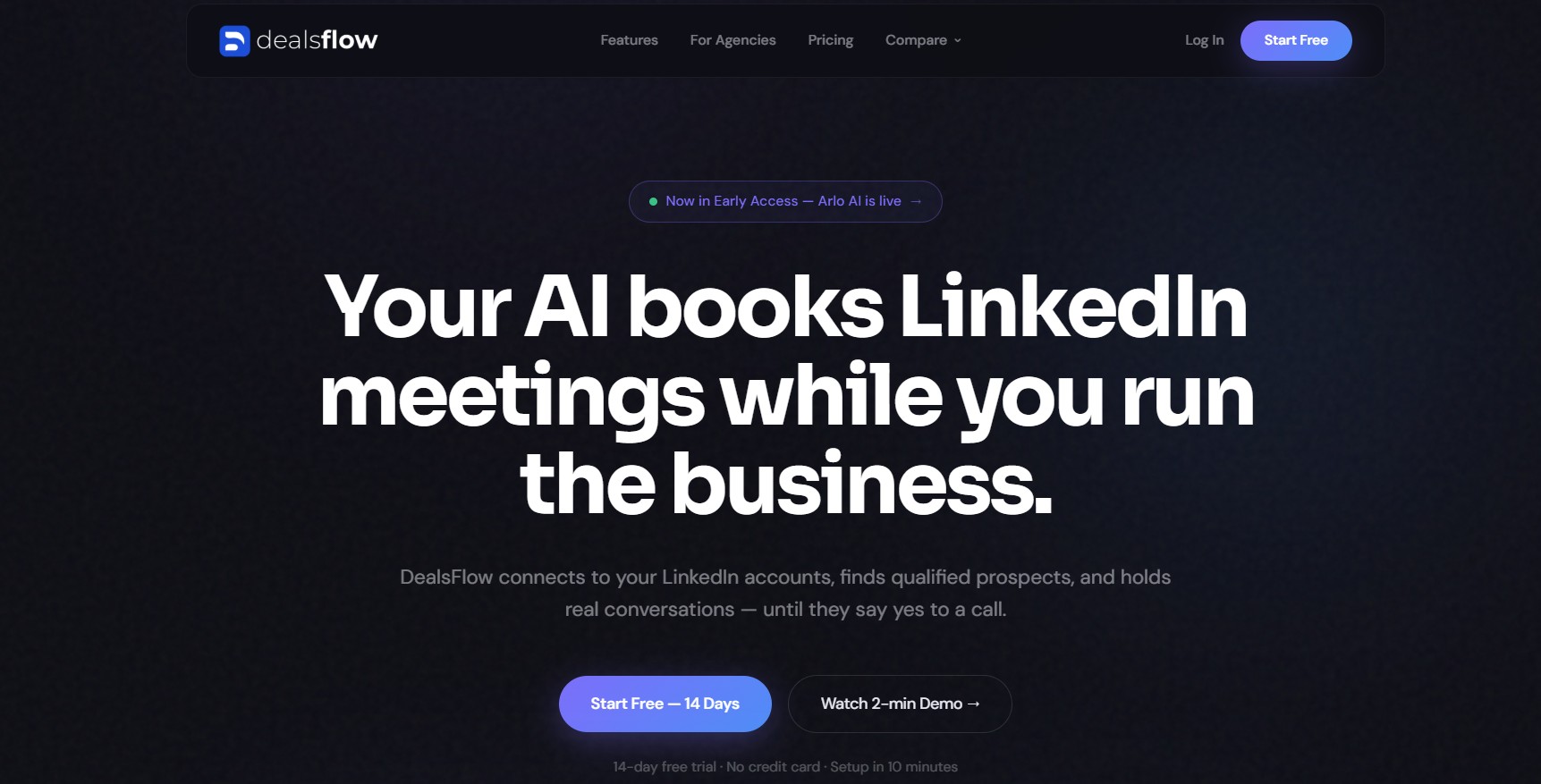
Apollo.io is a contact database with email sequencing tools attached. DealsFlow is something architecturally different: an AI-native LinkedIn outreach platform that doesn’t just send messages — it holds full conversations and books meetings without requiring human intervention after the initial setup.
The distinction matters because the two tools solve different problems. Apollo helps you find contacts and send them emails at scale. DealsFlow helps you find LinkedIn prospects and have a real back-and-forth conversation with them through its Arlo AI Engine, which reads replies, handles objections, follows up intelligently, and books a call on your calendar. Where Apollo’s automation stops when a prospect replies, DealsFlow’s automation is designed specifically for what happens after the first reply.
This makes DealsFlow the right starting point for any team whose primary outbound channel is LinkedIn, or for any team frustrated by the fact that automated sequences go cold the moment a prospect responds with anything other than a direct “yes.”
Key Features
- Arlo AI Engine: The core product. Arlo reads each prospect’s LinkedIn bio, recent posts, and company context to craft personalized opening messages. More importantly, it reads every reply, interprets context, handles objections professionally, and pushes toward booking a call — all in the user’s own voice. Verified user testimonials on DealsFlow’s website describe reply rates of 3x and conversations indistinguishable from a human rep.
- Multi-Account Dashboard: DealsFlow is built from the ground up for teams and agencies managing multiple LinkedIn accounts. The dashboard aggregates all accounts, inboxes, and campaigns in one place. The Agency Pilot plan supports 20 LinkedIn accounts, with the platform supporting larger volumes for enterprise operations.
- Prospect CRM with AI Warmth Scoring: Every lead is automatically tagged Hot, Warm, Neutral, or Cold based on engagement signals. Leads can be imported from LinkedIn search URLs, post commenters, or CSV uploads.
- Unlimited Campaigns: All plans include unlimited campaigns with full-funnel analytics showing conversion rates at every stage — connection request to acceptance to reply to booked call.
- Account Safety: DealsFlow uses distributed cloud execution and human-like timing randomization to keep LinkedIn accounts healthy. The platform enforces daily action limits aligned with LinkedIn’s current safety thresholds and reports zero bans among active users.
- 14-day free trial, no credit card required: Setup takes approximately 10 minutes according to the platform, and the trial provides full access to all features including the Arlo AI Engine.
DealsFlow Pricing vs Apollo
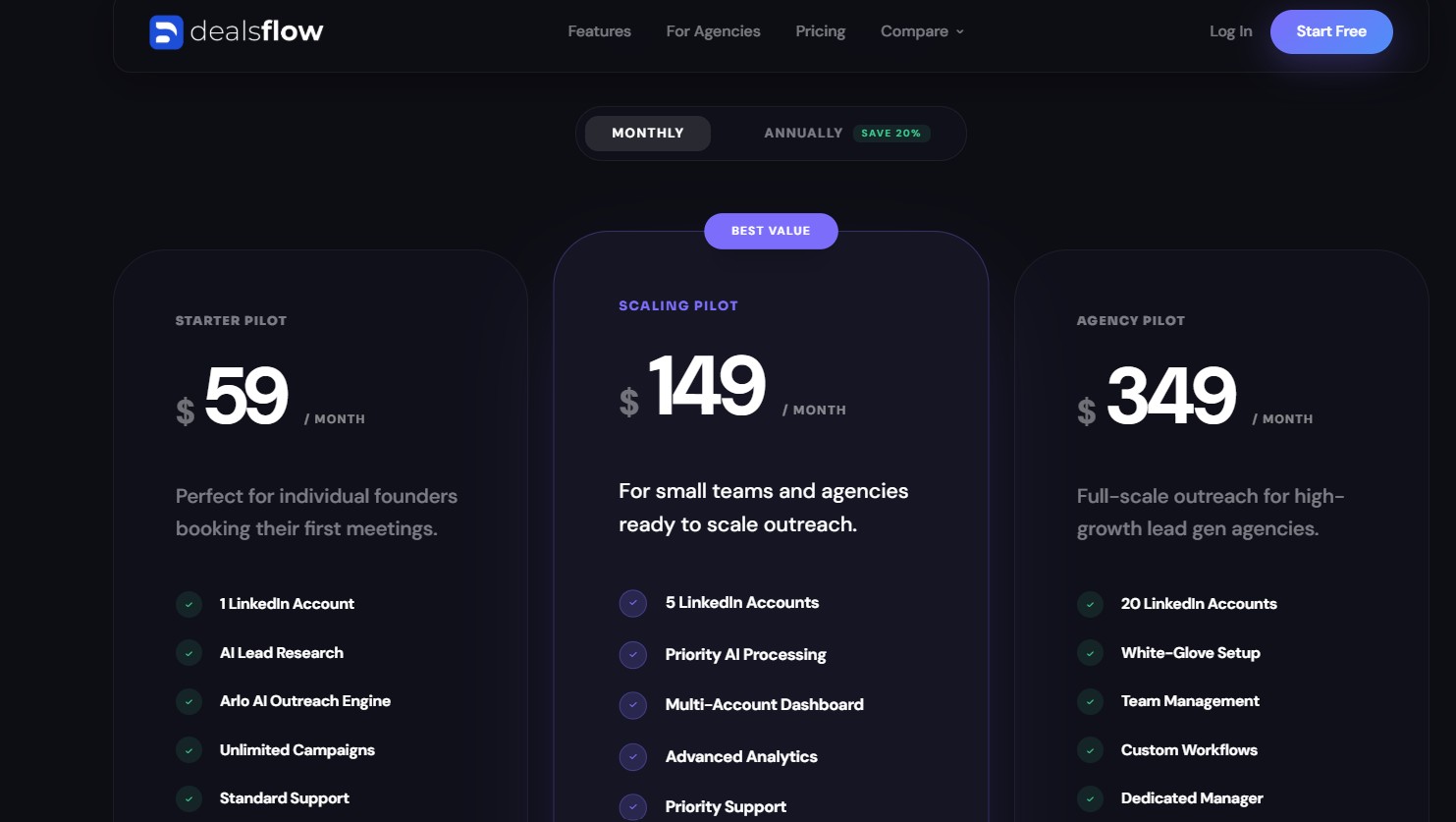
Apollo charges per user seat plus credits, with real-world costs frequently exceeding the advertised rate. DealsFlow charges per LinkedIn account with no credit system and no hidden overages.
| Plan | Monthly Price | LinkedIn Accounts Included |
|---|---|---|
| Starter Pilot | $59/month | 1 account |
| Scaling Pilot | $149/month | 5 accounts |
| Agency Pilot | $349/month | 20 accounts |
Annual billing saves 20% across all plans. For an agency running outreach across 20 client accounts, the Agency Pilot at $299/month is substantially more cost-effective than managing 20 separate tool subscriptions or paying per-seat fees for a database that doesn’t conduct the outreach for you.
Pros & Cons
Pros:
- No credits, no overages — fully predictable monthly pricing
- Arlo AI handles the full conversation funnel, not just the first message
- Built specifically for agencies with multi-account management at its core
- LinkedIn-native, targeting the channel where B2B buyers are most active in 2026
- 14-day free trial with no credit card requirement and approximately 10-minute setup
- Account safety is built in — zero reported bans due to human-like timing and enforced daily limits
Cons:
- LinkedIn-focused only — not a static contact database for email prospecting at scale
- Best paired with a separate email enrichment tool if cold email is also part of the outreach mix
- Arlo AI is currently in early access, meaning the product continues to evolve rapidly
- No phone number database — outreach is LinkedIn DM-based, not call-based
Best For
- Lead generation agencies managing outreach for 10–50 clients who need everything consolidated in one dashboard
- Founders doing LinkedIn-first outbound who want AI to run conversations while they focus on closing
- SDR teams who are tired of spending hours in their LinkedIn inbox managing replies to automated sequences
- Any team where LinkedIn is a primary or growing outbound channel
DealsFlow vs Apollo.io: The Verdict
Apollo gives you a database and tools to prospect at volume. DealsFlow gives you booked meetings on LinkedIn. They are not direct substitutes — they serve different outbound motions. But for teams whose pipeline runs through LinkedIn conversations and who want AI to handle the middle-of-funnel work that currently consumes hours of rep time, DealsFlow is the superior choice. It is the only tool on this list that fully automates the conversation, not just the send.
2. Cognism — Best for GDPR-Compliant EU Data & Phone-Verified Mobiles
What Makes Cognism Different from Apollo
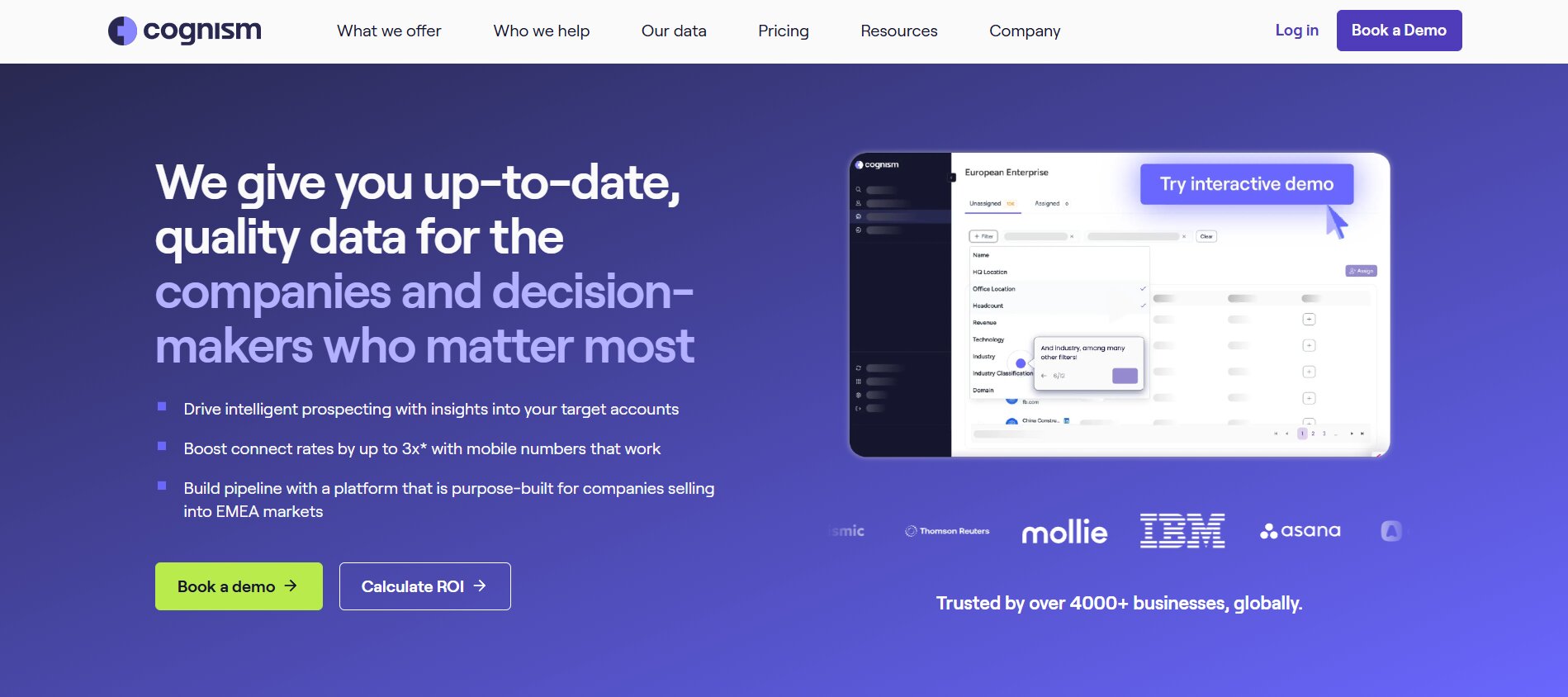
Cognism is a B2B sales intelligence platform headquartered in London, built from the ground up for teams that need clean, compliant data — particularly in European markets. While Apollo’s strengths lie in its large US-centric database and all-in-one outreach tools, Cognism’s differentiation comes from the quality and compliance depth of its contact data, especially mobile phone numbers.
The headline feature is Diamond Data — a premium tier of phone-verified mobile numbers where Cognism’s team physically calls numbers to confirm they are correct and currently in use before adding them to the database. Users consistently report connect rates of up to 3x higher when using Diamond Data compared to machine-verified mobile databases, according to multiple independent user reviews and Cognism’s own published data. For cold-calling-heavy sales teams, this single feature can dramatically improve productivity. Cognism also screens all data against 13 DNC lists internationally as a standard feature — a compliance layer that Apollo does not offer by default.
Key Features
- Diamond Data: Phone-verified mobile numbers confirmed by human callers, not algorithmic verification. Coverage is strongest for UK and European contacts, with expanding but comparatively lower coverage in North America.
- Diamonds-on-Demand: A premium concierge service that allows users to submit specific high-priority prospects for manual verification. Returns verified mobile numbers within approximately 48 hours, capped at roughly 50 contacts per month.
- Bombora Intent Data Integration: Cognism’s Elevate plan includes Bombora’s Company Surge data, allowing teams to identify accounts currently researching topics related to their product. Over 11,000 intent topics are available, with up to 12 monitored per account simultaneously.
- Signal Data: Includes hiring trends, funding alerts, job change tracking, and technographic data on over 20,000 technologies. These signals help identify accounts at the right stage of a buying journey.
- CRM Integrations: Native integrations with Salesforce, HubSpot, Salesloft, and Outreach. A Chrome extension works directly within LinkedIn for on-page contact reveals without leaving the browser.
- Data Enrichment: Three enrichment modes — Instant Enrich (real-time CRM enrichment for incoming leads), Scheduled Enrich (periodic database refresh), and On-Demand CSV Enrich (upload a list, get enriched data back). The database backing enrichment has over 400 million contacts according to Cognism’s published product documentation.
Cognism Pricing vs Apollo
Cognism’s pricing is quote-based with no public price list. Based on reported user data from multiple independent sources published in early 2026:
- Grow Tier (formerly Platinum): Approximately $15,000 platform fee per year plus roughly $1,500 per user per year. Includes access to up to 25 million contacts, verified emails, basic mobile numbers, and CRM integrations. Does not include phone-verified Diamond Data or intent data.
- Elevate Tier (formerly Diamond): Approximately $25,000 platform fee per year plus roughly $2,500 per user per year. Adds Diamond Data, Bombora intent data, Diamonds-on-Demand, and expands database access to 50 million contacts.
A 5-person team on the Grow tier faces a total cost of approximately $22,500 per year at minimum. The same team on the Elevate tier faces approximately $37,500 per year before add-ons. Intent data topic add-ons are reported to cost an additional $1,600–$6,000 per year depending on volume. Annual contracts are required, and auto-renewal clauses with 10–15% price increases at renewal have been documented by multiple user reports.
Unlike Apollo, Cognism does not use a credit-based model. Once contracted, users have unrestricted access to the database within fair use parameters, which eliminates the credit anxiety that plagues Apollo teams.
Pros & Cons
Pros:
- Best-in-class phone-verified mobile numbers for EU and UK markets
- 13 DNC lists screened internationally as a standard feature of every plan
- No credit limits — unrestricted database access within fair use parameters
- Bombora intent data integration available on the Elevate plan
- Consistently praised CRM integrations and Chrome extension usability across user reviews
- Strong compliance posture — GDPR, CCPA, ISO 27001/27701 certified
Cons:
- High entry cost — the platform fee alone ($15K–$25K) exceeds the total annual budget of many small teams
- No free plan and no self-serve pricing transparency — requires a demo and custom quote
- Annual contract required with auto-renewal provisions and reported price increases at renewal
- US and North American data coverage is less comprehensive than ZoomInfo or Apollo
- Diamond Data coverage is inconsistent for individual contributors and contacts in niche industries or smaller companies
- No built-in outreach or sequencing tools — Cognism provides data only; execution tools must be purchased separately
Best For
- B2B teams with significant European or UK outreach who need GDPR-compliant data as a legal requirement
- Enterprise SDR and BDR teams running high-volume cold calling campaigns where mobile connect rates are a critical KPI
- Revenue leaders who need intent data integration to prioritize accounts showing active buying signals
- Mid-market and enterprise companies with $20,000+ annual data budgets
Cognism vs Apollo.io: The Verdict
If your team operates in Europe or requires the highest possible compliance standards, Cognism’s data quality and DNC screening are genuinely superior to Apollo’s. Diamond Data’s phone-verified mobiles are a meaningful differentiator for cold-calling teams. However, Cognism’s pricing model is built for mid-market and enterprise buyers. Small teams and startups will find the platform fee prohibitive before ever factoring in per-seat costs.
3. ZoomInfo — Best for Enterprise-Scale Data & Intent Signals
What Makes ZoomInfo Different from Apollo
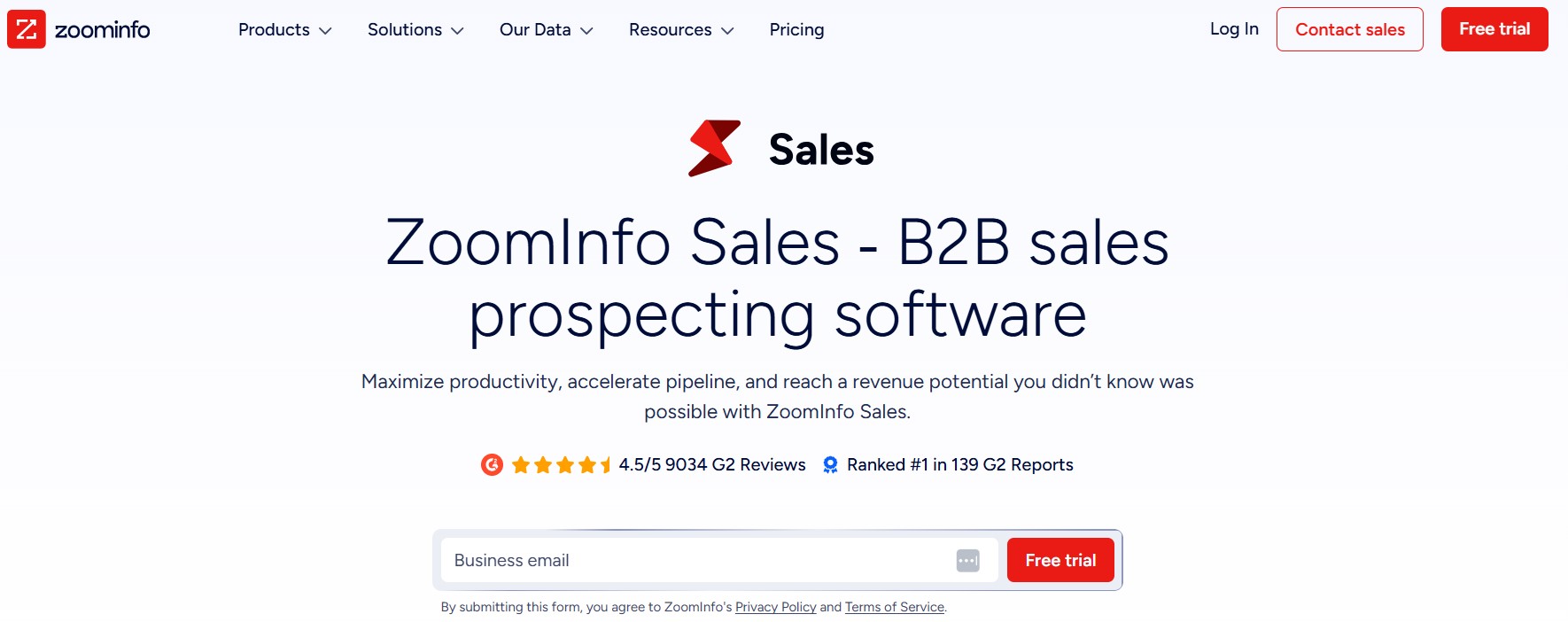
ZoomInfo is the enterprise gold standard in B2B sales intelligence. Its SalesOS product — the primary tool for sales teams — is built on a database of over 260 million professional contacts and 100 million companies, making it one of the largest B2B contact databases in existence. More than just a contact lookup tool, ZoomInfo provides org charts, technographic data, real-time buying intent signals, and an AI layer called ZoomInfo Copilot that synthesizes data to recommend who to contact, when, and with what message.
Apollo is a legitimate competitor in the mid-market segment, but ZoomInfo occupies a different tier of the market. The depth of its data — particularly org charts, department-level insights, and its Streaming Intent product — is genuinely beyond what Apollo offers at equivalent team sizes. Over 30,000 customers use ZoomInfo according to the company’s published case studies, ranging from rapidly growing startups to large enterprise organizations.
Key Features
- Database Depth: 260M+ professional contacts and 100M+ companies with verified emails, direct dials, org charts, department sizes, and hiring trends.
- Streaming Intent (Bombora-powered): Identifies companies actively researching topics related to a seller’s product from behavioral signals across thousands of websites. Intent data topic tracking is available as an add-on priced by volume.
- ZoomInfo Copilot: An AI layer that synthesizes database and intent signals to surface the most buyer-ready accounts and generate suggested outreach messaging tailored to each prospect.
- Chorus Conversation Intelligence: A call recording, transcription, and coaching tool that captures buyer insights from live sales calls and surfaces patterns across a team’s pipeline.
- WebSights: Website visitor tracking that identifies which companies are visiting a seller’s website even if visitors don’t fill out a form.
- CRM Integrations: Enterprise-grade integrations with Salesforce, HubSpot, Marketo, Outreach, and Salesloft, plus API access on Elite plans for custom data enrichment pipelines.
ZoomInfo Pricing vs Apollo
ZoomInfo does not publish pricing publicly. Based on aggregated user reports from Reddit, G2, and verified industry sources published in early 2026:
- Professional Plan: Starting around $14,995/year for a minimum of 3 users. Includes basic contact and firmographic data with approximately 5,000 annual export credits.
- Advanced Plan: Higher cost. Per-user fees are approximately $2,500/user/year. Adds mobile phone number access, intent data as an add-on, and advanced filtering.
- Elite Plan: Enterprise pricing, includes ZoomInfo Copilot, Chorus, and API access. Real-world contracts based on user reports frequently run $40,000–$60,000+ per year for larger teams.
Credits expire annually and do not roll over. Reddit user reports from early 2026 describe a 3-person team burning through 2,500 starter plan credits in under 2 months with normal prospecting activity. Annual contracts include auto-renewal clauses, and multiple users have reported 10–20% price increases at renewal. A commonly reported pattern across user communities is that the first quote from a ZoomInfo sales rep functions as a negotiating anchor rather than a final price — competitive quotes from alternatives have been documented to produce meaningful discounts.
Pros & Cons
Pros:
- Largest and most comprehensive B2B contact database on the market
- Streaming Intent data provides real competitive intelligence on which accounts are in an active buying cycle
- ZoomInfo Copilot AI synthesizes data and intent signals into actionable, prioritized outreach recommendations
- Enterprise-grade CRM integrations with mature, reliable sync capabilities across major platforms
- Org chart data enables multi-threaded enterprise selling in ways Apollo cannot match
- Established SOC 2 Type II and GDPR compliance credentials
Cons:
- Entry-level pricing of approximately $15,000/year eliminates small teams and early-stage startups entirely
- Annual contract required with no monthly billing option
- Auto-renewal with limited cancellation windows has been a documented source of user complaints
- Credit system creates overage costs on active prospecting teams — a 3-person team can exhaust starter credits in under 2 months
- US-centric coverage — European data quality is less comprehensive than Cognism
- Total real-world costs for a 10-person team can approach $50,000–$100,000/year when add-ons are included
Best For
- Mid-market to enterprise sales organizations with $25,000+ annual tool budgets
- Revenue teams that rely on intent data to prioritize their total addressable market
- Companies doing multi-threaded enterprise selling where org chart mapping is essential
- RevOps teams that need mature, enterprise-grade CRM data enrichment at scale
ZoomInfo vs Apollo.io: The Verdict
ZoomInfo is the right choice if you need the deepest data layer in the market and have the budget to support it. For large enterprise teams, the combination of its database breadth, intent data, and AI prioritization layer makes it genuinely superior to Apollo. For anyone outside enterprise with a budget under $15,000 per year, the math does not work — and Apollo or one of the more affordable alternatives on this list will deliver better ROI per dollar spent.
4. Lusha — Best Budget-Friendly Option with GDPR Compliance
What Makes Lusha Different from Apollo
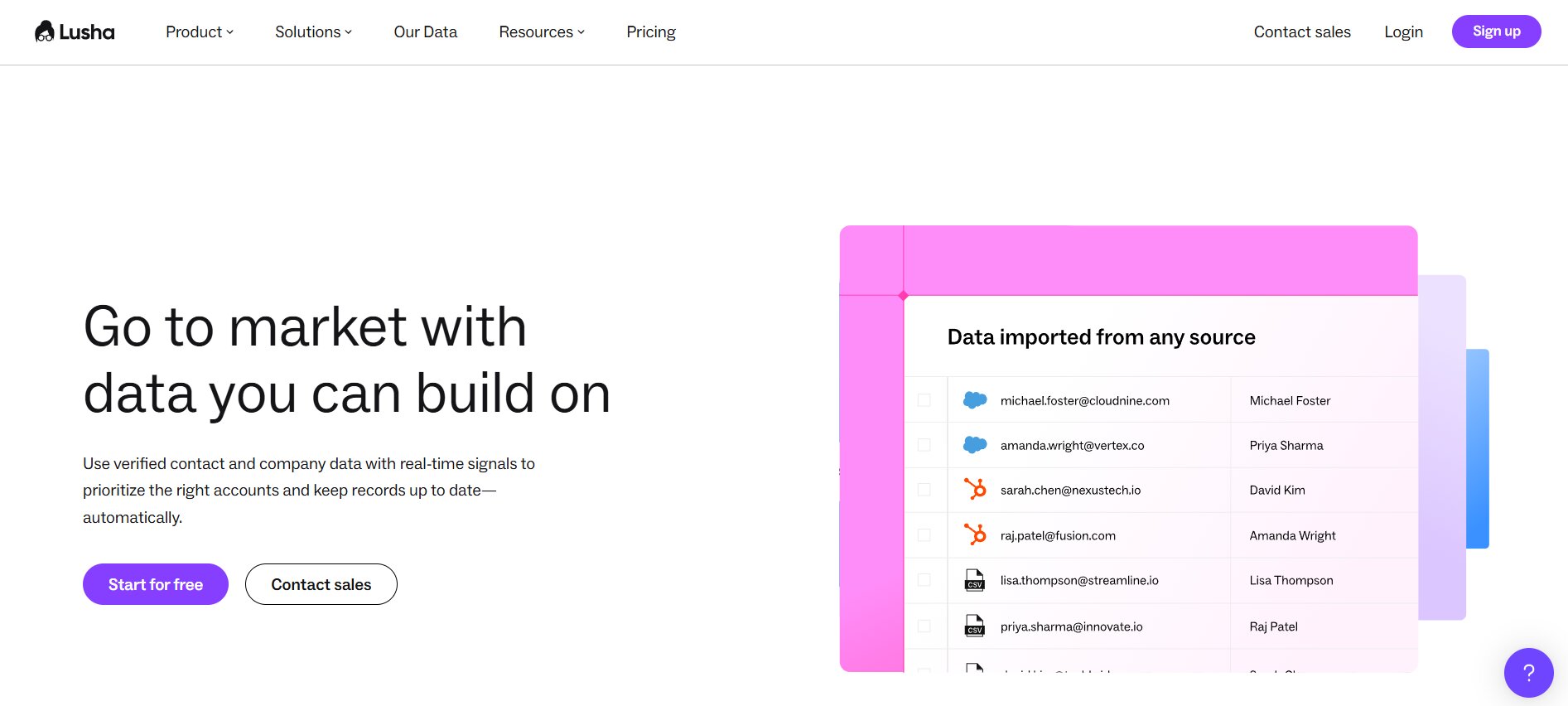
Lusha is a B2B sales intelligence and contact data platform that has built a strong reputation among individual sales reps and small-to-mid-sized teams who need reliable contact data — particularly direct dial phone numbers — without the complexity or cost of enterprise platforms. With over 300 million business profiles in its database, Lusha offers a meaningful combination of database size, data quality, and transparent pricing that starts at genuinely accessible price points.
What separates Lusha from Apollo in this space is a stronger compliance posture and, according to user reviews from G2 and multiple independent sources in 2026, more consistently accurate phone number data. Users report contact rates of 40–50% for decision-makers using Lusha’s direct dials, with some users noting 90% accuracy for phone numbers — a figure that significantly outperforms machine-verified mobile databases according to the La Growth Machine review of Lusha published in February 2026.
Key Features
- Contact Database: 300M+ business profiles including direct dial phone numbers, verified email addresses, and company data across industries and regions. The Chrome extension is the platform’s most praised feature, allowing reps to reveal verified contact data directly on LinkedIn profiles or company websites without leaving the page.
- AI Recommended Lists: Automatically generated and continuously updated lead lists that learn from a user’s ICP and surface the most relevant prospects over time without manual search effort.
- Buying Signals: Job change alerts, funding notifications, and hiring trend data that help reps time outreach to moments when a prospect is most likely to be receptive to a conversation.
- Bulk Reveal and Enrichment: Batch processing allows users to reveal and enrich up to 1,000 contacts at once — a significant time saver when building prospecting lists from LinkedIn Sales Navigator exports.
- CRM Integrations: Native integrations with Salesforce, HubSpot, and Pipedrive with real-time sync, eliminating manual data entry between the contact data platform and the CRM.
- Compliance Certifications: ISO 27001 and ISO 27701 certified. GDPR and CCPA compliant. Data is checked against Do Not Call lists — a meaningful compliance step that Apollo does not provide by default.
Lusha Pricing vs Apollo
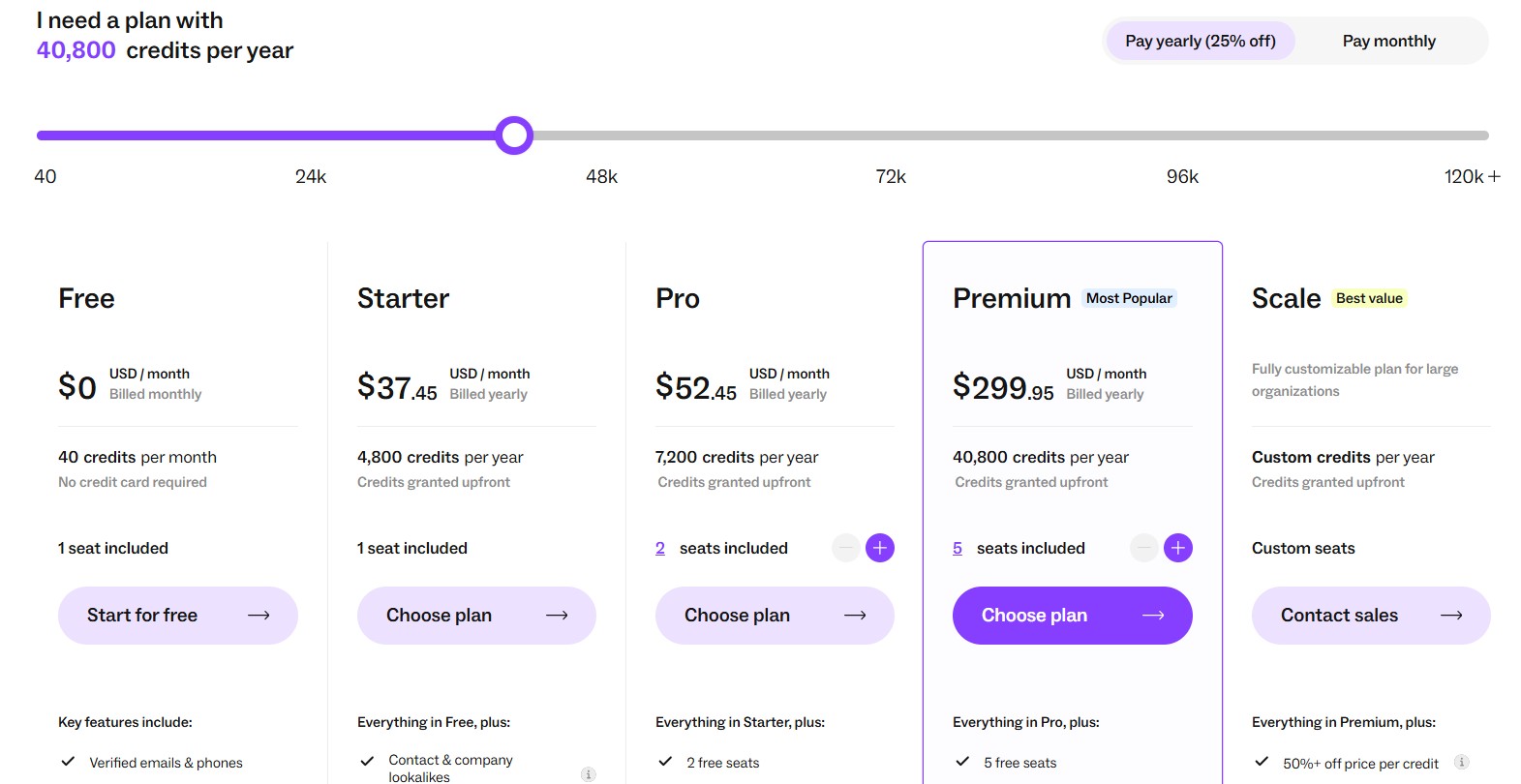
Lusha’s pricing is among the most transparent on this list, with all plans publicly listed.
| Plan | Annual Billing Price | Credits |
|---|---|---|
| Free | $0 | ~40–70 credits/month |
| Pro | ~$29.90/user/month | 3,000 credits/year |
| Premium | ~$51/user/month | Higher limits |
| Scale | Custom | Custom |
One email address costs 1 credit. One phone number costs 5–10 credits. This asymmetric credit cost is a limitation to be aware of — teams running phone-heavy prospecting will exhaust credits faster than teams focused on email alone. However, Lusha’s free plan with 40–70 monthly credits is one of the more generous free tiers in the category, and the Pro plan’s starting price of approximately $29.90/user/month on annual billing is substantially below Apollo’s $49/user/month entry point.
Pros & Cons
Pros:
- Most affordable entry point among full-featured, compliance-certified contact data platforms
- Strong phone number accuracy — users consistently report higher connect rates than competitors
- ISO 27001/27701 certified; genuine GDPR and CCPA compliance for EU-focused teams
- Generous free plan for testing data quality before committing
- Chrome extension is highly rated for LinkedIn prospecting speed and workflow integration
- Buying signals and AI-recommended lists add intelligence beyond simple contact lookup
Cons:
- Asymmetric credit cost (phone numbers cost 5–10x more than emails) creates unexpected spend for call-heavy teams
- Database coverage is smaller than ZoomInfo or RocketReach — niche industries and smaller companies may have gaps
- Not built for ABM or complex signals-based outreach strategies
- International coverage outside the US and Western Europe can be inconsistent
- No built-in email sequencing or dialing tools — Lusha is data-only; execution requires a separate tool
Best For
- Individual SDRs and small sales teams doing LinkedIn-first prospecting on a controlled budget
- Budget-conscious teams in regulated industries (EU, UK) who need compliance certifications to satisfy legal and procurement requirements
- Teams wanting the fastest possible setup with a clean, intuitive interface that doesn’t require extensive onboarding
- Recruiters and growth professionals who need quick contact lookups directly from LinkedIn profiles
Lusha vs Apollo.io: The Verdict
For teams that need a GDPR-compliant, transparent, and affordable contact data tool, Lusha is a compelling alternative to Apollo. The free plan makes it easy to evaluate data quality before spending anything, and the Pro tier delivers meaningful value at a lower price than Apollo’s basic paid plan. The main trade-off is that Lusha is a data-only platform — unlike Apollo, it does not include email sequencing tools. Teams that need both prospecting data and outreach automation will need to budget for an additional execution tool.
5. LeadIQ — Best for CRM-Synced Prospecting & AI Email Drafting
What Makes LeadIQ Different from Apollo
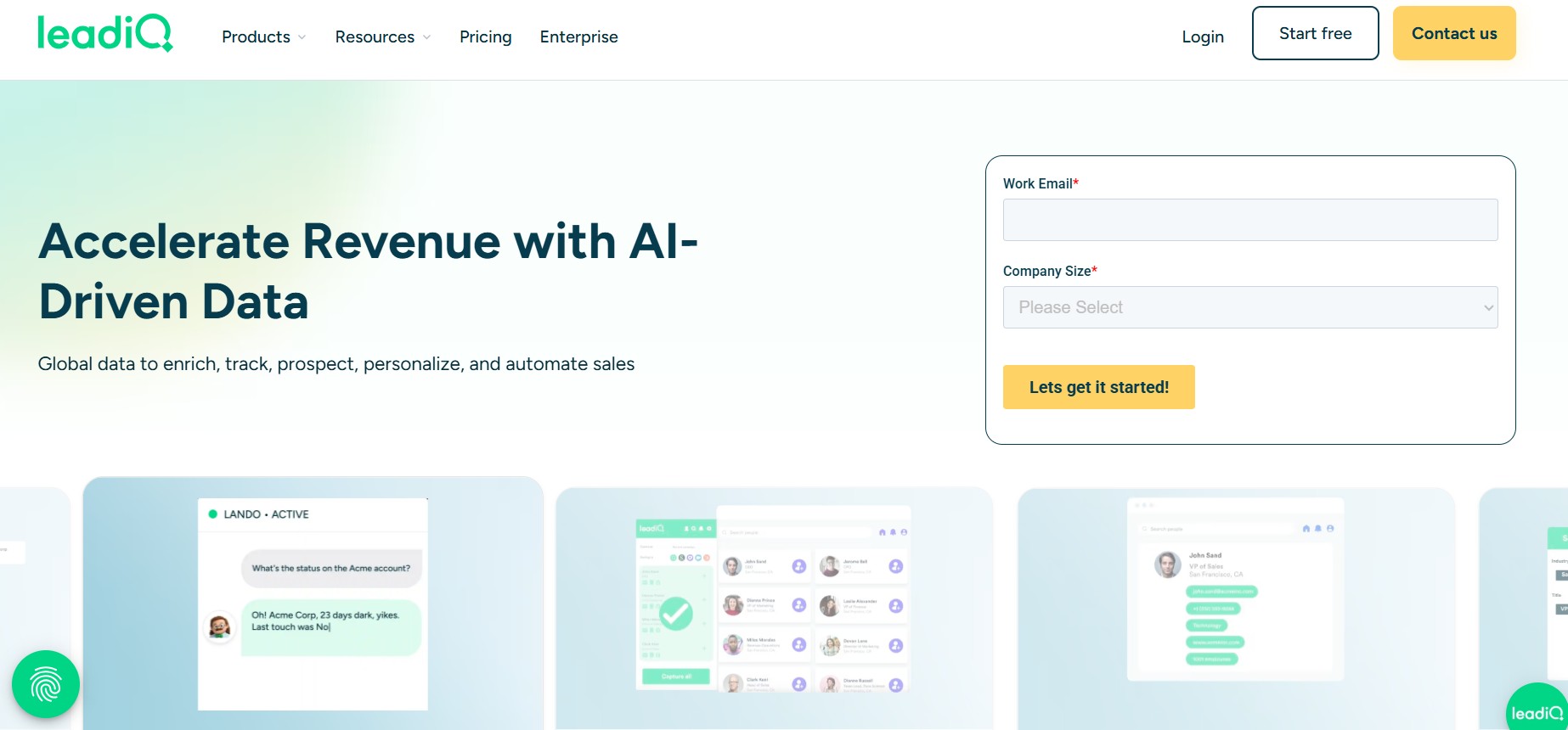
LeadIQ is a sales prospecting platform built for SDR teams whose primary workflow runs through LinkedIn and whose primary system of record is a CRM. While Apollo is designed as a destination — a place where reps go to find contacts and build sequences — LeadIQ is designed as a layer that sits on top of the reps’ existing browsing workflow. The Chrome extension captures contact data directly from LinkedIn and pushes it to Salesforce, HubSpot, or Outreach with a single click, eliminating the manual data entry step that creates friction and CRM hygiene problems for most sales teams.
The AI email drafting feature distinguishes LeadIQ further. When a rep captures a prospect from LinkedIn, LeadIQ uses context from the prospect’s profile — job title, company, recent activity, and technographic data — to automatically generate a personalized email draft. This reduces the time a rep spends on pre-outreach research and copy preparation without sacrificing personalization quality. According to user reviews across G2 and Lusha’s own analysis of LeadIQ alternatives published in January 2026, the CRM sync speed and reliability are consistently cited as the platform’s primary strength.
Key Features
- One-Click CRM Capture: The Chrome extension captures contacts from LinkedIn or Sales Navigator and pushes them directly to Salesforce, HubSpot, Outreach, or Salesloft in a single click. Contact data, firmographic data, and activity notes sync simultaneously, keeping CRM records clean without manual intervention.
- AI Email Writer: Generates personalized cold email drafts using prospect context pulled from LinkedIn profiles, company news, and technographic data. Designed to reduce rep prep time without sacrificing the personalization quality required for meaningful cold outreach.
- Job Change Tracking: Monitors when prospects move to new companies and alerts reps in real time. A new hire in a target role is often in active evaluation mode for tools and services — this signal is one of the highest-intent outreach triggers available.
- Team Governance and Deduplication: LeadIQ tracks which contacts have already been captured by other team members, preventing duplicate outreach from different reps reaching the same prospect simultaneously. This governance feature addresses one of the most common and reputation-damaging problems in outbound sales.
- Account Intelligence: Surfaces company-level signals including headcount growth, funding rounds, and recent news to help reps understand account context before reaching out.
LeadIQ Pricing vs Apollo
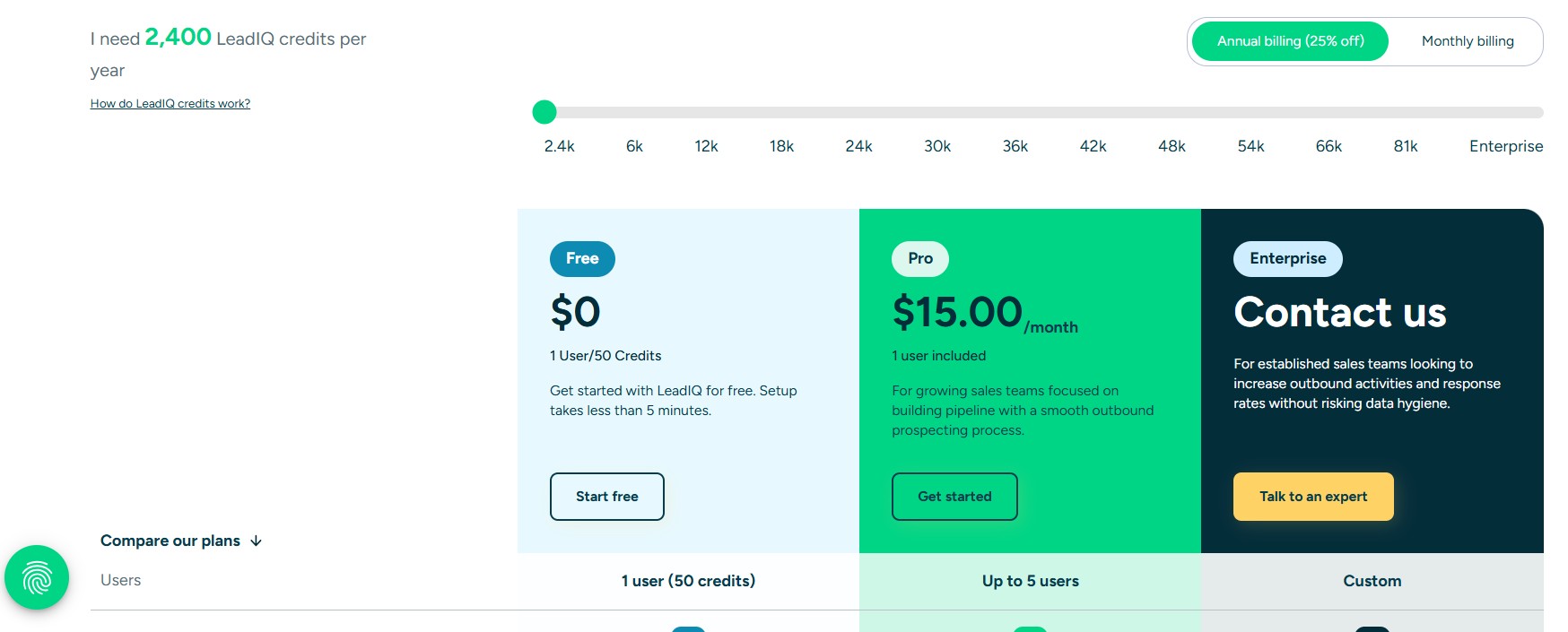
LeadIQ offers transparent, publicly listed pricing.
| Plan | Annual Billing Price | Key Limits |
|---|---|---|
| Free | $0 | 50 credits/month, limited features |
| Starter | ~$36/user/month | 250 credits/month, CRM integrations |
| Pro | ~$79/user/month | 500 credits/month, all AI features |
| Enterprise | Custom | Unlimited credits |
Credits do not roll over at month end. Phone number availability has been noted as inconsistent by multiple G2 reviewers — a meaningful limitation for cold-calling-heavy teams. However, for teams that prioritize CRM sync quality and AI-assisted email drafting over raw database volume, LeadIQ’s workflow efficiency gains justify the investment.
Pros & Cons
Pros:
- Fastest and most reliable CRM sync in the category — one-click capture eliminates manual data entry entirely
- AI email writer is a genuine productivity tool — it drafts personalized emails from live prospect context at the moment of capture
- Team deduplication prevents the embarrassment and reputation damage of multiple reps contacting the same prospect
- Job change tracking surfaces high-intent outreach moments automatically without manual research
- Transparent, publicly listed pricing with a useful free tier for testing
Cons:
- Smaller contact database than Apollo, ZoomInfo, or RocketReach — gaps more likely in niche industries
- Phone number availability is inconsistent — multiple user reviews flag low mobile number fill rates as a primary limitation
- Credits do not roll over, creating the same month-end credit anxiety found in Apollo
- International coverage outside North America is limited
- No native cold email sequencing tool — reps need Outreach, Salesloft, or a similar platform for campaign management
Best For
- SDR teams living in Salesforce or HubSpot who want contact data to flow in cleanly without manual entry
- Teams that prioritize CRM hygiene and data quality over raw prospecting volume
- RevOps teams that are tired of cleaning up duplicate records and stale data caused by manual processes
- Sales teams where personalized cold email is the primary outbound channel and rep prep time is a documented bottleneck
LeadIQ vs Apollo.io: The Verdict
LeadIQ wins on CRM workflow integration. If your team’s biggest problem is the gap between finding a contact and getting that contact into your CRM cleanly, LeadIQ removes that friction more effectively than Apollo. The trade-off is a smaller database and less comprehensive phone data. Teams that need both volume and workflow efficiency may find Apollo still edges LeadIQ out on raw database scale, but LeadIQ’s AI drafting and team governance features make it the superior choice for CRM-centric teams where data quality and hygiene are the primary concerns.
6. Seamless.AI — Best for Real-Time Data Validation & Fast List Building
What Makes Seamless.AI Different from Apollo
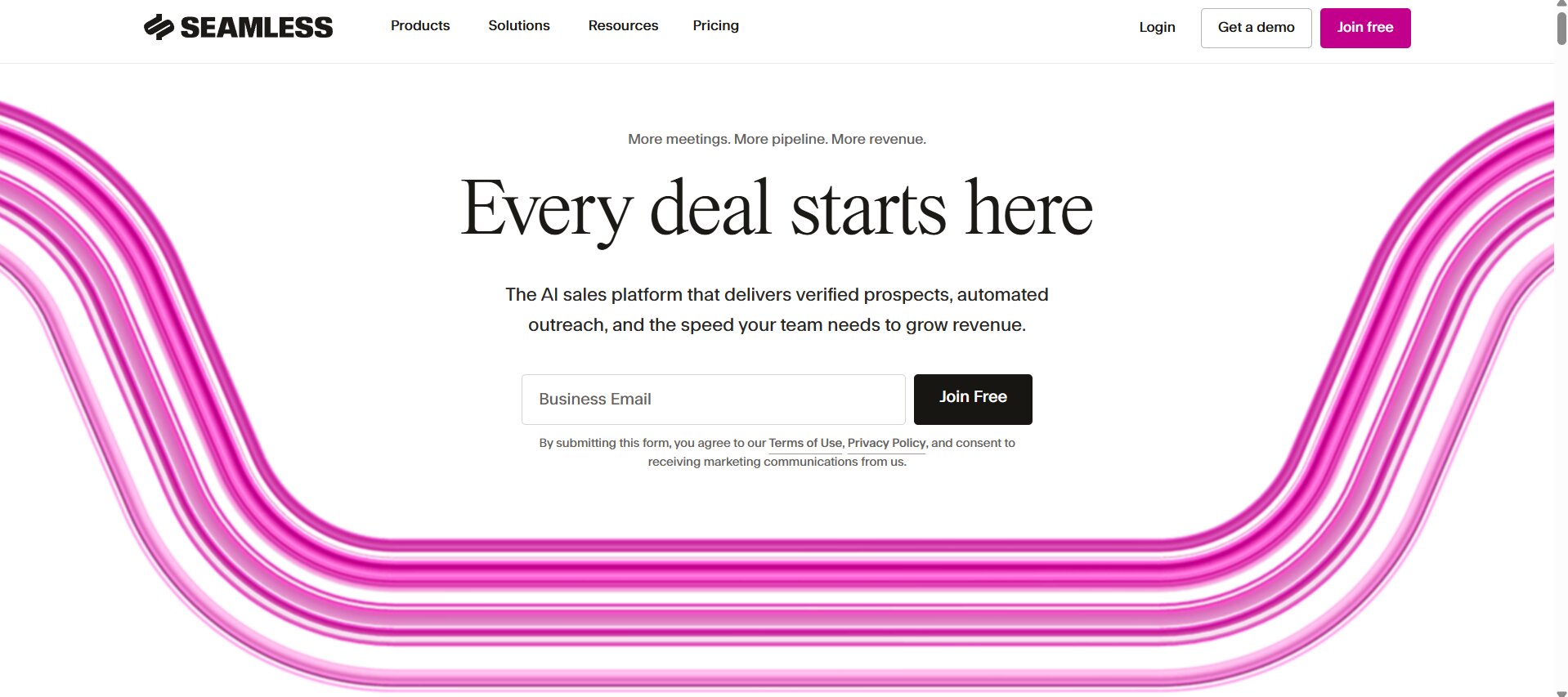
Apollo relies primarily on a static database — a large, pre-built repository of contacts that is periodically updated. Seamless.AI takes a different architectural approach. Rather than pulling from a stored database, its core engine crawls social profiles, company websites, and public records in real time at the moment of each search to assemble contact data on demand. The practical implication is that the data Seamless.AI returns is fresher than data from static databases where records may not have been updated for months.
For teams building large prospecting lists where data freshness directly impacts bounce rates, Seamless.AI’s real-time validation approach offers a meaningful advantage. The platform claims to verify emails and phone numbers at the point of search, which reduces the risk of outreaching on outdated records — a significant problem given that B2B contact data decays at approximately 20–30% per year as people change jobs, email addresses, and phone numbers.
Key Features
- Real-Time Data Verification: Contact data is verified at the moment of search rather than pulled from a cached database, targeting the data decay problem that affects static databases like Apollo’s.
- AI Search Engine: Seamless.AI’s search combines AI-powered parsing of social profiles, company websites, and public business records to assemble contact profiles including direct emails and mobile phone numbers.
- Autopilot Prospecting: An automated feature that generates new, continuously refreshed contact lists based on a defined ICP. Rather than requiring reps to run manual searches, Autopilot surfaces new prospects automatically as the search criteria are met.
- Writer AI: A built-in AI tool for generating personalized sales copy — cold emails, LinkedIn messages, and call scripts — based on prospect context. Included in the platform rather than as an add-on.
- Pitch Intelligence: Pre-call research synthesis that surfaces relevant information about a prospect’s company, role, and recent activity to help reps prepare for calls faster without external research.
- CRM Integrations: Native integrations with Salesforce, HubSpot, Outreach, and Salesloft for direct data push without manual exports.
Seamless.AI Pricing vs Apollo
| Plan | Price | Credits |
|---|---|---|
| Free | $0 | 50 credits |
| Basic | ~$147/month | Higher limits |
| Pro | ~$99/user/month (annual) | Higher limits |
| Enterprise | Custom | Custom |
Pricing for Pro and Enterprise requires a sales call. A common user complaint documented across G2 and Capterra is that the sales process is aggressive and that pricing is not always transparent until after a sales conversation. Data accuracy has received mixed reviews — while the real-time verification premise is sound, user reports indicate that phone number accuracy in particular can be inconsistent, and that the platform’s claims about data freshness do not always hold up for niche industries or smaller companies.
Pros & Cons
Pros:
- Real-time verification at point of search reduces data decay compared to static databases
- Autopilot prospecting automates the list-building process for consistent lead flow without manual search effort
- Writer AI and Pitch Intelligence reduce rep prep time and are included in the platform subscription
- CRM integrations are well-regarded for reliability and sync speed
- Free plan includes 50 credits for testing data quality before committing
Cons:
- Data accuracy for phone numbers is inconsistent — multiple G2 reviewers report bounces and wrong numbers despite real-time verification claims
- Pricing is not fully transparent without a sales call — the process has been described as aggressive by several user reviews
- GDPR compliance posture is less clearly documented than Cognism or Lusha — a material risk for EU-focused teams
- Real-time search can be slower than database lookups, which creates friction in high-volume prospecting workflows
- Some user reports indicate that the “real-time” nature of the data is inconsistent for smaller companies and niche industries
Best For
- Teams building large prospecting lists quickly where speed of list generation is the primary constraint
- SDRs who need fresh data rather than cached records for fast-moving markets like technology and SaaS
- Companies running high-volume cold email campaigns where data freshness directly affects deliverability metrics
- Teams that want AI-assisted copy generation alongside contact discovery in a single tool
Seamless.AI vs Apollo.io: The Verdict
Seamless.AI’s real-time validation approach is a genuine differentiator for teams where data freshness is the primary concern. The Autopilot and Writer AI features also make it more of an all-in-one prospecting tool than Apollo for teams that don’t already have a dedicated outreach platform. However, inconsistent phone data accuracy and limited compliance transparency mean it is better suited to teams focused on email-first outreach in North American markets than to those with compliance obligations or cold-calling-heavy strategies.
7. Hunter.io — Best for Simple Email Finding & Verification
What Makes Hunter.io Different from Apollo
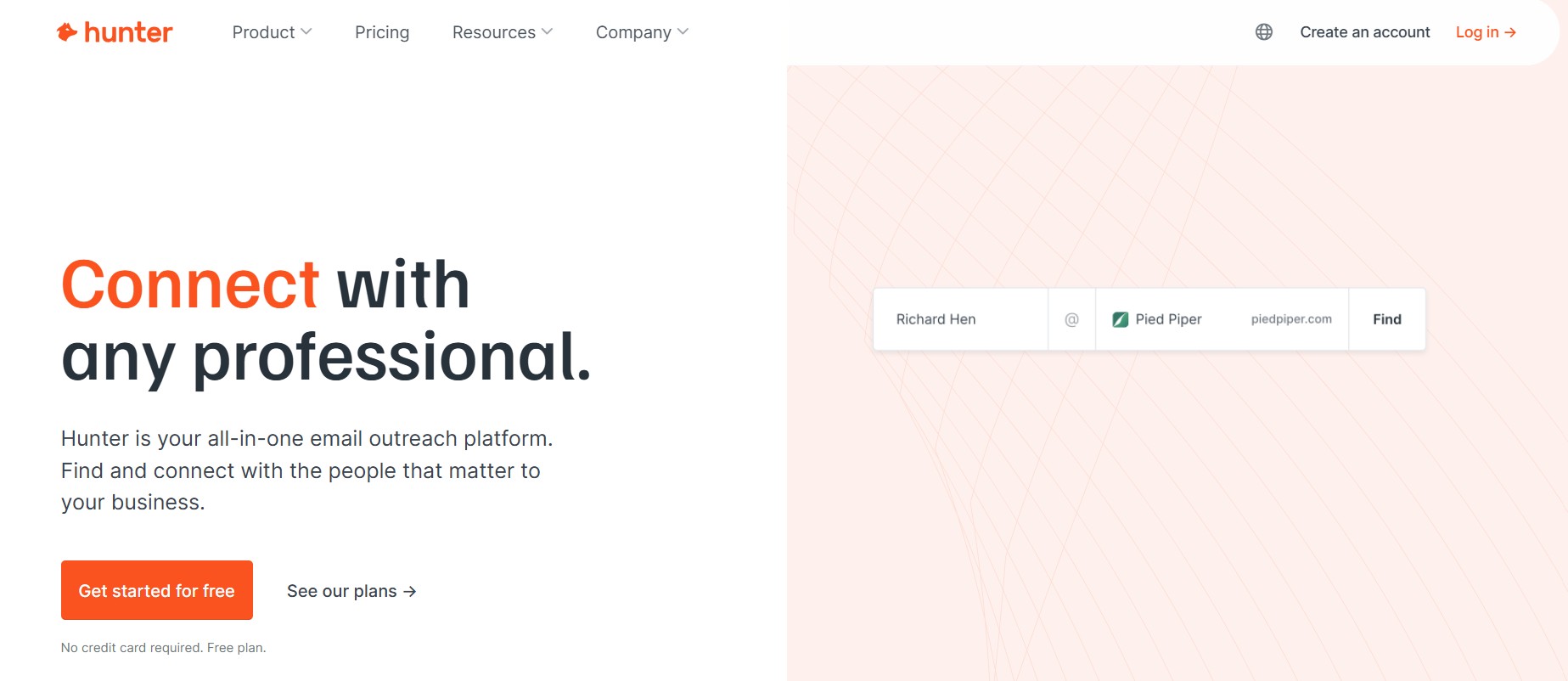
Hunter.io occupies a distinctly different position in the sales intelligence landscape compared to any other tool on this list. It is not a full sales intelligence platform. It is not a CRM enrichment engine. It is a focused, purpose-built email finder and verifier — and within that specific use case, it is the simplest and most affordable option available.
Hunter’s core workflow is straightforward: enter a company’s domain, and Hunter returns all the professional email addresses it has associated with that domain, along with a confidence score for each address. Enter a person’s name and company, and Hunter finds their individual business email. Run that email through the verifier, and Hunter confirms whether the address is deliverable before you send. Over 6 million professionals use Hunter according to the platform’s own data, which speaks to the breadth of its email-only use case across sales, marketing, recruiting, and link building.
What Hunter lacks is equally important to understand before evaluating it. It does not provide phone numbers. It does not provide intent data. It does not have a LinkedIn integration. It is not a CRM enrichment platform. It is an email finder. Teams that need more than that should look elsewhere on this list.
Key Features
- Domain Search: Enter any company domain and retrieve all publicly associated professional email addresses, with source attribution and confidence scores for each address returned.
- Email Finder: Enter a person’s name and company domain to find their individual professional email address. Hunter uses pattern recognition across its database to identify the most likely email format and returns a confidence score alongside the address.
- Email Verifier: Checks whether an email address is deliverable before it is used in an outreach campaign. This built-in verification reduces hard bounce rates and protects sender domain reputation — a critical function for teams with high sending volumes.
- Campaigns: A lightweight cold email sequencing tool built directly into Hunter that connects to Gmail or Outlook and sends personalized multi-step outreach from within the platform. Supports tracking of opens, clicks, and replies. Not a replacement for Outreach or Salesloft but adequate for teams that don’t need complex multi-channel sequencing.
- AI Writing Assistant: An AI-powered tool that assists with writing cold email copy, included on all paid plans.
- API Access: Available for developers and teams that want to integrate Hunter’s email discovery into custom workflows, CRMs, or enrichment pipelines.
Hunter.io Pricing vs Apollo
Hunter.io’s pricing is among the most transparent and affordable on this list.
| Plan | Monthly Billing | Annual Billing | Credits/Month |
|---|---|---|---|
| Free | $0 | $0 | 25 searches, 50 verifications |
| Starter | $49/month | ~$34/month | 500 searches, 1,000 verifications |
| Growth | $149/month | ~$104/month | 5,000 searches, 10,000 verifications |
| Business | $299/month | ~$209/month | 10,000 searches, 20,000 verifications |
Annual billing saves approximately 30% across all tiers. One important caveat: a 2025 benchmark analysis testing 20,000 contacts across 15 tools found Hunter’s effective enrichment rate to be approximately 32.5%, with an 11.2% hard bounce rate — meaning not every search returns a usable, deliverable email address. The Starter plan at $34/month on annual billing provides 500 searches, but effective usable contacts may be closer to 160–165 per month at that enrichment rate. Credits reset monthly and do not roll over.
All paid plans include unlimited team members — unlike Apollo’s per-seat model, Hunter charges per account level rather than per user, which makes it significantly more cost-effective for larger teams doing email-only prospecting.
Pros & Cons
Pros:
- Most affordable email finding tool in the market — the free plan is genuinely useful for low-volume testing
- Email verification built in at every tier — reduces bounce rates without requiring a separate verification tool
- Domain Search is excellent for account-based targeting: find everyone at a company in a single lookup
- Simple, intuitive interface that requires no training — usable within minutes of signup
- All paid plans include unlimited team members — no per-seat fees
- Campaigns tool provides basic cold email sequencing included in the base subscription
- GDPR compliant with transparent data handling practices
Cons:
- No phone numbers — strictly an email finder; not suitable for cold calling or multi-channel outreach
- No LinkedIn integration — does not work with LinkedIn profiles or Sales Navigator
- Effective enrichment rate of approximately 32.5% means many searches return no usable result
- Hard bounce rate of 11.2% may not be acceptable for teams with strict deliverability standards
- Not a full sales intelligence platform — no intent data, no firmographic enrichment, no org charts
- Credit-based model with monthly resets creates the same expiration problem found in Apollo
- No warm-up tool or inbox placement checker for teams managing deliverability at scale
Best For
- Freelancers, founders, and individual contributors who need occasional email lookups without a recurring monthly cost commitment
- Marketing teams running domain-based email campaigns where the target is a specific company rather than a named individual
- Agencies doing link building, journalist outreach, or partnership prospecting that is domain-driven
- Small teams with an existing outreach tool (Lemlist, Instantly, Mailshake) that just need email data to feed into it
- Teams on a strict budget who need email verification as much as email discovery
Hunter.io vs Apollo.io: The Verdict
Hunter.io is not trying to compete with Apollo on scale, database depth, or outreach automation — and it doesn’t need to. It wins on simplicity and cost for teams whose core need is clean, verifiable business email addresses. If your outreach strategy is email-first, your target list is domain-based, and your budget is tight, Hunter is the most straightforward and affordable choice available. If you need phone numbers, intent data, or a full prospecting workflow, look elsewhere on this list.
8. RocketReach — Best for Bulk Contact Discovery Across Multiple Channels
What Makes RocketReach Different from Apollo
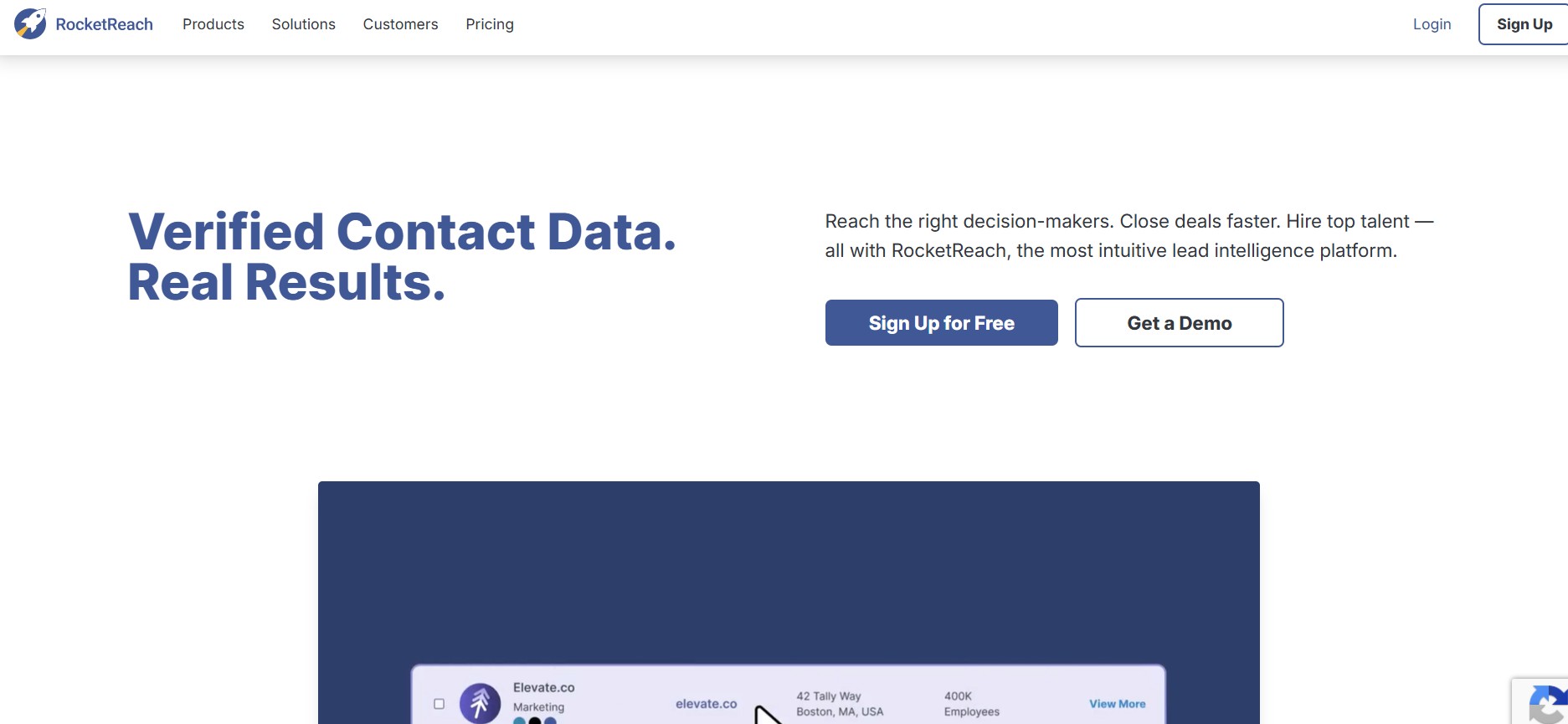
RocketReach is a contact intelligence platform built around one of the largest professional databases in the B2B space — over 700 million professional profiles and 60 million companies, aggregated from more than 100 public data sources including phone directories, government listings, and social networks. While Apollo competes on an all-in-one model that combines database access with built-in sequencing, RocketReach focuses on database breadth and multi-channel contact data: professional emails, personal emails, direct phone numbers, and social profiles all in one lookup.
The primary use case that distinguishes RocketReach from the rest of this list is bulk lookup. Teams that need to upload a list of names and companies and receive verified contact data in return — at scale and across multiple contact channels simultaneously — will find RocketReach’s bulk processing capabilities well-suited to that workflow. The database scale also makes it a useful tool for recruiters and agencies that need broad coverage across all industries and regions rather than deep coverage in a specific vertical.
Key Features
- Database Scale: 700M+ professional profiles and 60 million companies. The database aggregates data from over 100 public sources and undergoes regular updates, with most records refreshed at least quarterly according to the platform’s published specifications.
- Multi-Channel Contact Data: A single RocketReach lookup can return professional email, personal email, direct phone number, and social profile links (LinkedIn, Twitter) for a contact — a breadth of contact channels that most other tools on this list do not match in a single lookup.
- Bulk Lookup: Upload a CSV of names and companies; RocketReach returns verified contact data for the entire list. This is a core workflow for high-volume agencies and operations teams running enrichment projects.
- Advanced Search Filters: Over 100 search criteria including job title, company, industry, location, revenue, and headcount, allowing precise targeting without requiring an external prospect list.
- AI-Powered Recommendations: The platform surfaces additional relevant contacts based on search patterns and engagement history, expanding prospect lists organically.
- CRM Integrations: Native Salesforce and HubSpot integrations are available on Pro and Ultimate plans. Full API access is available on the Ultimate plan for custom data enrichment pipelines.
- Intent Data Add-On: Available as a premium add-on for identifying in-market buyers showing research intent on relevant topics.
RocketReach Pricing vs Apollo
RocketReach offers four individual plans plus team and enterprise options. All prices below are annual billing rates.
| Plan | Annual Price (per user) | Lookups/Year | Key Access |
|---|---|---|---|
| Free | $0 | 5/month | Email only, basic search |
| Essentials | 1,200/year | Email only | |
| Pro | 3,600/year | Email + phone numbers | |
| Ultimate | 10,000/year | All features + full API |
Phone numbers are only available from the Pro plan upward. The Essentials plan at $33/month is email-only, which limits it to a similar use case as Hunter.io but at a higher cost per lookup. A 5-person team on the Pro plan would cost approximately $415/month ($4,995/year) — comparable to Apollo’s Professional tier in price but without Apollo’s built-in sequencing tools.
An important disclosure: RocketReach has a TrustScore of 1.2 out of 5 on Trustpilot. Multiple verified user reviews document charges appearing without advance renewal reminders, refund requests denied within 24 hours of an unintended renewal, and difficulty canceling subscriptions. Teams should review contract terms carefully and set calendar reminders well before their annual renewal date.
Pros & Cons
Pros:
- One of the largest B2B contact databases available — 700M+ profiles across 60M companies
- Multi-channel contact data (professional email + personal email + phone + social) in a single lookup
- Bulk lookup capability is excellent for agencies and ops teams running large enrichment projects
- Advanced search filters (100+ criteria) allow precise targeting without requiring external lists
- Free plan available with no credit card for basic testing — 5 lookups per month
Cons:
- Phone numbers are not available on the entry-level Essentials plan — require Pro upgrade ($75/month) to access
- Data freshness is inconsistent — the database is updated periodically, not in real time, which can produce outdated records in fast-moving markets
- Billing practices have generated significant negative reviews on Trustpilot (1.2/5 TrustScore) — auto-renewal without reminder emails and refund denials are documented patterns
- Email accuracy is reported at approximately 85–90% by multiple independent sources — below what some teams require for deliverability management
- No built-in outreach sequencing or dialing tools — strictly a data platform
- GDPR compliance posture is less explicitly documented than Cognism or Lusha
- Intent data is an add-on and not included in any base plan
Best For
- Agencies running high-volume contact enrichment projects that require bulk lookup capabilities at scale
- Teams sourcing multi-channel contact data — particularly cases where reaching someone on personal email or social channels is part of the outreach strategy
- Operations and RevOps teams enriching or cleaning existing CRM databases with multi-source contact data
- Recruiters who need both professional and personal email data alongside social profile links in a single tool
RocketReach vs Apollo.io: The Verdict
RocketReach’s bulk lookup and multi-channel contact data are legitimate advantages over Apollo for specific use cases. For high-volume agencies and ops teams, the database scale and bulk processing capabilities make it a practical choice. However, the billing complaint history documented on Trustpilot is a serious concern that should not be overlooked — teams should explicitly review cancellation terms before committing. For teams that need both data and outreach tools in one platform, Apollo offers more functionality. For teams that need only data with better compliance credentials and a more reliable customer experience, Lusha or Cognism are stronger choices.
Head-to-Head Comparison: Apollo.io vs All 8 Alternatives
The table below consolidates the key decision factors for a side-by-side evaluation.
| Tool | Database Size | Free Plan | Starting Price | GDPR Compliant | Phone Numbers | Intent Data | Best For |
|---|---|---|---|---|---|---|---|
| Apollo.io | 275M+ | ✅ | $49/user/month | ✅ (with toggles) | ✅ Machine-verified | ✅ (limited) | All-in-one prospecting |
| DealsFlow | LinkedIn-native | ✅ 14-day trial | $59/month | ✅ | LinkedIn DMs | ❌ | AI LinkedIn outreach |
| Cognism | 400M+/50M Diamond | ❌ | ~$15K+/year | ✅✅ Best-in-class | ✅ Phone-verified | ✅ Bombora | EU prospecting |
| ZoomInfo | 260M+ contacts | ✅ Limited | ~$15K/year | ✅ | ✅ | ✅ Streaming Intent | Enterprise data |
| Lusha | 300M+ | ✅ | ~$30/user/month | ✅ ISO certified | ✅ | ✅ Signals | SMB/affordable |
| LeadIQ | Mid-size | ✅ | ~$36/user/month | ✅ | ✅ (inconsistent) | ❌ | CRM workflow |
| Seamless.AI | Real-time | ✅ 50 credits | ~$147/month | ⚠️ | ✅ | ❌ | Fast list building |
| Hunter.io | Domain-based | ✅ | $34/month | ✅ | ❌ | ❌ | Email finding |
| RocketReach | 700M+ | ✅ 5/month | ~$33/month | ⚠️ | ✅ Pro+ | Add-on | Bulk enrichment |
Which Apollo.io Alternative Should You Choose? (Decision Guide)
The right choice depends on your team’s outbound motion, geographic focus, compliance requirements, and budget. The guide below helps match tool to use case directly.
Choose DealsFlow if…
Your pipeline runs primarily through LinkedIn conversations, and you want AI to handle the entire conversation funnel — from first message to booked call — without your reps spending hours in their LinkedIn inbox. DealsFlow is the only tool on this list that automates not just outreach, but replies, objection handling, and meeting booking. It is built for agencies and SDR teams who want outbound to run in the background while they focus on calls and closing.
Choose Cognism if…
You are prospecting heavily in European or UK markets, your sales motion relies on cold calling, and GDPR compliance is a legal requirement rather than a nice-to-have. Cognism’s Diamond Data phone-verified mobile numbers and 13-country DNC screening make it the most compliance-forward option in the category. Budget accordingly — the platform fee alone starts at approximately $15,000/year.
Choose ZoomInfo if…
You are an enterprise sales organization with a $25,000+ annual budget, a large US-based ICP, and a need for intent data, org charts, and AI-powered prioritization across a large total addressable market. ZoomInfo is the most comprehensive data platform available, and for enterprise teams the depth of its coverage justifies the cost.
Choose Lusha if…
You are a small-to-mid-sized team that needs reliable direct dial phone numbers and GDPR-compliant data at an accessible price point. Lusha’s Pro plan at approximately $30/user/month is the most affordable entry point among the compliance-certified, full-featured tools on this list.
Choose LeadIQ if…
Your CRM is your source of truth, and your team’s biggest friction is getting LinkedIn prospect data into that CRM cleanly and quickly. LeadIQ’s one-click capture and AI email drafting make it the right choice for CRM-centric SDR teams where data hygiene is the primary operational challenge.
Choose Seamless.AI if…
You need to build large prospecting lists quickly and are prioritizing data freshness over breadth of features. The real-time verification approach reduces data decay, and the Autopilot feature keeps your pipeline stocked automatically.
Choose Hunter.io if…
Your outreach strategy is email-only, you are targeting specific companies by domain, and you want the most affordable and straightforward tool available. Hunter is the right choice when simplicity and cost are the primary decision criteria.
Choose RocketReach if…
You run a high-volume contact enrichment operation, need bulk lookup capabilities, or need multi-channel contact data (email + phone + social) in a single lookup. RocketReach’s database breadth and bulk processing tools are its primary advantages — just review billing terms carefully before committing to an annual contract.
Final Verdict
Apollo.io is a capable platform for the right team in the right circumstances. Teams with predictable, mid-volume prospecting needs, primarily US-based targets, and a tolerance for credit management will find it delivers reasonable value. But the credit system’s unpredictability, the data accuracy limitations at scale, and the pricing that compounds sharply as teams grow make it worth a careful evaluation against the alternatives.
The 8 tools reviewed here cover every meaningful use case. DealsFlow stands out as the most differentiated option for teams running LinkedIn-first outbound — not because it competes with Apollo on database size, but because it solves the problem Apollo cannot: what happens after the first message is sent. Cognism is the clear winner for European compliance and cold-calling connect rates. ZoomInfo owns the enterprise segment. LeadIQ is the right choice for CRM-centric teams that need clean data syncing over raw volume. Lusha offers the best balance of compliance, accuracy, and affordable pricing for smaller teams. Seamless.AI targets teams who need fresh data at list-building speed. Hunter.io is the most cost-effective solution for email-only outreach. And RocketReach offers unmatched bulk lookup capabilities for agencies doing high-volume enrichment — provided billing terms are reviewed carefully.
The best Apollo alternative is the one that matches your outbound motion, your compliance requirements, and your budget with the least friction. Use the decision guide above to narrow the field, take advantage of the free plans and trials available across almost every tool on this list, and test on your actual ICP before committing to an annual contract.
FAQs
How accurate is Apollo.io’s data?
User review data aggregated from G2 and Trustpilot in 2026 puts Apollo’s real-world email accuracy at approximately 65–70%, with email bounce rates of 15–25% reported across multiple independent sources. Mobile number accuracy is lower than providers that physically verify numbers, such as Cognism. These figures represent reported user experience rather than Apollo’s official accuracy claims.
What’s the best Apollo alternative for mobile/phone numbers?
Cognism’s Diamond Data is the most accurate phone data available for European and UK contacts, with user-reported connect rates of up to 3x higher than unverified databases. For North American mobile numbers, ZoomInfo and Lusha are strong options. Lusha offers better pricing transparency for smaller teams, while ZoomInfo provides broader coverage at a significantly higher cost.
What’s the best Apollo alternative for GDPR-compliant outreach?
Cognism is the most thorough compliance option, screening all data against 13 international DNC lists and holding ISO 27001/27701 certification. Lusha also holds ISO 27001/27701 certification and is consistently cited in user reviews as the preferred compliance-focused tool for teams that cannot afford Cognism’s enterprise pricing.
Is there a free Apollo.io alternative?
Yes. Hunter.io, Lusha, LeadIQ, Seamless.AI, RocketReach, and ZoomInfo (Lite) all offer free plans with varying degrees of usefulness. DealsFlow offers a 14-day free trial with full feature access. The most useful free plans for genuine prospecting testing are Lusha (40–70 credits/month) and Hunter.io (25 searches/month). For LinkedIn outreach testing, DealsFlow’s 14-day trial gives the most complete picture of the product before committing.
What’s the best Apollo alternative for LinkedIn prospecting?
DealsFlow is the most LinkedIn-specific tool on this list. It not only finds prospects on LinkedIn but runs the entire conversation — initial message, follow-up, objection handling, and meeting booking — through its Arlo AI Engine. Lusha’s Chrome extension is the strongest alternative for quick contact reveals directly on LinkedIn profiles for teams that want data, not outreach automation.
What’s the cheapest Apollo alternative for small teams?
Hunter.io at $34/month (annual billing) is the cheapest paid plan for email-only prospecting. Lusha’s Pro plan at approximately $29.90/user/month (annual billing) is the cheapest option for teams that also need phone numbers with GDPR compliance. DealsFlow’s Starter plan at $49/month covers AI LinkedIn outreach for a single account with no per-credit charges and no hidden overages.
Does Apollo.io work for EU/international markets?
Apollo does maintain GDPR compliance documentation and provides toggles to exclude EU contacts from prospecting. However, its international coverage and DNC screening depth have been cited as limitations in user reviews, particularly compared to Cognism for European data quality and compliance. Notably, Apollo’s own documentation acknowledges that the GDPR safeguard controls do not apply when using the Apollo Chrome Extension, requiring additional caution from users. Teams with heavy EU outreach are better served by Cognism as their primary data provider.
What’s the best all-in-one Apollo alternative for agencies?
DealsFlow is purpose-built for agencies, with its Agency Pilot plan supporting 20 LinkedIn accounts across client campaigns in a single dashboard at $299/month flat. For agencies that also need a large contact database for email prospecting alongside LinkedIn outreach, pairing DealsFlow with Lusha or Hunter.io covers both channels at a combined cost well below Apollo’s per-seat model at scale.
Can AI tools like DealsFlow replace Apollo completely?
Not directly — DealsFlow and Apollo solve different problems. Apollo is a contact database with email sequencing tools. DealsFlow is an AI-powered LinkedIn outreach engine. They can complement each other, but for teams whose outbound is entirely LinkedIn-based, DealsFlow replaces the need for Apollo’s sequencing functionality. Teams running both email and LinkedIn outreach would benefit from pairing DealsFlow with a lighter email data tool like Hunter.io or Lusha.