


Cognism has built a strong reputation, particularly among European sales teams, for its phone-verified contact database and GDPR compliance features. But as 2026 rolls in, a growing number of sales and marketing teams are quietly asking the same uncomfortable question: is Cognism really worth the price?
The short answer, for many teams, is no — or at least, not anymore. And the reasons go beyond simple sticker shock.
This guide breaks down exactly why so many revenue teams are looking for alternatives, what they should be looking for in a replacement, and — most importantly — eight specific tools that genuinely deliver better or equal data quality at a fraction of what Cognism costs.
Why Marketers and Sales Teams Are Moving Away From Cognism
Cognism is not a bad product. Its Diamond Data® phone-verified contacts are legitimately differentiated, and its compliance coverage across 15+ Do Not Call (DNC) lists remains best-in-class for European outreach. The problem is not what Cognism delivers. The problem is what it costs to get there — and what it fails to deliver for teams whose primary market is not Europe.
The Most Common Cognism Complaints
Before switching to any alternative, it helps to understand exactly what is pushing teams away. The following issues appear consistently across verified user reviews on G2, Capterra, Reddit, and independent analyst reports.
- Opaque, negotiation-dependent pricing. Cognism does not publish its prices publicly. Every team must sit through a demo and negotiate directly with a sales rep to get a number. According to data compiled by Salesmotion, real Cognism deals range from $1,500 to $25,000 per year depending on tier, team size, and negotiation leverage. This unpredictability makes budget planning difficult and puts smaller teams at a disadvantage against enterprise buyers who know how hard to push back.
- A platform fee that blindsides buyers. Unlike most SaaS tools where you pay per seat and that covers your costs, Cognism charges a flat platform license fee on top of individual user fees. The Grow (formerly Platinum) plan carries an estimated platform fee starting at $15,000, while the Elevate (formerly Diamond) plan starts at approximately $25,000 — before adding any per-user licenses. A team budgeting for three users at $1,500 each might expect a $4,500 bill. In reality, the platform fee alone pushes that number to $19,500 or higher — nearly a 4x difference from the per-seat math alone.
- Mandatory annual contracts with aggressive auto-renewal clauses. Cognism locks teams into yearly commitments. Missing the renewal window means another full year of charges, regardless of whether the tool is still serving the team’s needs.
- Annual price increases of 10–15% at renewal. Multiple user reports and negotiation benchmarking data from Vendr indicate that Cognism regularly increases pricing at contract renewal, adding budget pressure on top of an already steep starting cost.
- Significant data gaps outside Europe. Cognism’s strength is European coverage, particularly the UK and EMEA markets. For teams selling primarily into North America, Asia-Pacific, or Latin America, coverage drops meaningfully. G2 reviewers have specifically flagged that contact availability in mid-market US companies and niche industries can feel limited, and that APAC data in particular shows lower accuracy than the platform’s European records.
- No built-in outreach or execution tools. Cognism provides contact data. Full stop. It does not include an email sequencer, a built-in dialer, a chatbot, or workflow automation. Teams must pair it with separate execution platforms — adding $50 to $150 per user per month to their total stack cost. For a five-person SDR team on the Elevate plan, that can mean $37,500+ per year just for contact data, before touching outreach tools.
- Credit bottlenecks on premium verification. Cognism’s premium phone verification service, which allows you to submit contacts for manual verification, is capped at approximately 50 contacts per month and takes up to 48 hours to complete. For teams that need verified numbers at scale, this is a meaningful operational constraint.
What to Look for in a Cognism Alternative
Switching data providers is not a decision to make lightly. The wrong tool can leave your SDRs drowning in bounced emails and disconnected numbers. Before evaluating any platform on this list, align your team around the following criteria:
- Data accuracy and verification methodology. The question is not just how many contacts are in the database. It is what percentage of those contacts are verified, how recently they were verified, and what the verification process actually involves — algorithmic scraping, human review, real-time validation, or some combination.
- GDPR, CCPA, and DNC list compliance. Every reputable B2B data provider in 2026 claims compliance. What separates them is the depth and breadth of their screening. Verify which specific DNC lists a provider screens against, and whether they maintain an opt-out process for contacts who request data removal.
- Pricing transparency. If a vendor cannot show you a price page, ask explicitly whether a platform fee exists on top of per-seat costs. Request the total cost in writing for your specific user count, feature set, and contract length before signing anything.
- Free trial or freemium access. The ability to test a database against your actual ICP — not just a vendor-curated sample — is non-negotiable. Any provider that refuses to let you test real data before signing an annual contract is a red flag.
- CRM and workflow integrations. The tool must connect cleanly with your CRM (Salesforce, HubSpot, Pipedrive, etc.) and ideally with your sales engagement platform. Friction in the data-to-outreach workflow directly costs your SDRs time every single day.
- Coverage alignment with your ICP geography. European-focused teams need different data than teams selling into North America or Asia-Pacific. Match the provider’s geographic strength to where your buyers actually live.
Quick Comparison — 8 Best Cognism Alternatives at a Glance
| Tool | Best For | Geographic Strength | Starting Price | Free Plan? |
|---|---|---|---|---|
| Dealsflow | All-in-one modern revenue teams | Global | Contact for pricing | Yes |
| Apollo.io | High-volume prospecting on a budget | North America, Global | $49/user/month (annual) | Yes |
| ZoomInfo | Enterprise teams, deep firmographic data | North America | ~$14,995/year (min. 3 users) | Lite tier available |
| Lusha | Quick contact enrichment, LinkedIn prospecting | Global | Free plan; Pro from ~$36/user/month | Yes |
| UpLead | Verified emails with real-time validation | Global (200+ countries) | $99/month (annual) | Yes (trial credits) |
| LeadIQ | SDR teams working inside LinkedIn | North America, Global | Free plan; Essential from $36/user/month | Yes |
| SalesIntel | Human-verified data, North American coverage | North America | ~$5,000/year (custom) | No (demo required) |
| RocketReach | Cross-channel contact discovery | Global (700M+ profiles) | $399/year (individual) | No |
The 8 Best Cognism Alternatives in 2026
1. Dealsflow — Best All-in-One Alternative for Modern Revenue Teams
What Is Dealsflow?
Dealsflow is an all-in-one revenue intelligence platform built for modern B2B sales and marketing teams who are tired of stitching together five different tools to complete a single prospecting workflow. Where most data providers give you a database and leave the rest to you, Dealsflow is designed to cover the gap between raw contact data and actual booked meetings — combining data access, workflow intelligence, and outreach capability in a single, unified layer.
The platform serves SDRs, RevOps professionals, growth marketers, and agency teams who need high-quality prospect data without the enterprise pricing wall that makes tools like Cognism inaccessible for growing businesses. Dealsflow positions itself directly against the old model of paying for data and then paying again for execution — instead offering both in one place, at a price point that does not require a negotiation session with a sales rep.
Why Dealsflow Beats Cognism
Cognism’s core limitations are pricing opacity, mandatory platform fees, and the absence of any execution tooling. Dealsflow addresses all three directly.
- Transparent pricing model. Unlike Cognism’s demo-and-negotiate approach, Dealsflow allows prospective users to understand costs without sitting through a sales process. This is particularly valuable for SMBs and growth-stage teams that need to make fast, informed budget decisions.
- No forced annual contracts with hidden platform fees. Cognism’s platform fee structure — which can push a three-user team’s annual cost from roughly $4,500 to nearly $20,000 — is a consistent source of buyer frustration. Dealsflow removes that unpredictability from the equation.
- All-in-one design eliminates tool sprawl. Cognism provides data and nothing else. Teams must add separate email sequencers, dialers, and engagement platforms — each adding $50 to $150 per user per month. Dealsflow’s integrated approach means fewer vendors, fewer invoices, and fewer context-switches for your reps each day.
- Built for outbound velocity at scale. Where Cognism is optimized for careful, compliance-focused European prospecting, Dealsflow is built for teams that need to move fast, test quickly, and iterate on their outreach without hitting a wall of credit limits or manual verification queues.
- Accessible for SMBs and individual contributors. Cognism’s pricing structure effectively prices out small teams and solo sellers. Dealsflow is designed to be viable for teams at any stage, from a two-person outbound function to a full-scale SDR organization.
Key Features
- Comprehensive B2B contact and company database with verified email and phone data
- Built-in outreach and engagement tools that eliminate the need for separate sequencing platforms
- Advanced search and filtering by industry, company size, job title, seniority, and technographics
- Real-time data enrichment for existing CRM records
- Chrome extension for prospecting directly from LinkedIn and company websites
- CRM integrations with major platforms to keep data flowing without manual exports
- Compliance-conscious data sourcing and regular database refresh cycles
Dealsflow Pricing
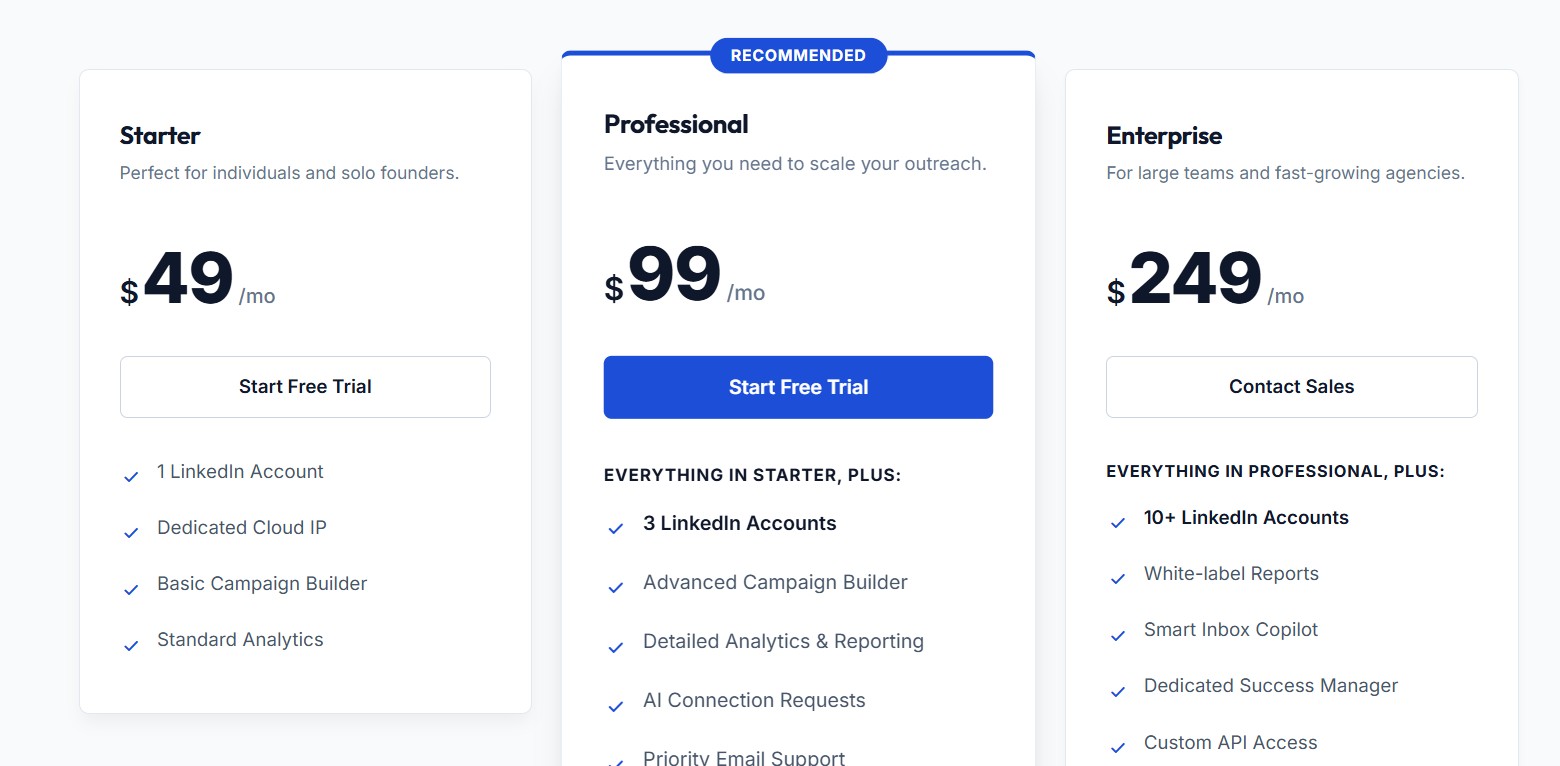
Dealsflow offers accessible pricing that removes the platform-fee surprises and opaque quote-based negotiation that frustrate Cognism buyers. Visit dealsflow.co directly to explore current plans — the platform provides pricing information without requiring a mandatory demo call, which alone sets it apart from most enterprise-tier competitors.
Ideal For
Dealsflow is the strongest fit for SDR teams at growth-stage and mid-market companies, RevOps professionals managing multi-tool stacks who want to consolidate, digital agencies running outbound for multiple clients, and individual contributors who need powerful data access without an enterprise budget.
What Users Say About Dealsflow
Dealsflow has been gaining traction among revenue teams who previously felt priced out of the premium data market. Users consistently highlight the accessible onboarding process, the quality of contact data relative to price, and the absence of the opaque pricing dynamics that define competitors like Cognism and ZoomInfo.
Dealsflow vs. Cognism — Head-to-Head
| Factor | Dealsflow | Cognism |
|---|---|---|
| Pricing transparency | Clear, no hidden platform fees | Opaque, demo required, platform fee applies |
| Annual contract required | Flexible | Yes, with auto-renewal |
| Built-in outreach tools | Yes | No |
| European DNC compliance | Yes | Best-in-class |
| Best geographic market | Global | Europe / EMEA |
| Entry cost for small teams | Accessible | $15,000+ platform fee before per-user costs |
| Free plan or trial | Available | Sample data only |
2. Apollo.io — Best for High-Volume Prospecting on a Budget
What Is Apollo.io?
Apollo.io is one of the most widely used B2B sales intelligence and engagement platforms on the market, and for good reason. It combines a massive contact database with built-in outreach automation, a dialer, AI-assisted workflow tools, and pipeline management — all in a single interface. For teams that want to replace multiple point solutions with one consolidated platform, Apollo is the most accessible entry point in the market. According to Apollo’s own data and third-party review platforms, the platform serves hundreds of thousands of companies, including enterprises like Anthropic, Autodesk, and Docusign.
Key Features
- A contact database of 210 million+ contacts and 30 million+ companies, searchable by job title, company size, industry, location, technographics, funding stage, and more
- Built-in multi-step email sequencing and outreach automation
- AI-powered workflow tools for lead scoring, account research, message generation, and prioritization
- A built-in dialer included in Professional and Organization plans
- Intent data to identify in-market accounts based on behavioral signals
- Real-time CRM sync with Salesforce, HubSpot, Outreach, and SalesLoft
- Chrome extension for prospecting directly from LinkedIn and company websites
- Email warmup, spam testing, and deliverability tools built into the platform
Apollo.io Pricing
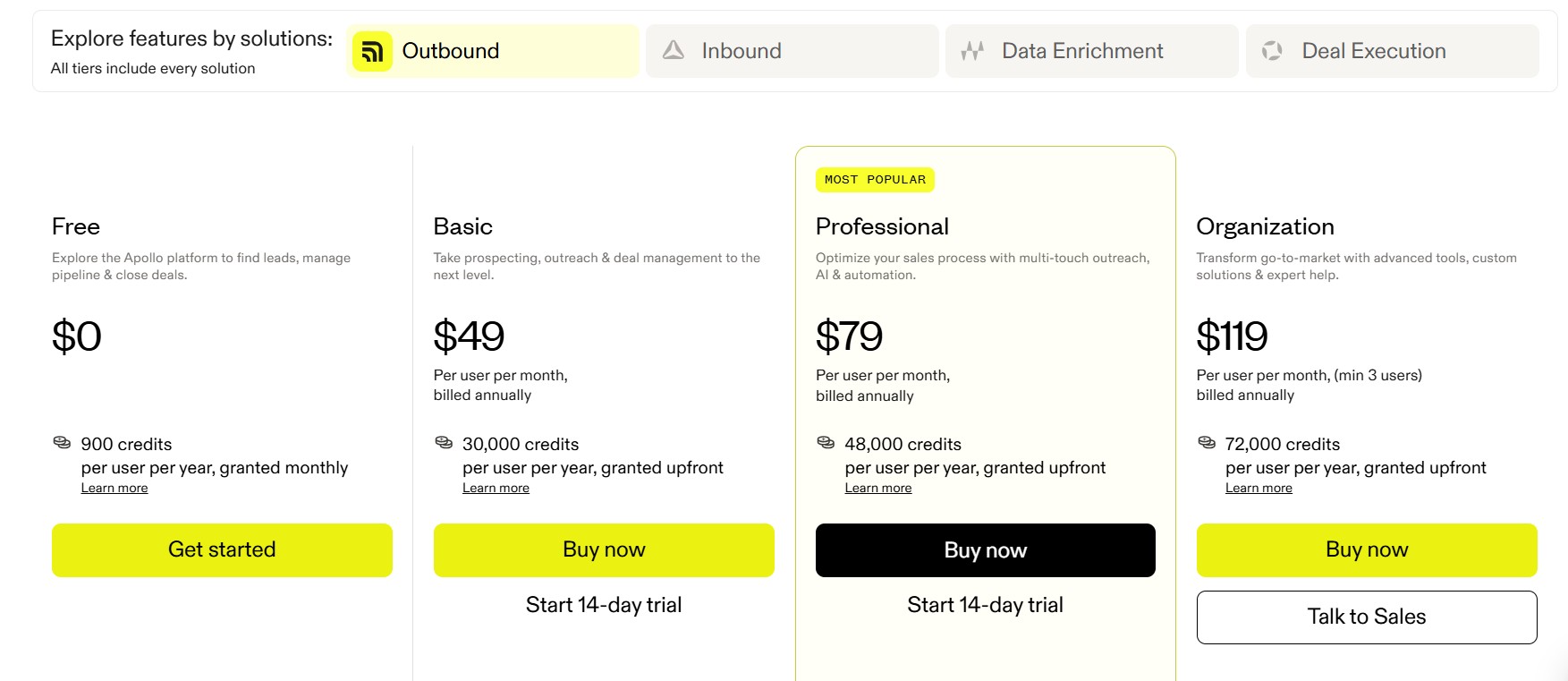
Apollo offers four plans, making it one of the most flexible pricing structures in the B2B data space:
- Free: Limited access — 5 mobile credits and 10 export credits per month. Suitable for individual testing but not for daily prospecting at scale.
- Basic: $49/user/month (annual billing) or $59/user/month (monthly). Includes 5,000 data credits per year, advanced filters, and core CRM integrations.
- Professional: $79/user/month (annual) or $99/month. Includes 10,000 data credits per year, the US auto-dialer, and advanced analytics.
- Organization: $119/user/month (annual), with a minimum of three users. Required for intent data, advanced API access, custom reporting, and international dialing features.
A critical note on Apollo’s credit system: credits expire at the end of each billing cycle with no rollover. Accessing mobile phone numbers costs 8 credits per record, versus 1 credit for a business email. According to multiple user reports and independent analyses, real-world email accuracy on Apollo hovers around 65–70%, with bounce rates of 15–25% in high-volume outreach campaigns. Teams should factor in the potential cost of a supplementary email verification tool when calculating total ownership costs.
Ideal For
Apollo is ideal for startups and growth-stage companies seeking an affordable all-in-one alternative to the Cognism + outreach tool stack. It works particularly well for SDR teams doing high-volume North American prospecting, and for any team that wants a free tier to test data quality before committing.
Limitations vs. Cognism
Apollo’s data is strong for North America but does not match Cognism’s verified mobile number quality for European markets. The credit system creates budget unpredictability for teams with variable month-to-month prospecting volumes, and auto-renewal cancellation requires 60 days’ written notice — a point flagged repeatedly on Trustpilot reviews.
Apollo.io vs. Cognism — Head-to-Head
| Factor | Apollo.io | Cognism |
|---|---|---|
| Starting price | $49/user/month | ~$15,000 platform fee + per-user costs |
| Free plan | Yes | No |
| Built-in email sequencer | Yes | No |
| European mobile data quality | Moderate | Best-in-class |
| North America coverage | Strong | Moderate |
| Contract flexibility | Monthly or annual | Annual only |
| Credit system | Yes (with expiry) | No (fair-use model) |
3. ZoomInfo — Best for Enterprise Teams Needing Deep Firmographic Data
What Is ZoomInfo?
ZoomInfo is the dominant force in B2B sales intelligence for enterprise teams. With a database of 420 million+ contacts and 145 million+ company profiles, it offers the most comprehensive single-source contact database in the market — particularly for North American coverage. Beyond raw contacts, ZoomInfo has evolved into a full Go-to-Market (GTM) intelligence platform, offering intent data, conversation intelligence, website visitor de-anonymization, sales engagement tools, and AI-powered workflow automation through products like ZoomInfo Copilot and GTM Studio.
ZoomInfo holds a 4.5-star rating on G2 based on more than 9,000 verified reviews, making it one of the most reviewed platforms in the category.
Key Features
- A database of 420 million+ contacts and 145 million companies with verified emails, direct dials, and mobile numbers
- Intent data powered by Bombora, tracking content consumption across a B2B publisher cooperative network to identify in-market buyers
- Org chart mapping to visualize buying committees and multi-stakeholder deal dynamics
- Website visitor intelligence (WebSights) to de-anonymize company-level traffic
- ZoomInfo Copilot: an AI-powered tool that aggregates first- and third-party signals to recommend who to contact, when to engage, and what message to send
- Job posting pattern analysis and funding signal tracking
- Deep CRM integrations with Salesforce, HubSpot, Marketo, Eloqua, Outreach, and SalesLoft
- SOC 2 and GDPR compliance certification
ZoomInfo Pricing
ZoomInfo does not publish prices publicly and requires a demo call to receive a quote. Based on verified user reports from G2, Reddit, Vendr, and independent analyst sources, pricing structures in 2026 break down roughly as follows:
- Professional: Entry-level plan for small teams. Minimum three users. Estimated starting cost of approximately $14,995/year. Includes basic contact and firmographic data, but no mobile phone numbers or intent data.
- Advanced: Growing team plan. Approximately doubles the credit allocation versus Professional and adds mobile phone number access and more advanced filtering. Intent data and org charts remain paid add-ons.
- Elite: Enterprise plan with ZoomInfo Copilot, AI-powered pipeline management, and priority support. Minimum budget estimated at $40,000/year or higher.
Important caveats: All ZoomInfo plans require annual contracts. Contracts auto-renew with a 60–90 day cancellation window. Missing that window locks the team in for another year. Intent data is available as a separate paid add-on starting at approximately $5,000–$10,000/year on top of the base contract.
Ideal For
ZoomInfo is purpose-built for large enterprise sales organizations running account-based motions with $50,000+ ACV deals. If your team has a $50,000+ data budget, sells into complex multi-stakeholder buying committees, and relies on intent signals to time outreach, ZoomInfo earns its premium price. It is the best single-source B2B database money can buy for North America-focused teams.
Limitations vs. Cognism
ZoomInfo is significantly more expensive than Cognism for equivalent team sizes. Its minimum entry point of roughly $15,000/year for three users, combined with annual contracts and add-on costs for intent data, makes it inaccessible for SMBs and early-stage teams. Additionally, ZoomInfo is a data layer, not an execution tool — teams still need separate sales engagement platforms to do anything with the data, just as they do with Cognism.
ZoomInfo vs. Cognism — Head-to-Head
| Factor | ZoomInfo | Cognism |
|---|---|---|
| Database size | 420M+ contacts | 400M+ contacts |
| North America coverage | Best-in-class | Moderate |
| European coverage | Strong | Best-in-class |
| Intent data | Included (add-on fee) | Available via Bombora integration |
| Built-in execution tools | Yes (engagement suite) | No |
| Minimum entry cost | ~$14,995/year | ~$19,500/year (platform fee + 3 users) |
| SMB-friendly | No | No |
| Free plan | Lite tier (limited) | No |
4. Lusha — Best for Quick, No-Fuss Contact Enrichment
What Is Lusha?
Lusha is one of the most widely adopted B2B contact data platforms among individual sales professionals and small-to-mid-sized teams, with over 2.6 million users worldwide according to the company’s own figures. Its core value proposition is simplicity and speed: through a highly regarded Chrome extension, users can surface verified email addresses and direct dial numbers from LinkedIn profiles and company websites in seconds, without interrupting their prospecting flow to switch between multiple tabs or platforms.
Lusha has evolved beyond its origins as a simple contact lookup tool. As of 2026, the platform includes an AI-powered prospecting database, intent data, job change alerts, CRM enrichment, and an outreach sequencing module. It holds a 4.0/5 rating on G2 based on nearly 400 verified reviews, with users consistently praising the tool’s ease of use and data accuracy for quick enrichment tasks.
Key Features
- A B2B contact database of 100 million business profiles and 15 million company profiles
- Chrome extension for one-click contact enrichment directly from LinkedIn and company websites
- Real-time data verification through third-party validation and Lusha’s community-sourced database
- AI-powered Playlists that automatically surface and refresh prospect lists matching your ICP
- Intent data to identify accounts actively researching solutions in your category
- Job change alerts that notify users when key contacts move roles — a valuable trigger for outreach
- CRM integrations with Salesforce, HubSpot, Zoho, SalesLoft, and Pipedrive
- GDPR and CCPA compliance certification
- Bulk export and list-building functionality for larger prospecting campaigns
Lusha Pricing
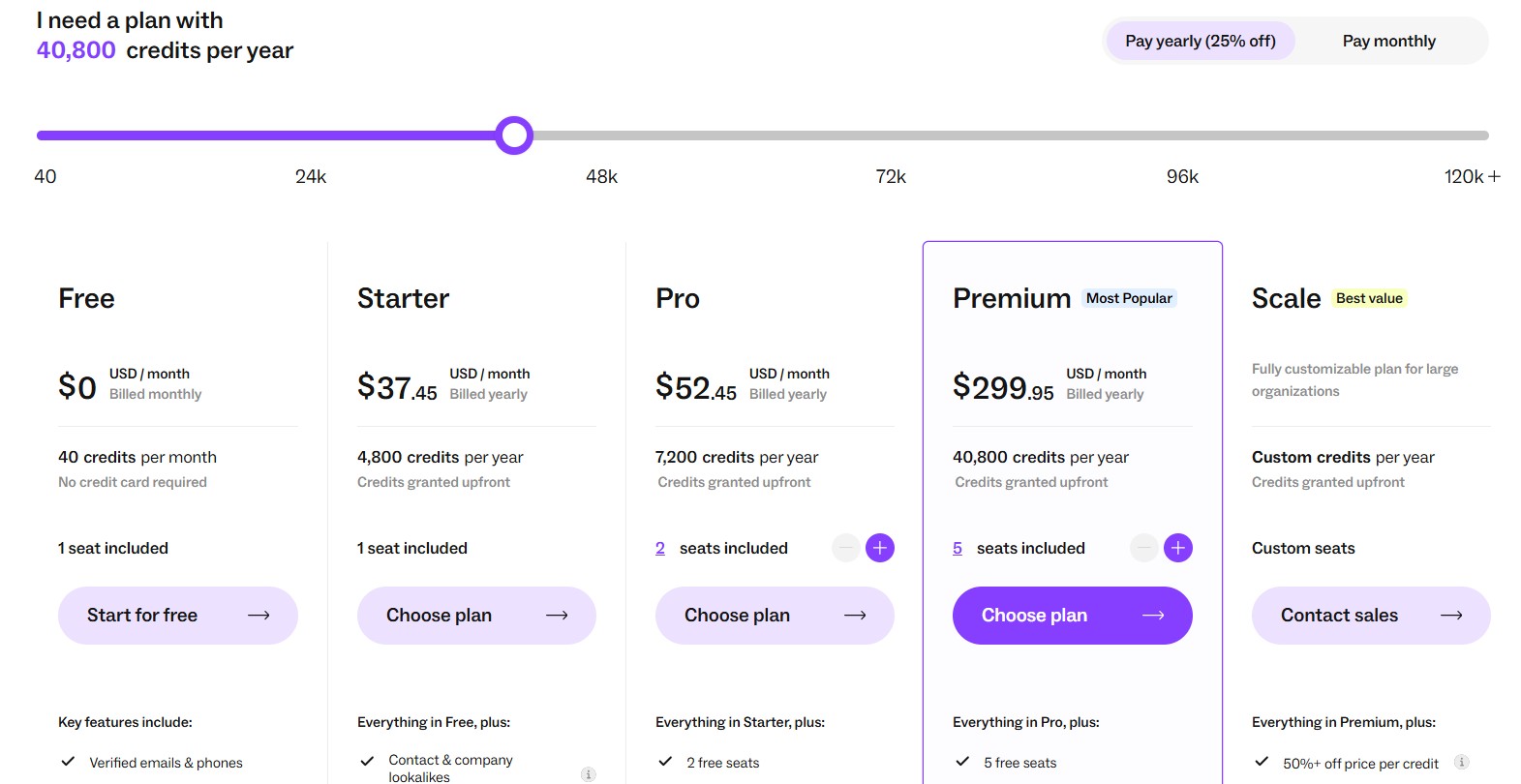
Lusha offers four plans with transparent pricing — a meaningful differentiator from Cognism’s opaque, demo-required model:
- Free: Limited monthly credits. Suitable for low-volume individual use or initial testing.
- Pro: Starting from approximately $36/user/month (annual billing). Includes expanded credit allocation, advanced search filters, and CSV export.
- Premium: Higher credit volumes and additional features for growing teams.
- Scale: Custom pricing for larger teams with high-volume needs, dedicated account management, and advanced API access.
Lusha’s data accuracy rate is reported at approximately 81%, which is above industry average but below the 95% guarantee offered by platforms that employ human verification processes. For context, Lusha sources its data from social media feeds, public databases, government sources, and a volunteer community verification network.
Ideal For
Lusha is the strongest fit for individual SDRs and small teams that live on LinkedIn and need fast, frictionless access to contact data while browsing profiles. It is particularly well-suited for teams that want a GDPR-compliant tool without the enterprise price tag, and for organizations looking to enrich existing CRM records with fresh contact details.
Limitations vs. Cognism
Lusha’s credit-based limits can frustrate high-volume prospectors who hit their monthly ceiling before the billing cycle resets. Users on G2 frequently mention that scaling a full SDR team on Lusha can become expensive as credit demand grows. Data coverage for contacts outside North America and Europe — particularly in Asian markets — is also an acknowledged gap.
Lusha vs. Cognism — Head-to-Head
| Factor | Lusha | Cognism |
|---|---|---|
| Starting price | Free; Pro from ~$36/user/month | ~$15,000 platform fee + per-user costs |
| Free plan | Yes | No |
| Chrome extension | Yes — a core strength | Yes |
| Data accuracy | ~81% | ~98% for Diamond Data® contacts |
| European compliance | GDPR/CCPA compliant | Best-in-class (15+ DNC lists) |
| High-volume prospecting | Credit limits apply | Fair-use model (no hard credit limit) |
| Built-in outreach tools | Basic (Engage module) | No |
5. UpLead — Best for Verified Emails with Real-Time Validation
What Is UpLead?
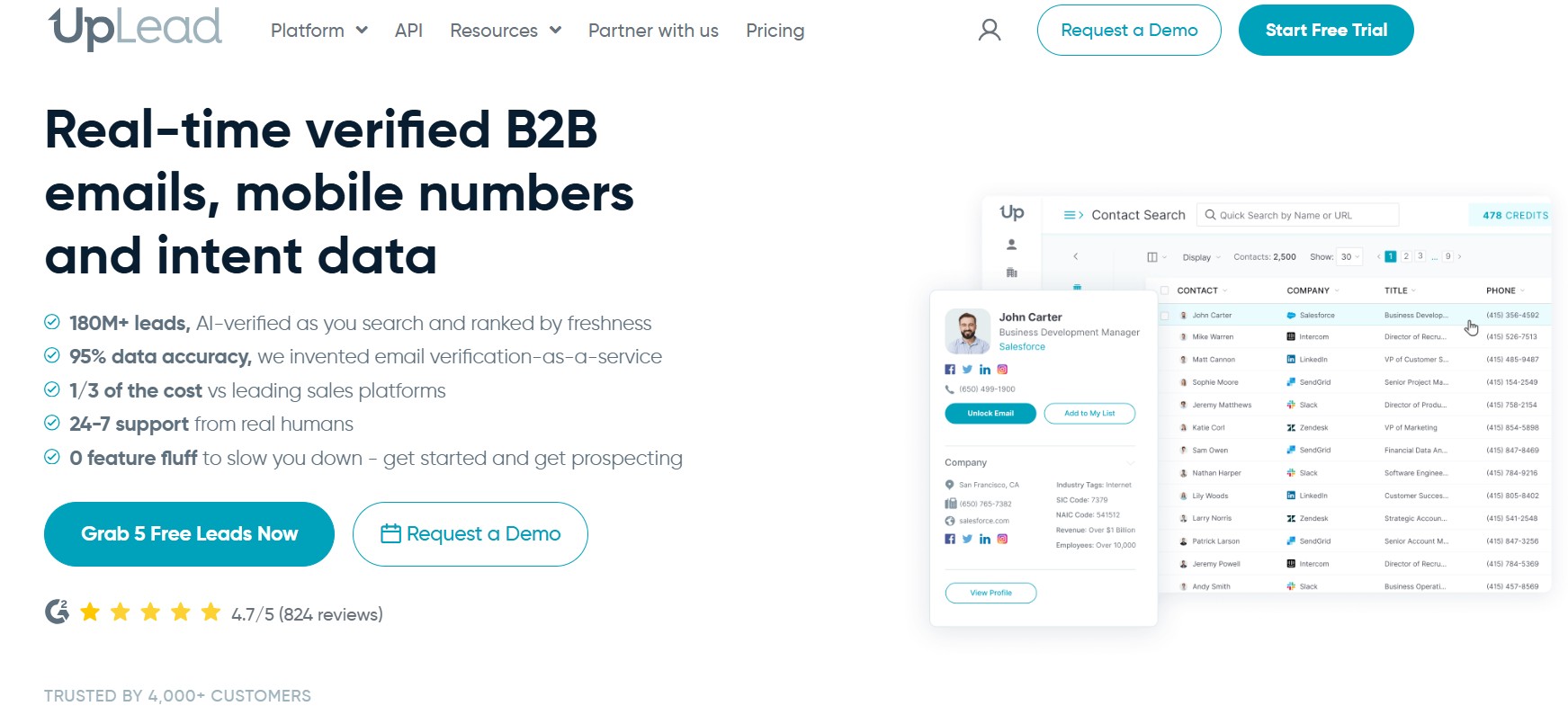
UpLead takes a distinctly different approach to data quality than most B2B contact databases. Rather than building the largest possible database and accepting a certain percentage of inaccuracy, UpLead validates every email address at the moment of download — in real time. This means that when you export a contact from UpLead, the email address has just been verified as deliverable before the credit is consumed. If the email cannot be verified, no credit is charged.
The platform provides access to contacts and company data from over 200 countries worldwide, making it one of the more globally comprehensive options on this list. UpLead offers a 95% data accuracy guarantee, a figure it backs up with its real-time verification process rather than periodic re-verification cycles. It is a particularly strong fit for teams that have experienced high bounce rates with platforms that rely on cached or periodically updated contact records.
Key Features
- Real-time email verification at the point of download — you only pay credits for valid emails
- A global database covering contacts across 200+ countries with advanced search filters
- 95% data accuracy guarantee backed by real-time verification methodology
- Technographic data to identify prospects based on the tools and technologies their companies use
- Intent data to surface accounts actively researching solutions in your product category
- Competitor intelligence features for building lists based on technographic profiles
- CRM integrations with Salesforce, HubSpot, Zoho, Pipedrive, and others
- Robust API access for teams that need to integrate UpLead data into custom workflows or enrichment pipelines
- Account-based marketing (ABM) list-building capabilities
UpLead Pricing
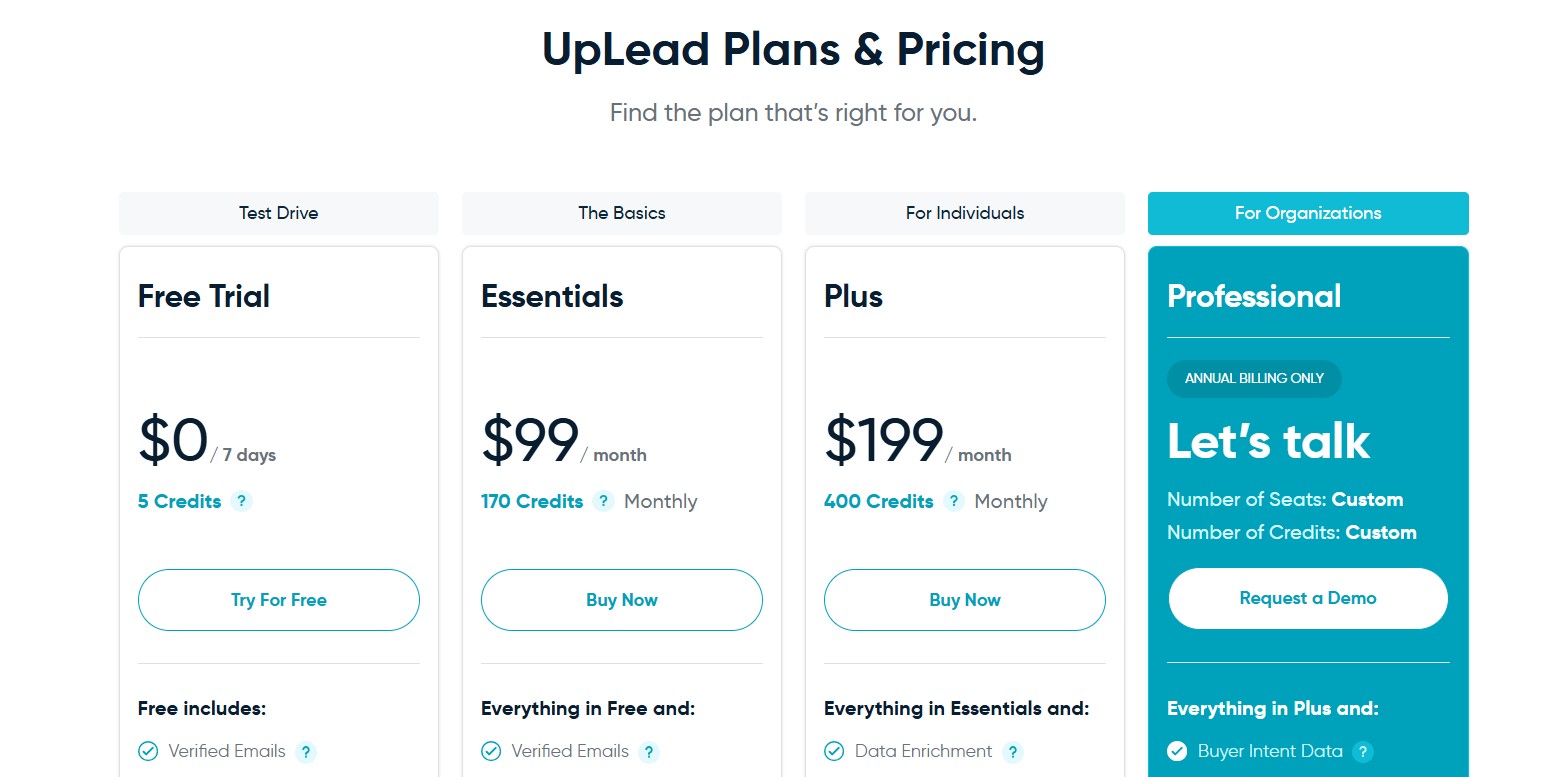
UpLead’s pricing is transparent and publicly available — another contrast to Cognism’s quote-based model:
- Free Trial: 5 credits to test the platform against your actual ICP before committing to any paid plan.
- Essentials: $99/month (annual billing). Includes 170 credits per month, access to all filters, and standard CRM integrations.
- Plus: $199/month (annual). Includes 400 credits, technographic filters, and intent data.
- Professional: Custom pricing for larger teams with high-volume needs, dedicated support, and advanced API access.
UpLead’s per-credit pricing reflects its verification-first model. Because credits are only consumed for validated contacts, the effective cost per usable lead is often lower than platforms with larger credit allocations that include a significant percentage of unverifiable records.
Ideal For
UpLead is the best choice for teams where email deliverability is a critical metric — typically teams running high-volume cold email campaigns where a 15–25% bounce rate would damage sender reputation. It is also an excellent option for teams that have been burned by inaccurate data from larger databases and want a confidence guarantee before spending their prospecting budget.
Limitations vs. Cognism
UpLead’s database is smaller than Cognism’s 400 million+ contact pool. For teams targeting niche industries or needing very high contact volumes for large SDR teams, the credit-based model can also become a constraining factor at scale. UpLead does not include built-in outreach or sequencing tools.
UpLead vs. Cognism — Head-to-Head
| Factor | UpLead | Cognism |
|---|---|---|
| Starting price | $99/month (annual) | ~$15,000 platform fee + per-user costs |
| Free trial | Yes (5 credits) | Sample data only |
| Data accuracy guarantee | 95% (real-time verified) | ~98% for Diamond Data® tier only |
| Verification timing | Real-time at download | Periodic manual verification |
| Global coverage | 200+ countries | Strong EMEA, moderate North America |
| Built-in outreach | No | No |
| Contract flexibility | Annual | Annual only |
6. LeadIQ — Best for SDR Teams Running Personalized Outreach at Scale
What Is LeadIQ?
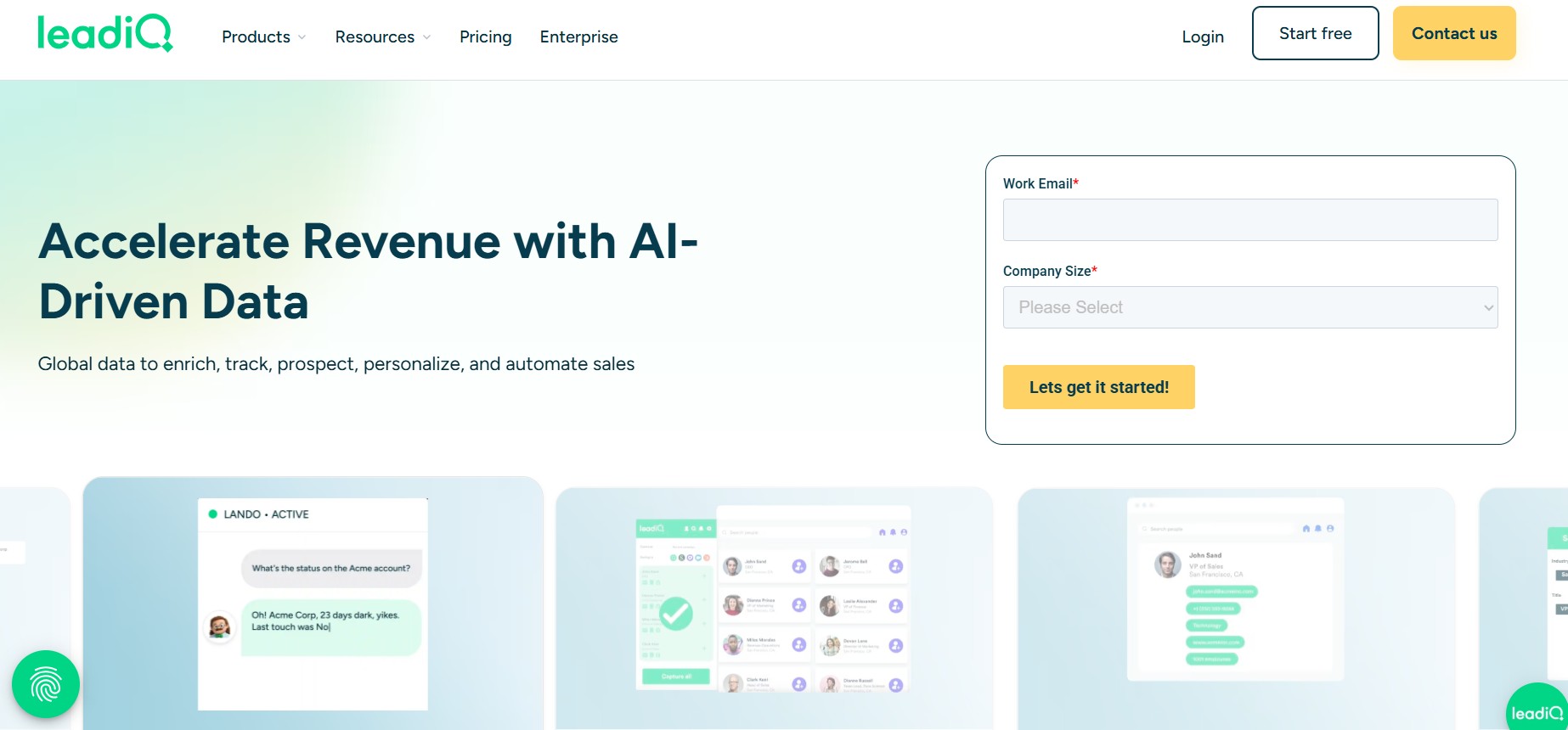
LeadIQ is a B2B sales intelligence and prospecting platform built specifically around the workflow of an SDR who lives inside LinkedIn Sales Navigator. Its central design philosophy is speed and workflow efficiency: rather than requiring reps to open a separate tool, build a list, and then manually transfer data into a CRM and a sequencer, LeadIQ’s Chrome extension allows users to capture verified contact data from a LinkedIn profile and sync it directly to their CRM or sales engagement platform in a single click.
Founded in 2015 and backed by over $40 million in funding from investors including Eight Roads Ventures and Cathay Innovation, LeadIQ serves more than 1,000 teams as of 2025 and holds a 4.2/5 rating on G2 based on more than 1,100 verified reviews.
Key Features
- Chrome extension for one-click lead capture from LinkedIn, LinkedIn Sales Navigator, and company websites — with direct sync to CRM and sales engagement platforms
- Multi-source email enrichment that queries nine separate data providers to maximize the probability of finding a valid address for each prospect
- Confidence scoring for emails, helping reps prioritize which contacts are safe to send to without additional verification
- Champion tracking: LeadIQ monitors job changes for tracked contacts and alerts reps when key stakeholders move to new companies — creating a natural, warm reason to re-engage
- Scribe: an AI writing assistant that generates personalized prospecting messages using context from the prospect’s profile, company, and recent activity
- Tracked Accounts: users can follow specific companies and receive alerts when relevant signals occur
- CRM integrations with Salesforce, HubSpot, Outreach, and SalesLoft
- GDPR and CCPA compliant data sourcing from hundreds of public and private sources, with all suppliers passing a compliance review
LeadIQ Pricing
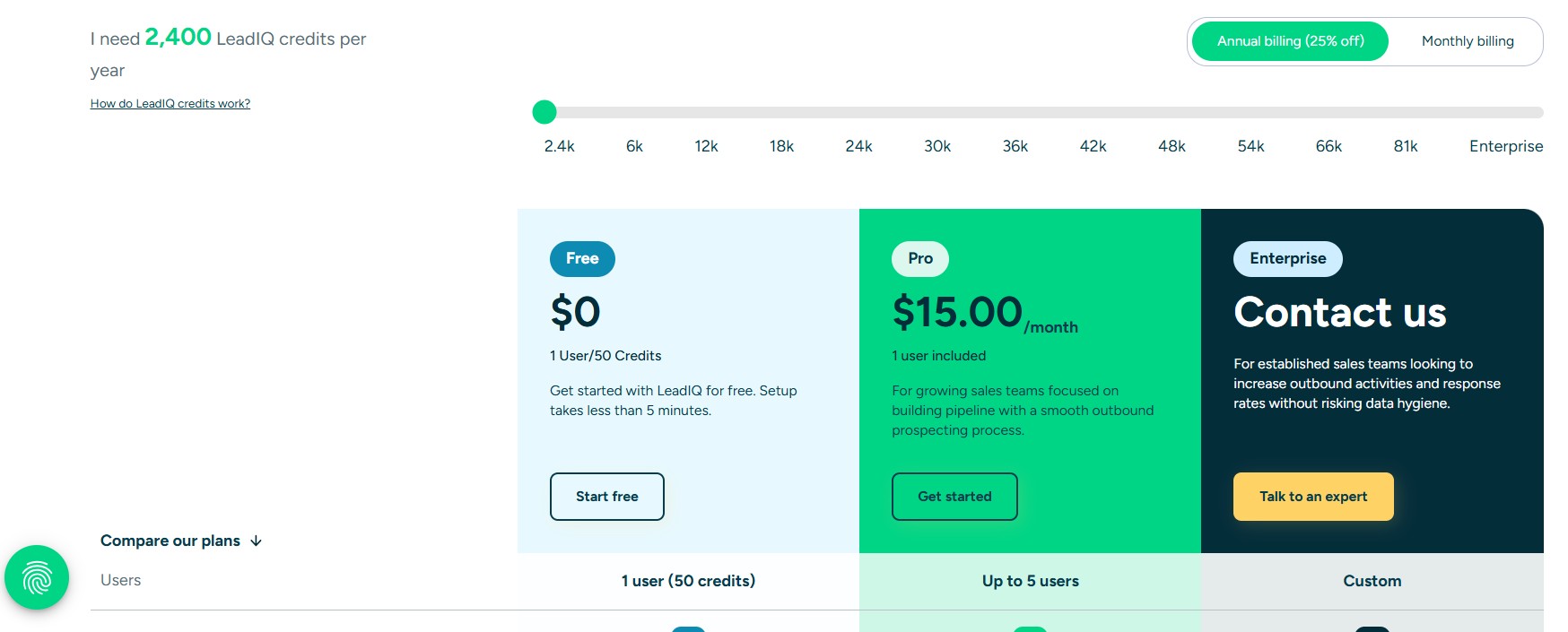
LeadIQ structures pricing across four tiers:
- Free: 50 verified emails and 5 phone numbers per month. Suitable for small teams testing the platform.
- Essential: $36–$45/user/month (pricing varies based on annual commitment and negotiation). Includes 1,000 emails and 50 phone numbers per month.
- Pro: $79/user/month. Includes 2,000 emails, 100 phone numbers, and access to the Scribe AI writing assistant.
- Enterprise: Custom pricing with 10,000 emails, 200 phone numbers per month, and dedicated account management.
According to Vendr and independent deal data from 93 documented purchases, the median LeadIQ contract value is approximately $26,400 per year, though costs range from $6,096 to $58,240 depending on team size and negotiated terms. Organizations that negotiate actively can save an average of 21% off initial quoted prices.
Ideal For
LeadIQ is the best choice for SDR teams whose primary prospecting channel is LinkedIn or LinkedIn Sales Navigator, and who want to eliminate the manual copy-paste workflow between LinkedIn, their CRM, and their sequencer. The champion tracking feature is particularly valuable for teams targeting mid-market accounts where personnel movement is frequent and relationship continuity matters.
Limitations vs. Cognism
Phone number accuracy is the most commonly cited limitation in LeadIQ user reviews, with multiple G2 reviewers noting that mobile numbers can be unreliable — particularly for contacts outside North America. The platform does not include native outreach sequencing or a built-in dialer, so teams still need separate execution tools. Data quality also trails Cognism’s Diamond Data® for European contacts specifically.
LeadIQ vs. Cognism — Head-to-Head
| Factor | LeadIQ | Cognism |
|---|---|---|
| Starting price | Free; Pro at $79/user/month | ~$15,000 platform fee + per-user costs |
| Free plan | Yes | No |
| LinkedIn integration | Best-in-class | Good |
| European phone data | Moderate | Best-in-class |
| Champion / job change tracking | Yes | Limited |
| Built-in AI writing assistant | Yes (Scribe) | No |
| Built-in outreach sequencer | No | No |
| Contract flexibility | Annual (with monthly billing option) | Annual only |
7. SalesIntel — Best for Human-Verified Data in North American Markets
What Is SalesIntel?
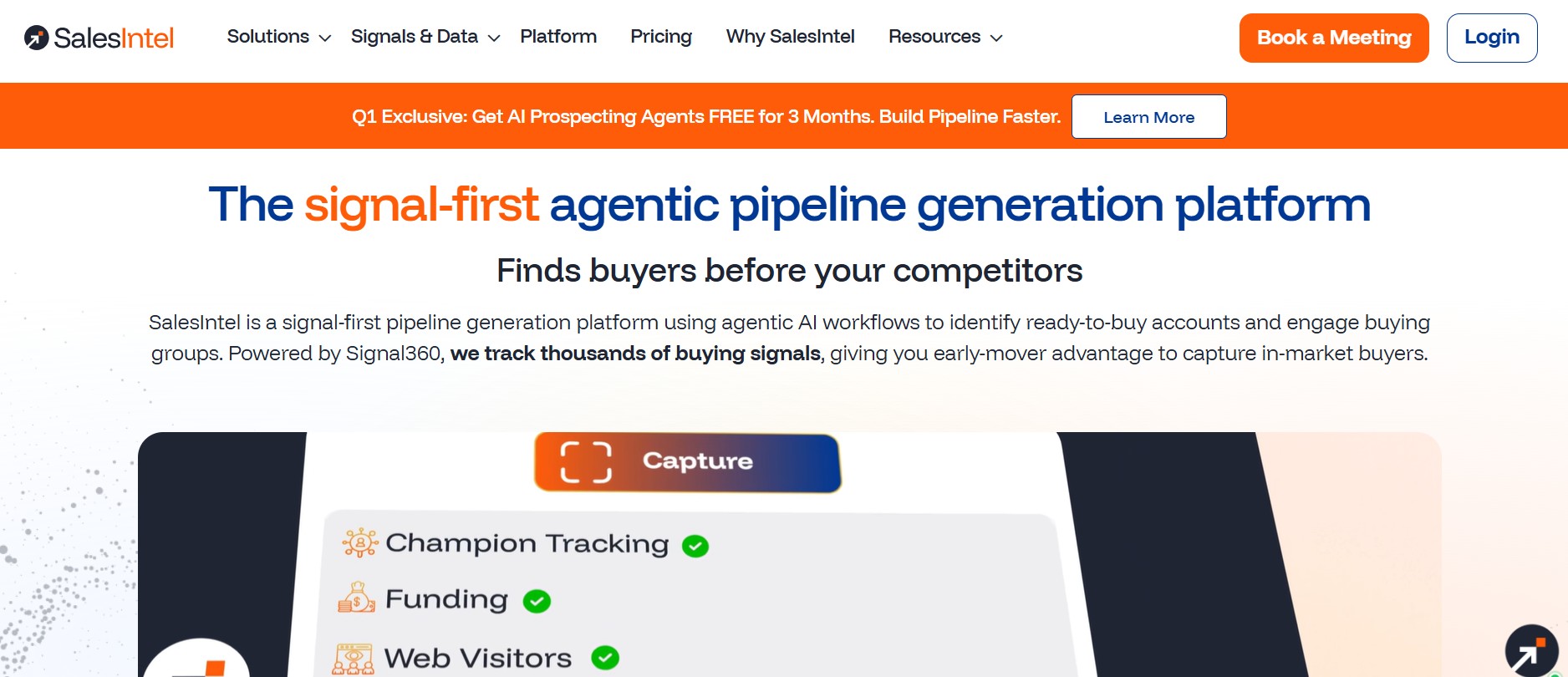
SalesIntel is a B2B sales intelligence platform that has staked its market position on a single, genuinely differentiated claim: more human-verified contacts than any other platform in the industry. While most data providers rely on algorithmic scraping, machine learning, and periodic automated re-verification, SalesIntel employs a team of human researchers who verify every contact record before it enters the database and then re-verify all contacts on a 90-day cycle.
This verification process results in a claimed 95% accuracy rate across the platform’s database. SalesIntel serves more than 5,000 customers and has focused primarily on the North American B2B market, where its coverage depth is strongest. The platform also includes intent data to identify in-market accounts, a Research on Demand (RoD) service for custom data sourcing outside the standard database, and a broad suite of CRM and MAP integrations.
Key Features
- The largest collection of human-verified work mobile numbers in the B2B data industry, according to SalesIntel’s own documentation and independent comparisons
- All contacts re-verified by human researchers every 90 days, maintaining a 95% stated accuracy rate
- Research on Demand (RoD): users can request verified contact or company data not already in the database, with delivery within 24–48 hours — a capability no other platform on this list offers
- Intent data powered by Bombora, identifying companies actively researching topics relevant to your product category
- Advanced search with over 300 filters including industry, company size, revenue, technology stack, job title, and seniority
- Unlimited data access model on current plans — no credit limits for emails, mobile phone numbers, firmographic data, technographic data, downloads, exports, enrichment, or web visitor insights
- CRM integrations with Salesforce, HubSpot, Zoho, SalesLoft, Outreach, Marketo, and Dynamics
- GDPR and CCPA compliant
SalesIntel Pricing
SalesIntel does not publish a public pricing page and requires a conversation with their sales team to receive a quote tailored to team size and feature needs. However, based on available market data, entry-level pricing starts at approximately $5,000/year for smaller teams, making it considerably more accessible than Cognism for budget-conscious buyers.
The platform’s unlimited everything model — which removes credit limits entirely — is a meaningful advantage over Cognism’s fair-use cap and over Apollo’s expiring credit structure. For teams running high-volume outbound campaigns, predictable access without credit anxiety directly reduces operational friction.
Ideal For
SalesIntel is best suited for North American-focused outbound sales teams where data accuracy directly impacts connect rates and meeting volume. It is particularly strong for teams that have experienced poor ROI from algorithmic data providers and want the confidence of human verification behind every dial. The Research on Demand service is uniquely valuable for teams targeting niche verticals or very specific personas that may not be fully represented in standard databases.
Limitations vs. Cognism
SalesIntel’s database skews toward North America, and users have noted that coverage in niche industries and very small companies can be limited relative to larger platforms. European coverage, while present, does not match Cognism’s depth in EMEA markets. Some users on G2 also note that loading times for large searches can be slower than competing platforms.
SalesIntel vs. Cognism — Head-to-Head
| Factor | SalesIntel | Cognism |
|---|---|---|
| Entry price | ~$5,000/year | ~$19,500/year (platform fee + 3 users) |
| Data verification | Human-verified, every 90 days | Machine + manual for Diamond tier |
| Accuracy claim | 95% | ~98% for Diamond Data® |
| Credit limits | None (unlimited model) | Fair-use cap applies |
| Research on Demand | Yes | No |
| North America coverage | Best-in-class | Moderate |
| European coverage | Present but limited | Best-in-class |
| Contract flexibility | Custom | Annual only |
8. RocketReach — Best for Cross-Channel Contact Discovery (Email + Social)
What Is RocketReach?
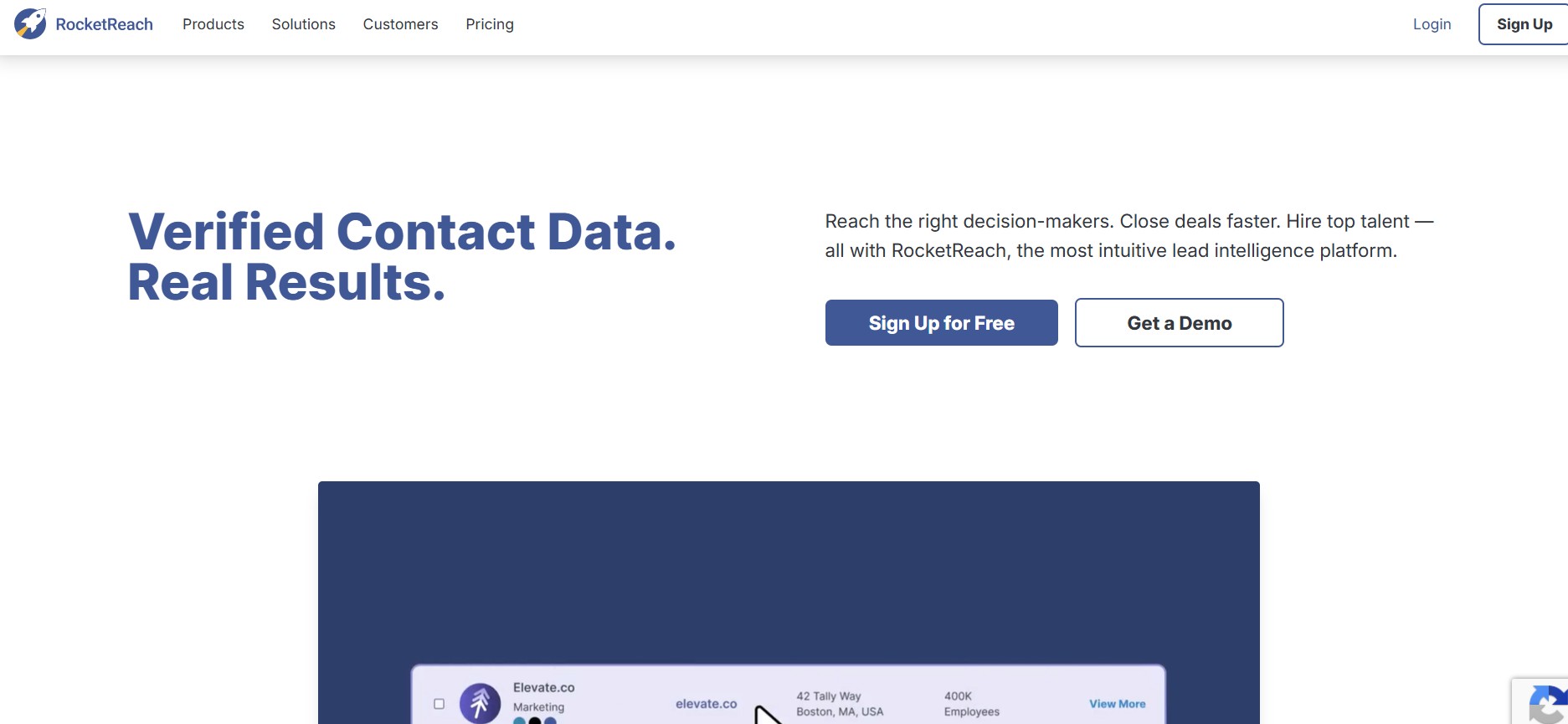
RocketReach takes a different approach to contact discovery than the European-focused databases and LinkedIn-centric tools on this list. Rather than building depth within a defined dataset of corporate contacts, RocketReach has assembled one of the broadest professional contact databases available — 700 million+ professional profiles and 60 million companies — by aggregating data across multiple online channels, including corporate websites, social media platforms, public professional directories, and other web sources.
This breadth gives RocketReach a distinct advantage in situations where other tools come up empty: finding contacts who are not active on LinkedIn, professionals who work at small or niche organizations with limited online presence, and individuals whose primary professional identity exists on platforms beyond the standard corporate B2B ecosystem. The platform is popular for email prospecting, recruiting, and outreach across both sales and talent acquisition functions.
Key Features
- A database of 700 million+ professional profiles and 60 million companies — one of the largest by raw volume
- Contact discovery across LinkedIn, company websites, social platforms, and public professional directories
- Bulk lookup capability for processing large contact lists at scale
- API access for custom integrations and high-volume data needs (available on Ultimate and Enterprise plans)
- Salesforce native integration for direct CRM enrichment (Ultimate plan and above)
- AI-powered prospect recommendations based on search history and behavioral patterns
- Org charts and company trend data on higher-tier plans for account-level intelligence
- Intent data features for identifying in-market prospects (available on advanced tiers)
- Chrome extension compatible with LinkedIn, AngelList, and other sites — not limited to LinkedIn alone
RocketReach Pricing
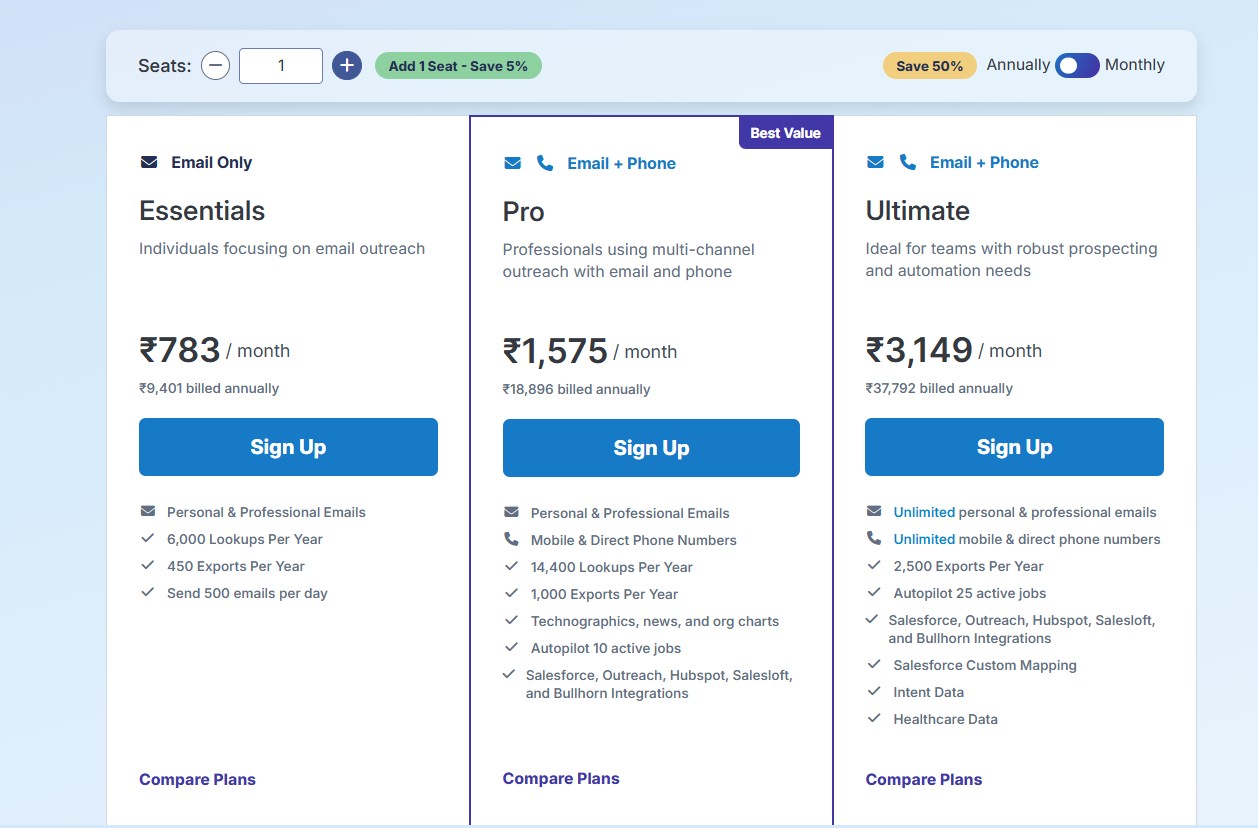
RocketReach publishes its pricing publicly, making it one of the most transparent options in the market. Annual plans offer meaningful savings over monthly billing:
- Essentials: $399/year (approximately $33.25/month). Best for individual email prospecting. Includes 1,200 annual lookups.
- Pro: $899/year (approximately $74.92/month). Adds mobile phone and direct dial access. Includes 3,600 annual lookups.
- Ultimate: $2,099/year (approximately $174.92/month). Includes everything in Pro plus full API access, Salesforce integration, org charts, and advanced automation features. Includes 10,000 annual lookups.
- Custom/Enterprise: Starting at approximately $6,000/year for teams requiring high-volume usage, team management features, and negotiated enterprise terms.
RocketReach only deducts a credit when it finds a verified email or phone number — a user-friendly policy that means you are never charged for a lookup that comes back empty.
Ideal For
RocketReach is the best fit for teams or individuals who need broad contact discovery across channels beyond just LinkedIn. It is particularly strong for recruiting, sales into small or niche businesses, and prospecting in industries where professionals are scattered across platforms rather than concentrated in corporate B2B networks. The transparent, affordable individual-tier pricing also makes it accessible for solo sellers, freelancers, and lean outbound operations that cannot justify enterprise-level data costs.
Limitations vs. Cognism
RocketReach’s 700 million+ profile database is impressive in volume, but the trade-off is accuracy. The platform relies primarily on algorithmic data collection rather than human verification, and independent comparisons place RocketReach’s data accuracy at approximately 85–90%, compared to SalesIntel’s human-verified 95% or Cognism’s 98% for Diamond Data® contacts. For teams where phone number accuracy is mission-critical — cold calling-heavy operations, for instance — this gap matters.
RocketReach vs. Cognism — Head-to-Head
| Factor | RocketReach | Cognism |
|---|---|---|
| Starting price | $399/year (individual) | ~$19,500/year (min. entry with platform fee) |
| Database size | 700M+ profiles | 400M+ contacts |
| Data verification | Algorithmic (no human verification) | Manual for Diamond tier |
| Accuracy | ~85–90% | ~98% for Diamond Data® |
| No-charge empty lookup | Yes | No |
| Phone number quality | Moderate | Best-in-class for Europe |
| API access | Ultimate plan and above | Available |
| Contract flexibility | Annual or monthly | Annual only |
How to Choose the Right Cognism Alternative for Your Team
There is no single best tool on this list. The right choice depends entirely on three factors: who your team is, what you need the data to do, and what you can realistically spend. This section is designed to help you map your situation to the right recommendation without wading through another full review cycle.
Choose Based on Your Team Size
The size of your team shapes which pricing models and product designs actually work for you in practice.
Individual contributor or freelancer: RocketReach at $399/year or LeadIQ’s free plan are the most accessible entry points for solo sellers who need quality contact data without enterprise overhead. Apollo’s free tier is also worth testing for its database breadth.
Small team of two to ten people (SMB): Apollo.io’s Basic or Professional plan delivers strong value for SMBs needing an all-in-one platform without Cognism’s five-figure platform fee. Lusha offers a transparent credit-based model that scales predictably as team size grows. Dealsflow is also worth evaluating for teams that want a simpler, more integrated alternative to the Apollo or Lusha model.
Mid-market team (10–50 seats): SalesIntel’s unlimited model removes the credit anxiety that comes with Apollo and Lusha at mid-market scale, and UpLead’s real-time verification becomes particularly valuable as outbound volume grows and bounce rates start affecting sender reputation. Dealsflow is also a strong contender here for teams wanting consolidated tooling.
Enterprise (50+ seats, complex ABM motion): ZoomInfo’s database depth, intent data network, and integration ecosystem are genuinely best-in-class for large enterprise buying committee-level prospecting. If your budget supports it and your primary market is North America, ZoomInfo is the most powerful single-source solution available.
Choose Based on Your Primary Use Case
What your team actually does with the data matters as much as which data provider you choose.
Outbound prospecting at high volume: Apollo.io’s 210 million contact database with built-in sequencing is the most cost-effective end-to-end solution for volume-focused outbound. SalesIntel’s unlimited model prevents the credit bottlenecks that slow high-volume teams on other platforms.
Account-based marketing (ABM): ZoomInfo’s intent data, org chart mapping, and Bombora integration are designed specifically for ABM motions that require deep account intelligence and buying committee visibility. SalesIntel’s Research on Demand feature also supports ABM by allowing teams to request specific contact data for key target accounts.
CRM enrichment and data hygiene: UpLead’s real-time verification and robust API make it a strong choice for RevOps teams whose primary goal is keeping existing CRM records accurate and current. SalesIntel’s 90-day re-verification cycle also makes it suitable for ongoing database maintenance.
European and GDPR-compliant outreach: Cognism remains genuinely best-in-class for European coverage and DNC list compliance. However, if you are evaluating this list, you have already identified a reason Cognism is not working for your team. In that case, Lusha provides GDPR/CCPA compliance at a more transparent and accessible price, and Apollo.io’s global database covers European contacts with adequate accuracy for many teams.
LinkedIn-centric SDR workflow: LeadIQ is purpose-built for this use case and outperforms every other tool on this list for frictionless LinkedIn-to-CRM capture. The champion tracking feature adds proactive pipeline generation on top of standard contact discovery.
Choose Based on Budget
Your available budget should drive the tier of tool you evaluate. Spending time negotiating with a Cognism sales rep when your total data budget is $3,000/year is not a productive use of anyone’s time.
Free or freemium: Apollo.io’s free tier, LeadIQ’s free plan (50 emails and 5 phones per month), and Lusha’s free plan are the strongest free options. Apollo offers the most functionality on its free tier; LeadIQ’s free plan is best if LinkedIn is your primary channel.
Under $100/month: UpLead’s Essentials plan at $99/month with real-time verification is the best value in this range. Apollo’s Basic plan at $49/user/month is the strongest overall alternative if you need both data and outreach in one tool.
$100–$500/month: Apollo Professional, Lusha Pro or Premium, and UpLead Plus all operate in this range and offer meaningful step-ups in data access, features, and volume limits. RocketReach’s Ultimate plan at approximately $175/month (annual) also fits this tier for teams focused on contact discovery across multiple channels.
Enterprise budget: ZoomInfo for North American enterprise motions. Cognism remains a valid consideration for European enterprise teams that can absorb the platform fee. SalesIntel is the most compelling enterprise alternative if unlimited data access and human verification are non-negotiable requirements.
Final Verdict
The B2B data market in 2026 is more competitive than it has ever been. Cognism still does some things exceptionally well — particularly phone-verified mobile data for European contacts and DNC compliance coverage across 15+ countries. But for the majority of sales and marketing teams that do not have a six-figure data budget, sell primarily into European markets, or require Cognism’s specific compliance architecture, there is no longer a compelling reason to pay $20,000–$50,000+ per year for data alone.
The best overall starting point for most teams — particularly those looking to consolidate their tool stack without paying Cognism’s platform fee — is Dealsflow. It combines accessible pricing, integrated outreach capability, and quality B2B data in a single platform designed for modern revenue teams. Visit dealsflow.co to explore what it can do for your pipeline.
For teams that need the largest database at the most affordable entry price point, Apollo.io remains the strongest value proposition in the market — particularly for North American outbound teams who want both data and sequencing in one tool.
For teams where email deliverability is a critical operational metric, UpLead’s real-time verification model provides unmatched confidence that credits are only consumed for valid, deliverable contacts.
And for enterprise teams with the budget to match, ZoomInfo remains the most powerful single-source B2B intelligence platform available — provided the $15,000+ minimum annual commitment and add-on costs for intent data fit within your GTM investment.
Whatever tool you choose, insist on testing real data against your actual ICP — not a vendor-curated sample set — before signing any annual contract. The best data provider is the one whose database contains your buyers. The only way to know that is to look.
Frequently Asked Questions
Is there a free alternative to Cognism?
Yes — several. Apollo.io offers a free plan with limited monthly credits and access to its 210 million+ contact database. LeadIQ offers a free tier with 50 verified emails and 5 phone numbers per month. Lusha also provides a free plan for individual use. None of these free tiers match the volume or phone verification quality of Cognism’s paid plans, but they allow you to test data quality against your actual ICP before committing to any paid contract.
How much does Cognism cost in 2026?
Cognism does not publish its pricing publicly. Based on compiled data from Vendr, Salesmotion, user reports on G2 and Reddit, and independent pricing analyses, Cognism’s Grow (formerly Platinum) plan carries an estimated platform fee of approximately $15,000 plus per-user licensing at approximately $1,500/user/year. The Elevate (formerly Diamond) plan carries an estimated platform fee of approximately $25,000 plus approximately $2,500/user/year. For a five-user team on the Elevate plan, total annual cost is estimated at approximately $37,500 — before adding any intent data topics or onboarding fees. All Cognism contracts are annual and auto-renew. Significant discounts (reported at 28–52% by Vendr) are available for buyers who negotiate actively.
Which Cognism alternative has the best data accuracy?
For human-verified data, SalesIntel’s 90-day verification cycle and 95% accuracy claim — backed by an actual team of human researchers rather than algorithmic processes alone — represents the most rigorous accuracy standard outside of Cognism’s own Diamond Data® tier. UpLead’s real-time verification at the point of download also delivers consistently high deliverability rates. For phone number accuracy specifically, Cognism’s Diamond Data® verified mobile numbers remain the market benchmark for European contacts.
Is Cognism worth it for small businesses?
For most small businesses, no. Cognism’s platform fee structure means that the minimum effective entry cost for a small team is approximately $19,500/year — a level of commitment that is difficult to justify without a mature, high-volume outbound function already generating consistent ROI. For small teams, Apollo.io, Lusha, UpLead, or Dealsflow offer substantially better value at accessible price points that do not require a five-figure annual commitment before adding any per-user costs.
What is the best Cognism alternative for European B2B data?
This is the most nuanced question on the list. Cognism’s European coverage — particularly for UK and EMEA mobile phone numbers — is genuinely class-leading, and no alternative on this list fully replicates it. Among the alternatives evaluated here, Lusha offers the strongest GDPR/CCPA compliance coverage and good European contact quality for email prospecting. Apollo.io covers European contacts with adequate accuracy for many teams and is significantly more affordable. If you need phone-verified mobile numbers at Cognism’s accuracy level for European contacts, no current alternative is a complete like-for-like replacement.
Can I switch from Cognism without losing my data?
Switching data providers does not affect data you have already exported into your CRM. Contact records stored in Salesforce, HubSpot, or any other CRM remain yours regardless of which vendor you use going forward. The transition cost is operational rather than technical: your team will need to learn a new interface, adjust to a different search and filtering workflow, and potentially rebuild any saved searches or list segments from scratch. Most platforms on this list offer migration support and onboarding assistance to reduce this friction.