


Lusha built its reputation as the go-to browser extension for B2B contact data. Simple to install, easy to use, and reasonably priced for individuals — it was many sales professionals’ first introduction to contact enrichment tools.
But something has shifted.
Sales teams using Lusha in 2026 are running into the same walls repeatedly. Credits running out mid-month with no rollover. Phone numbers that connect to the wrong person or no one at all. European teams quietly carrying legal exposure from data compliance gaps they didn’t fully understand when they signed up. And perhaps most frustrating — a feature ceiling that stops at “find an email address” when modern sales operations need significantly more than that.
The B2B data tool landscape has matured considerably. The alternatives available today don’t just match Lusha — many of them surpass it in the dimensions that matter most: data accuracy, compliance architecture, outreach capability, and overall value for money.
This guide evaluates eight of the best Lusha alternatives available in 2026. Each tool was assessed hands-on across the same criteria — data accuracy, database coverage, GDPR compliance, CRM integration quality, outreach features, pricing structure, and ease of use. The goal is to give you a genuinely useful comparison that helps you make the right decision for your team’s specific situation.
No affiliate rankings. No vendor-sponsored placements. Just an honest evaluation of what each tool actually delivers.
Why Sales Teams Are Searching for Lusha Alternatives in 2026
Before diving into the alternatives, it’s worth being precise about what’s actually driving users away from Lusha — because the right alternative depends entirely on which specific limitation is causing the most pain in your workflow.
The Data Accuracy Problem
Lusha’s data accuracy — particularly for mobile phone numbers — has been cited consistently as a growing concern. High bounce rates from outdated email addresses waste sending domain reputation and SDR time simultaneously. When your team is making 50 calls a day based on Lusha data and a significant percentage connect to wrong numbers or disconnected lines, the productivity cost compounds quickly.
Tools like UpLead have responded to this market gap with explicit accuracy guarantees — refunding credits for emails that bounce. Lusha offers no comparable commitment.
GDPR and Compliance Exposure
This is the issue that doesn’t get discussed loudly enough in B2B sales circles, but carries the most serious consequences. Lusha has faced documented scrutiny regarding GDPR compliance, particularly around the lawful basis for processing personal data of European contacts.
For sales teams operating in or targeting the EU and UK, using contact data without a verified legal basis for processing is not just an ethical question — it’s a regulatory liability. The fines for GDPR violations are real and substantial, and “we got the data from a third-party tool” has not historically been accepted as an adequate defense.
The Credit Model Creates Operational Friction
Lusha’s credit-based pricing model creates a specific, recurring frustration: credits expire, don’t always roll over, and the per-credit cost on lower tiers is high enough that high-volume prospecting becomes genuinely expensive. Teams hitting their monthly credit limit with two weeks left in the month face a binary choice — buy more credits at unfavorable rates or pause prospecting until the month resets.
Feature Depth That Doesn’t Scale
Lusha is fundamentally a contact finder. It finds email addresses and phone numbers. What it doesn’t do — sequences, intent data, CRM enrichment pipelines, organizational chart data, technographic filters — is precisely what modern B2B sales operations increasingly require.
Here’s how the limitations compare
| Limitation | Lusha Reality | What Better Alternatives Offer |
|---|---|---|
| Data accuracy | No guarantee, inconsistent phone data | Verified data + explicit accuracy commitments |
| GDPR compliance | Documented gaps | Built-in compliance frameworks |
| Pricing model | Credit-based with expiry | Seat-based and unlimited options |
| Feature depth | Contact finding only | Sequences + intent + enrichment + CRM |
| Phone number quality | Variable, especially mobile | Verified or specialized phone data |
| Database size | ~45M contacts | 160M to 321M+ depending on tool |
| CRM integration | Basic | Native deep integrations |
How These Tools Were Evaluated
Every tool on this list was evaluated against the same nine criteria:
| Criteria | Why It Matters |
|---|---|
| Data accuracy | Inaccurate contacts waste time and damage sender reputation |
| Database size and geographic coverage | More contacts across more regions = more prospecting opportunities |
| GDPR and compliance architecture | Legal exposure for non-compliant data is real — especially in Europe |
| Email and phone data quality | Both channels matter — tools that only do email have significant gaps |
| CRM integration depth | Data needs to flow to where your team actually works |
| Ease of use and onboarding speed | Complex tools that don’t get used deliver zero ROI |
| Pricing vs. delivered value | Total cost of ownership matters — not just the headline price |
| Outreach features | Does the tool help you act on the data or just find it? |
| Free trial quality | Can you meaningfully evaluate the tool before paying? |
The Best Lusha Alternatives Worth Switching To in 2026
Eight tools. Eight different answers to the Lusha problem. Here’s what each one actually delivers.
1. Dealsflow
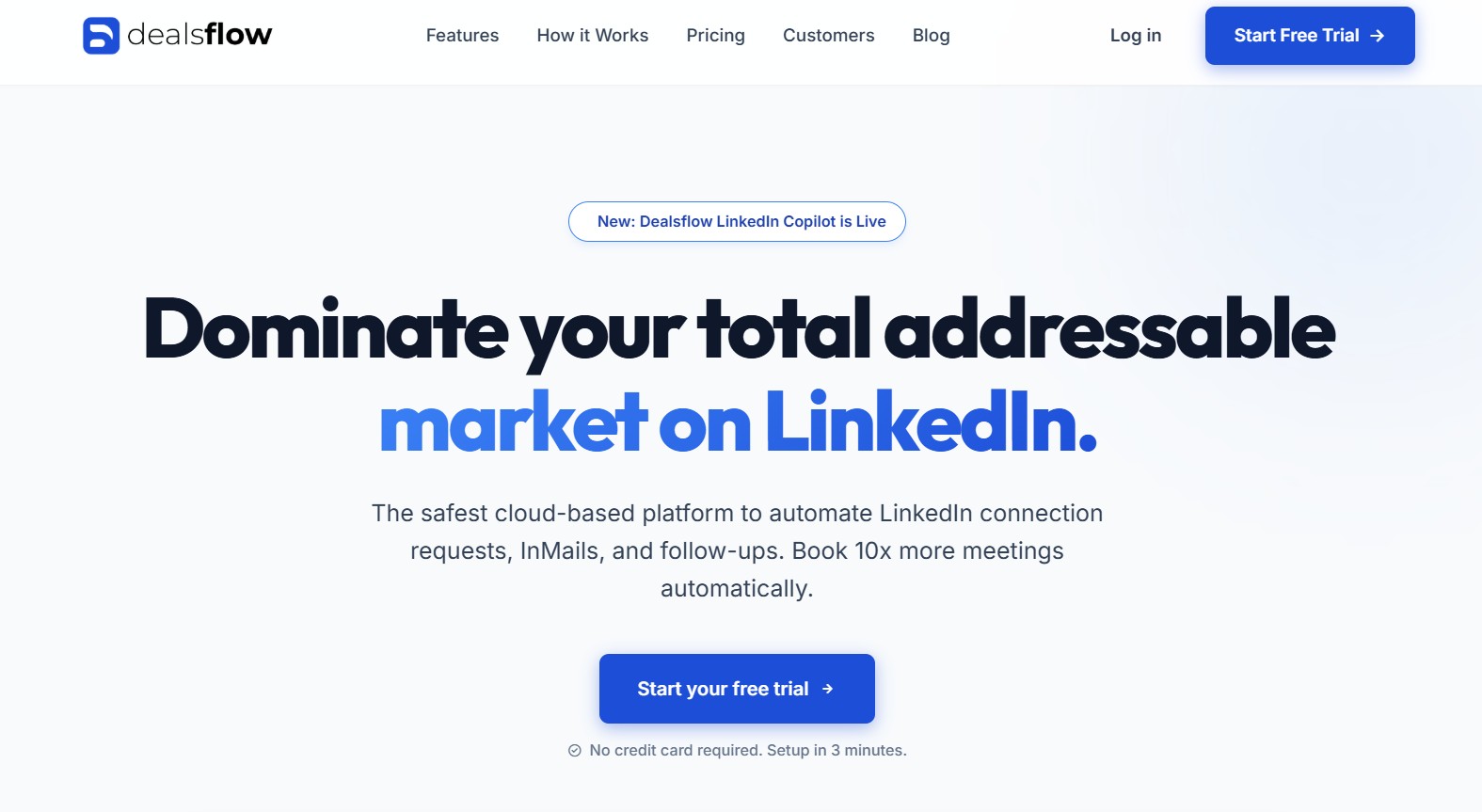
If you’re evaluating Lusha alternatives because you want a single platform that handles contact data, LinkedIn outreach, email sequences, and pipeline management without stitching together three separate tools — Dealsflow belongs at the top of your evaluation list.
Dealsflow is a cloud-based B2B sales engagement platform built around one central idea: the data you find and the outreach you run and the pipeline you manage should all live in the same system. This is a fundamentally different architectural approach from Lusha — which finds contact data and then expects you to export it somewhere else to do anything with it.
What makes Dealsflow stand out as a Lusha alternative:
The built-in CRM is the most immediately impactful differentiator. Every prospect you find through Dealsflow becomes a tracked deal. Every outreach action — LinkedIn connection, email sent, reply received — is logged automatically against the right contact record. For teams currently using Lusha to find contacts, then manually exporting to a CRM, then building outreach sequences in a third tool, Dealsflow eliminates two of those three steps entirely.
The LinkedIn automation component is cloud-based with dedicated IP addresses per account — meaning the safety architecture that browser-based tools like Lusha lack is built in from the start. Campaigns run 24/7 without requiring your computer to be on. Account detection risk is minimized through human-behavior simulation and intelligent daily action limits.
Full feature comparison — Dealsflow vs. Lusha:
| Feature | Dealsflow | Lusha |
|---|---|---|
| Contact data / email finder | ✅ | ✅ |
| Phone numbers | ✅ | ✅ |
| Built-in CRM | ✅ Full pipeline management | ❌ |
| LinkedIn automation | ✅ Cloud-based | ❌ |
| Email outreach sequences | ✅ | ❌ |
| Behavioral sequence logic | ✅ | ❌ |
| GDPR compliance | ✅ Cloud-based, safe architecture | ⚠️ Gaps reported |
| Team collaboration | ✅ Shared inbox + deal assignment | ❌ |
| CRM integration | ✅ Native | Basic export only |
| Analytics | ✅ Campaign + pipeline level | Basic |
| Pricing model | Seat-based | Credit-based |
Pricing: Custom pricing based on team size — contact for a quote. Free trial available.
Pros:
- Eliminates the need to subscribe to a separate CRM, outreach tool, and data tool
- Cloud-based LinkedIn automation with dedicated IPs — significantly safer than browser extensions
- Combined LinkedIn and email sequences in one coordinated workflow
- Built-in pipeline management keeps prospect data, outreach activity, and deal stages synchronized
- Team collaboration features including shared inbox and deal assignment
- Modern, clean interface with logical workflow design
Cons:
- More feature-rich than solo users running occasional contact lookups might need
- Custom pricing requires a conversation rather than instant self-serve signup
- Full ROI requires proper team onboarding
Best for: B2B sales teams and founders currently using Lusha alongside a CRM and a separate outreach tool who want to consolidate all three into one coherent platform. Particularly strong for teams doing coordinated LinkedIn and email outreach with pipeline tracking built in.
2. Apollo.io
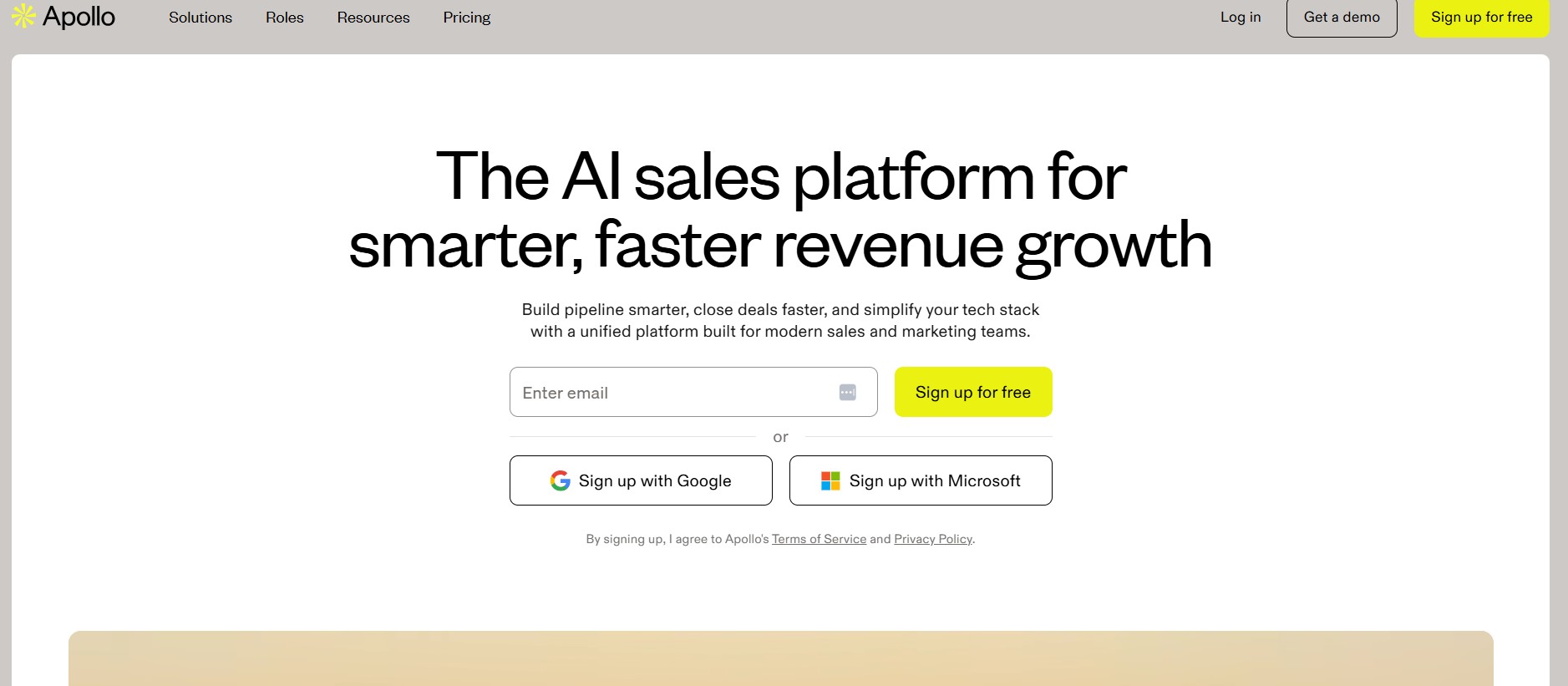
Apollo.io is the most direct functional upgrade from Lusha for teams that want a larger database, built-in outreach sequences, and a genuinely useful free plan — all at a price point that undercuts most enterprise alternatives.
Where Lusha stops at finding contact information, Apollo.io keeps going. Its 275 million+ contact database is already six times the size of Lusha’s. Add built-in email sequences, LinkedIn integration, intent data signals, and a free plan that gives you real functionality without a credit card — and the value proposition over Lusha becomes difficult to argue with.
The database advantage is significant:
| Database Metric | Apollo.io | Lusha |
|---|---|---|
| Total contacts | 275M+ | ~45M |
| Companies covered | 65M+ | ~15M |
| Email data | ✅ High accuracy | ✅ Variable |
| Mobile phone numbers | ✅ | ✅ Variable |
| Geographic coverage | Global | Primarily US |
| Data refresh rate | Continuous | Periodic |
| Intent data | ✅ Built-in | ❌ |
Feature comparison:
| Feature | Apollo.io | Lusha |
|---|---|---|
| Email sequences | ✅ Advanced | ❌ |
| LinkedIn Chrome extension | ✅ | ✅ |
| Intent data | ✅ | ❌ |
| A/B testing | ✅ Professional+ | ❌ |
| CRM integration | ✅ Native Salesforce + HubSpot | Basic |
| Analytics dashboard | ✅ Advanced | Basic |
| Free plan | ✅ Real functionality | Very limited |
| API access | ✅ | ✅ Higher plans |
Apollo.io Pricing:
| Plan | Monthly Price | Annual Price | Key Features |
|---|---|---|---|
| Free | $0 | $0 | 10 email exports, basic sequences, 60 mobile credits/year |
| Basic | $59/user | $49/user | Unlimited email credits, sequences, CRM sync |
| Professional | $99/user | $79/user | Advanced sequences, A/B testing, call recording |
| Organization | $149/user | $119/user | Advanced analytics, custom permissions, SSO |
Pros:
- Largest database of any tool on this list — dramatically more coverage than Lusha
- Built-in email sequences eliminate the need for a separate sales engagement platform
- Generous free plan that actually allows meaningful evaluation
- Intent data layer helps prioritize outreach to companies actively researching solutions
- Native CRM integrations with HubSpot, Salesforce, and Pipedrive
Cons:
- Mobile phone number accuracy varies — email data is stronger than phone data
- Interface can feel overwhelming to first-time users
- Advanced features require Professional plan — Basic has meaningful limitations
Best for: SDRs and small-to-mid sales teams who want contact data and outreach sequences in one platform, particularly those currently paying for Lusha plus a separate email outreach tool and wanting to consolidate.
3. ZoomInfo
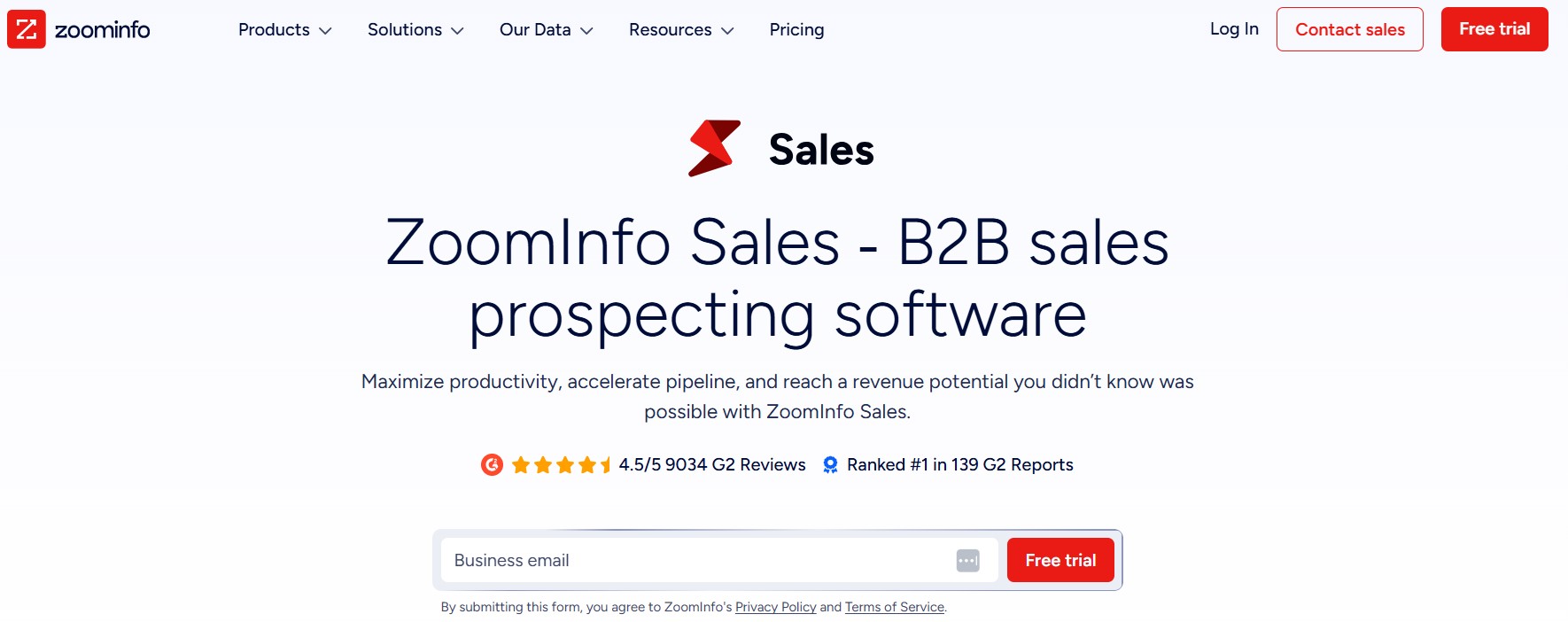
ZoomInfo is in a different category from Lusha — not just a contact finder but a comprehensive B2B intelligence platform used by enterprise sales teams running complex, multi-threaded deal cycles.
If your team is selling to large organizations where you need to understand reporting structures, identify multiple stakeholders, track buying intent signals, and integrate deeply with a Salesforce or HubSpot CRM that your RevOps team has built out carefully — ZoomInfo is the most complete solution available.
The price reflects this. ZoomInfo contracts typically start at $15,000+ annually and scale significantly from there. But for the teams it’s built for, the ROI on intent data alone — identifying companies actively researching your solution before your competitors do — often justifies the investment.
What ZoomInfo offers that Lusha fundamentally cannot:
| Feature | ZoomInfo | Lusha |
|---|---|---|
| Database size | 321M+ contacts | ~45M contacts |
| Proprietary intent data | ✅ Advanced | ❌ |
| Organizational chart data | ✅ Deep hierarchies | ❌ |
| Technographic data | ✅ Technology stack of every company | ❌ |
| Website visitor tracking | ✅ | ❌ |
| Conversation intelligence | ✅ (via Chorus integration) | ❌ |
| CRM integration depth | ✅ Deepest available | Basic |
| Buying committee mapping | ✅ | ❌ |
| Company news and alerts | ✅ Real-time | ❌ |
| GDPR compliance | ✅ | ⚠️ Gaps |
ZoomInfo Pricing:
- Custom enterprise pricing only — no public tiers
- Typical contracts range from $15,000 to $50,000+ annually
- Requires demo and procurement process
- Packages: SalesOS, MarketingOS, TalentOS — each priced separately
Pros:
- Most comprehensive B2B intelligence platform available — nothing comes close on data depth
- Intent data identifies companies actively researching your solution category before your competitors call them
- Org chart data enables multi-threading — essential for enterprise deals
- Real-time company news and alerts create perfect timing for outreach
- Deepest CRM integration of any tool in this comparison
Cons:
- Price is prohibitive for small teams — not realistic under $15K/year
- Annual contract lock-ins are standard — difficult to exit if the tool doesn’t deliver
- Overkill and expensive for teams that just need basic contact finding
Best for: Enterprise and upper-mid-market sales teams running complex multi-stakeholder deals who need intent data, organizational intelligence, and the most comprehensive contact coverage available. Not appropriate for small teams or solo users.
Searching for Lusha Alternatives Based on Specific Needs? Here Are More Options
Not every team needs an all-in-one platform or enterprise-grade intelligence. The following five tools serve more specific use cases — and each one outperforms Lusha in the dimension it specializes in.
4. RocketReach
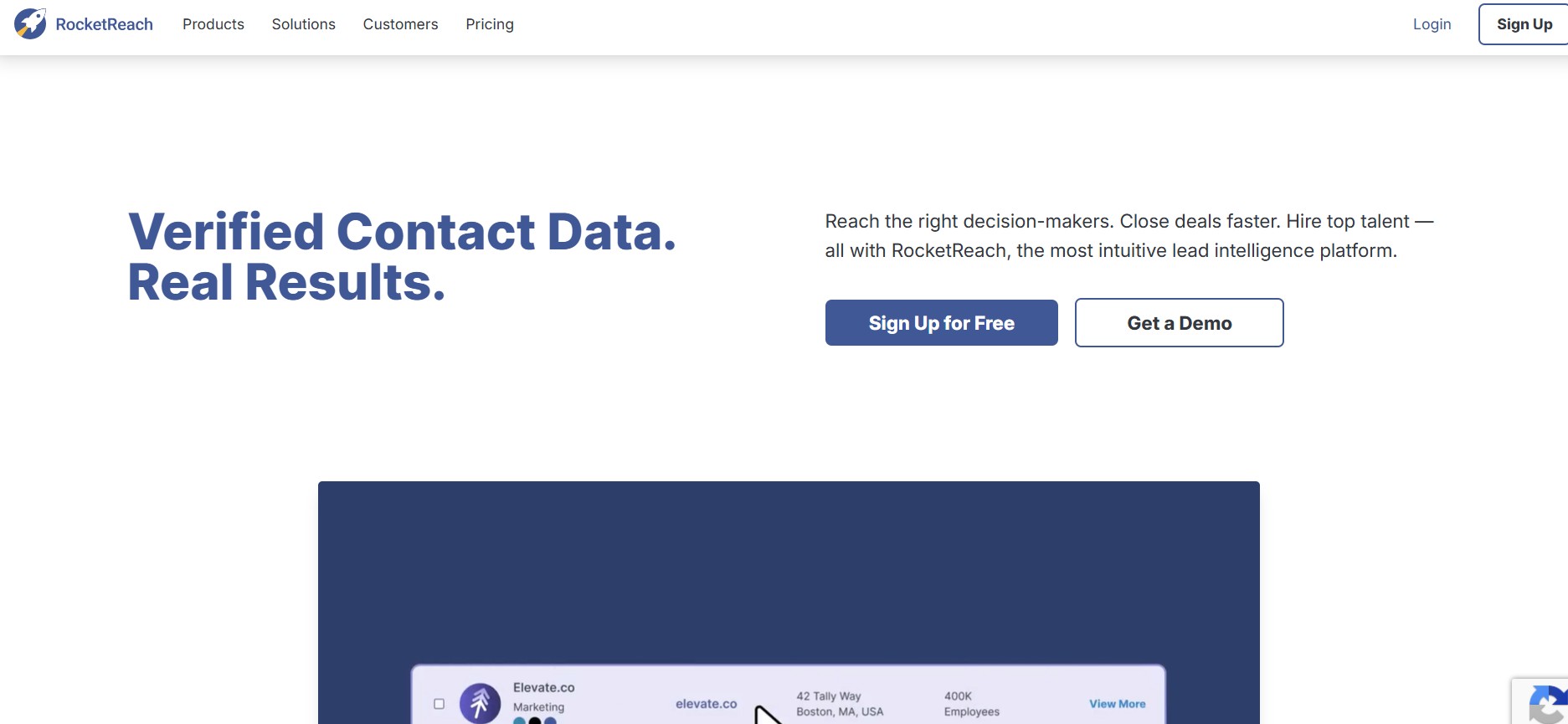
RocketReach is the cleanest, most straightforward contact finder on this list — and for individual SDRs, recruiters, and freelancers who need reliable email and phone data without complexity or enterprise pricing, it’s a compelling alternative to Lusha.
The interface is immediately intuitive. Search by name and company, filter by location, title, or industry, and get verified contact details within seconds. The Chrome extension works across LinkedIn, company websites, and other professional platforms — extending beyond LinkedIn where Lusha is primarily focused.
RocketReach vs. Lusha:
| Feature | RocketReach | Lusha |
|---|---|---|
| Email accuracy | ✅ High | ✅ Variable |
| Phone numbers | ✅ | ✅ |
| LinkedIn integration | ✅ | ✅ |
| Multi-platform search | ✅ (beyond LinkedIn) | Primarily LinkedIn |
| Bulk lookup | ✅ | ✅ |
| API access | ✅ All plans | ✅ Higher plans |
| CRM integration | ✅ HubSpot, Salesforce | Basic |
| Outreach features | ❌ | ❌ |
| Database coverage | 700M+ profiles | ~45M contacts |
RocketReach Pricing:
| Plan | Monthly Price | Annual Price | Monthly Lookups |
|---|---|---|---|
| Essentials | $80/month | $53/month | 80 lookups |
| Pro | $150/month | $100/month | 200 lookups |
| Ultimate | $300/month | $200/month | 500 lookups |
| Teams | Custom | Custom | Volume-based |
Pros:
- Clean, intuitive interface requires zero onboarding time
- Reliable email accuracy with good coverage across industries
- Searches beyond LinkedIn — useful for prospects who aren’t active on the platform
- API access on all paid plans enables developer-built workflows
- Stronger database coverage than Lusha at comparable price points
Cons:
- No outreach features — purely a contact finder
- No intent data or firmographic depth
- Monthly lookup limits feel restrictive for high-volume prospecting teams
Best for: Individual SDRs, recruiters, and freelancers who need a reliable, simple contact finder with clean UI and consistent accuracy — and don’t need outreach sequences or intent data baked in.
5. UpLead
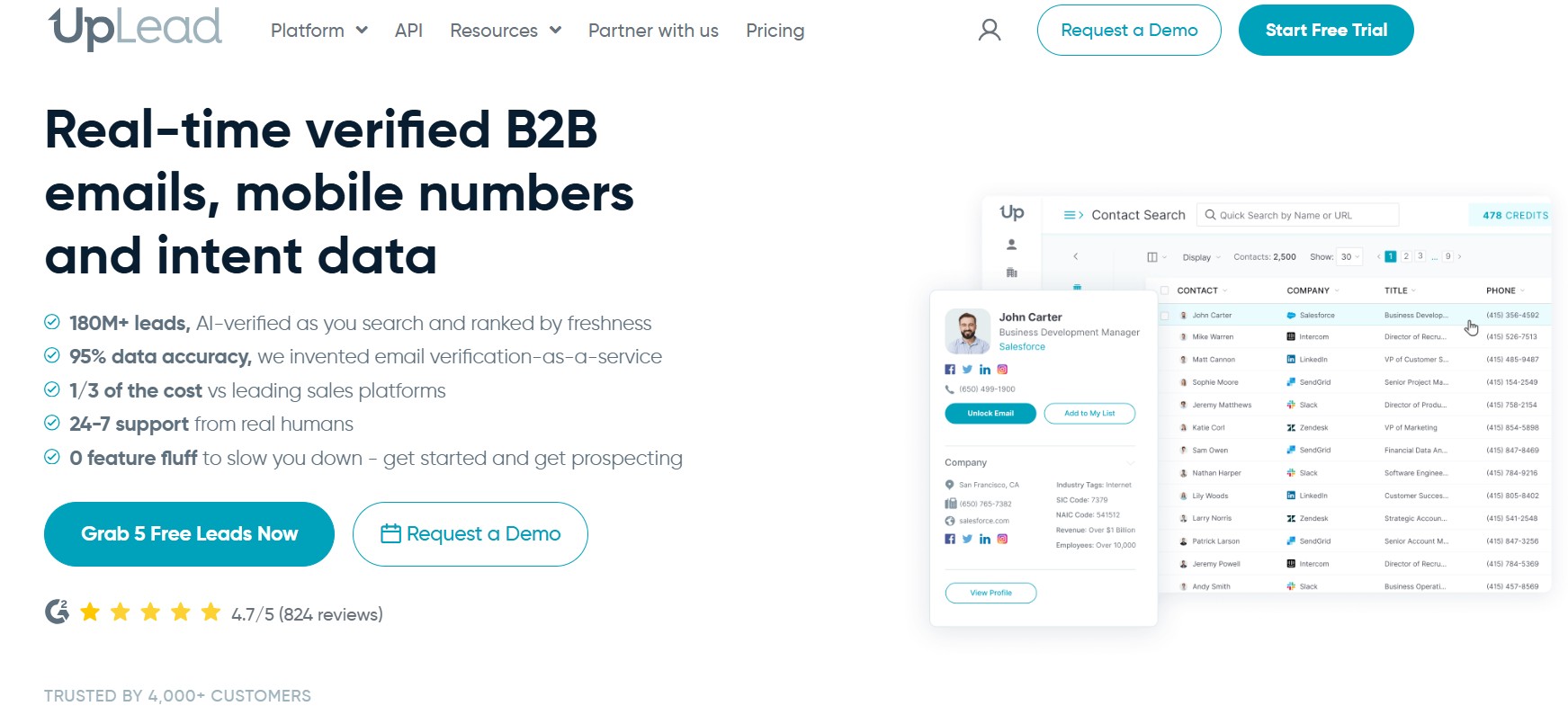
UpLead occupies a unique position in this comparison: it’s the only tool that backs its data quality with an explicit, enforced accuracy guarantee. 95% verified data or your credits are refunded. No other tool on this list offers a comparable commitment.
For teams who’ve experienced the downstream costs of inaccurate contact data — bounced emails that hurt domain reputation, wasted call attempts on disconnected numbers, SDR time lost chasing bad leads — UpLead’s accuracy guarantee changes the ROI calculation fundamentally.
UpLead’s accuracy approach:
Every email exported from UpLead is verified in real-time before delivery. If an email bounces despite this verification, the credit is refunded. This creates a direct financial incentive for UpLead to maintain data quality that Lusha’s credit model doesn’t replicate.
UpLead vs. Lusha:
| Feature | UpLead | Lusha |
|---|---|---|
| Accuracy guarantee | ✅ 95% with refunds | ❌ No guarantee |
| Real-time email verification | ✅ At point of export | ✅ |
| Technographic data | ✅ Technology stack filters | ❌ |
| Intent data | ✅ | ❌ |
| CRM integration | ✅ Native | Basic |
| Chrome extension | ✅ | ✅ |
| Bulk enrichment | ✅ | ✅ |
| Data points per contact | 50+ | Basic |
| GDPR compliance | ✅ | ⚠️ |
UpLead Pricing:
| Plan | Monthly Price | Annual Price | Monthly Credits |
|---|---|---|---|
| Essentials | $99/month | $74/month | 170 credits |
| Plus | $199/month | $149/month | 400 credits |
| Professional | $399/month | $299/month | 1,000 credits |
| Enterprise | Custom | Custom | Unlimited |
Pros:
- 95% accuracy guarantee with credit refunds — the strongest data quality commitment in this comparison
- Real-time verification at the point of export reduces bounce rates significantly
- Technographic filters enable highly targeted prospecting by technology stack
- 50+ data points per contact — significantly richer than Lusha’s basic output
- Clean, straightforward interface with strong filtering capabilities
Cons:
- Smaller database than Apollo or ZoomInfo — coverage gaps in some regions
- Credit model still limits high-volume prospecting
- No outreach sequences — purely a data and enrichment tool
Best for: Teams where email deliverability and data quality are the primary concern — particularly those who’ve damaged their sending domain reputation on inaccurate data and need to rebuild with a trustworthy source.
6. Lead411
Lead411 solves a specific problem that no amount of accurate contact data alone can solve: knowing which prospects to contact first. By integrating Bombora intent data directly into its B2B contact database, Lead411 identifies companies actively researching solutions in your category — so you’re reaching out to buyers who are already in-market rather than blasting your entire addressable market simultaneously.
The practical impact of this is significant. A sales team using intent data to prioritize outreach consistently sees higher connection rates, higher reply rates, and shorter sales cycles — because they’re having conversations with people who are already thinking about the problem their product solves.
Lead411 vs. Lusha:
| Feature | Lead411 | Lusha |
|---|---|---|
| Bombora intent data | ✅ Built-in | ❌ |
| Growth intent triggers | ✅ Hiring, funding, expansion | ❌ |
| Email verification | ✅ Real-time | ✅ |
| Direct dial numbers | ✅ | ✅ Variable |
| Email sequences | ✅ Basic built-in | ❌ |
| CRM integration | ✅ Salesforce, HubSpot, Pipedrive | Basic |
| Chrome extension | ✅ | ✅ |
| GDPR compliance | ✅ | ⚠️ |
| Free trial | ✅ 7 days | ✅ 5 credits |
Lead411 Pricing:
| Plan | Monthly Price | Annual Price | Key Feature |
|---|---|---|---|
| Basic Plus | $99/user | $75/user | 200 exports/month |
| Pro with Bombora | Custom | Custom | Unlimited + full intent data |
| Enterprise | Custom | Custom | Team management + advanced |
Pros:
- Bombora intent data integration is a genuine competitive advantage over Lusha
- Growth trigger signals — hiring, funding rounds, expansions — create natural outreach timing
- Reasonable pricing for the intent data included
- Direct dial numbers included at all tiers
- Basic email sequences built in for simple outreach flows
Cons:
- Database smaller than Apollo.io or ZoomInfo — coverage gaps for some regions and industries
- UI less polished than competitors — functional but not modern
- Full intent data requires the Pro tier — Basic plan is more limited
Best for: Sales teams who want to stop prospecting randomly and start prioritizing outreach to companies actively showing buying signals — especially teams selling solutions with a defined research cycle.
7. Swordfish
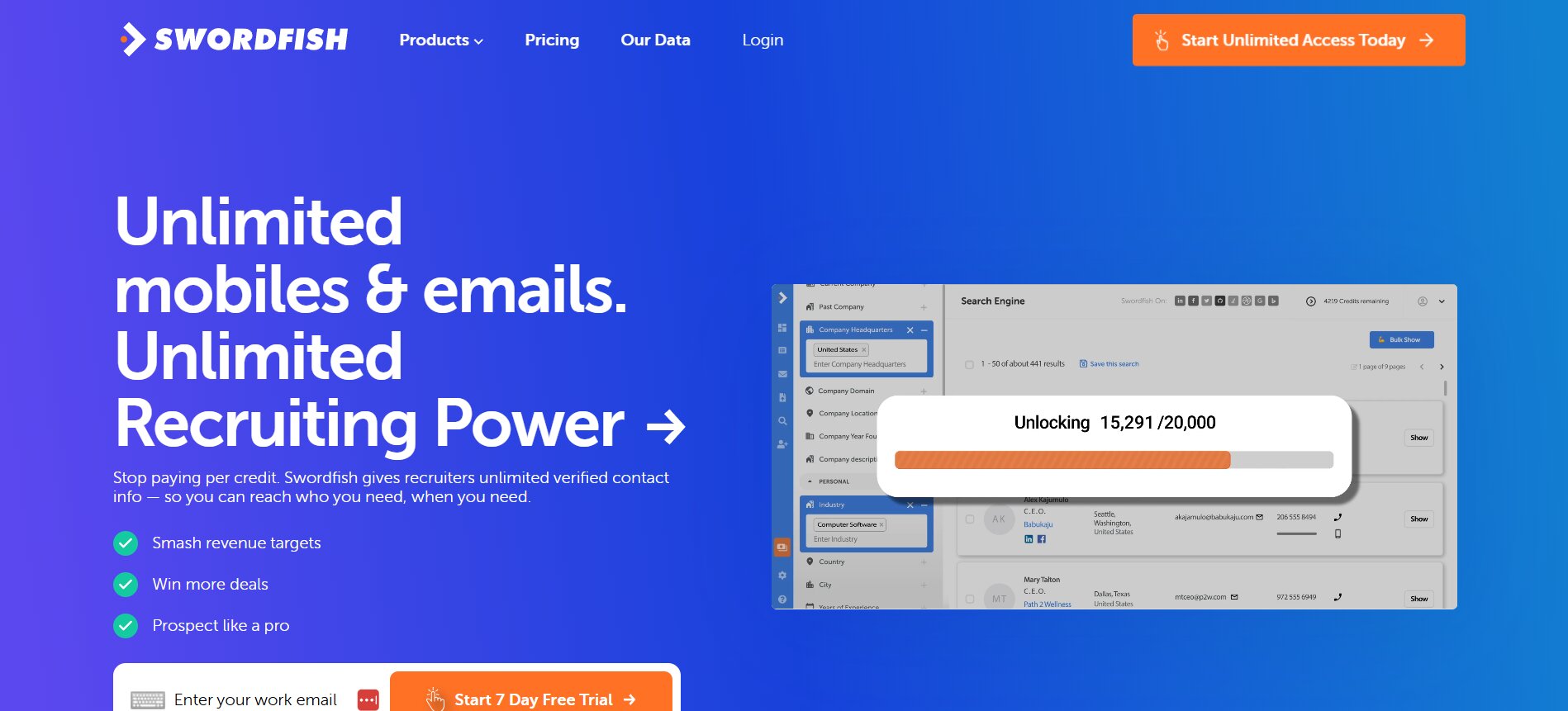
Swordfish exists to solve one specific problem: finding accurate personal cell phone numbers for contacts who are impossible to reach through email alone. If your primary outreach channel is phone — particularly for mid-to-senior contacts who have corporate assistants screening calls — Swordfish provides a data depth that Lusha simply cannot match.
What makes Swordfish different is its reverse search capability and its focus on personal mobile data rather than just corporate direct dials. While most B2B data tools prioritize email as the primary contact vector, Swordfish’s architecture is built around phone data as the primary asset.
Swordfish vs. Lusha:
| Feature | Swordfish | Lusha |
|---|---|---|
| Personal cell phone numbers | ✅ Core specialty | ⚠️ Variable quality |
| Reverse phone lookup | ✅ | ❌ |
| Corporate direct dials | ✅ | ✅ |
| Email finder | ✅ | ✅ |
| LinkedIn Chrome extension | ✅ | ✅ |
| Real-time verification | ✅ | ✅ |
| Data points accessed | 3.5B+ | ~45M contacts |
| Social profile search | ✅ Multi-platform | LinkedIn-focused |
| GDPR compliance | ✅ | ⚠️ |
Swordfish Pricing:
| Plan | Monthly Price | Credits Included | Key Feature |
|---|---|---|---|
| Starter | $49/month | 300 credits | Email + phone finder |
| Pro | $149/month | 1,000 credits | Full access + bulk search |
| Enterprise | Custom | Unlimited | API + team management |
Pros:
- Best personal cell phone data coverage of any tool in this comparison
- Reverse phone lookup — find contact details starting from a phone number
- Multi-platform social search — not limited to LinkedIn
- Real-time verification reduces wasted call attempts significantly
- Competitive pricing for the phone data specialization
Cons:
- Higher cost per contact than general-purpose tools when compared directly
- UI less intuitive than Dripify or Apollo
- More expensive per credit than email-focused alternatives
- Not the right choice if email is your primary outreach channel
Best for: Sales teams and recruiters whose primary channel is phone calling — particularly those targeting senior decision-makers who are unreachable through corporate email but can be reached on direct mobile lines.
8. Seamless.AI
Seamless.AI takes a fundamentally different approach to B2B contact data than Lusha or most tools on this list. Rather than querying a static database, Seamless.AI builds contact records in real-time using AI — searching and verifying data at the moment you request it rather than returning pre-stored results.
The practical benefit is freshness. B2B contact data decays at roughly 30% per year — people change jobs, companies restructure, phone numbers change. Static databases, however large, contain an increasing proportion of outdated records over time. Real-time data building addresses this decay problem directly.
Seamless.AI vs. Lusha:
| Feature | Seamless.AI | Lusha |
|---|---|---|
| Data building approach | Real-time AI discovery | Static database |
| Contact freshness | ✅ Built at request time | Variable — can be stale |
| Email data | ✅ | ✅ |
| Phone numbers | ✅ | ✅ Variable |
| LinkedIn integration | ✅ | ✅ |
| AI autopilot prospecting | ✅ Automated list building | ❌ |
| CRM integration | ✅ Native Salesforce + HubSpot | Basic |
| Free plan | ✅ 50 credits | Very limited |
| Buyer intent data | ✅ | ❌ |
| GDPR compliance | ✅ | ⚠️ |
Seamless.AI Pricing:
| Plan | Monthly Price | Credits | Key Feature |
|---|---|---|---|
| Free | $0 | 50 credits | Real-time search, basic features |
| Basic | $147/month | 250 credits | Full access, CRM integration |
| Pro | $397/month | Unlimited | AI autopilot, advanced filters |
| Enterprise | Custom | Unlimited | Team management, API |
Pros:
- Real-time data building produces significantly fresher contact information than static databases
- AI autopilot can build prospect lists automatically based on defined ICP criteria
- Generous free plan — 50 credits allows real evaluation before paying
- Native CRM integration keeps data synchronized automatically
- Buyer intent signals help prioritize the lists being built
Cons:
- Real-time building means accuracy can vary — the AI isn’t perfect
- Significant price jump between Basic and Pro tiers
- Some user reports of inconsistent data quality compared to database-backed tools
- Unlimited plan required for high-volume use — expensive
Best for: Sales teams in fast-moving industries — tech, finance, high-growth startups — where contact information changes frequently and data freshness matters more than the sheer volume of pre-verified records.
All 8 Lusha Alternatives Compared Side by Side
Now that you’ve seen each tool in detail, here’s the complete comparison in one place:
| Tool | Database | GDPR | Intent Data | Outreach Built-in | Phone Data | CRM Integration | Free Plan | Starting Price | Best For |
|---|---|---|---|---|---|---|---|---|---|
| Dealsflow | ✅ | ✅ | ✅ | ✅ Full | ✅ | ✅ Native + CRM built-in | ✅ | Custom | All-in-one B2B platform |
| Apollo.io | 275M+ | ✅ | ✅ | ✅ Sequences | ✅ | ✅ Native | ✅ | $49/mo | Data + outreach combined |
| ZoomInfo | 321M+ | ✅ | ✅ Advanced | ✅ | ✅ | ✅ Deepest | ❌ | Custom | Enterprise intelligence |
| RocketReach | 700M profiles | ✅ | ❌ | ❌ | ✅ | ✅ | ✅ | $53/mo | Individual prospectors |
| UpLead | 160M+ | ✅ | ✅ | ❌ | ✅ | ✅ Native | ✅ | $74/mo | Data accuracy guarantee |
| Lead411 | 450M+ | ✅ | ✅ Bombora | ✅ Basic | ✅ | ✅ | ✅ | $75/mo | Intent prospecting |
| Swordfish | 3.5B points | ✅ | ❌ | ❌ | ✅ Best | ✅ | ✅ | $49/mo | Phone-first teams |
| Seamless.AI | Real-time | ✅ | ✅ | ❌ | ✅ | ✅ Native | ✅ | Free/$147 | Fresh real-time data |
| Lusha | ~45M | ⚠️ | ❌ | ❌ | ⚠️ Variable | Basic only | ✅ Limited | Basic contact finding |
The pattern across this table is clear. Every tool on this list offers meaningful improvements over Lusha in at least one critical dimension. Several offer improvements across multiple dimensions simultaneously.
How to Choose the Right Lusha Alternative for Your Situation
With eight options evaluated, here’s the decision framework that maps your situation to the right choice:
| Your Situation | Best Choice | Core Reason |
|---|---|---|
| Need all-in-one: data + outreach + CRM | Dealsflow | Single platform for entire workflow |
| Need data + email sequences together | Apollo.io | Largest database + built-in sequences |
| Enterprise with complex deal cycles | ZoomInfo | Intent data + org charts + depth |
| Individual SDR, need simplicity | RocketReach | Clean UI, reliable, affordable |
| Data accuracy is non-negotiable | UpLead | 95% guarantee with credit refunds |
| Want to prospect by buying intent | Lead411 | Bombora intent data built-in |
| Primary channel is phone calling | Swordfish | Best personal cell data available |
| Fast industry, need fresh data | Seamless.AI | Real-time AI data building |
Three questions to answer before you decide:
1. Do you need outreach features in the same tool? If yes, Dealsflow or Apollo.io eliminate the need for separate software. If no, UpLead, RocketReach, or Swordfish may be the right specialist tool.
2. Is GDPR compliance legally required for your operations? If you’re targeting EU or UK contacts, every tool on this list improves on Lusha’s compliance position. Dealsflow and UpLead are particularly strong choices for teams with active European outreach.
3. Is your primary channel email, phone, or both? Email-primary teams get the most value from Apollo.io or UpLead. Phone-primary teams should seriously evaluate Swordfish. Teams doing coordinated multichannel outreach benefit most from Dealsflow’s integrated approach.
Conclusion
After evaluating all eight tools against real outreach workflows, here is the final ranking:
| Rank | Tool | Why It Ranks Here |
|---|---|---|
| 🥇 1 | Dealsflow | Most complete all-in-one B2B sales platform |
| 🥈 2 | Apollo.io | Best value data + outreach combination |
| 🥉 3 | ZoomInfo | Most comprehensive enterprise intelligence |
| 4 | UpLead | Strongest data accuracy commitment |
| 5 | Lead411 | Best intent-driven prospecting |
| 6 | RocketReach | Best for individual simplicity and value |
| 7 | Swordfish | Best for phone-first outreach |
| 8 | Seamless.AI | Best for real-time data freshness |
The right choice from within this ranking depends entirely on your team’s situation. Dealsflow is the strongest recommendation for B2B teams wanting a single platform that replaces Lusha, a CRM, and a separate outreach tool simultaneously. Apollo.io is the best choice for teams prioritizing volume and outreach capability at an accessible price. UpLead is the right answer when data quality and deliverability are the primary concern.
Every tool here offers a free trial or demo. Test your actual ICP against the tool’s database before committing budget — data coverage for your specific target market is the most important variable that no feature comparison table can substitute for.
Frequently Asked Questions
Is there a free alternative to Lusha?
Yes — Apollo.io and Seamless.AI both offer free plans with genuine functionality. Apollo.io’s free plan includes 10 email exports per month, basic sequences, and 60 mobile credits per year. Seamless.AI’s free plan provides 50 credits for real-time contact building. Both represent significantly more value than Lusha’s limited free offering.
Which Lusha alternative is best for GDPR compliance?
Every tool on this list improves on Lusha’s documented compliance gaps. For teams with active European outreach where GDPR compliance is a legal requirement, UpLead and Dealsflow both offer strong compliance architecture. The key question to ask any data provider is their documented lawful basis for processing European personal data.
Why do sales teams replace Lusha?
The four most common reasons are: inconsistent data accuracy especially for phone numbers, documented GDPR compliance concerns for European teams, a credit-based pricing model that limits scale, and a feature ceiling that doesn’t support modern sales operations requiring intent data, sequences, and CRM enrichment.
What is better than Lusha for overall value?
Apollo.io offers significantly more value at every comparable price point — a database six times larger, built-in sequences, intent data, and a functional free plan. For teams wanting the most comprehensive upgrade, Dealsflow’s all-in-one platform replaces Lusha plus a CRM plus a separate outreach tool in a single subscription.
What’s more accurate than Lusha for contact data?
UpLead offers the strongest accuracy commitment — a 95% accuracy guarantee with credit refunds for emails that bounce despite verification. For phone number accuracy specifically, Swordfish’s specialized personal cell data outperforms Lusha’s variable mobile coverage significantly.
How does Apollo.io compare to Lusha?
Apollo.io’s database is approximately six times larger than Lusha’s. It includes built-in email sequences, intent data, and a functional free plan — none of which Lusha offers. The primary trade-off is interface complexity — Lusha is simpler to use for basic contact lookups, while Apollo.io requires more onboarding time to use effectively. For teams who outgrow basic contact finding, Apollo.io is the more scalable platform.
Can I use these tools without LinkedIn Premium?
Yes — all eight tools on this list work independently of LinkedIn Premium. However, combining any of these tools with LinkedIn Sales Navigator significantly improves targeting precision and expands the searchable prospect pool, particularly for Apollo.io’s Chrome extension and Swordfish’s LinkedIn integration.