


The sales engagement platform landscape has evolved dramatically over the past few years, with tools becoming increasingly sophisticated and feature-rich. If you’re evaluating which platform to invest in for your sales team in 2026, you’ve likely come across two major names: Apollo and Outreach. Both platforms have gained significant traction in the market, but they serve different needs and come with different price points and capabilities. Understanding the nuances between apollo.io vs outreach.io is crucial before making an investment decision that could impact your team’s productivity and revenue generation for the next year or more.
This comprehensive guide breaks down every aspect of these platforms, from features and pricing to ease of use and AI capabilities, so you can make an informed decision based on your specific business needs.
If you’re short on time, here’s the quick breakdown: Apollo is the lean, affordable option designed for startups and small sales teams who need a contact database, email sequencing, and basic outreach automation without breaking the bank. Outreach, on the other hand, is the enterprise powerhouse that excels at conversation intelligence, advanced coaching features, and deep CRM integration, making it ideal for larger organizations with dedicated sales operations teams and higher budgets.
Best for Apollo.io: Startups, SMBs, teams under 50 people, budget-conscious organizations, fast implementation needs
Best for Outreach.io: Enterprise companies, teams with 50+ people, organizations prioritizing AI conversation intelligence, companies already invested in Salesforce, teams needing advanced coaching
Apollo.io vs Outreach.io: Side-by-Side Comparison Table
| Feature | Apollo.io | Outreach.io |
|---|---|---|
| Pricing Model | Freemium + subscription | Enterprise custom pricing |
| Contact Database | 500M+ B2B contacts | Integrated via integrations |
| Email Sequences | Advanced automation | Advanced automation + AI |
| Multi-Channel Outreach | Email, LinkedIn, phone | Email, LinkedIn, phone, calls |
| Conversation Intelligence | Basic | Advanced |
| CRM Integration | Multiple options | Salesforce-native |
| Ease of Implementation | Days to weeks | Weeks to months |
| Learning Curve | Beginner-friendly | Steep |
| AI Coaching | Limited | Comprehensive |
| Mobile App | Available | Available |
| Free Trial | Yes (14 days) | Custom demo |
| Annual Cost (Avg) | $2,400 – $6,000 | $10,000 – $30,000+ |
Apollo.io vs Outreach.io: Quick Overview
When it comes to modern sales engagement and lead generation, both Apollo.io and Outreach.io are powerful platforms designed to streamline outreach and improve conversion rates—but they serve slightly different purposes.
Apollo.io is best known for its robust B2B database combined with built-in outreach tools. It allows users to find verified leads, enrich contact data, and run email campaigns—all from one platform. This makes it an excellent choice for startups, small businesses, and marketers who want an all-in-one solution for prospecting and outreach without relying heavily on third-party tools.
On the other hand, Outreach.io is a dedicated sales engagement platform built for scaling outreach efforts and managing complex sales workflows. It focuses heavily on automation, sequencing, analytics, and team collaboration. Large sales teams and enterprises often prefer Outreach.io because of its advanced features, deep CRM integrations, and ability to optimize every stage of the sales pipeline.
Apollo.io
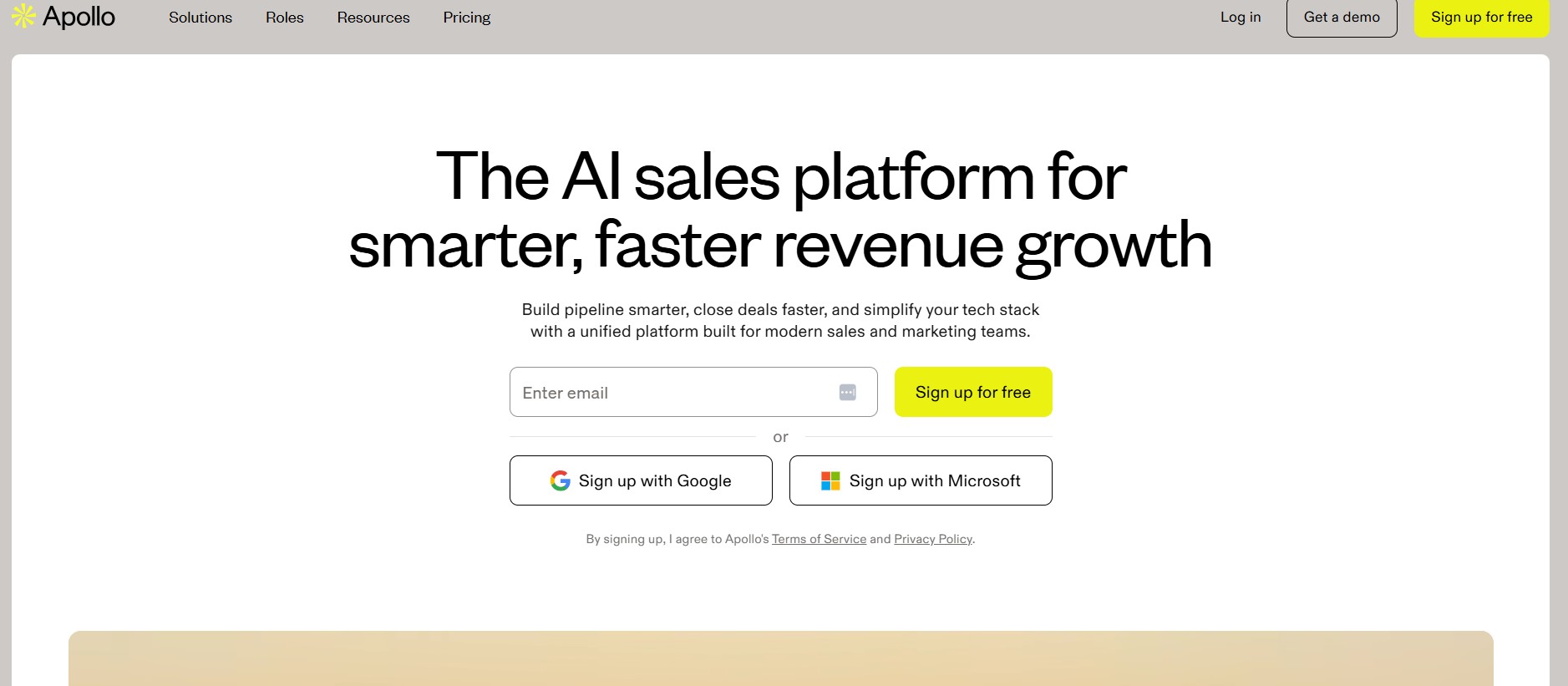
Apollo emerged in the sales engagement space with a mission to democratize access to quality sales intelligence and automation tools. Founded in 2019, the platform has grown rapidly by focusing on what sales teams actually need: access to verified contact data, email sequencing capabilities, and straightforward automation without unnecessary complexity.
Apollo positions itself as the all-in-one platform for account executives and sales development representatives. What sets Apollo apart is its built-in contact database of over 500 million B2B prospects and companies, meaning you don’t need to integrate a separate data provider like ZoomInfo or Hunter to find and verify email addresses. This integrated approach makes Apollo particularly attractive for teams that want to get up and running quickly without managing multiple subscriptions.
The platform is designed with user accessibility in mind. Even if you’re not a power user or technical expert, Apollo’s interface guides you through creating outreach sequences, managing leads, and tracking engagement. The company has also recognized the importance of affordability, offering a freemium tier that allows you to test the platform with limited functionality before committing financially.
Outreach.io
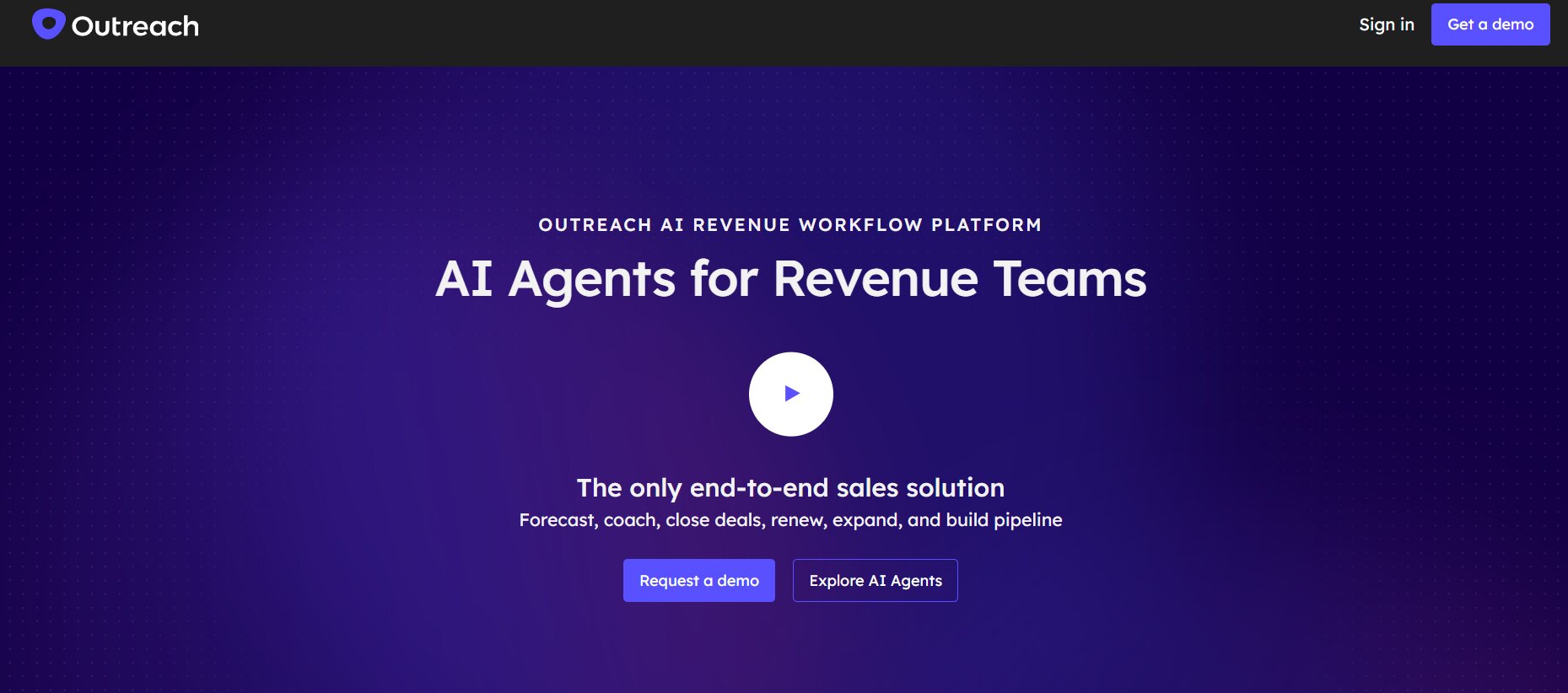
Outreach has established itself as the enterprise sales engagement platform since its founding in 2010. The company has positioned itself as the leader in conversation intelligence and sales coaching, focusing on how companies can extract maximum value from every customer interaction and sales conversation.
Outreach’s strength lies in its deep integration with Salesforce and its sophisticated AI capabilities. The platform doesn’t just help you send emails or manage sequences; it analyzes your sales calls, provides real-time coaching during conversations, and generates insights about which sales behaviors correlate with closing deals. For large enterprises, this level of intelligence can translate directly into revenue impact.
The platform is built for sales teams with dedicated operations resources who can configure complex workflows, customize fields, and extract data for strategic planning. Outreach is often the choice of Fortune 500 companies and mid-market organizations with 50+ person sales teams where the return on investment justifies the higher cost.
Apollo.io vs Outreach.io: Head-to-Head Comparison
Data & Contact Database
When comparing apollo.io vs outreach.io in terms of data quality and contact access, you’re looking at fundamentally different approaches.
Apollo’s competitive advantage is its built-in database of over 500 million B2B contacts with verified email addresses. This database includes company information, decision-maker details, technical stacks, and firmographic data. The platform continuously updates this database through web scraping and user contributions, meaning the contact information you find through Apollo is typically fresher than data from some competitors.
What makes Apollo’s database particularly valuable is the quality of email verification. The platform uses multiple verification methods to ensure that the email addresses in its database are currently active and monitored. For sales development teams, this means fewer bounces and more reliable outreach.
Outreach takes a different approach to data. Rather than maintaining its own database, Outreach integrates with various data providers and focuses on what happens with that data once you’ve found a prospect. The platform can work with data from Salesforce, ZoomInfo, Hunter, or whatever other sources you’re already using. This flexibility means that organizations already paying for ZoomInfo or Apollo for data don’t need to duplicate their spend, though it also means you need to manage multiple tools.
For pure contact discovery, Apollo wins hands down. You can search Apollo’s database directly within the platform, filter by company size, industry, job title, and dozens of other criteria, and immediately start reaching out. With Outreach, you need to either manually import contacts or rely on integrations with data providers, adding steps to the process.
Engagement Tools & Automation
Both platforms offer email sequencing and multi-channel engagement, but with notable differences in sophistication and approach.
Apollo’s email sequences are intuitive to set up. You can create conditional logic that branches based on recipient actions (opens, clicks, replies), determine how many days pass between touches, and combine email with other channels like LinkedIn outreach. The platform supports personalization through dynamic variables, allowing you to insert prospect names, company information, or other details into your email copy.
One area where Apollo excels is simplicity. If you’re a sales rep with minimal technical experience, you can build an effective sequence in 20 minutes. The interface guides you through the process, and templates are available to jumpstart your campaign.
Outreach’s email sequences are more sophisticated but require more configuration. The platform allows for highly complex workflows that can incorporate data from Salesforce, trigger based on CRM field values, and adjust in real-time based on prospect behavior. For example, you could create a sequence that automatically escalates deals that haven’t received a response after three days, or adjusts messaging based on whether the prospect has opened previous emails from anyone on your team.
The key difference is that Outreach sequences are built for power users who understand complex conditional logic and have the bandwidth to configure intricate automations. Apollo sequences are built for busy sales reps who need something that works quickly without requiring SQL knowledge or a data analyst’s help.
Conversation Intelligence & AI Capabilities
This is where the gap between the platforms becomes most pronounced when analyzing apollo.io vs outreach.io.
Apollo’s AI capabilities are improving but currently remain more limited. The platform offers call recording and basic transcription, allowing you to review your own sales calls and identify what worked or didn’t. Some AI-assisted insights are available, but these are relatively straightforward (call duration, talk-to-listen ratio, etc.) rather than sophisticated pattern recognition across your entire team.
Outreach’s conversation intelligence is genuinely sophisticated. The platform records sales calls (with proper consent), transcribes them in real-time, and analyzes them against your organization’s defined talking points, objection-handling patterns, and winning sales behaviors. This means that during a call, a rep might receive a notification that a prospect just mentioned a competitor, and the system could suggest how your team typically handles that objection based on successful past calls.
After calls, Outreach generates detailed coaching insights for individual reps, highlighting where they excelled and where they could improve. The system learns from your organization’s best performers and propagates those behaviors to newer reps through suggested coaching actions. For large sales organizations where standardization of process and best practice dissemination is critical, this capability is genuinely transformational.
Apollo is working to improve in this space, but as of 2026, if advanced conversation intelligence is critical to your needs, Outreach remains the leader.
Ease of Use & User Interface
One of the most practical considerations in apollo.io vs outreach.io is how quickly your team can become productive.
Apollo’s interface is clean, modern, and intuitive. The platform uses a logical navigation structure, and most tasks can be accomplished in 2-3 clicks. Your inbox of contacts is easy to manage, building sequences involves simple drag-and-drop elements, and reporting dashboards are visually clear without being overwhelming. A new user can typically get productive in their first day, and be proficient within a week.
This ease of use is intentional. Apollo’s product team has focused on reducing friction in the user experience because they understand that sales reps are busy and don’t want to spend hours learning software. The freemium tier actually encourages this exploration—you can literally sign up and start using core features immediately.
Outreach’s interface is more complex. There are more options, more customization possibilities, and more parameters you can configure. This flexibility is powerful for organizations with sophisticated needs, but it comes at the cost of usability. A new Outreach user might spend a week in onboarding and training before they’re comfortable with the platform. The platform assumes a higher level of technical sophistication and requires more intentional setup and configuration.
For sales teams that prioritize speed-to-productivity and minimal training overhead, Apollo is the clear winner. For organizations that have the resources to invest in proper implementation and whose team members are comfortable with complexity, Outreach’s capabilities justify the steeper learning curve.
Pricing & Value Analysis
Pricing is often the first differentiator when evaluating apollo.io vs outreach.io, and it’s where the philosophies of the two companies really diverge.
Apollo uses a tiered subscription model:
- Free Plan: Limited to 50 contacts per month, basic email sending, no sequences
- Starter ($49/user/month): 500 contacts per month, basic sequences, limited integrations
- Professional ($99/user/month): Unlimited contacts, advanced sequences, API access, priority support
- Organization ($299/user/month): All Professional features plus team management, custom reporting, dedicated success manager
For a small team of 5 sales reps on the Professional plan, you’re looking at roughly $6,000 per year. Even adding complementary tools for CRM integration or additional features, most small companies stay well under $10,000 annually.
Outreach doesn’t publish standard pricing. Instead, the company positions itself as an enterprise solution and requires a custom demo and proposal process. Typical Outreach implementations cost anywhere from $10,000 to $30,000+ per year depending on the number of users, implementation requirements, and which modules you include (conversation intelligence, coaching, advanced reporting). Most organizations end up on multi-year contracts with annual commitments of at least $15,000 to $20,000 for meaningful functionality.
The value question depends entirely on your company size and sales strategy. If you’re a startup with 5-15 sales reps, spending $6,000-$10,000 annually on Apollo likely delivers excellent ROI. If you’re a 100-person sales organization at a mid-market company and can justify Outreach’s higher cost through improved close rates and better sales methodology compliance, that’s a different equation entirely.
It’s worth noting that Apollo’s pricing is transparent and straightforward, allowing you to calculate costs before committing. Outreach’s custom pricing means you need to go through their sales process to know what you’ll actually pay, which can be frustrating when you’re in evaluation mode.
Integrations & Ecosystem
Modern sales tools don’t exist in isolation. They need to connect with your CRM, email, calendar, and various other business systems. Let’s explore how apollo.io vs outreach.io handle integrations.
Apollo integrates with the major CRM platforms: Salesforce, HubSpot, Pipedrive, and others. Contacts from Apollo can be synced to your CRM, and activities (opens, clicks, replies) can be logged back to CRM records. Calendar integration allows you to schedule follow-ups and sync meetings. Email integrations work with Gmail and Outlook.
The integration approach is practical rather than deep. Apollo can push and pull data, but it’s not as tightly woven into your CRM as you might want. For many users, this is fine—it’s still a massive productivity improvement over manual data entry.
Outreach’s integrations, particularly with Salesforce, are much deeper. The platform is essentially a Salesforce extension. Information flows seamlessly between systems, and many organizations treat Outreach and Salesforce as a single integrated platform rather than two separate tools. This deep integration means less manual data management and more reliable data synchronization.
Outreach also integrates with modern tech stacks including HubSpot, Pipedrive, and others, though the Salesforce integration remains the most mature and feature-rich.
From an ecosystem perspective, Outreach also offers pre-built integrations with business intelligence tools, allowing organizations to pull Outreach activity data into platforms like Tableau or Looker for advanced analytics.
For teams deeply invested in Salesforce already, Outreach’s native integration provides obvious value. For teams using HubSpot or other platforms, the advantage is less clear.
Reporting & Analytics
Understanding what’s working in your sales process is critical for continuous improvement. Both platforms offer reporting, but with different approaches.
Apollo’s reporting dashboards show activity metrics at the team and individual level: number of sequences sent, open rates, reply rates, meetings booked. The dashboards are customizable to some degree, and you can export data to spreadsheets for deeper analysis. For most sales teams, Apollo’s reporting answers the key questions: Are we sending enough outreach? What’s our response rate? Are we booking meetings?
Outreach’s reporting is significantly more sophisticated. The platform can show you which sales behaviors correlate with deals closing, which talking points work best with certain buyer personas, and which rep techniques are most effective. This goes beyond “what happened” and starts to address “why it happened” and “what should we do about it.”
For data-driven sales organizations that want to understand the correlation between activities and outcomes, Outreach’s analytics capabilities provide real value. For simpler reporting needs, Apollo is more than adequate.
Pros and Cons
Let’s take a structured look at what each platform does well and where it falls short.
Apollo.io Strengths & Weaknesses
Strengths:
- Affordability: Transparent pricing starting at $49/user/month makes it accessible to startups and smaller organizations
- Built-in contact database: 500M+ verified B2B contacts mean you don’t need to buy a separate data provider
- Quick implementation: Teams can get up and running in days rather than weeks
- User-friendly interface: Minimal training required; sales reps can be productive immediately
- Email verification quality: High deliverability rates due to robust email verification
- All-in-one approach: Contacts, sequences, and engagement tracking in one platform
- Freemium option: Test the platform with limited features before committing financially
- API access: Even the starter plan includes API access for custom integrations
Weaknesses:
- Limited conversation intelligence: AI capabilities are basic compared to Outreach
- Less sophisticated automation: Complex workflows are possible but less flexible than Outreach
- Smaller integrations ecosystem: Fewer pre-built integrations compared to enterprise platforms
- Limited coaching features: No real-time coaching or advanced sales methodology enforcement
- Smaller enterprise customer base: Less appeal for Fortune 500 organizations
- Analytics depth: Reporting is functional but not as sophisticated as Outreach’s
- Scalability questions: Less proven at organizations with 500+ person sales teams
Outreach.io Strengths & Weaknesses
Strengths:
- Market-leading conversation intelligence: Real-time call insights and post-call coaching are genuinely sophisticated
- Salesforce integration depth: Seamless two-way data flow with Salesforce, treating both as one system
- Advanced automation: Complex conditional workflows allow sophisticated process enforcement
- Sales methodology alignment: Built-in frameworks for consistent sales processes across teams
- Proven enterprise adoption: Trusted by Fortune 500 and mid-market organizations globally
- Advanced analytics: Correlation analysis between activities and outcomes, rather than just activity reporting
- Real-time coaching: Live coaching during sales calls helps reps perform better in the moment
- Team management: Advanced permission structures and approval workflows for large organizations
Weaknesses:
- High cost: Custom enterprise pricing with typical annual commitments of $15,000+
- Implementation complexity: Requires weeks of setup and configuration, often with professional services
- Steep learning curve: Not designed for casual users; requires training and ongoing learning
- No contact database: You need to source contacts elsewhere
- Vendor lock-in risk: Deep Salesforce integration creates switching costs
- Overkill for small teams: Many features go unused by organizations under 50 people
- Longer sales cycle: The custom pricing and enterprise positioning mean a longer buying process
- Customization burden: More flexible, but also requires more ongoing maintenance and management
Which Should You Choose?
The answer to apollo.io vs outreach.io isn’t which platform is “better” in an absolute sense—it’s which one aligns better with your specific situation.
Choose Apollo.io if you
Are a startup or early-stage SaaS company: If you’re pre-Series B or bootstrapped, Apollo’s $2,400-$6,000 annual cost is manageable, and you don’t need Outreach’s enterprise features. Your bottleneck is probably getting more qualified conversations, not optimizing existing processes.
Have a smaller sales team (under 30 people): Apollo scales well up to 20-30 person teams. Beyond that, you might start feeling the limitations of the platform.
Need to get productive quickly: If you need your sales team productive within days rather than weeks, Apollo’s ease of use and quick implementation are huge advantages.
Prioritize contact database access: If finding decision-maker email addresses and company information is part of your challenge, Apollo’s built-in database solves that problem without needing another tool.
Have limited IT/operations resources: Apollo requires minimal technical configuration and can be managed by a sales leader or basic ops person rather than requiring a dedicated implementation team.
Are using HubSpot or non-Salesforce CRMs: Apollo works well with HubSpot, Pipedrive, and others. If you’re not deeply invested in Salesforce, Outreach’s advantage shrinks.
Choose Outreach.io if you
Run a mid-market or enterprise sales organization: With 50+ sales reps and complex sales processes, Outreach’s features and sophistication justify the cost.
Are heavily invested in Salesforce: If Salesforce is your system of record and you want seamless integration without data synchronization headaches, Outreach’s native Salesforce integration is ideal.
Need advanced conversation intelligence: If understanding what’s happening in your sales conversations and coaching reps to improve is a strategic priority, Outreach’s AI is genuinely the best in the market.
Have dedicated sales operations resources: If you have a sales ops team that can handle complex configuration and optimization, you can fully leverage Outreach’s power.
Want standardized sales methodology: If you’re implementing frameworks like Sandler, Spin Selling, or a custom methodology across your entire sales organization, Outreach’s enforcement mechanisms help ensure consistency.
Are expanding rapidly: If you’re planning significant growth from 50 to 200+ salespeople, Outreach scales better operationally.
Have budget for implementation: If implementation costs (typically $5,000-$15,000) aren’t a barrier, you can get more value from Outreach’s more complex setup.
Alternative Sales Engagement Platforms to Consider
While Apollo and Outreach are the two major players, the market includes other options worth evaluating depending on your specific needs.
Lemlist
Lemlist is ideal if email is your primary focus. The platform excels at personalization, with features like video personalization and dynamic content that make cold emails feel genuinely personalized rather than templated. For teams whose main challenge is email engagement rates, Lemlist can be excellent. However, it’s more narrowly focused than Apollo or Outreach—it’s primarily an email tool rather than a full engagement platform.
Clay
Clay positions itself as a modern alternative to traditional data providers, combining contact discovery with workflow automation. If your primary need is finding prospects across multiple data sources and building sophisticated multi-channel workflows, Clay is worth considering. The platform is particularly strong for companies building custom go-to-market processes.
Salesloft
Salesloft is another enterprise platform comparable to Outreach in many ways, though it hasn’t gained Outreach’s market dominance. Salesloft is slightly more focused on sales execution than conversation intelligence, and it can be a good middle ground for organizations that want enterprise capabilities at a somewhat lower price point than Outreach.
HubSpot Sales Hub
If you’re already using HubSpot as your CRM, HubSpot’s built-in Sales Hub includes email sequencing, call logging, and basic engagement features. For smaller teams already in the HubSpot ecosystem, this can reduce the need for standalone tools.
Implementation & Migration Considerations
Beyond the feature set and pricing, how you actually get these platforms into your organization matters significantly.
Apollo.io Implementation
Implementing Apollo is straightforward. The typical timeline is:
- Day 1: Sign up and create account
- Days 2-3: Import your existing contact database and/or start finding new prospects in Apollo’s database
- Week 1: Build your first few email sequences and start sending outreach
- Weeks 2-3: Fine-tune based on results, train additional team members
- Month 1: Full team productivity
For CRM integration, you’ll need to connect your Salesforce or HubSpot account, which requires someone with basic admin access but isn’t technically complex.
The beauty of Apollo’s implementation is that you can achieve value quickly. Within a week, your team can be sending structured outreach and tracking results.
Outreach.io Implementation
Outreach implementation is more involved:
- Week 1: Kickoff meeting, requirements gathering, project planning
- Weeks 2-4: Technical setup, Salesforce integration configuration, field mapping
- Weeks 4-6: Custom workflow and sequence building, integration with email and calendar systems
- Weeks 6-8: Team training, pilot testing with select reps
- Week 8+: Full rollout, optimization, ongoing tuning
Many organizations work with Outreach professional services during implementation, which adds cost but accelerates the process. Even with dedicated resources, most Outreach implementations take 8-12 weeks to full productivity.
The longer implementation timeline isn’t necessarily bad—it means more deliberate process design and better alignment with how your organization works. But it does mean delayed productivity and higher organizational cost to implement.
Data Migration Considerations
If you’re switching from an existing platform, data migration matters.
Apollo makes it easy to import your existing contacts via CSV. You can bulk-upload your database and start adding Apollo’s data enrichment on top.
Outreach integration with Salesforce is so deep that “migration” mostly means configuring the connection. Your data lives in Salesforce, not in Outreach, so there’s no traditional migration in the copy-and-paste sense.
Contact Discovery & Prospecting
The way you find prospects differs between the platforms, which matters for different sales strategies.
With Apollo, you’re leveraging Apollo’s built-in database. You can search by company size, industry, job title, technology stack, and dozens of other criteria. You immediately get email addresses, LinkedIn profiles, and company information. For sales development teams whose job is to identify and reach new prospects, Apollo’s database is incredibly valuable.
With Outreach, you’re typically already working from a list of prospects you’ve identified through marketing, intent data platforms, or your own research. Outreach helps you engage those prospects, but it’s not designed as a discovery tool.
This difference matters. If prospecting (finding new people to reach) is a key part of your sales process, Apollo gives you a significant advantage because you’re not paying extra for a separate data provider.
Activity Tracking & Engagement Measurement
Both platforms track activities differently.
Apollo automatically logs activities to your CRM when you’ve configured the integration. Opens, clicks, and replies from sequences you send through Apollo can flow back to your CRM records automatically. This means that even if your sales rep forgets to log an activity, the system captures that the prospect opened the email.
Outreach goes deeper with activity tracking, particularly around calls. Every call made through Outreach is logged, transcribed, and analyzed. The platform can tell you not just that a call happened, but details about the conversation—how long the rep talked vs. listened, what topics were discussed, which objections came up.
For pure activity logging, both platforms work well. For understanding the substance of sales conversations, Outreach is more sophisticated.
Mobile Accessibility
In 2026, many sales reps are working from the field or in client environments rather than from a desk.
Apollo offers a mobile app available on iOS and Android. The app allows you to review contacts, send quick follow-ups, and manage your pipeline from your phone. The mobile experience is clean and functional, though obviously more limited than the web version.
Outreach also offers a mobile app with similar functionality. Additionally, Outreach’s real-time coaching capabilities work on mobile, meaning you could theoretically receive coaching guidance during a phone call even if you’re not at your desk.
For reps who spend significant time away from their desk, both platforms provide adequate mobile support, though neither is as full-featured as the web version.
Data Privacy & Compliance
Both platforms handle data in different ways that matter for compliance.
Apollo maintains its own database of contact information. This means Apollo has relationships with data providers, employment verification systems, and other sources to populate and maintain the database. The data in Apollo comes with representations that it’s been verified and complies with GDPR and other privacy regulations. For the purposes of GDPR compliance, Apollo can facilitate your contact consent management if needed.
Outreach relies on the CRM you’re using as the system of record. If you’re using Salesforce, your data governance is primarily Salesforce’s responsibility. Outreach acts as an application layer on top of Salesforce. This means compliance depends largely on how you’ve configured Salesforce and what data practices you’ve put in place. The advantage here is that Outreach isn’t maintaining a separate database that could create compliance issues.
Both platforms have SOC 2 certification and GDPR compliance documentation available. If data privacy is a critical concern (as it should be), both are acceptable options, though with different data governance models.
Learning Resources & Support
Beyond the platforms themselves, the quality of support and learning resources matters for adoption.
Apollo provides:
- Knowledge base articles covering most features
- Email and chat support for paid plans
- Video tutorials covering common workflows
- Community Slack channel with other users and company team members
Outreach provides:
- Comprehensive knowledge base and documentation
- Phone and email support
- Dedicated customer success manager for enterprise customers
- Video training and on-demand learning modules
- Regular webinars and certification programs
Outreach’s support is more comprehensive, particularly for enterprise customers with dedicated success managers. However, Apollo’s support is adequate for most use cases and is more accessible to smaller organizations.
Integration With Sales Methodology Frameworks
Many organizations want their sales engagement platform to support a specific sales methodology (Sandler, Spin Selling, Challenger Sale, etc.).
Outreach has invested in building frameworks for popular methodologies into the platform. Your sequences can be built around methodology principles, reps can receive coaching aligned with your methodology, and the platform can reinforce consistent application of your methodology.
Apollo is more agnostic. You can certainly build sequences that follow your methodology, but Apollo doesn’t include built-in frameworks or coaching aligned with specific methodologies.
If your organization is heavily committed to a specific sales methodology and wants the platform to reinforce and codify it, Outreach is better positioned to support that.
Performance Optimization & Continuous Improvement
Once you’re using either platform, how do you optimize performance?
Apollo provides basic reporting on sequence performance (open rates, reply rates, etc.). You can A/B test subject lines, email bodies, and messaging to see what resonates. Many power users build complex analytics on top of Apollo using the API to pull data into BI tools.
Outreach’s reporting is more sophisticated. The platform can show you correlation between specific behaviors and outcomes. This allows more intelligent optimization—you’re not just seeing that Email Variant A had a 2% higher open rate, but understanding that reps who used specific objection-handling language in their sequences saw 15% higher reply rates.
For continuous improvement, Outreach’s analytics capabilities are genuinely more powerful. However, this requires organizational commitment to analyzing data and acting on insights. Apollo is sufficient if you’re doing optimization at a simpler level.
Vertical-Specific Considerations
Different industries have different sales engagement needs. Let’s consider how apollo.io vs outreach.io stack up in specific verticals.
SaaS Sales
Both platforms serve SaaS sales well. Apollo’s contact database is particularly strong for SaaS because it includes technology stack information, making it easy to target companies using specific platforms. Outreach works well when you have existing prospect lists and want to optimize engagement with them.
Financial Services
Financial services teams often have complex compliance requirements around customer communication. Outreach’s more enterprise-grade setup and compliance capabilities make it a natural fit for many financial services organizations. Apollo works fine too, but Outreach’s maturity appeals to compliance-sensitive organizations.
Real Estate
Real estate teams sometimes favor Apollo because of its lower cost and simpler setup. Real estate brokers often operate more independently than enterprise sales teams, and Apollo’s individual contributor experience is more appealing than Outreach’s team-based approach.
Enterprise Software
Enterprise software sales teams selling complex, high-ticket deals typically benefit from Outreach’s conversation intelligence and sales methodology enforcement. The longer sales cycles in enterprise software make conversation quality more important.
2026 Product Roadmap Insights
Looking forward into 2026, both platforms are investing in AI capabilities.
Apollo is working on enhancing its AI features, likely improving conversation intelligence and coaching capabilities to narrow the gap with Outreach. The platform will likely continue evolving its contact enrichment capabilities and deepening integrations with modern data platforms.
Outreach is likely to further develop its AI-powered coaching, potentially incorporating video analysis in addition to call analysis, and expanding its use of AI to predict deal outcomes and recommend next steps.
For organizations evaluating these platforms for multi-year deals, consider where each is heading in AI. Outreach is likely to maintain its lead in conversation intelligence through 2026, while Apollo is likely to improve but remain less sophisticated. However, Apollo’s trajectory is positive, and in 12-24 months, the gap may be smaller.
Conclusion
The comparison between apollo.io vs outreach.io isn’t about one being objectively better—it’s about which platform aligns with your organization’s size, sophistication, budget, and timeline.
Choose Apollo if: You’re a startup or small sales team (under 30 people), you need to move fast, your budget is limited, you want an all-in-one solution with built-in contact data, and you’re willing to accept basic AI capabilities in exchange for simplicity and affordability.
Choose Outreach if: You’re mid-market or enterprise (50+ people), you’re already invested in Salesforce, conversation intelligence is a strategic priority, you have dedicated implementation resources, and you’re willing to invest more to get more sophisticated capabilities.
The middle ground: If you’re in the 20-50 person range and undecided, consider:
- Running a POC with each platform (Apollo offers a freemium tier, Outreach offers demos)
- Calculating the true cost of ownership including implementation and training
- Considering your growth trajectory—will you outgrow Apollo in 12-24 months?
- Evaluating whether conversation intelligence and advanced coaching are truly strategic needs or nice-to-haves
As you evaluate these platforms in 2026, remember that the feature gap between them is narrowing. Both are investing in AI and improving their offerings. However, their positioning—Apollo as an accessible all-in-one platform and Outreach as an enterprise sales machine—is unlikely to change significantly.
Take time to understand not just what each platform does, but how each one works with your existing systems, your team’s technical proficiency, and your organizational culture. The best platform is the one your team will actually use consistently and optimize. Don’t let feature checklists override practical considerations like ease of use and implementation timeline.
Finally, remember that your choice isn’t permanent. Many organizations successfully transition from one platform to another if their needs change. Use that as a permission to make your best decision for your current situation, rather than trying to predict and optimize for every hypothetical future need.
Frequently Asked Questions
Can you use both platforms together?
Technically yes, though there’s limited reason to. If you’re using Apollo for prospecting and Outreach for engagement, that could work, but most organizations choose one and optimize it. If you’re comparing them, this question usually doesn’t matter.
Does Apollo.io replace CRM functionality?
No. Apollo is a sales engagement platform, not a CRM. You still need Salesforce, HubSpot, or another CRM as your system of record. Apollo enhances your CRM by bringing in contact data and logging activities. Think of it as a specialized tool that sits alongside your CRM rather than replacing it.
Is Outreach.io worth the higher price?
That depends on your organization size and strategic priorities. For startups and small businesses under 20 people, Apollo’s lower cost is almost certainly better value. For mid-market and enterprise organizations with 50+ sales reps and complex sales processes, Outreach’s higher cost can absolutely be justified. For the 20-50 person range, it’s a judgment call based on your specific needs.
Which has better customer support?
Outreach has more comprehensive support, particularly for enterprise customers with dedicated success managers. Apollo has good support, but it’s more self-service oriented. For critical sales systems where you want guaranteed support responsiveness, Outreach is more robust.
What’s the typical onboarding timeline?
Apollo: 1-2 weeks to productivity Outreach: 8-12 weeks to full productivity
This is a significant difference. If you need to activate quickly, Apollo is dramatically faster.
How do they compare for remote teams?
Both platforms work well for remote teams. Apollo’s mobile app makes it easy for remote reps to stay connected. Outreach’s real-time coaching could theoretically work better for remote teams that are less supervised, but this isn’t a major differentiator.
Which platform scales better for growth?
Outreach is designed for larger organizations and scales operationally better. However, Apollo scales functionally well up to 50-100 person sales teams. The question is more about when you might outgrow Apollo than about Apollo’s inability to scale.
Can you export data from either platform?
Apollo provides API access even on starter plans, allowing you to extract data programmatically. You can also export via CSV through the UI.
Outreach allows data export and provides API access, though export capabilities can depend on your contract tier.
Both platforms allow you to get your data out, though neither makes it trivially easy.
How does conversation intelligence quality compare?
Outreach’s conversation intelligence is significantly more sophisticated as of 2026. Apollo’s is improving but remains more basic. If this feature is critical to your decision, Outreach is the clear winner.
Which is better for email deliverability?
Both platforms handle email deliverability well. Apollo’s email verification quality is particularly strong, which contributes to good deliverability. Outreach relies on your email infrastructure but provides guidance on sender reputation management. For pure email deliverability metrics, they’re comparable.