


Sales teams today operate in a high-pressure environment where every touchpoint, every email, every call, and every follow-up can be the difference between closing a deal and losing a prospect to a competitor. Sales engagement platforms exist to streamline this process — helping reps reach the right people at the right time with the right message.
Salesloft has long been one of the most recognized names in this space. Built around the concept of a structured sales cadence, it promised to bring order to the chaotic world of outbound and inbound sales. For many teams, it delivered on that promise. But in 2026, the sales technology landscape has evolved dramatically. Buyer behavior has changed, remote-first teams are now the norm, and the demand for AI-driven personalization has exploded.
As a result, more and more sales leaders are asking a straightforward question: is Salesloft still the best tool for our team, or are there better options out there?
This blog exists to answer that question. Whether you’re a startup scaling your first SDR team, a mid-market company trying to reduce software costs, or an enterprise looking for deeper CRM integration, there are powerful Salesloft alternatives worth exploring in 2026.
We’ve researched, compared, and analyzed the top options available today. Each tool in this list has been evaluated for real-world usability, feature depth, pricing fairness, and how well it serves different types of sales teams.
Let’s get into it.
What Is Salesloft?
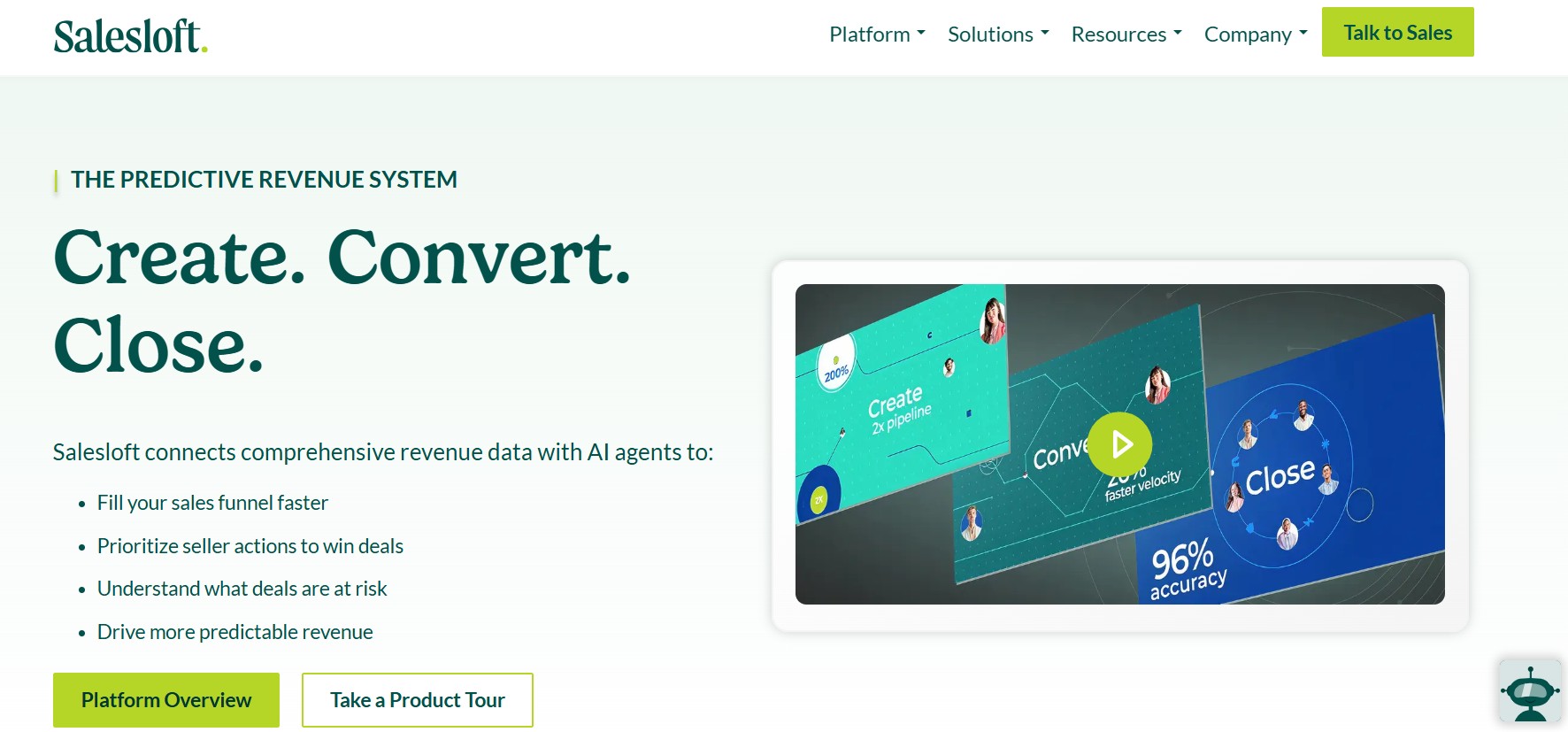
Salesloft is a cloud-based sales engagement platform designed to help revenue teams manage and optimize every interaction across the buyer journey. It was founded in 2011 and has since grown into one of the most feature-rich platforms in the sales engagement category.
At its core, Salesloft is built around the concept of cadences — structured, repeatable sequences of outreach activities that sales reps follow to engage prospects. These cadences can include emails, phone calls, LinkedIn messages, direct mail, and other touchpoints, all organized in a logical order with defined time intervals between each step.
Beyond cadences, Salesloft offers a conversation intelligence module (formerly Conversation Intelligence, now embedded in its Revenue Intelligence suite), deal management features, analytics dashboards, coaching tools, and integrations with major CRMs like Salesforce and HubSpot.
Over the years, Salesloft has repositioned itself from a pure sales engagement platform to a broader revenue orchestration tool. This evolution has made it more powerful in some respects, but it has also introduced complexity, higher pricing, and a steeper learning curve that doesn’t suit every organization.
Why Businesses Look for Salesloft Alternatives
Understanding why teams switch tools is just as important as knowing which tools to consider. Here are the most common reasons sales teams start evaluating Salesloft alternatives:
Pricing and Contract Rigidity Salesloft operates on an enterprise pricing model with annual contracts. For growing teams or startups, the cost can be prohibitive. Many users report that pricing isn’t transparent upfront, and that add-ons for features like conversation intelligence or advanced analytics drive up the total cost significantly.
Complexity and Onboarding Time Salesloft is a feature-dense platform. While that’s a strength for large enterprise teams with dedicated RevOps support, it becomes a burden for smaller sales teams that don’t have the bandwidth to navigate complex workflows or run extensive training programs. Many users report weeks of onboarding time before the platform becomes productive.
Limited Flexibility for Non-Enterprise Teams The platform is clearly optimized for large, structured sales organizations. SMBs and mid-market companies often find that they’re paying for capabilities they don’t need while missing simpler features that would actually help them.
CRM Integration Limitations While Salesloft integrates well with Salesforce, users of HubSpot, Pipedrive, Zoho, and other CRMs sometimes encounter sync issues, data gaps, or limitations that create friction in daily workflows.
Customer Support and Responsiveness Multiple G2 and Capterra reviews point to slow support response times and a lack of personalized help during implementation. For teams without an in-house admin, this can be a serious obstacle.
The Shift Toward AI-Native Tools In 2025 and 2026, a new generation of AI-native sales tools has emerged. These platforms don’t just bolt AI features onto existing workflows — they’re built around intelligence from the ground up. Many teams are migrating to these newer platforms to take advantage of smarter prioritization, automated personalization, and predictive analytics.
Key Features to Consider in a Sales Engagement Tool
Before diving into the alternatives, it’s worth defining what you should actually be evaluating. Not every sales team needs the same features, but here are the capabilities that matter most across the board:
Multi-Channel Outreach The ability to reach prospects across email, phone, LinkedIn, SMS, and other channels within a single workflow. A strong platform eliminates the need to jump between tools.
Sequence and Cadence Management Automated, rule-based sequences that allow reps to follow up consistently without manually tracking every task. Look for flexibility in sequence design, branching logic, and the ability to pause or modify sequences mid-cadence.
Email Deliverability Tools Features like email warm-up, domain health monitoring, and spam testing are critical in 2026 as inbox placement rates continue to decline due to stricter spam filters.
AI-Powered Personalization and Insights Modern platforms should help reps write better emails, identify the best time to reach a prospect, surface deal risks, and suggest next actions — not just record what happened.
CRM Integration Depth Two-way sync with your CRM is non-negotiable. The best platforms also write back activity data automatically, eliminating manual logging.
Analytics and Reporting Sequence performance metrics, rep activity dashboards, and pipeline impact reporting help managers make data-driven coaching decisions.
Ease of Use A platform that reps actually adopt is worth more than one with more features that nobody uses. User experience matters enormously in sales tools.
Pricing Transparency and Flexibility Month-to-month options, modular pricing, or team-size-appropriate plans are important factors, especially for fast-growing teams.
7 Best Salesloft Alternatives in 2026
Now let’s look at the seven platforms that stand out as the strongest Salesloft alternatives this year.
1. Dealsflow
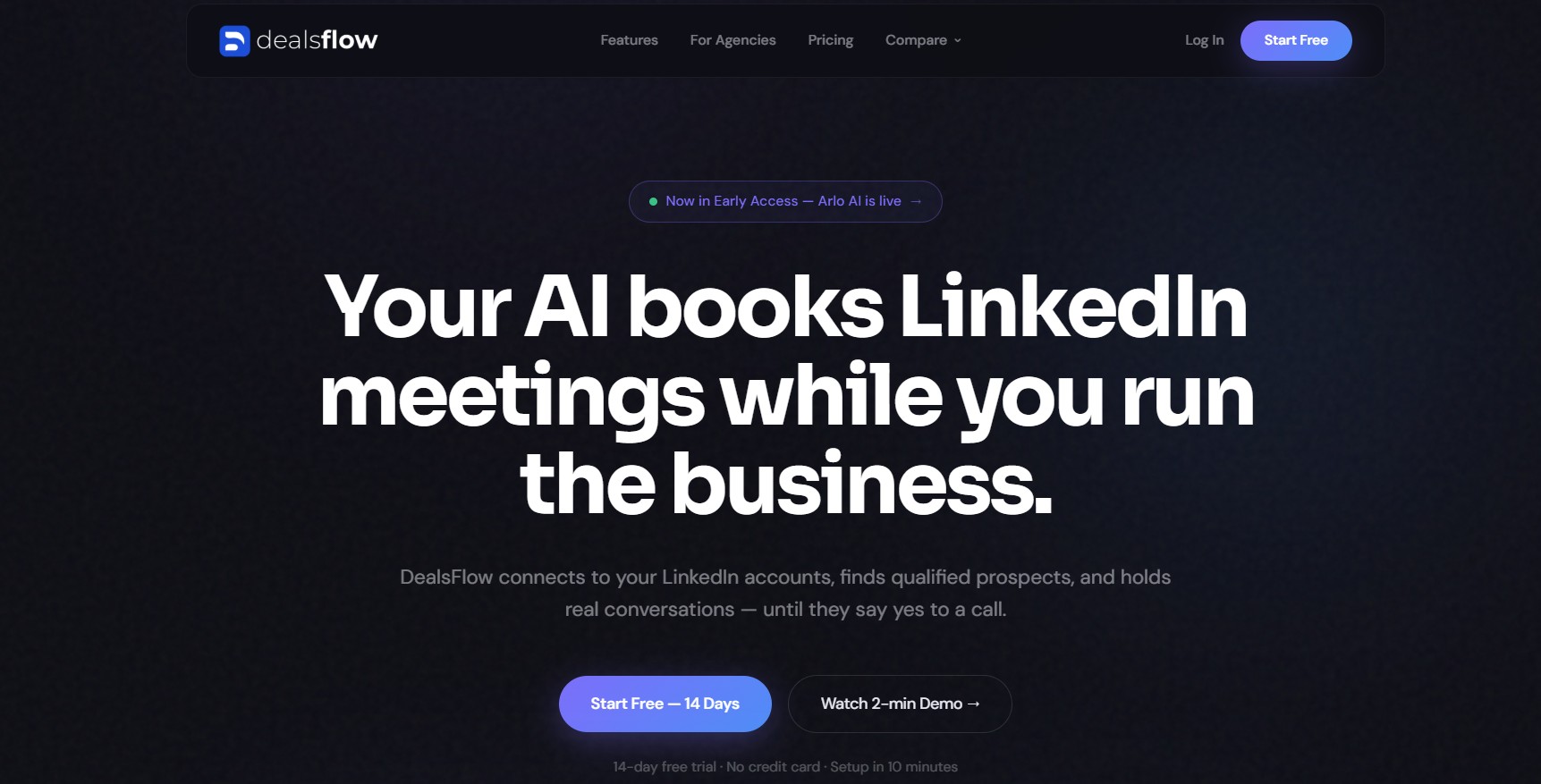
When evaluating salesloft alternatives in 2026, Dealsflow consistently rises to the top of the list. Built with a clear focus on helping sales teams move faster, engage smarter, and close more deals, Dealsflow has carved out a distinct identity in a crowded market.
Unlike platforms that started as email automation tools and gradually added features, Dealsflow was designed from the ground up as a complete sales engagement ecosystem. It brings together outreach automation, pipeline visibility, AI-assisted messaging, and deep CRM integration in a way that feels cohesive rather than patched together.
Dealsflow is a sales engagement platform built for teams that want the power of an enterprise tool without the enterprise complexity. It’s particularly well-suited for B2B sales teams in the SMB and mid-market space, though its feature depth makes it a credible option for larger organizations as well.
The platform centers around intelligent outreach workflows — helping reps build personalized sequences across multiple channels while using AI to surface insights that improve message quality and timing. What sets Dealsflow apart is the balance it strikes between automation and personalization. Automated cadences don’t feel robotic because the platform’s AI layer helps reps customize at scale.
Key Features
Dealsflow’s multi-channel sequencing allows reps to build outreach workflows that span email, phone calls, LinkedIn touchpoints, and SMS — all within a single visual workflow builder. The interface is clean and intuitive, making it easy to design complex sequences without needing technical support.
The platform includes a robust email deliverability suite. Teams can monitor domain health, run inbox placement tests, and use built-in warm-up tools to maintain strong sender reputation. In 2026, where email deliverability can make or break an outbound motion, this feature alone is a significant differentiator.
Dealsflow’s AI writing assistant helps reps craft personalized email copy based on prospect data, industry context, and previous engagement history. Rather than generating generic templates, the assistant produces contextually relevant suggestions that reps can refine in seconds.
Pipeline management within Dealsflow gives sales managers real-time visibility into deal health, activity gaps, and rep performance. The deal scoring feature uses engagement signals to flag at-risk opportunities before they go cold.
CRM integration is deep and bidirectional — Dealsflow syncs natively with Salesforce, HubSpot, Pipedrive, and several other platforms, automatically logging calls, emails, and meetings without requiring manual entry from reps.
The analytics suite covers everything from sequence-level open and reply rates to individual rep performance benchmarks. Managers can identify which sequences are working, which messaging themes are resonating, and where prospects are dropping off.
Pros
- Highly intuitive interface that reduces onboarding time significantly compared to legacy platforms
- Excellent email deliverability tools built natively into the platform
- AI-powered personalization that genuinely improves messaging quality
- Deep CRM integration with automatic activity logging
- Transparent, flexible pricing that scales with team size
- Strong customer support with responsive onboarding assistance
- Multi-channel workflows that keep outreach coordinated across channels
- Pipeline visibility that connects sales activity to deal outcomes
Limitations
- Conversation intelligence features, while improving, are not yet as mature as standalone tools like Gong
- Some enterprise-specific compliance features are still in development
- The mobile app experience, while functional, could benefit from further refinement
Best Use Cases
Dealsflow is an ideal fit for B2B sales teams that are outgrowing basic email automation but don’t need (or want to pay for) the full complexity of an enterprise platform like Salesloft. It works particularly well for SDR teams running high-volume outbound campaigns, account executives managing multi-threaded deals, and sales managers who need clear visibility into pipeline health and rep activity.
Teams switching from Salesloft often find that Dealsflow delivers 80 to 90 percent of the functionality they actually used in Salesloft, at a meaningfully lower cost and with significantly less friction.
2. Outreach.io
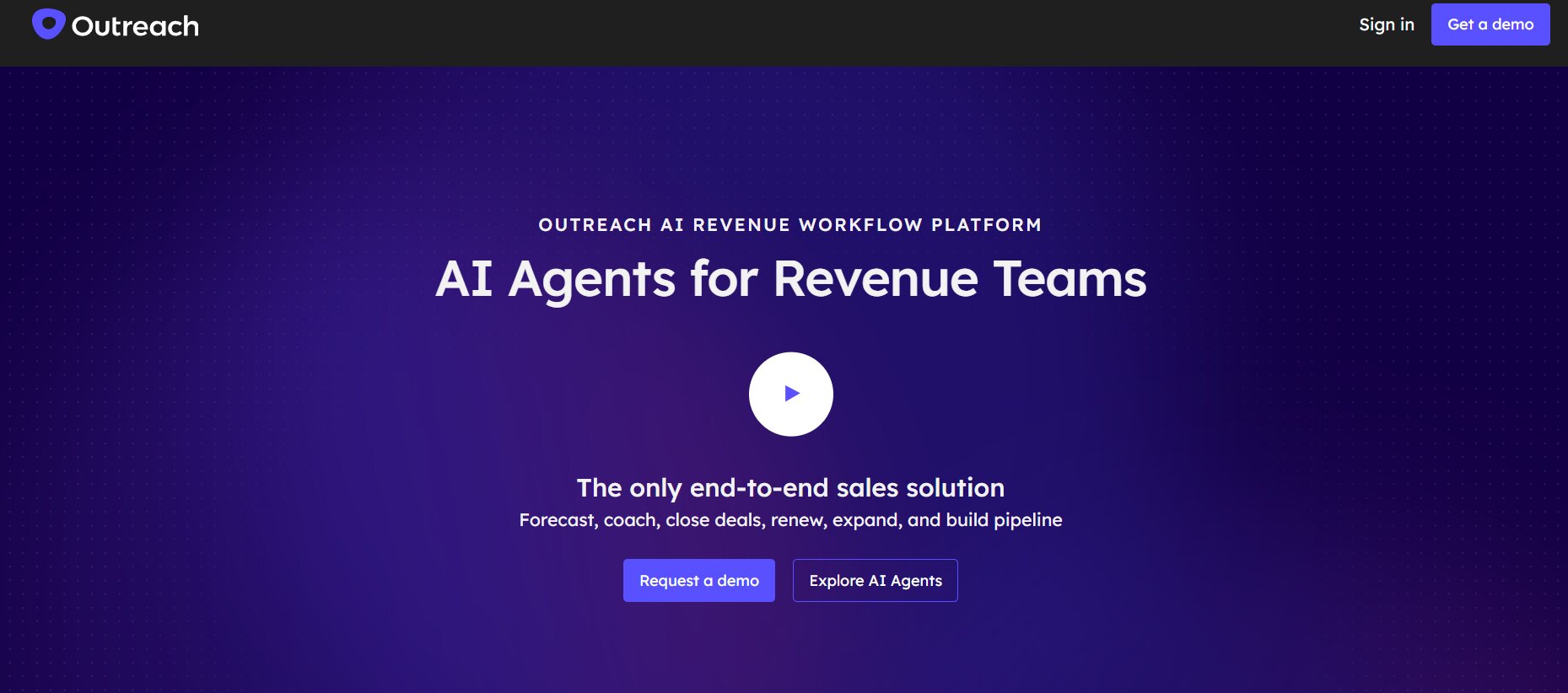
Outreach has long been Salesloft’s primary competitor at the enterprise level, and for good reason. It’s a deeply feature-rich platform that has continued to evolve its AI and automation capabilities through 2025 and into 2026.
Outreach positions itself as a sales execution platform, emphasizing not just outreach automation but the entire revenue workflow from prospecting to close. It’s built for large sales organizations with complex processes, multiple team layers, and the need for extensive customization.
Key Features
Outreach offers sophisticated sequence management with AI-driven send time optimization, dynamic content insertion, and multi-step branching logic. Its Kaia AI assistant provides real-time conversation guidance during calls, surfacing relevant talk tracks, competitor information, and objection handling tips as the conversation unfolds.
The platform includes a strong deal management module that gives managers visibility into pipeline coverage, deal momentum, and forecast accuracy. Integration with Salesforce is among the most robust in the industry.
Outreach also offers extensive reporting capabilities, including custom dashboards, team performance comparisons, and sequence attribution analysis.
Pros
- Extremely feature-rich with strong enterprise customization options
- Powerful AI-assisted calling features
- Best-in-class Salesforce integration
- Strong community and ecosystem of third-party integrations
- Advanced analytics and forecasting capabilities
Limitations
- Pricing is enterprise-tier and can be difficult to justify for smaller teams
- The platform has a steep learning curve, and full adoption often requires dedicated RevOps support
- Some users report that the interface feels cluttered, especially for reps managing large prospect lists
- Customer support response times have been a recurring complaint in recent reviews
Best Use Cases
Outreach is best suited for enterprise sales organizations with 50 or more reps, dedicated RevOps and enablement functions, and complex multi-stage sales processes. It’s overkill for most SMBs but genuinely powerful for teams that can leverage its full depth.
3. Apollo.io
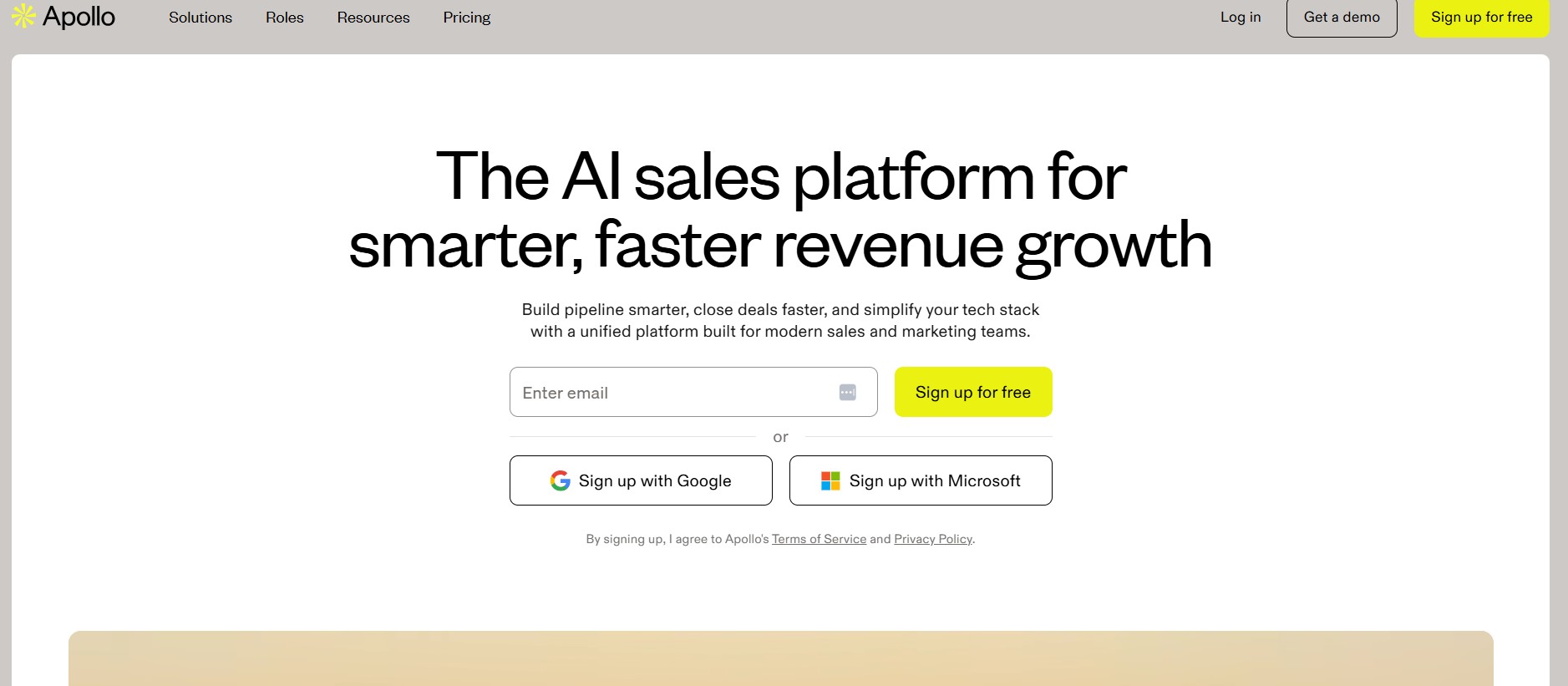
Apollo.io has rapidly become one of the most discussed tools in the sales technology space over the last two years. What makes it unique is that it combines a B2B data and prospecting database with a full sales engagement platform — a combination that many teams find compelling.
Rather than requiring you to pull prospect data from a separate tool like ZoomInfo or Clearbit and then import it into a sequencing platform, Apollo lets you do both in one place. You can search for prospects using detailed firmographic and technographic filters, add them directly to a sequence, and start engaging — all without leaving the platform.
Key Features
Apollo’s database contains over 270 million B2B contacts as of 2026, with verified email addresses, phone numbers, and LinkedIn profiles. The search functionality is powerful, allowing teams to filter by job title, company size, industry, revenue, tech stack, and dozens of other criteria.
The sequencing engine supports email, phone, and LinkedIn steps, with A/B testing and analytics built in. Apollo has invested heavily in AI features, including an AI email writer and an engagement score that predicts which prospects are most likely to respond.
The platform also includes a basic CRM for teams that don’t use a dedicated CRM, as well as integrations with Salesforce, HubSpot, and other major platforms.
Pros
- Combining prospecting data with engagement in one tool reduces tool sprawl significantly
- Very competitive pricing, including a generous free tier
- Rapid pace of product development and feature releases
- Strong filtering and segmentation capabilities for list building
- Good fit for teams that do significant outbound prospecting
Limitations
- Data quality can be inconsistent for certain industries or geographies
- The sequencing engine, while solid, is less mature than dedicated platforms like Outreach or Dealsflow
- Advanced analytics and reporting are not as deep as enterprise-focused competitors
- The platform can feel overwhelming due to the sheer number of features
Best Use Cases
Apollo is an excellent choice for teams that currently spend significant budget on separate data enrichment and sequencing tools. It’s particularly effective for SDR-heavy organizations doing high-volume cold outreach where data freshness and list building speed matter as much as sequence sophistication.
4. HubSpot Sales Hub
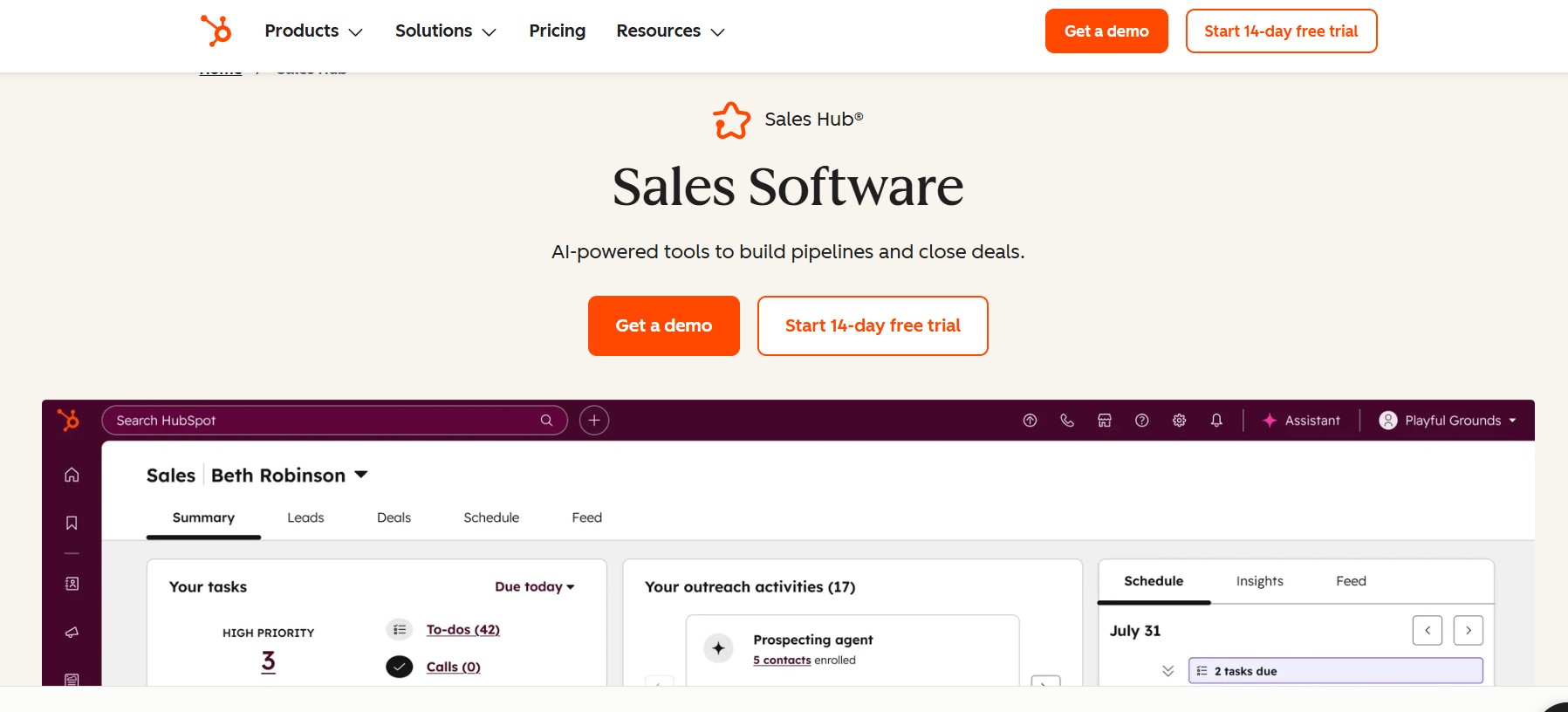
For teams already using HubSpot as their CRM, Sales Hub represents the path of least resistance. Rather than managing a third-party integration, everything lives natively within the HubSpot ecosystem.
HubSpot Sales Hub is the sales engagement and automation layer within HubSpot’s broader CRM platform. It includes email sequences, calling tools, deal pipeline management, meeting scheduling, and reporting — all tightly integrated with HubSpot’s contact and company database.
Key Features
Sales Hub sequences allow reps to enroll contacts in multi-step email and task workflows directly from the CRM contact record. Personalization tokens pull data from HubSpot properties automatically, making it easy to customize at scale.
The platform includes a built-in calling tool with call recording and transcription, a meeting scheduler that syncs with Google and Outlook calendars, and a deal pipeline view that gives managers a visual overview of all open opportunities.
HubSpot’s reporting suite is strong, with customizable dashboards and the ability to track sequence performance, rep activity, and pipeline attribution in one place.
Pros
- Seamless native integration with HubSpot CRM eliminates sync issues entirely
- Clean, intuitive interface that’s easy for new reps to learn
- Strong customer support and extensive documentation
- Regular product updates with consistent feature improvements
- All-in-one platform reduces the need for multiple point solutions
Limitations
- For teams not using HubSpot CRM, the value proposition diminishes significantly
- Enterprise-tier features require a Professional or Enterprise subscription, which can be expensive
- Sequences are less sophisticated than dedicated sales engagement platforms — limited branching logic and fewer channel options
- AI features, while improving, are not yet as powerful as newer AI-native platforms
Best Use Cases
HubSpot Sales Hub is the obvious choice for teams already invested in the HubSpot ecosystem. It works especially well for inbound-heavy sales teams where leads are already flowing through HubSpot and the team wants to nurture and follow up without leaving the platform.
6. Reply.io
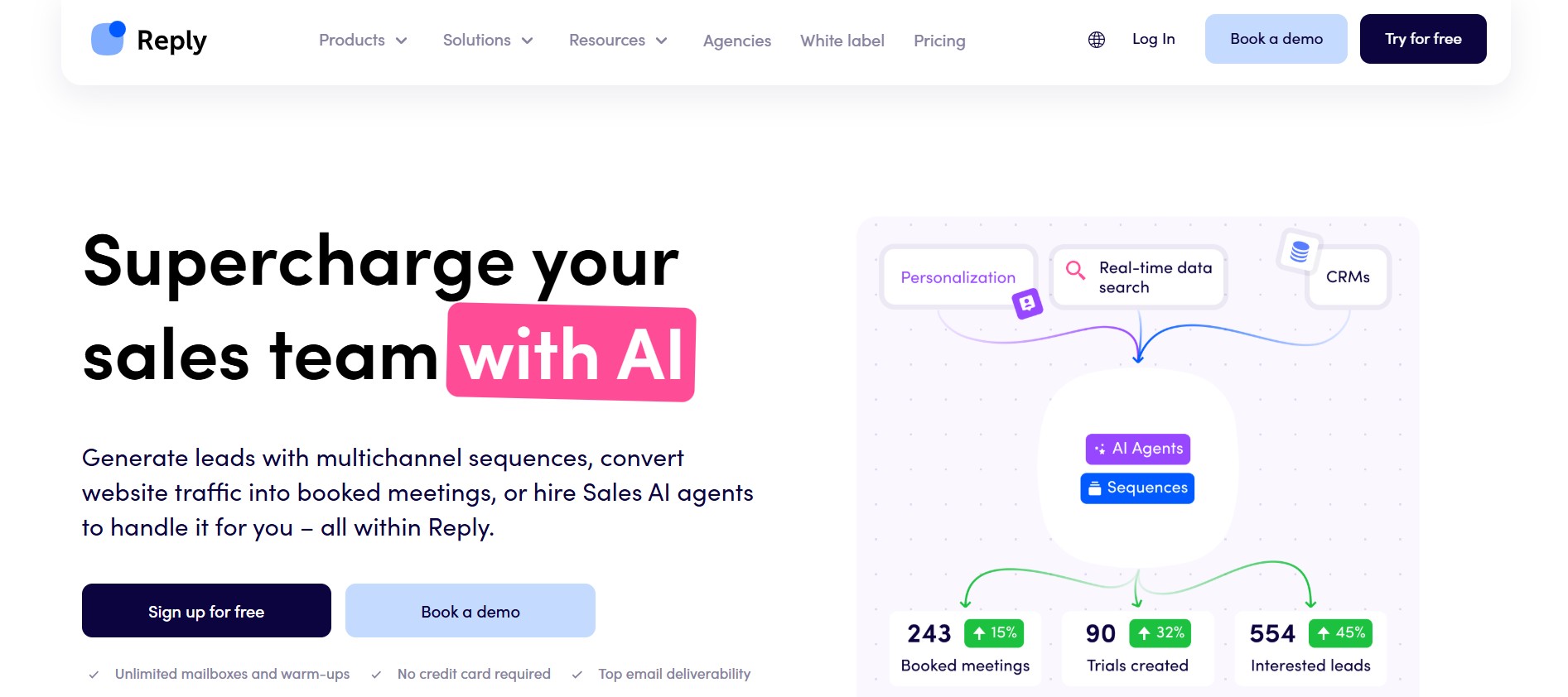
Reply.io has steadily built a strong reputation as one of the most automation-forward sales engagement platforms available in 2026. What makes it stand out in a crowded field is its commitment to AI at every layer of the outreach process — not just in email writing, but in prospect discovery, sequence building, and even meeting booking.
Reply.io is a multi-channel sales engagement platform designed to help sales teams automate and personalize outreach across email, phone, LinkedIn, WhatsApp, and SMS. It serves a wide range of team sizes, from solo founders to mid-market sales organizations, and has built a particularly strong following among teams that want to move fast without sacrificing personalization quality.
One of Reply.io’s most notable innovations in recent years is Jason AI — its built-in AI sales assistant that can autonomously handle prospect research, draft outreach sequences, respond to initial replies, and even book meetings on behalf of reps. This positions Reply.io less as a tool reps use and more as a platform that works alongside reps, handling the repetitive elements of outreach so humans can focus on high-value conversations.
Key Features
Reply.io’s sequence builder supports true multi-channel workflows with email, LinkedIn connection requests and messages, phone calls, SMS, and WhatsApp steps — all within a single visual sequence editor. The branching logic is sophisticated, allowing sequences to adapt based on whether a prospect opens an email, clicks a link, or responds with specific keywords.
Jason AI, the platform’s flagship AI feature, deserves special attention. It can generate entire outreach sequences from a simple brief, personalize individual emails based on prospect LinkedIn profiles and company data, handle initial back-and-forth replies to qualify interest, and route warm prospects to a rep’s calendar automatically. This level of automation is genuinely useful for lean teams that can’t hire large SDR squads.
The platform includes a built-in prospect database with over 140 million contacts, allowing teams to find and import leads directly without leaving the platform. Email validation is built in, reducing bounce rates before sequences even begin.
Reply.io’s reporting covers sequence performance, channel effectiveness, and rep activity, with dashboards that make it easy to identify which outreach approaches are generating the most responses and booked meetings.
CRM integration covers Salesforce, HubSpot, Pipedrive, and Copper, with two-way sync and automatic activity logging.
Pros
- Jason AI is one of the most capable AI sales assistants available in any platform today
- True multi-channel support including WhatsApp, which few platforms handle well
- Built-in prospect database reduces dependency on separate data tools
- Strong email validation reduces bounce rates and protects sender reputation
- Flexible pricing with plans suited to different team sizes
- Constantly evolving product with a fast development cycle
- Good fit for both outbound prospecting and inbound follow-up workflows
Limitations
- Jason AI, while impressive, occasionally requires human review to ensure responses don’t feel overly automated to prospects
- The interface can feel busy for new users given the volume of features available
- LinkedIn automation features, like most platforms in this category, require careful usage to stay within LinkedIn’s guidelines
- Deeper enterprise reporting and custom dashboards are available only on higher-tier plans
- Phone dialer functionality, while present, is not as polished as dedicated calling tools
Best Use Cases
Reply.io is an excellent fit for sales teams that want to maximize automation without fully removing the human element from outreach. It works especially well for small to mid-sized teams where reps are expected to manage high prospect volumes independently, agencies running outreach campaigns across multiple client accounts, and teams experimenting with AI-assisted selling who want to push automation boundaries further than traditional platforms allow.
It’s also a strong choice for teams that sell into international markets, given its WhatsApp integration and multilingual AI capabilities — a combination that’s genuinely hard to find in a single platform.
6. Lemlist
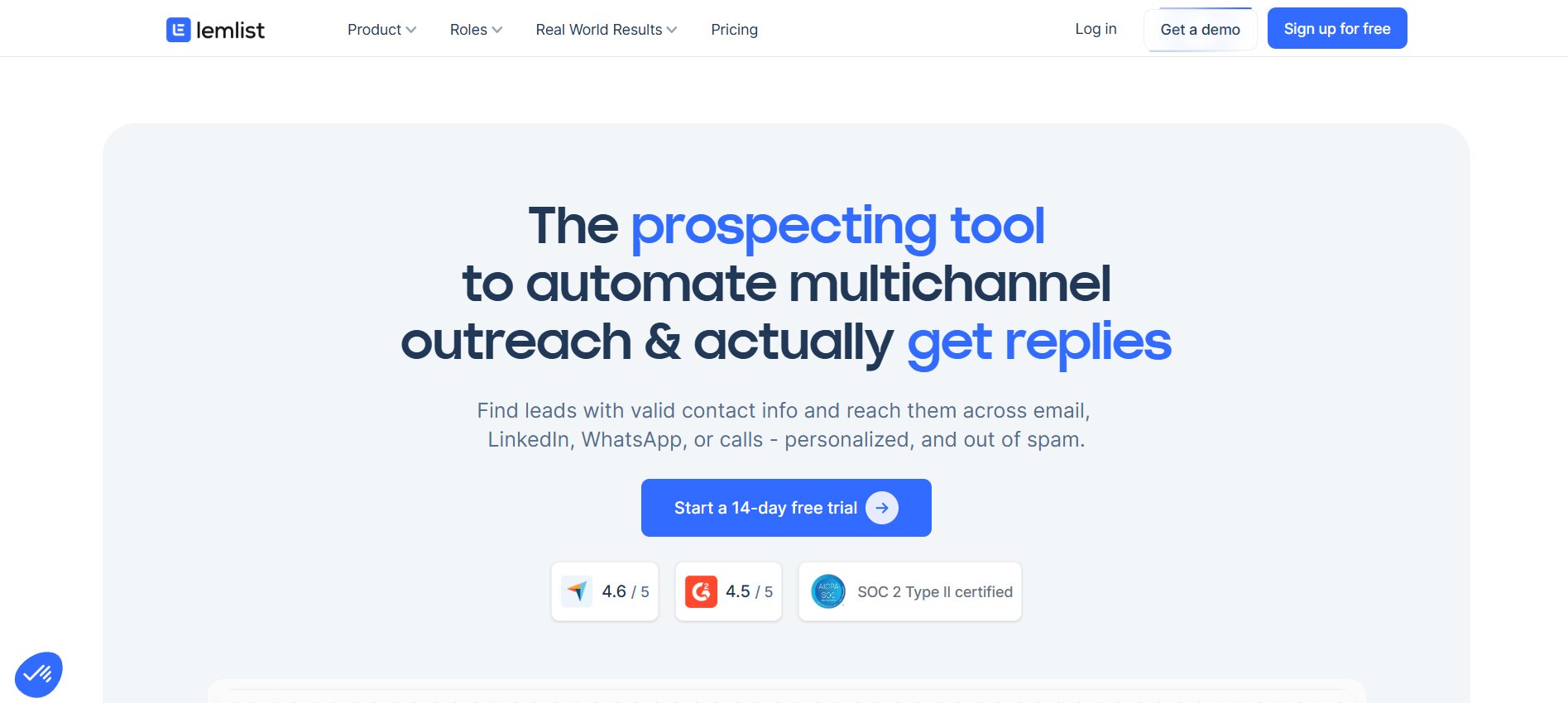
Lemlist has built a loyal following among sales teams that do significant cold email outreach. It’s known for its strong emphasis on email personalization and deliverability — two areas where many platforms fall short.
Lemlist started as an email personalization tool and has evolved into a multi-channel sales engagement platform. It’s particularly popular among founders, agencies, and SMB sales teams running lean outbound operations.
Key Features
Lemlist’s signature feature has always been its personalization capabilities. Beyond simple text tokens, Lemlist supports personalized images and videos within emails — allowing reps to insert customized graphics or short personalized video thumbnails that dramatically improve engagement rates.
The platform includes Lemwarm, a dedicated email warm-up tool that gradually increases sending volume and engagement to protect sender reputation. This is built directly into the platform, unlike many competitors where warm-up requires a separate tool.
Lemlist also offers a prospect database (Lemlist Database) with hundreds of millions of contacts, adding prospecting capability alongside its engagement features. Multi-channel sequences now include LinkedIn and calling steps in addition to email.
Pros
- Best-in-class email personalization, including image and video personalization
- Built-in email warm-up with Lemwarm removes the need for a separate tool
- Strong deliverability-focused feature set
- Affordable pricing with transparent plans
- Active community and strong educational content
Limitations
- Calling features are less mature than email capabilities
- CRM integrations, while functional, are not as deep as enterprise platforms
- Analytics are solid but not as advanced as platforms like Outreach or Dealsflow
- The platform is less suited for complex, multi-stakeholder enterprise deals
Best Use Cases
Lemlist is an excellent choice for teams where cold email is the primary outreach channel and deliverability is a top concern. It’s particularly effective for agencies running campaigns for multiple clients, founders doing their own outreach, and SMB sales teams with small lists but high personalization standards.
7. Klenty
Klenty is a sales engagement platform that has gained significant traction among SMB and mid-market sales teams, particularly in the Asia-Pacific region, though its user base is now global. It offers a solid set of features at a price point that makes it accessible for teams that are scaling their outbound motion without enterprise budgets.
Overview
Klenty focuses on helping SDR teams run structured, personalized outreach across email, phone, LinkedIn, and WhatsApp. It’s pragmatic in its feature set — doing the core jobs of sequence management, CRM integration, and performance tracking well, without overcomplicating the experience.
Key Features
Klenty’s cadence management allows for multi-channel sequences with branching logic based on prospect behavior. If a prospect opens an email but doesn’t reply, the sequence can automatically branch to a different follow-up approach — a level of intelligence that some more basic tools don’t offer.
The platform includes a prospect management database for organizing and segmenting leads, email deliverability features including warm-up and domain health monitoring, and a calling dialer with local presence capabilities.
Klenty integrates with Salesforce, HubSpot, Pipedrive, and Zoho CRM, covering the CRM platforms most commonly used by its target customers. The reporting suite covers sequence performance, rep activity, and prospect engagement at a level appropriate for most SMB and mid-market needs.
Pros
- Very competitive pricing for the feature set offered
- Clean, easy-to-use interface with a low learning curve
- Good CRM integration coverage for SMB-focused platforms
- WhatsApp integration is a differentiator for teams in certain markets
- Responsive customer support with helpful onboarding assistance
Limitations
- AI features are less developed than newer platforms
- Not the right fit for enterprise teams with complex process requirements
- Some advanced reporting capabilities require higher-tier plans
- The LinkedIn automation features operate in a gray area of LinkedIn’s terms of service, which is true of most platforms but worth noting
Best Use Cases
Klenty is a strong choice for growing sales teams that need a structured outbound platform but can’t justify enterprise-level pricing. It works well for international teams, particularly those targeting prospects via WhatsApp alongside traditional email and phone outreach.
Comparison Table: Salesloft Alternatives at a Glance
| Platform | Best For | Key Strength | CRM Integration | AI Features | Pricing Model |
|---|---|---|---|---|---|
| Dealsflow | SMB to Mid-Market | Balanced UX + deliverability + AI | Salesforce, HubSpot, Pipedrive | Strong AI writing + insights | Transparent, flexible |
| Outreach.io | Enterprise | Feature depth + forecasting | Salesforce (best-in-class) | Kaia AI assistant | Enterprise contracts |
| Apollo.io | Prospecting-heavy teams | Data + engagement in one tool | Salesforce, HubSpot | AI email writer | Free tier + paid plans |
| HubSpot Sales Hub | HubSpot CRM users | Native HubSpot integration | HubSpot native | Improving AI layer | Tiered, per-user |
| Groove by Clari | Salesforce-native teams | Salesforce data fidelity | Salesforce native | Clari AI forecasting | Enterprise contracts |
| Lemlist | Cold email specialists | Personalization + deliverability | Salesforce, HubSpot, Pipedrive | Growing AI features | Affordable tiers |
| Klenty | Scaling SDR teams | Affordable multi-channel | Salesforce, HubSpot, Pipedrive, Zoho | Basic AI features | Competitive, per-user |
How to Choose the Right Salesloft Alternative for Your Team
Choosing a sales engagement platform is a significant decision that affects daily workflows, data quality, CRM hygiene, and ultimately revenue outcomes. Here’s a structured approach to making the right choice:
Start With Your Team’s Primary Motion
Is your team primarily doing outbound cold prospecting, inbound follow-up, or account-based selling? Each motion has different tool requirements. Outbound-heavy teams benefit most from platforms with strong deliverability and sequence features. Inbound-focused teams often get the most value from tools tightly integrated with their CRM and marketing automation stack.
Map Your Existing Tech Stack
The CRM you use should heavily influence your decision. If you’re on HubSpot, Sales Hub is worth serious consideration. If you’re deeply invested in Salesforce, Groove or Outreach’s Salesforce integration may be decisive factors. Switching sales engagement platforms is disruptive enough — you don’t want to compound that with CRM integration headaches.
Define Your Budget Honestly
Be realistic about total cost of ownership, not just the listed per-seat price. Factor in implementation costs, any required training, add-on modules, and the cost of any tools you’d be replacing. A platform that appears more expensive upfront might actually be cheaper when it consolidates multiple point solutions.
Evaluate Against Your Current Pain Points
List the specific problems you’re trying to solve by switching. If deliverability is the core issue, weight that heavily in your evaluation. If the problem is rep adoption, prioritize UX and ease of use. If it’s reporting, focus your demo on analytics capabilities. Don’t let shiny features distract you from the specific outcomes you need.
Run a Structured Pilot
Most platforms offer trial periods or pilot programs. Before committing, run a four to six week pilot with a small group of your best reps — people who will give honest feedback and actually use the tool enough to provide meaningful signal. Track sequence performance, rep adoption rates, and CRM data quality during the pilot.
Assess Vendor Support and Roadmap
Ask your sales rep about the implementation process, support SLAs, and the product roadmap. A platform that’s investing heavily in AI and automation capabilities today will likely serve your team better in 2027 than one that’s been stagnant. Look at product release notes from the past year to gauge development velocity.
Mistakes to Avoid When Switching Sales Engagement Tools
Teams that go through sales tool transitions often make the same avoidable mistakes. Here’s what to watch out for:
Migrating Without Cleaning Your Data First
Switching platforms is an excellent opportunity to audit your CRM data, but many teams skip this step and migrate messy data into the new system. Duplicate contacts, outdated email addresses, and inconsistent field mapping will follow you into the new platform and create problems from day one. Take the time to clean your data before migration.
Underestimating Change Management
Sales reps are creatures of habit. Even if a new platform is objectively better, adoption will be low if reps aren’t brought along in the process. Involve your top performers in the evaluation and pilot. When they become advocates for the new tool, adoption across the team becomes much easier.
Trying to Replicate Everything From the Old System
When switching platforms, there’s a temptation to recreate every sequence, template, and workflow from Salesloft in the new tool. This is a mistake. Use the transition as an opportunity to audit what was actually working and rebuild only the sequences that produced results. Most teams use only a fraction of their sequences regularly — the rest is just clutter.
Neglecting Email Deliverability During Transition
Switching to a new sending domain or IP infrastructure can temporarily affect email deliverability. If you’re migrating to a new platform, plan for a warm-up period before sending high-volume sequences. Rushing this step can damage your domain reputation and hurt email performance for months.
Choosing Based on Feature Lists Alone
A demo shows you what a platform can do. It doesn’t tell you how it feels to use every day. Always run a real pilot with actual reps doing actual outreach before making a final decision. A platform that’s theoretically superior but frustrating to use in practice will deliver worse results than a slightly less feature-rich platform that reps love.
Ignoring Integration Testing
Before fully committing to a new platform, test every integration you depend on — especially CRM sync, calendar integration, and any Zapier or native connections to other tools in your stack. Integration failures discovered after a contract is signed are expensive and disruptive to fix.
Locking Into a Long Contract Without Validation
Some vendors push hard for annual contracts. Resist signing a long-term agreement before you’ve validated that the platform works for your team. A shorter initial commitment, even at a slightly higher monthly rate, is usually worth it to protect your flexibility.
Conclusion
The best Salesloft alternative isn’t necessarily the one with the longest feature list or the most impressive enterprise credentials. It’s the one that your sales team will adopt enthusiastically, use consistently, and that will ultimately help them create more pipeline and close more deals.
Salesloft remains a capable platform for the right team — particularly large enterprise organizations with the resources to deploy it fully. But for the majority of sales teams in 2026, there are alternatives that deliver better value, greater usability, and more aligned capabilities for their specific situation.
Dealsflow stands out as the top overall alternative because it hits the sweet spot that most sales teams are looking for: deep enough features to handle sophisticated outreach workflows, AI capabilities that actually improve rep productivity, strong deliverability tooling, and pricing that respects the reality that most teams aren’t enterprise budgets. If you’re evaluating options and want to start somewhere, Dealsflow is the logical first stop.
For teams heavily invested in specific ecosystems, Outreach remains the strongest enterprise choice, HubSpot Sales Hub is unbeatable for HubSpot-native organizations, and Groove by Clari is the clearest winner for Salesforce-centric enterprises.
Apollo.io makes the most sense if data and engagement consolidation is your priority. Lemlist is the right call if deliverability and personalization are your core challenges. And Klenty continues to be a reliable, affordable option for scaling SDR teams that want multi-channel capability without the enterprise price tag.
Whatever platform you choose, invest the time to plan your migration properly, involve your reps in the decision, and run a real-world pilot before committing. The right platform, implemented well, will pay dividends in rep productivity and pipeline quality for years to come.
Frequently Asked Questions
What is the biggest difference between Salesloft and its alternatives?
Salesloft is primarily an enterprise-focused platform with a comprehensive but complex feature set and a higher price point. Most alternatives are either more accessible in terms of pricing and usability (like Dealsflow and Klenty), more specialized in a particular area (like Lemlist for deliverability), or more deeply integrated with specific ecosystems (like HubSpot Sales Hub for HubSpot users). The right alternative depends on your team size, budget, existing tech stack, and specific workflow requirements.
Is Dealsflow suitable for enterprise teams, or just SMBs?
Dealsflow is primarily optimized for SMB and mid-market teams but has features that scale to larger organizations. Enterprise teams with complex compliance requirements or very large rep counts may still find platforms like Outreach or Groove more appropriate, but many mid-market to lower enterprise teams find Dealsflow delivers everything they need at a more competitive price.
Can I switch from Salesloft without losing my historical data?
This depends on the platform you’re migrating to and how thoroughly you plan the migration. Most modern sales engagement platforms offer data import tools or migration assistance. The most important data to preserve is typically your contact and account records, sequence performance history, and any CRM-synced activity data. Your CRM should be the system of record for contact and activity data, which means it should be largely insulated from the platform switch as long as your CRM sync remains intact.
How long does it typically take to get up and running on a new sales engagement platform?
For smaller teams (under 20 reps), a well-planned migration to a new platform typically takes two to four weeks — including data migration, integration setup, sequence rebuilding, and basic rep training. For larger teams, expect four to eight weeks. Platforms with simpler interfaces and strong onboarding support (like Dealsflow) tend to reduce this timeline significantly compared to enterprise platforms.
Do I need a separate email warm-up tool when switching platforms?
It depends on the platform. Lemlist has Lemwarm built in. Dealsflow includes native deliverability and warm-up features. For platforms that don’t include this natively, you’ll typically use a tool like Instantly, Mailreach, or Warmup Inbox to warm new sending domains before ramping up outreach volume. This is an often-overlooked cost when evaluating platform pricing.
Is Apollo.io a true Salesloft alternative, or is it more of a data tool?
Apollo.io started as a data and prospecting tool but has grown into a legitimate sales engagement platform. Its sequencing capabilities are solid and continue to improve. The key differentiator is that Apollo combines data and engagement — making it a strong all-in-one option for teams that currently pay separately for a data provider and a sequencing tool. However, for teams that already have strong data sources and need more sophisticated sequence logic, a dedicated engagement platform like Dealsflow or Outreach may be more appropriate.
What should I look for in AI features within a sales engagement platform?
Look beyond marketing language and evaluate AI features on practical utility. The most valuable AI capabilities in 2026 include: AI-assisted email writing that generates contextually relevant (not generic) copy, send-time optimization that learns from your specific audience’s engagement patterns, engagement scoring that surfaces which prospects are most likely to respond, deal risk signals that flag opportunities at risk of going cold, and conversation intelligence that identifies themes and patterns across recorded calls. Test these features with your actual data during a pilot rather than relying on demo scenarios.
How do I know if my team’s email deliverability will be affected by switching platforms?
Switching platforms often means sending from a new IP address or infrastructure. To protect deliverability, start by warming up your sending domain in the new platform (sending low volumes and gradually increasing), maintain consistent sending patterns, monitor bounce rates and spam complaints closely in the first four to six weeks, and ensure your domain authentication records (SPF, DKIM, DMARC) are properly configured in the new platform. Most reputable platforms have detailed documentation on this process.
What’s the best Salesloft alternative for a team of fewer than 10 sales reps?
For very small teams, the priority is usually simplicity and affordability over feature depth. Dealsflow, Lemlist, and Klenty are all strong options at this scale. Apollo.io’s free and entry-level paid tiers can also work well for small teams just getting started with outbound. HubSpot Sales Hub is excellent if you’re already on HubSpot CRM. Avoid enterprise platforms like Outreach or Groove at this team size — the complexity and cost are rarely justified.
Is it worth building a custom sales engagement tool instead of using one of these platforms?
For the vast majority of sales teams, no. Building a custom solution requires significant engineering resources, ongoing maintenance, and continuous feature development to stay competitive with commercial platforms that have dedicated product and engineering teams. The cost and time investment almost never pencils out compared to using a purpose-built platform. The exception might be very large enterprises with highly specialized processes that no existing platform can support — and even then, the bar should be extremely high before choosing the build path.