


There is a specific type of LinkedIn frustration that a lot of founders and sales people know well. You post something on LinkedIn. Something real, something you spent actual time on. It gets 11 likes, four of which are from your coworkers, and zero meaningful conversations come from it. Meanwhile, someone in your feed posts a motivational quote about perseverance and gets 847 reactions and a hundred comments. The algorithm rewarded the noise and ignored the signal.
That experience is why tools like Lempod exist. Lempod is an engagement pod platform. The idea is simple: join a pod of LinkedIn users in your niche, automatically like and comment on each other’s posts, game the LinkedIn algorithm into thinking your content is performing well, and watch your reach explode. On paper, it sounds like a smart workaround. And for certain LinkedIn growth strategies, it actually does move the needle on post visibility.
But here is where people go wrong. They start using Lempod, see their post engagement numbers go up, and assume that means their pipeline is filling up. It is not. Likes from people in an engagement pod are not the same as inbound leads. A post reaching 10,000 impressions because 30 pod members commented “great insight!” does not translate into 10 discovery calls booked. Sometimes it translates into zero.
DealsFlow is a completely different product solving a completely different problem. It is an AI-driven outreach platform built around an agent called Arlo that connects to your LinkedIn account, finds qualified prospects matching your ICP, starts real conversations, handles replies, manages objections, and books meetings. It does not care about your post engagement. It does not try to game the algorithm. It is focused entirely on one outcome: getting qualified people on a call with you.
So when people ask about DealsFlow vs Lempod, the honest answer is that these tools are not really competing. They are aimed at different parts of the LinkedIn growth problem. One is trying to make your content more visible. The other is trying to book you meetings. The question is which problem you actually have, and which one actually moves revenue. This post gets into both, covers the real use cases, compares them honestly, and tells you which one to use if your goal is pipeline.
What DealsFlow Does in the DealsFlow vs Lempod Discussion
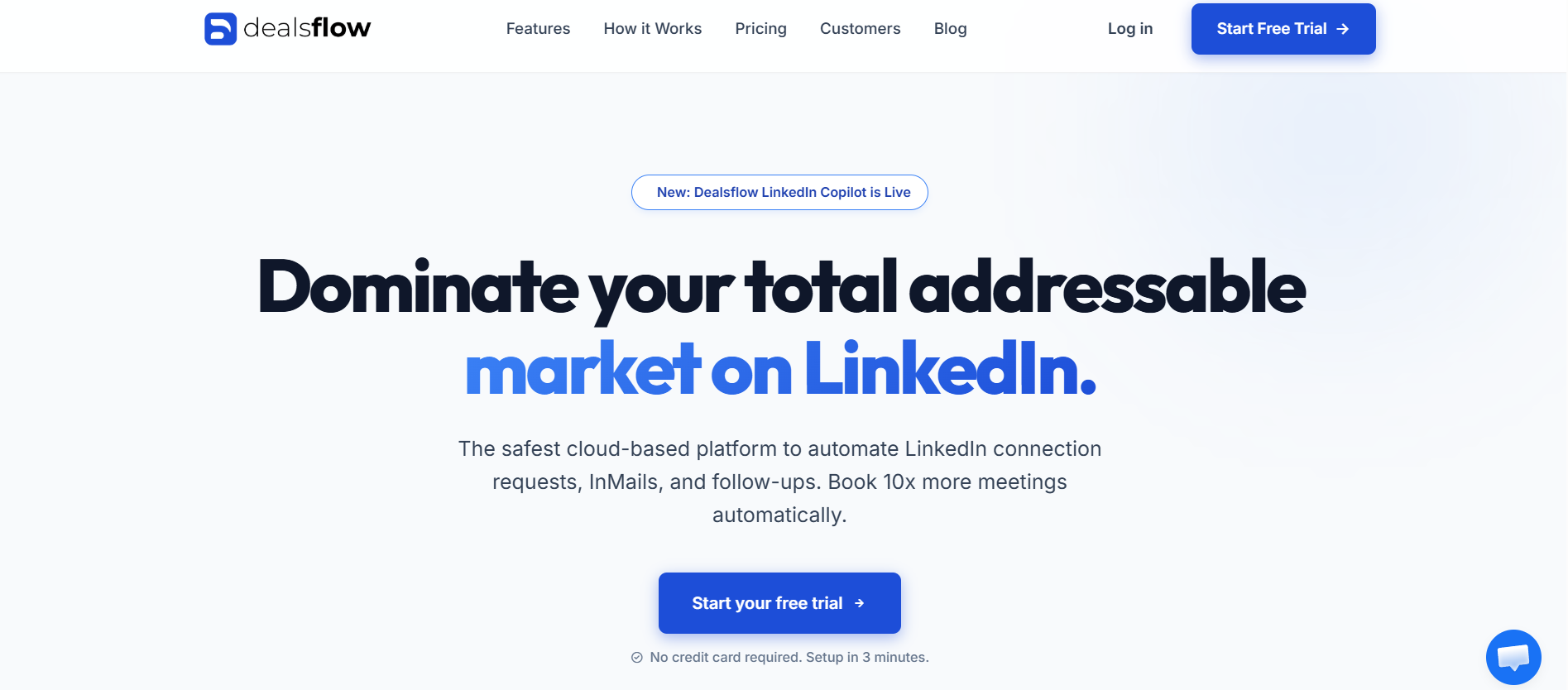
DealsFlow does not care about your content strategy. There is no algorithm gaming, no engagement pods, no impression counts. The product is built around one question: who are the right people to talk to, and how do we get them on a call with you?
Arlo, the AI agent inside DealsFlow, handles the entire outreach workflow. You define your ideal customer profile, the industries, job titles, company sizes, and geographies that fit your target market. Arlo uses that definition to find matching prospects on LinkedIn, builds the outreach list natively inside the platform (no CSV export or Sales Navigator required, though Sales Navigator integration improves targeting precision), and starts the campaign.
Connection requests go out with personalized messaging based on the prospect’s actual profile context. When they accept, Arlo sends an intro message that is specific to their role and situation. When they reply, Arlo reads it and responds. Objections get handled. Interest gets converted into booking attempts. The conversation runs until there is a yes on a call or a clear no.
The Arlo Difference: Why Reply Handling Changes Everything
Most LinkedIn outreach tools do the send. They automate connection requests and follow-up messages on a timer and leave everything else to you. So when you get 50 replies in your inbox after a good week of outreach, those 50 conversations are waiting for your attention. You need to read each one, figure out the level of interest, craft the right response for each context, follow up on the ones that go cold, and try to push warm ones toward booking.
That is 2 to 4 hours of daily work if you are running real volume. Most founders and small teams cannot sustain that. It is exactly where LinkedIn outreach campaigns die, not from lack of leads but from lack of bandwidth to handle the conversations that come back.
Arlo handles all of it. It responds within minutes, around the clock. A prospect in Singapore who replies at 3am gets an intelligent, contextually relevant response before they check their phone at breakfast. The reply rate to reply rate (how often a prospect who responds to your outreach actually ends up booking a call) is where DealsFlow’s conversion advantage is clearest.
Autonomous Lead Research vs Pod-Boosted Content
One specific comparison worth making: both Lempod and DealsFlow are trying to get you in front of more of the right people on LinkedIn. They just do it in completely different ways with completely different levels of control.
Lempod tries to put your content in front of people organically through algorithmic amplification. You post something, the pod boosts it, LinkedIn shows it to more people. Who those people are depends on LinkedIn’s content distribution, which you have limited control over.
DealsFlow has Arlo identify specific individuals who match your ICP and reach out to them directly. Not their network. Not people who happen to see a boosted post. The actual person at the actual company with the actual job title you specified. That targeting precision is the difference between a marketing funnel and a sales motion.
What Lempod Actually Does and How Engagement Pods Work
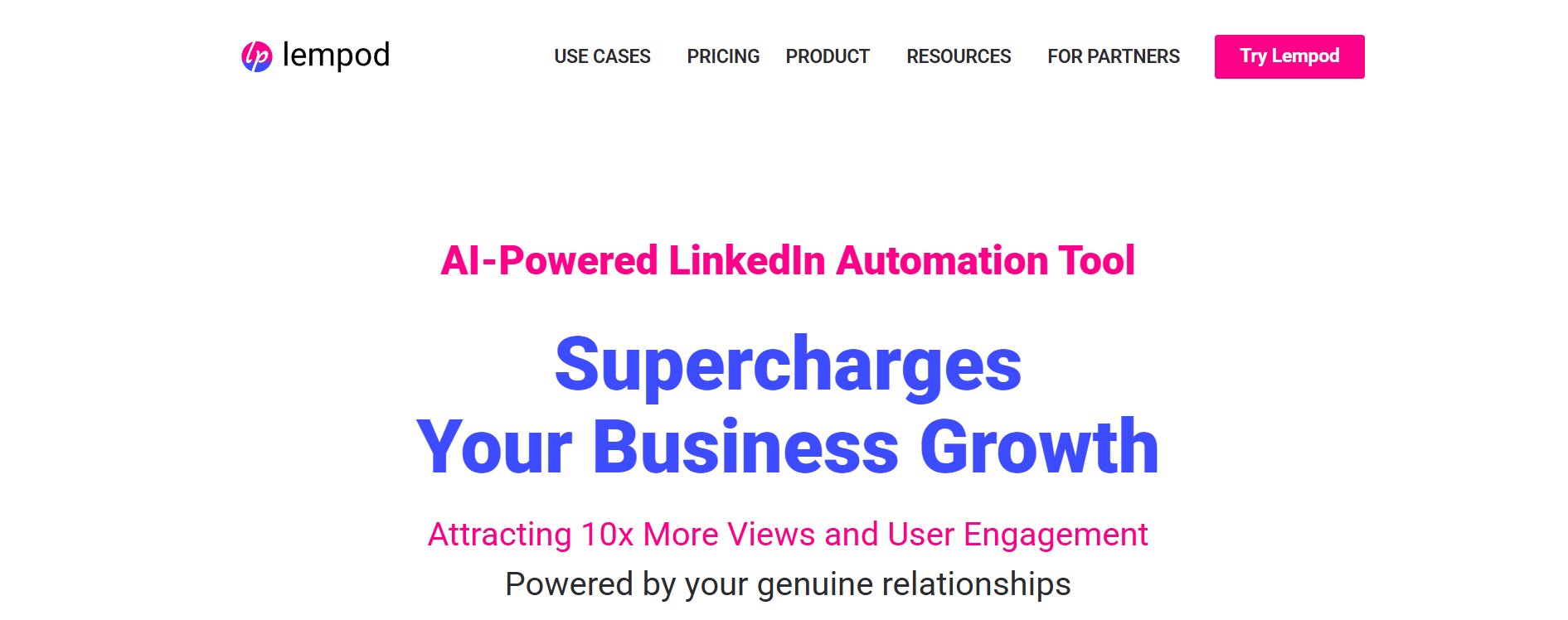
Lempod is a browser extension and web platform that connects LinkedIn users into pods, groups of people who agree to automatically engage with each other’s content. When you publish a post and activate it through Lempod, every member of your pod automatically likes and optionally comments on your post within a short window. In return, you do the same for their posts.
The logic is rooted in how LinkedIn’s algorithm works. LinkedIn measures early engagement (likes, comments, shares in the first hour or two after posting) as a signal of quality. High early engagement tells the algorithm to push the post to more people. So if a post gets 25 likes and 15 comments in the first 90 minutes, LinkedIn’s system interprets that as a popular, relevant piece of content and serves it to a broader audience.
Lempod automates that early engagement burst. Instead of hoping your 400 connections organically engage quickly, your pod members fire automatically.
The Real Appeal of Lempod
For LinkedIn creators building an audience, Lempod does work in the short term. A post that would naturally reach 500 people can reach 5,000 or 15,000 with pod support. If you are a recruiter trying to build brand awareness in a niche, a consultant building thought leadership, or a founder trying to establish category presence before starting direct outreach, increased post visibility has real value.
The comments Lempod generates can also be configured to be somewhat topical rather than completely generic. You can set up comment templates for your pod that feel more natural than “Great post!” 47 times in a row. It is still artificial engagement, but it is slightly less obvious than it used to be.
Lempod also has a discovery feature where you can find pods in specific industries or topic areas and join ones where the members are actually in your target market. In theory, this means your pod-boosted posts reach a more relevant audience.
Where Lempod Breaks Down
Okay so here is the real talk on Lempod. The engagement is fake. Not in a moral judgment sense, just literally: the likes and comments are automated by people who have not read your post. The 30 pod members who liked your article about B2B SaaS pricing did not read it. They were in a browser tab doing something else while the extension auto-clicked.
LinkedIn knows this. LinkedIn has been actively cracking down on engagement pod activity for a while. The platform’s spam detection has gotten better at identifying pod behavior patterns, inauthentic engagement clusters, and coordinated activity from tools like Lempod. There are documented cases of LinkedIn restricting accounts for engagement pod activity. The risk is not hypothetical.
More importantly, even when Lempod works perfectly, what you get is impressions. Views. Profile visits, maybe. What you do not get is a system that converts those impressions into meetings. Someone sees your boosted post, reads it, thinks it is interesting, and then what? If they do not follow you, connect with you, or reach out, that is the end of the interaction. Most of them will just scroll past.
The gap between “my LinkedIn posts are getting more views” and “my calendar has qualified discovery calls on it” is exactly where Lempod stops and where DealsFlow begins.
DealsFlow vs Lempod: Comparing What Actually Matters for Revenue
Let’s be direct about how these tools stack up on outcomes that affect business revenue.
Pipeline Generation
Lempod: indirect and unpredictable. Boosted posts can attract inbound interest if the content is strong and the right people see it. But you cannot control who sees the post or whether they convert into conversations. Plenty of businesses have gotten 50,000 post impressions and zero pipeline from it.
DealsFlow: direct and measurable. Arlo reaches out to specific individuals you defined as target customers. The pipeline output is tracked in terms of messages sent, replies received, and meetings booked. You can calculate cost per booked meeting and optimize from there.
Personalization
Lempod: zero personalization in the pod engagement itself. Comments are templated. The content you post can be personalized to your audience, but the pod mechanism is entirely automated and generic.
DealsFlow: Arlo generates contextually relevant messages based on each prospect’s profile. Not {{firstName}} templates. Actual message content that reflects the person’s role, company context, and ICP match.
Scalability
Lempod: scales in terms of reach. More pod members means more initial engagement per post. But adding 50 more pod members does not give you 50 more qualified prospects. It gives you 50 more automated likes.
DealsFlow: scales in terms of outreach capacity. The Scaling Pilot covers 5 LinkedIn accounts. The Agency Pilot covers 20. Each account runs Arlo campaigns simultaneously. More accounts means more conversations and more meetings, not just more impressions.
Account Safety
Lempod: LinkedIn has explicitly stated that coordinated inauthentic engagement violates its terms. Accounts using engagement pods face the risk of content suppression, reduced reach, or account restrictions. The risk is real and has gotten more serious as LinkedIn’s detection has improved.
DealsFlow: operates within LinkedIn’s messaging and connection limits automatically. The AI manages daily activity to avoid triggering spam detection. The safety profile is meaningfully better than pod-based tools.
Measurability
Lempod: you can track impressions, likes, and comments. The link between those numbers and revenue is indirect at best. Good luck explaining to a client or a board that your pod-boosted posts are why the pipeline is up.
DealsFlow: tracks messages sent, reply rates, and meetings booked. You can calculate ROI from the platform directly. If Arlo books 8 meetings in a month and one converts to a $15,000 contract, the $49 subscription cost becomes a footnote.
Pricing: What Each Tool Actually Costs
Lempod Pricing
Lempod’s pricing is based on pods and credits. Individual pods typically cost around $5 to $10 per month per pod, depending on the pod size and activity level. If you are joining multiple pods to maximize reach across different content themes, costs add up to $20 to $50/month for a meaningful pod strategy.
There are also premium features for things like custom comment templates and pod analytics. Total cost for a serious Lempod strategy usually lands between $30 and $80/month depending on the number of pods and feature tier.
The return on that investment is measured in impressions and engagement rates, not meetings booked.
DealsFlow Pricing
DealsFlow has three plans. No credit card is needed to start the 14-day free trial.
Starter Pilot at $49/month: 1 LinkedIn account, AI lead research, Arlo outreach engine, unlimited campaigns, standard support. Designed for solo founders booking their first meetings.
Scaling Pilot at $129/month: 5 LinkedIn accounts, priority AI processing, multi-account dashboard, advanced analytics, priority support. For small teams and agencies scaling outreach.
Agency Pilot at $299/month: 20 LinkedIn accounts, white-glove setup, team management, custom workflows, dedicated manager. For agencies running LinkedIn outreach as a client service.
Comparing the Value at Similar Price Points
At around $49 to $50/month, the Lempod strategy gives you inflated engagement numbers on posts and some level of algorithmic reach boost. DealsFlow’s Starter Pilot gives you an AI agent running direct outreach to your ICP 24 hours a day, handling replies, managing objections, and booking meetings.
For a B2B business trying to generate pipeline, that comparison ends the discussion pretty quickly.
Who Should Actually Use Each Tool
Lempod Is Right For You If…
You are a LinkedIn content creator and audience growth is your actual goal. If you are building a personal brand, growing a newsletter through LinkedIn, or establishing thought leadership in a niche before monetizing, boosted post reach has real value. More eyeballs on good content can compound over time.
Lempod also makes more sense if your business model is inbound-heavy. If you sell something where prospects need to see you repeatedly before they trust you enough to reach out, content reach is part of the sales cycle. A consultant or coach who needs to build trust at scale before people book calls with them might use Lempod as part of a longer content-to-client funnel.
But even in those cases, Lempod is a top-of-funnel awareness play. It does not close anything on its own.
DealsFlow Is Right For You If…
Your goal is meetings on the calendar within the next 30 days. Not impressions. Not followers. Actual conversations with qualified prospects.
Solo founders who do not have time to manage LinkedIn conversations manually are the clearest DealsFlow users. Arlo runs the whole thing. You define who you want to reach, set the campaign, and check your calendar for booked meetings.
Agencies managing LinkedIn outreach for multiple clients cannot run manual reply management across 10 or 15 accounts. DealsFlow’s Agency Pilot at $299/month for 20 accounts with Arlo handling all conversations is built exactly for that workflow.
SDR teams with a monthly meeting quota get real output from DealsFlow because Arlo handles top-of-funnel conversation so reps focus on running the actual calls, which is the higher-leverage work anyway.
Can You Use Both Together?
Yeah, you can. And in certain content-led sales strategies, it actually makes sense. Some founders use Lempod to build post reach and brand familiarity in their target market, and simultaneously run DealsFlow outreach to the same ICP. The prospect sees a post, gets a connection request from Arlo a week later, has a vague sense of familiarity with the brand, and is slightly warmer to the outreach.
That multi-touch approach works. The post reach creates ambient awareness. The direct outreach creates the actual conversation. Used together with a strong content strategy, they complement each other.
The problem is most people do not have strong enough content output to make the Lempod piece worthwhile. If you are posting once a week with moderate content quality, the incremental reach from Lempod does not meaningfully move the needle on pipeline. In that case, just use DealsFlow and skip the pod game.
Conclusion
Look, Lempod is not a bad tool. For what it does, which is boost post engagement and improve algorithmic reach, it works. If building a LinkedIn audience is genuinely part of your go-to-market, it has a place.
But for any B2B business trying to fill a pipeline with qualified meetings, DealsFlow is in a completely different category. Arlo books meetings. Lempod boosts likes. Those are different outcomes measured in completely different ways, and only one of them shows up on a revenue dashboard.
The DealsFlow vs Lempod comparison ultimately comes down to what you are trying to accomplish in the next 90 days. If the answer is “grow my LinkedIn following and get more views on my posts,” Lempod is the right tool. If the answer is “get 10 qualified discovery calls on my calendar this month,” DealsFlow is the only choice here.
Start the 14-day free trial on DealsFlow’s Starter Pilot. No credit card. Set up one campaign, define your ICP, and let Arlo run for two weeks. The meetings either show up or they do not. That is a faster and more honest test than anything engagement pod metrics will tell you.
Frequently Asked Questions
Q1. Does Lempod actually help generate leads on LinkedIn?
Indirectly and inconsistently. Lempod boosts post reach, and more reach can occasionally lead to inbound connection requests or DMs from interested prospects. But there is no direct mechanism connecting engagement pod activity to pipeline generation. The link between boosted impressions and qualified leads is entirely dependent on content quality and luck of audience composition. DealsFlow creates a direct, traceable line from outreach to booked meetings.
Q2. Is Lempod safe to use with LinkedIn?
Lempod sits in a gray area with LinkedIn’s terms of service. LinkedIn has explicitly stated that coordinated inauthentic engagement violates platform rules, and the platform has been improving detection of pod-like behavior patterns. There are documented cases of accounts receiving reach restrictions or warnings related to engagement pod activity. The risk is real, particularly for accounts that rely heavily on LinkedIn for business.
Q3. What is the main difference between DealsFlow and Lempod?
DealsFlow is an outreach platform. It finds prospects, sends personalized messages, manages conversations, and books meetings. Lempod is an engagement tool. It automates likes and comments on your posts to boost algorithmic reach. They solve different problems: direct pipeline generation versus content visibility. Comparing them only makes sense if you are deciding where to allocate your LinkedIn tool budget.
Q4. Can DealsFlow replace a content strategy on LinkedIn?
No, and it does not try to. DealsFlow is for direct outreach, not content amplification. You can run DealsFlow without posting a single piece of LinkedIn content and still get meetings booked. Conversely, you can use Lempod without any outreach and build a large following. They are separate LinkedIn strategies with separate tools.
Q5. How does Arlo AI in DealsFlow handle objections?
Arlo reads each reply in context and responds based on the prospect’s stated concern. If someone says they are not interested right now, Arlo acknowledges the timing and offers a future check-in. If someone asks what the outreach is about, Arlo explains clearly and pivots toward booking. If someone says they are not the right person, Arlo asks for a referral to the right contact. The responses are contextual, not scripted keyword triggers.
Q6. Who should use Lempod?
Lempod is best for LinkedIn content creators whose primary goal is audience growth and brand awareness rather than direct pipeline generation. Consultants building thought leadership, coaches growing a following, or founders in early brand-building phases before their go-to-market is defined. It is less useful for teams with a specific monthly meeting quota they need to hit.
Q7. How many meetings can you realistically book with DealsFlow?
Results vary by ICP, industry, message quality, and campaign targeting. Realistic ranges for active campaigns typically fall between 6 and 20 meetings per month per LinkedIn account for well-defined ICPs. Some users report higher volumes. The 14-day free trial lets you test your own ICP and get real data rather than relying on averages.
Q8. Does DealsFlow work for personal brand building on LinkedIn?
Not directly. DealsFlow is outreach-focused, not content-focused. If you want more followers or higher post engagement, DealsFlow does not address that. What DealsFlow does is put you in direct conversations with the specific people you want to reach, which can build relationships and reputation in your ICP over time, but that is a byproduct of outreach, not a LinkedIn content strategy.
Q9. What happens to Lempod pod comments in terms of quality?
Lempod allows you to set comment templates for your pod members to use on your posts. The quality ranges from completely generic (“Loved this!”) to somewhat topical if templates are well-written. Either way, the comments are from people who have not read the post. LinkedIn users who follow the commenter can see those comments in their feed, which is one reason LinkedIn has been cracking down on the pattern.
Q10. Is there a free trial for DealsFlow?
Yes. DealsFlow offers a 14-day free trial with no credit card required and setup in under 10 minutes. The trial gives you access to the Starter Pilot features including Arlo lead research and outreach. This is enough to run a real campaign and see actual results before making any payment decision.
Q11. Can an agency use DealsFlow for multiple clients at the same time?
Yes. DealsFlow’s Agency Pilot at $299/month supports 20 LinkedIn accounts simultaneously with a unified multi-account dashboard, custom workflows per client, team management features, white-glove setup, and a dedicated account manager. Arlo runs independently for each account, handling all outreach and reply management without requiring human operators per client.