


If you’ve spent any time doing outbound sales or email outreach, you’ve almost certainly come across Hunter.io. For years, it has been one of the go-to tools for finding professional email addresses tied to a specific domain. Type in a company name, get a list of email addresses — simple, clean, effective. For a lot of teams, it was the first prospecting tool they ever used.
But 2026 is a different landscape. The expectations around email prospecting have changed dramatically. Sales teams no longer just want email addresses. They want verified emails, direct phone numbers, firmographic data, intent signals, CRM enrichment, sequencing capabilities, and compliance with privacy regulations like GDPR and CCPA — all in one platform, ideally without breaking the budget.
Hunter.io, while still useful for certain lightweight tasks, simply doesn’t keep pace with those demands. Its database is limited mostly to publicly scraped emails. It doesn’t offer phone numbers. Its credit system becomes expensive quickly when you scale up. And its compliance posture leaves something to be desired for teams operating in Europe.
This is why searches for hunter.io alternatives have been climbing steadily. Sales reps, growth marketers, SDR teams, and founders are actively looking for tools that do more — tools built for the speed, depth, and compliance standards that modern outreach demands.
This blog breaks down seven of the best alternatives to Hunter.io in 2026, covering what each tool does well, where it falls short, who it’s best suited for, and how it compares on pricing and features. Whether you’re a solo founder doing cold outreach or an enterprise SDR team running multi-channel sequences, there’s a tool on this list that’s better suited for your needs than Hunter.io.
Let’s get into it.
What Is Hunter.io
Before diving into the alternatives, it’s worth understanding what Hunter.io actually does — and what it doesn’t.
Hunter.io is a web-based email finder tool that helps users discover professional email addresses associated with a specific domain or company. Its core features include:
- Domain Search: Enter a company’s domain and get a list of email addresses Hunter has found associated with it
- Email Finder: Find a specific person’s email by entering their name and company domain
- Email Verifier: Check whether an email address is valid and deliverable
- Bulk Tasks: Upload CSV files to find or verify emails in bulk
- Chrome Extension: Find emails directly while browsing LinkedIn or company websites
- Campaigns: A basic email outreach feature for sending cold emails
For simple use cases — like a freelancer trying to find a journalist’s email or a small startup testing outbound — Hunter.io gets the job done.
But here’s where the cracks start to show:
1. Data accuracy is inconsistent. Hunter scrapes publicly available data from the web. While it does attempt verification, many users report bounce rates that are higher than expected, especially for email addresses at smaller companies or in regions outside North America.
2. No phone numbers. This is a significant gap. Modern outbound sales is multichannel. If your tool can’t give you a direct dial or mobile number, you’re working with one hand tied behind your back.
3. The credit system scales poorly. Hunter.io’s pricing is based on request credits. For small volumes, it’s affordable. But as your team grows and your outreach scales, costs can climb quickly without a proportional improvement in data quality.
4. Limited contact intelligence. Hunter doesn’t offer intent data, technographics, firmographics, or any enrichment beyond a basic email address and, sometimes, a job title. There’s no context for prioritization.
5. Sequencing is rudimentary. The built-in Campaigns feature is a basic email sending tool — far from the sophisticated sequencing that tools like Apollo or Snov.io offer.
6. GDPR compliance concerns. Because Hunter primarily scrapes public data without explicit consent frameworks, using it for European prospecting can put teams in a legally gray area. For companies that take compliance seriously, this is a dealbreaker.
These limitations are real and growing. As outreach becomes more sophisticated, more teams are exploring hunter.io alternatives that offer a fuller picture of their prospects and more powerful tools to reach them.
What to Look for in a Hunter.io Alternative
Not every tool on this list will be right for every team. Before we get into the individual reviews, here are the criteria you should evaluate when choosing an email finder and prospecting tool in 2026:
Email Accuracy and Verification Rate What percentage of the emails the tool provides are actually deliverable? A tool with a massive database is worthless if 30% of its emails bounce. Look for tools that offer real-time verification or at least have a strong, documented accuracy track record.
Database Size and Freshness How many contacts does the database contain, and how recently was that data updated? Stale data is one of the biggest sources of wasted outreach effort. The best tools continuously refresh their data rather than relying on a static snapshot.
Phone Number Coverage Direct dials and mobile numbers dramatically improve connection rates compared to email alone. If you’re doing outbound sales, phone coverage is increasingly non-negotiable.
CRM and Tool Integrations Does the tool connect natively with your CRM (Salesforce, HubSpot, Pipedrive) and the rest of your stack? Seamless integration reduces manual work and keeps your data clean.
Compliance: GDPR and CCPA If you’re prospecting in Europe or California, you need a tool that takes privacy law seriously — with documented compliance frameworks, opt-out handling, and data sourcing transparency.
Pricing Transparency and Free Tiers Some tools have convoluted pricing structures. Look for transparent plans where you know what you’re getting. Free tiers are valuable for testing before committing.
Additional Intelligence: Intent Data, Enrichment, Sequencing The best alternatives don’t just find emails — they help you prioritize outreach with intent signals, enrich existing records, and automate multi-step sequences.
The 7 Best Hunter.io Alternatives in 2026
1. Dealsflow
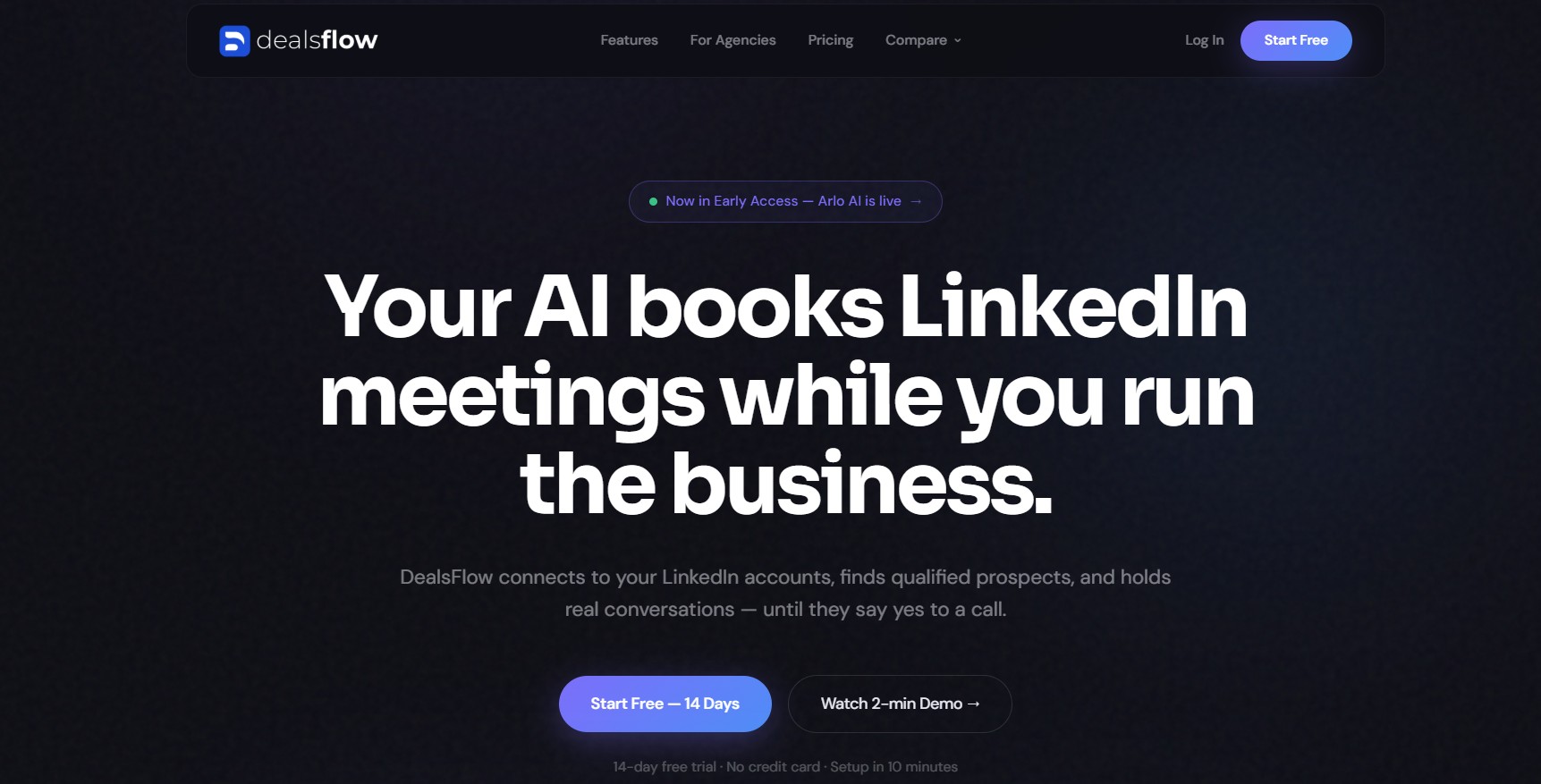
Dealsflow has emerged as one of the most compelling prospecting platforms for sales teams that want more than just an email finder. Unlike Hunter.io, which is essentially a single-feature tool with some add-ons bolted on, Dealsflow was built from the ground up as a full prospecting and outreach ecosystem. It combines contact discovery, email verification, CRM enrichment, and multi-channel outreach into a single unified platform.
What makes Dealsflow stand out in 2026 is its emphasis on data quality and actionability. The platform doesn’t just hand you a list of contacts — it gives you enriched profiles with verified emails, phone numbers, company data, technographics, and behavioral signals that help you prioritize who to contact first and why.
Key Features
- Email Finder and Verification: Dealsflow’s email finder covers a wide range of industries and geographies. Every email is run through a multi-step verification process to maximize deliverability before it ever reaches your outreach tool.
- Direct Dial and Mobile Numbers: One of the most important differentiators from Hunter.io. Dealsflow provides verified direct dials and mobile numbers alongside email addresses, enabling true multichannel outreach.
- Contact and Company Enrichment: Enrich your existing CRM records with fresh, accurate data. If you have a list of company names or partial contact records, Dealsflow fills in the gaps automatically.
- Intent Data Integration: Understand which companies are actively researching topics relevant to your product. Intent data lets you prioritize warm accounts over cold ones, dramatically improving conversion rates.
- Multi-Channel Sequences: Build and automate email and LinkedIn outreach sequences directly within the platform. Track opens, clicks, replies, and conversions without jumping between tools.
- CRM Integrations: Native integrations with Salesforce, HubSpot, Pipedrive, and other major CRMs mean your data flows automatically without manual import/export.
- Team Collaboration Features: Dealsflow supports team-level workflows, shared contact lists, and activity tracking — making it practical for SDR teams, not just individual users.
Pros
- Combines prospecting, verification, enrichment, and outreach in one platform
- Strong data accuracy with multi-step verification
- Multichannel outreach including email and LinkedIn
- Intent data available for smarter prioritization
- Clean, intuitive UI with a manageable learning curve
- Scales well from small teams to larger sales organizations
Cons
- More feature-rich than a solo freelancer might need
- Full access to all features requires a paid plan
- Intent data depth may not rival some specialized enterprise platforms
Pricing Dealsflow offers a free trial so teams can evaluate the platform before committing. Paid plans are structured around team size and feature access, with transparent pricing available on their website. For teams that have outgrown Hunter.io but don’t want to pay enterprise prices, Dealsflow hits a practical sweet spot.
Best For: Growing sales teams, SDR teams, and growth marketers who want a single platform for prospecting, verification, enrichment, and outreach — without the fragmentation of using five different tools.
2. Apollo.io
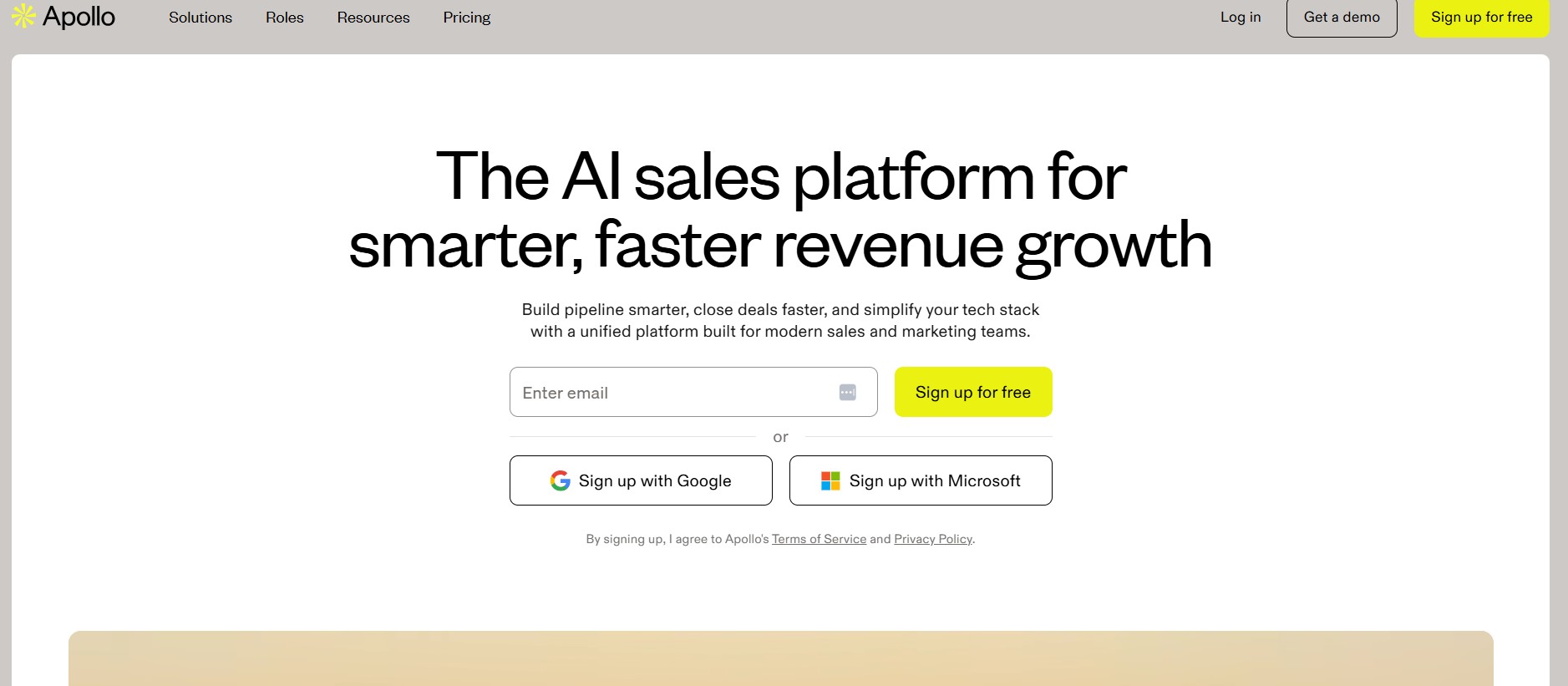
Apollo.io has become one of the most widely used sales intelligence platforms in the market. It started as a contact database and has evolved into a full sales engagement platform with a database of over 270 million contacts. For sales teams that previously used Hunter.io just for email finding and then cobbled together separate tools for sequencing and CRM, Apollo offers the promise of doing it all in one place.
The platform is particularly popular among SDR teams at startups and mid-market companies because it combines a large contact database with built-in email and phone outreach, LinkedIn integration, and robust filtering options for finding the exact right prospects.
Key Features
- Contact Database: 270+ million contacts with email addresses, direct dials, and company information. Filters include job title, seniority, industry, company size, technology stack, and more.
- Email Sequencing: Build multi-step email sequences with A/B testing, scheduling, and reply detection. Sequences can include LinkedIn touchpoints as well.
- Dialer: Apollo includes a built-in calling feature with call recording and logging, removing the need for a separate calling tool.
- CRM Sync: Deep integrations with Salesforce and HubSpot, with bi-directional data sync to keep records clean.
- AI-Powered Features: Apollo has invested heavily in AI for things like email writing assistance, prospect scoring, and recommended sequences based on what’s working for similar users.
- Chrome Extension: Find and export contact data while browsing LinkedIn or company websites without leaving the platform.
- Analytics Dashboard: Track email open rates, click rates, reply rates, sequence performance, and more at both individual and team levels.
Pros
- Massive contact database with good global coverage
- All-in-one platform reduces the need for multiple tools
- Generous free plan available for testing
- Strong filtering and search capabilities
- Continuously updated with AI features
Cons
- Data quality can vary, particularly for contacts outside North America
- Interface can feel overwhelming for new users due to feature density
- Customer support responsiveness has received mixed reviews
- Some users report data that becomes stale over time
Pricing Apollo offers a free plan with limited monthly credits. Paid plans start at a relatively affordable price point for individuals and scale up for teams. Enterprise pricing is available for large organizations.
Best For: SDR teams and sales reps who want a single tool that handles contact discovery, email outreach, calling, and CRM sync — especially teams already using Salesforce or HubSpot.
3. Snov.io
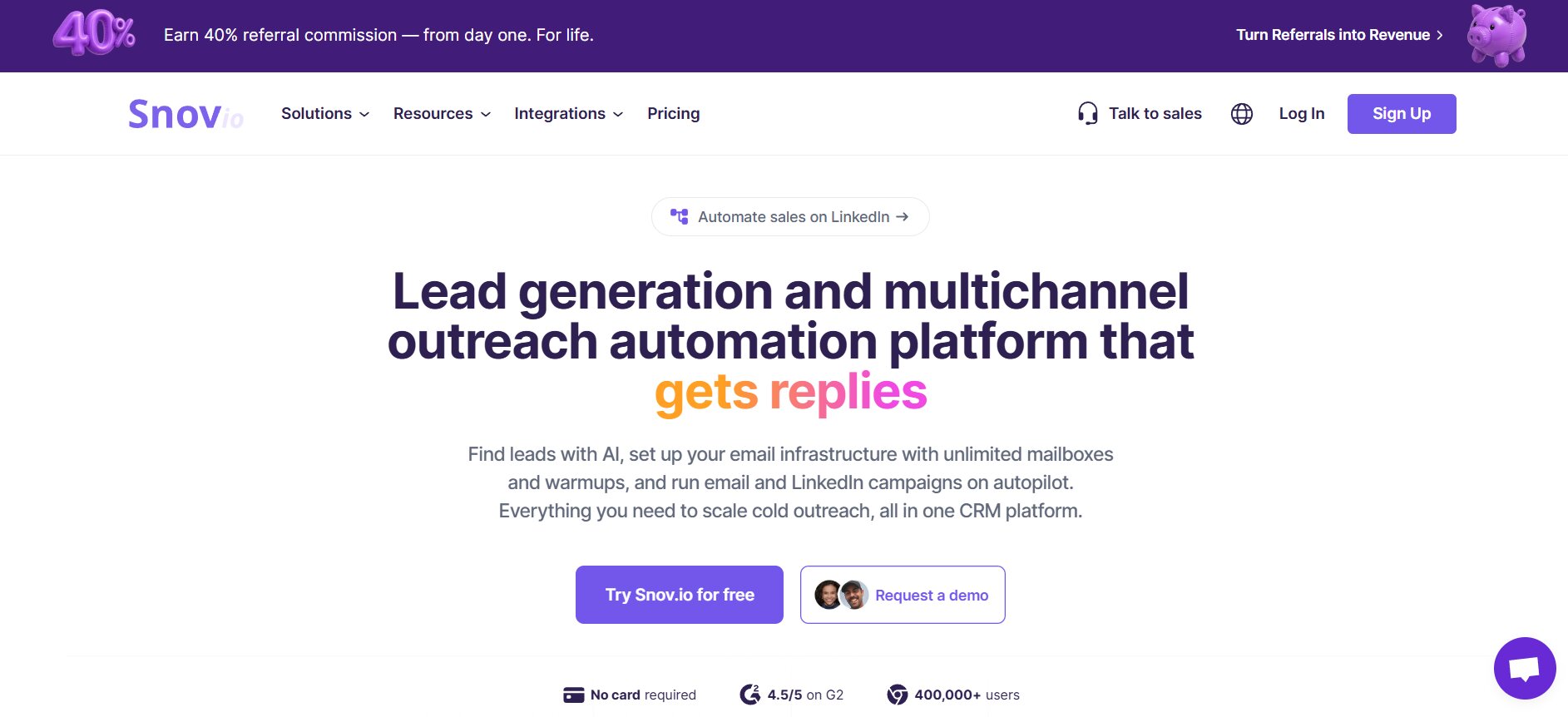
Snov.io is a versatile prospecting platform that has built a loyal following among small sales teams, marketing agencies, and startups. It occupies an interesting middle ground: more feature-rich than Hunter.io, but lighter and more accessible than enterprise platforms like ZoomInfo. For teams that need email finding, verification, and basic drip campaigns without the complexity of a full sales engagement platform, Snov.io is a genuinely compelling option.
What Snov.io does particularly well is giving users a connected workflow. You find prospects, verify their emails, and then drop them directly into a drip campaign sequence — all within the same platform. For small teams that can’t afford to stitch together three different tools, this matters.
Key Features
- Email Finder: Find emails by name and domain, or scrape emails from a list of URLs. The Chrome extension makes it easy to grab contact data from LinkedIn and company websites.
- Email Verification: Real-time verification that checks email format, domain validity, and mail server response. Reduces bounce rates significantly.
- Drip Campaigns: Build multi-step email sequences with conditions, delays, and personalization variables. Not as powerful as dedicated sequencing tools, but more than capable for many use cases.
- LinkedIn Integration: The Snov.io Chrome extension works on LinkedIn to pull contact information and push it directly into your lists.
- CRM Integration: Connects with HubSpot, Salesforce, Pipedrive, Zoho, and others. Also integrates with Zapier for custom workflows.
- Technology Checker: Snov.io can tell you what software a company uses on their website, which is useful for identifying good-fit prospects based on their tech stack.
- Bulk Email Finder: Upload a list of names and domains to find emails at scale without manually searching one by one.
Pros
- Clean, intuitive interface with a short learning curve
- End-to-end workflow from prospecting to outreach in one tool
- Solid free plan with meaningful credits
- Technology checker adds useful targeting context
- Competitive pricing for small teams
Cons
- Database is smaller than enterprise alternatives
- Drip campaign features are functional but not sophisticated
- Phone number coverage is limited compared to larger platforms
- Reporting and analytics are basic
Pricing Snov.io offers a free plan with 50 credits per month. Paid plans are priced based on credits and scale up for higher volume needs. The pricing is competitive for small teams and agencies.
Best For: Startups, agencies, and small sales teams that want a self-contained tool for finding emails, verifying them, and sending outreach sequences without investing in a complex enterprise platform.
4. RocketReach
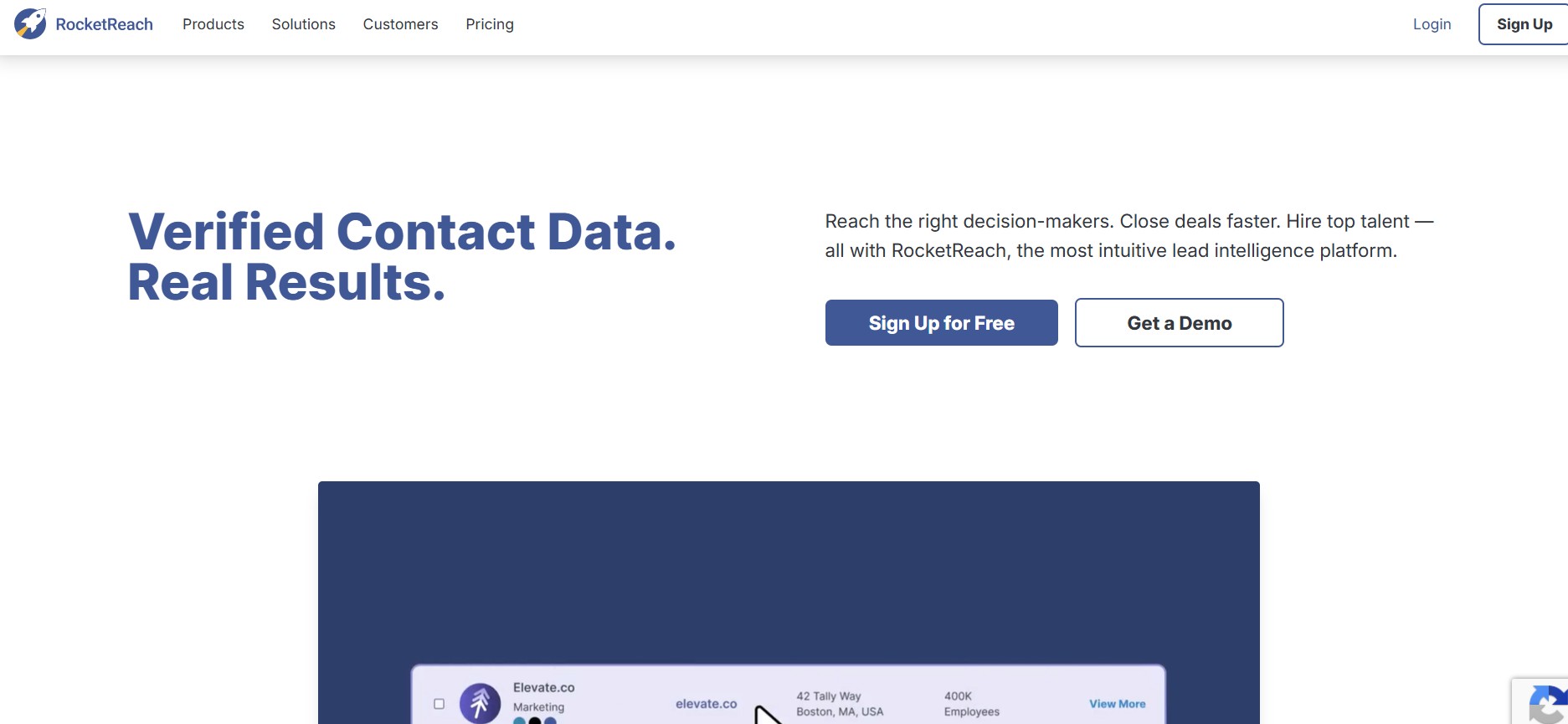
RocketReach has built a strong reputation as a reliable source for finding contact information on specific individuals — particularly for use cases like recruiting, PR outreach, and targeted sales prospecting where you need to find the right person’s email or phone number rather than mass-prospecting a domain.
Its database is large — reportedly over 700 million professionals — and covers a wide range of industries and geographies. What sets RocketReach apart is its depth on individual profiles. While Hunter.io gives you a list of emails tied to a domain, RocketReach lets you search by name, title, company, and location to find verified contact data on a specific person.
Key Features
- Individual Contact Search: Find a specific person’s email and phone number by searching their name, job title, company, or LinkedIn URL.
- Bulk Lookup: Upload a list of names and companies to find contact information at scale. Useful for enriching existing prospect lists.
- Company Search: Find multiple contacts at a target company, filtered by department or seniority level.
- API Access: Integrate RocketReach contact lookup directly into your own tools or CRM with their API.
- Chrome Extension: Look up contact data while browsing LinkedIn profiles or company websites.
- CRM Integration: Connects with Salesforce, HubSpot, Zoho, and others for seamless data export.
- Email and Phone Coverage: RocketReach claims to have email addresses for the vast majority of its database, with phone coverage (direct dials and mobile numbers) for a significant portion of contacts.
Pros
- Large, globally diverse database
- Strong for individual-level contact lookup
- Reliable data quality with multi-step verification
- Good for recruiters, PR professionals, and sales reps alike
- API availability for custom integrations
Cons
- No native email sequencing or outreach tools — purely a data tool
- Pricing can be expensive for high-volume use
- Data freshness can lag for contacts who change roles frequently
- Interface is functional but not particularly modern
Pricing RocketReach offers a free plan with very limited lookups. Paid plans are tiered by lookup volume, starting at an individual level and scaling to team plans. Pricing is on the higher end for what is essentially a data tool without built-in outreach features.
Best For: Recruiters, PR professionals, sales reps, and researchers who need reliable contact data on specific individuals, and who don’t need built-in sequencing or outreach features.
5. Lusha
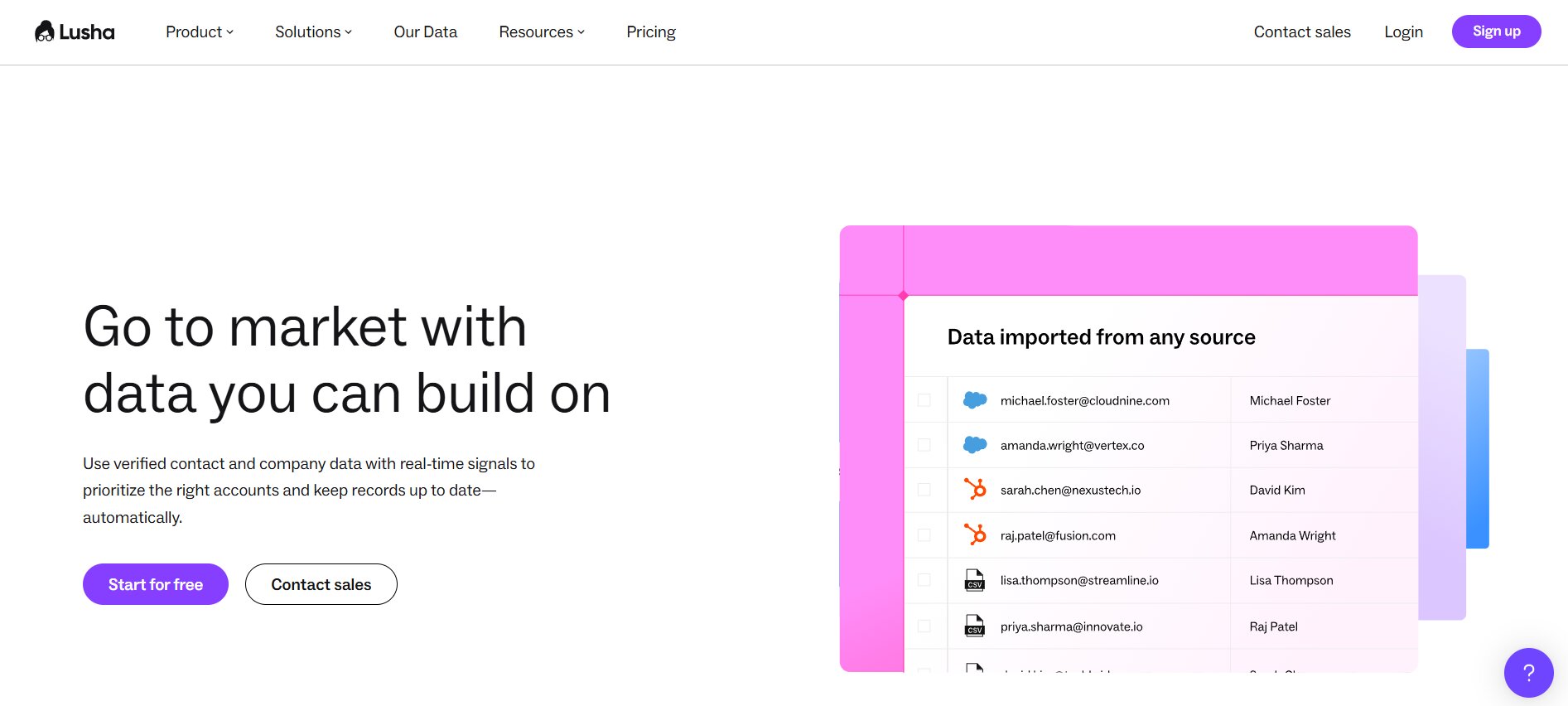
Lusha is laser-focused on one thing: making it as fast and frictionless as possible for a sales rep to find someone’s contact information while they’re on LinkedIn. Its Chrome extension is widely regarded as one of the best in the market for this specific use case. You open a LinkedIn profile, click the Lusha icon, and within seconds you have a verified email address and, often, a direct dial phone number.
For sales reps who spend significant time prospecting on LinkedIn, Lusha removes a major bottleneck. Instead of copying names into Hunter.io, running an email search, and hoping for a result, Lusha surfaces the information instantly without leaving the LinkedIn page.
Key Features
- Chrome Extension: The flagship feature. Works on LinkedIn and Sales Navigator to surface email addresses and direct phone numbers instantly.
- Email and Direct Dials: Lusha specializes in providing both emails and phone numbers, including mobile numbers, which is a significant advantage over Hunter.io.
- Prospecting Platform: Beyond the extension, Lusha offers a web-based prospecting tool where you can search their database by company, title, industry, location, and other filters.
- CRM Integration: Direct integrations with Salesforce, HubSpot, Pipedrive, Zoho, and Microsoft Dynamics. Contact data can be pushed to CRM with a single click.
- Team Features: Lusha supports team credits, shared lists, and usage analytics so managers can track team activity.
- API: Available for developers who want to integrate contact enrichment into their own tools or workflows.
- Data Compliance: Lusha has invested in GDPR and CCPA compliance frameworks, including a data opt-out mechanism for individuals.
Pros
- Best-in-class LinkedIn Chrome extension
- Strong phone number coverage — both direct dials and mobile
- Clean, simple interface with minimal learning curve
- Good CRM integrations for pushing data automatically
- Compliance framework better than Hunter.io’s
Cons
- Database is smaller than Apollo or ZoomInfo
- No built-in sequencing or outreach features
- Can get expensive at scale on higher-tier plans
- Data quality outside North America and Western Europe is less consistent
- Free plan is very limited in monthly credits
Pricing Lusha offers a free plan with a small number of monthly credits. Paid plans start at a reasonable price for individuals and scale for teams. Enterprise pricing is available for larger organizations.
Best For: Sales reps and SDRs who do a significant amount of LinkedIn prospecting and want instant access to verified emails and direct dials without switching tools.
6. Cognism
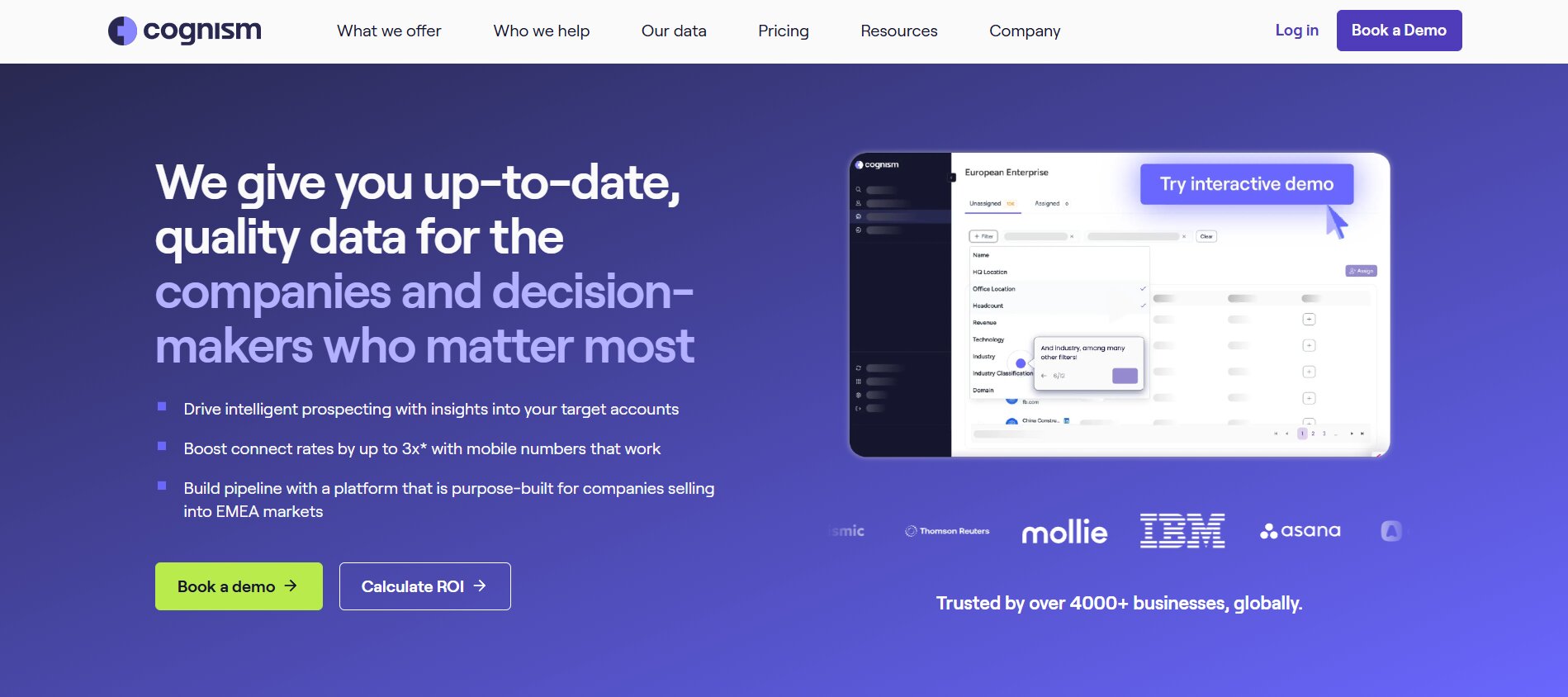
Cognism occupies a unique position in the market. While most email finder tools are built primarily with North American sales teams in mind, Cognism was designed with European compliance requirements as a first-class feature. If your team operates under GDPR or prospects heavily into European markets, Cognism is arguably the most responsible choice available.
But Cognism isn’t just a compliance play. Its data quality is genuinely impressive, particularly for phone numbers. Cognism has invested heavily in phone-verifying mobile numbers — actually calling numbers to confirm they’re accurate before adding them to the database. This “diamond data” (as they call it) results in significantly higher mobile connect rates compared to tools that simply compile numbers from public sources.
Key Features
- Phone-Verified Mobile Numbers: Cognism’s most distinctive feature. Their team manually verifies mobile numbers, giving sales reps significantly better connect rates on cold calls.
- GDPR-Compliant Prospecting: Cognism maintains a robust compliance framework including TPS/CTPS screening in the UK, a global do-not-call list, and documented data sourcing processes. This makes it suitable for teams that need to demonstrate compliance due diligence.
- Intent Data: Cognism integrates with Bombora to provide intent signals — showing you which companies are actively researching topics relevant to your product.
- CRM and Sales Tool Integrations: Integrates with Salesforce, HubSpot, Salesloft, Outreach, and other major tools in the sales stack.
- Chrome Extension: Works on LinkedIn and company websites to surface contact information in context.
- Company and Contact Filtering: Advanced filters for building highly targeted prospect lists based on industry, company size, technology, location, job title, and more.
Pros
- Best GDPR compliance framework of any tool on this list
- Phone-verified mobile numbers dramatically improve call connect rates
- Intent data integration for smarter prioritization
- Strong European data coverage
- Integrates well with enterprise sales stacks
Cons
- Pricing is on the higher end — not suited for solo users or very small teams
- Interface has a steeper learning curve than simpler tools
- North American data, while decent, is not as strong as dedicated US-focused platforms
- No built-in sequencing — requires integration with a separate engagement tool
Pricing Cognism does not publish pricing publicly. They operate on a custom pricing model based on team size and feature requirements. Most users report pricing that is notably higher than mid-market alternatives, which makes it most suitable for teams with meaningful outbound programs and compliance requirements.
Best For: Enterprise and mid-market sales teams prospecting heavily in Europe, or any team that needs to demonstrate serious GDPR compliance as part of their data handling practices.
7. UpLead
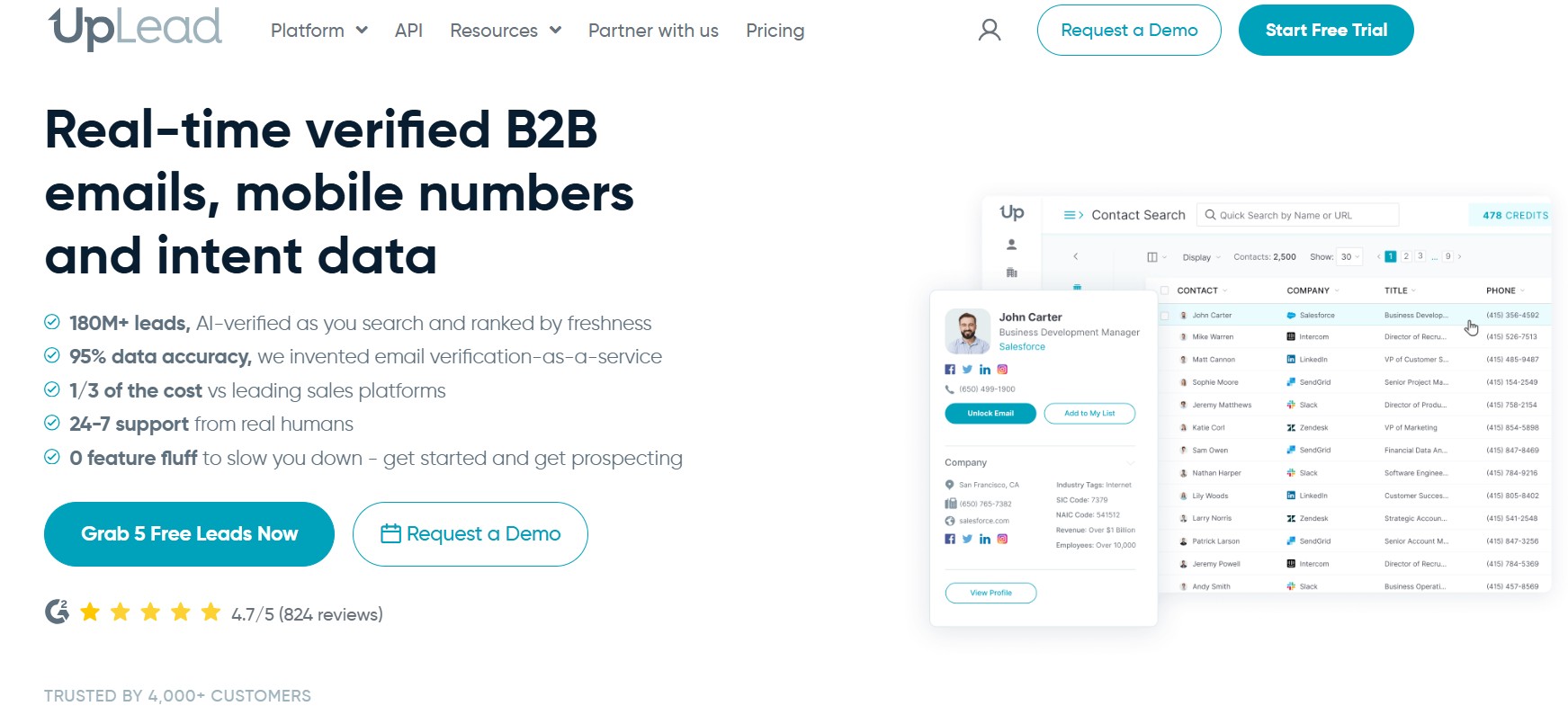
UpLead has built its entire brand around one promise: data accuracy. While many tools in this space quietly deal with data quality issues behind the scenes, UpLead publishes a 95%+ accuracy guarantee and backs it up with real-time email verification at the point of export. This means that before a contact’s email address is delivered to you, it’s verified live against the mail server. If it can’t be verified, you don’t get charged the credit.
For teams that have been burned by high bounce rates from other tools — Hunter.io included — UpLead’s approach is genuinely refreshing. It won’t always have the largest database, but the data you do get is among the most reliable in the market.
Key Features
- Real-Time Email Verification: Every email is verified at the moment of export rather than at the time of ingestion. This means you’re working with the most current deliverability information possible.
- 95%+ Accuracy Guarantee: If an email bounces, UpLead offers credit refunds — putting their money behind their accuracy claims.
- Contact Database: 160+ million contacts with emails, direct dials, and company information. Filterable by over 50 data points.
- Technographics: UpLead shows you what technologies a company uses, enabling precise targeting based on tech stack.
- Competitor Intelligence: Identify companies that use your competitors’ products — a powerful targeting signal.
- CRM Integration: Integrates with Salesforce, HubSpot, Pipedrive, and Zoho, with CSV export for other tools.
- Chrome Extension: Available for LinkedIn and website prospecting.
- Bulk Enrichment: Upload an existing list to enrich with verified emails, phone numbers, and company data.
Pros
- Highest documented email accuracy of any tool on this list
- Real-time verification means no stale data at export
- Technographics and competitor intelligence for better targeting
- Credit refund policy if emails bounce
- Clean, straightforward interface
- Competitive pricing for the data quality provided
Cons
- Database size is smaller than Apollo or ZoomInfo
- Phone number coverage is less comprehensive than some alternatives
- No built-in outreach or sequencing features
- May not be sufficient for very high-volume prospecting needs
Pricing UpLead offers a 7-day free trial with a small number of credits. Paid plans start at a reasonable price point for individuals and scale for teams. Pricing is transparent and straightforward.
Best For: Marketing teams, sales reps, and growth hackers who’ve been stung by email bounce rates and want the highest possible data accuracy, even if it means a smaller database overall.
Free Alternatives to Hunter.io Worth Knowing About
Not every team is ready to commit to a paid tool. Here’s an honest look at what’s available for free — and what the real limitations are.
Apollo.io Free Plan Apollo’s free plan is genuinely one of the most generous in the market. You get access to a limited number of email credits per month, plus access to their contact filtering and search features. It’s enough to test the platform seriously and run small outreach campaigns.
Snov.io Free Plan Snov.io’s free plan includes 50 credits per month, which is enough for light prospecting. It gives you a taste of the email finder and verifier, though you’ll hit limits quickly if you’re doing meaningful outreach volume.
Lusha Free Plan Lusha offers a handful of free monthly credits — enough to test the Chrome extension and confirm that the data quality meets your needs before upgrading.
The Honest Reality: Free plans across all these tools are intentionally limited. They’re designed for evaluation, not sustained use. If you’re doing any meaningful volume of email prospecting — say, more than 50 contacts per month — you’ll need a paid plan. The good news is that most of the tools on this list offer transparent, reasonably priced entry-level plans that don’t require long-term contracts.
Side-by-Side Comparison: Hunter.io Alternatives at a Glance
| Tool | Email Finder | Phone Numbers | Verification | GDPR-Ready | Free Plan | Best For |
|---|---|---|---|---|---|---|
| Dealsflow | ✅ Yes | ✅ Yes | ✅ Multi-step | ✅ Yes | ✅ Free Trial | All-in-one prospecting + outreach |
| Apollo.io | ✅ Yes | ✅ Yes | ✅ Real-time | ⚠️ Partial | ✅ Yes | SDRs needing full outreach platform |
| Snov.io | ✅ Yes | ⚠️ Limited | ✅ Real-time | ⚠️ Partial | ✅ Yes | Small teams, agencies |
| RocketReach | ✅ Yes | ✅ Yes | ✅ Multi-step | ⚠️ Partial | ⚠️ Very Limited | Individual contact lookup |
| Lusha | ✅ Yes | ✅ Yes | ✅ Real-time | ✅ Yes | ⚠️ Very Limited | LinkedIn prospecting |
| Cognism | ✅ Yes | ✅ Phone-verified | ✅ Real-time | ✅ Strong | ❌ No | European teams, compliance-first |
| UpLead | ✅ Yes | ⚠️ Limited | ✅ Real-time | ✅ Yes | ⚠️ Trial Only | Highest data accuracy |
| Hunter.io | ✅ Yes | ❌ No | ⚠️ Basic | ⚠️ Weak | ✅ Yes | Light domain-based email finding |
How to Choose the Right Hunter.io Alternative for Your Team
There’s no single “best” tool — there’s only the best tool for your specific situation. Here’s how to think through the decision:
If You’re a Solo Founder or Freelancer
You need something affordable, simple, and effective for low-to-medium volume outreach. Snov.io or Apollo.io’s free or entry-level paid plans are likely the best fit. You don’t need enterprise features, and you don’t want to pay for them. The key things to look for are email accuracy and a clean Chrome extension for LinkedIn prospecting.
If You’re a Growing SDR Team
You need a platform that scales with your workflow — one that combines data discovery with sequencing, CRM sync, and team-level reporting. Dealsflow and Apollo.io are the strongest options here. Both give you the full picture from prospecting to outreach, reducing the tool fragmentation that kills productivity on SDR teams.
If You Operate in Europe or Have Strict Compliance Requirements
Cognism is the clear leader for GDPR compliance. Its compliance infrastructure is more mature than any other tool on this list. If you can justify the cost, it’s the responsible choice for teams that need to demonstrate they take data privacy seriously.
If Data Accuracy Is Your Top Priority
UpLead’s real-time verification and accuracy guarantee make it the best choice for teams that have been burned by bounces and reputation damage from poor-quality data. A smaller but cleaner database is almost always better than a massive but unreliable one.
If You Prospect Heavily on LinkedIn
Lusha’s Chrome extension is purpose-built for this workflow. If LinkedIn is where most of your prospecting happens, Lusha removes friction better than any other tool on this list.
Questions to Ask Before You Switch
- What is my current email bounce rate, and is it acceptable?
- Do I need phone numbers, or is email sufficient for my outreach?
- What CRM am I using, and does the tool integrate natively?
- How important is GDPR compliance to my business?
- Do I need outreach/sequencing built in, or do I have a separate tool for that?
- How many contacts am I looking to prospect per month?
- What is my monthly budget for this category of tool?
Answering these questions honestly will narrow your options quickly.
Conclusion
Hunter.io earned its place in the outreach toolkit. For simple, one-off email finding at small volumes, it still works. But in 2026, the expectations for a prospecting tool have fundamentally shifted. Teams need phone numbers alongside emails. They need real-time verification. They need CRM integrations that eliminate manual data entry. They need compliance frameworks that hold up to legal scrutiny. And increasingly, they need intent signals and enrichment that turn raw contact data into intelligent prioritization.
None of that is what Hunter.io was designed to do.
The seven tools covered in this blog — Dealsflow, Apollo.io, Snov.io, RocketReach, Lusha, Cognism, and UpLead — each address specific gaps that Hunter.io leaves open. The right choice for your team depends on your priorities:
- Dealsflow if you want a true all-in-one platform that covers prospecting, verification, enrichment, and outreach
- Apollo.io if you want a massive database combined with sequencing and CRM sync in a single tool
- Snov.io if you’re a small team that wants a connected workflow from finding to outreach without the enterprise price tag
- RocketReach if your use case is high-quality individual contact lookup at scale
- Lusha if you prospect primarily on LinkedIn and want instant, verified contact data without leaving the platform
- Cognism if GDPR compliance and phone-verified mobile numbers are non-negotiable for your business
- UpLead if email accuracy is the single most important variable in your tool selection
The fragmented, cobbled-together prospecting stack — where you use Hunter.io for emails, a separate tool for phones, another for sequencing, and yet another for CRM enrichment — is increasingly costly and inefficient. The best hunter.io alternatives in 2026 are the ones that collapse that complexity into a single, coherent workflow.
Evaluate your needs, take advantage of free trials, and make the switch that actually moves the needle for your team.
Frequently Asked Questions
Does Hunter.io Provide Phone Numbers?
No. Hunter.io does not provide phone numbers. It focuses exclusively on email addresses. This is one of the most frequently cited reasons teams look for hunter.io alternatives — particularly sales teams doing multichannel outreach who need both email and phone data.
Which Alternative Is Best for GDPR Compliance?
Cognism is the strongest choice for GDPR compliance. It maintains documented data sourcing processes, TPS/CTPS screening for the UK, global do-not-call list management, and has built compliance into the core of its product. Lusha and Dealsflow also have solid compliance frameworks and are worth considering if Cognism’s pricing is prohibitive.
What Is the Most Accurate Email Finder Tool in 2026?
UpLead consistently receives high marks for email accuracy, backed by a 95%+ guarantee and a real-time verification system that checks deliverability at the point of export. Dealsflow also employs multi-step verification that results in strong deliverability rates.
Is There a Truly Free Alternative to Hunter.io?
Apollo.io’s free plan is the most generous free option in this category, offering meaningful monthly credits and access to core features. Snov.io also has a free tier with 50 monthly credits. That said, no free plan will give you unlimited access, and sustainable prospecting at any meaningful volume requires a paid subscription.
Can I Use These Tools with My CRM?
Yes — most of the tools on this list offer native integrations with major CRMs including Salesforce, HubSpot, Pipedrive, and Zoho. Apollo, Dealsflow, Lusha, Snov.io, and UpLead all have direct CRM integrations. RocketReach and Cognism also offer CRM connectivity, with Cognism particularly strong on enterprise CRM integrations.
What Features Should I Look for When Evaluating Hunter.io Alternatives?
The most important features to evaluate are: email accuracy and verification method, phone number availability, database size and freshness, CRM and tool integrations, GDPR/CCPA compliance, built-in outreach and sequencing capabilities, pricing transparency, and the quality of customer support. The right weighting of these factors will depend on your specific team size, geography, and outreach volume.
How Many Emails Can I Find Per Month With These Tools?
It depends heavily on the plan. Most tools operate on a credit-based system where each email lookup or export costs one credit. Entry-level paid plans typically range from 1,000 to 5,000 credits per month. Mid-tier plans extend to 10,000–50,000 credits. Enterprise plans often offer unlimited or very high volume access. Always verify the specific credit allocation before committing to a plan.
Do These Tools Work for International Prospecting?
Coverage varies by tool and region. Apollo and RocketReach have the broadest global coverage. Cognism has particularly strong European coverage. Most tools have solid North American data but varying quality in Asia-Pacific, Latin America, and the Middle East. If international prospecting is a priority, always test the tool with contacts from your target regions before committing.