


La Growth Machine is a capable tool. But “capable” only gets you so far when the per-identity pricing is eating your budget, your LinkedIn account rotation doesn’t exist, and every single reply still lands in a human inbox waiting for someone to handle it.
That last part is the one most teams don’t talk about until they’re deep into it. LGM automates your sequences beautifully. Connection request, follow-up one, follow-up two — all running on autopilot. Then a prospect actually replies, and the whole thing grinds to a halt. Someone has to go in, read the context, and respond. At 10 replies a week, that’s manageable. At 100, it’s a job. That’s why people start looking for alternatives, and honestly it’s a fair reason to look.
There are also the pricing dynamics. LGM’s Basic plan starts at around €60/identity/month. Five identities — which is not even a medium-sized SDR team — puts you at €300/month before you’ve unlocked CRM integrations or run more than three campaigns simultaneously. The per-identity model punishes scale in a way that catches teams off guard when the invoice hits.
This list covers tools built to solve different problems. Some are better for agencies running 20+ LinkedIn accounts. Some are built for email deliverability at volume. Some have actual AI that handles conversations after the first reply. The selection criteria were straightforward: LinkedIn safety infrastructure, reply handling capability, pricing at scale, multichannel coverage, and how well the tool fits specific team types. No tool on this list made it just because it has a nice UI.
Why Teams Leave La Growth Machine
Before getting into the alternatives, it’s worth being specific about what’s actually breaking down. Because “LGM isn’t working for us” means very different things depending on who’s saying it.
Per-Identity Pricing That Compounds Fast
LGM’s pricing is structured per identity — one identity equals one LinkedIn account plus one email account plus one X/Twitter account. Basic starts around €60/identity/month. Pro runs €100–€120. Ultimate hits €150–€180.
That sounds reasonable for a solo founder or a two-person team. The math changes fast for anyone running outreach at scale. Five identities on the Basic plan is €300/month, and you’re still capped at three active campaigns per identity. G2 reviewers have flagged this specifically: “Expensive to scale: Seats are expensive, per se, and to scale your outreach or speed up, expect to invest more with every additional seat. What’s more, you’re limited with the number of campaigns you can run simultaneously.” That’s not a minor gripe. It’s a structural constraint that shows up every billing cycle.
No LinkedIn Account Auto-Rotation
LGM respects LinkedIn’s daily action limits, which is the right call. But it has no native auto-rotation across accounts. The only way to push more volume is to add more identities, which adds more cost. For agencies managing 10, 15, or 20 LinkedIn accounts, that compounds fast and it forces a choice between volume and budget that shouldn’t exist.
The Reply-Handling Gap
This is the big one. LGM automates sends and follow-up sequences. The moment a prospect replies, the sequence stops and a human takes over. That is the default behavior for almost every tool in this category — but it’s worth naming clearly because it’s where the real conversion work happens.
Some teams pair LGM with inbox management tools specifically to handle the volume of replies that come in. That’s a workaround, not a solution. If the tool stops working the moment a prospect engages, that’s a gap in the automation, not a feature.
Enrichment Accuracy Limitations
LGM’s waterfall enrichment runs through Hunter and Dropcontact integrations and achieves email find rates that published reviews put in the 30–60% range. The Basic plan includes 250 enrichment credits per month — enough to fully enrich roughly 50 leads. Teams importing large prospect lists hit that ceiling fast and end up paying for a separate enrichment tool anyway.
CRM and API Integrations Gated by Plan
HubSpot and Pipedrive sync, plus API access, are locked behind higher-tier plans. Teams that need CRM-native workflows from day one end up forced into an upgrade they didn’t budget for.
Steep Learning Curve for Non-Technical Users
The sequence builder is genuinely flexible. Multiple G2 reviewers say exactly that. But flexible and easy to set up are different things, and for non-technical users or smaller teams without dedicated ops, the setup time before the first campaign is non-trivial. That’s a real cost even if it’s not on the invoice.
How These Alternatives Were Selected
These tools were evaluated on six things: how they handle LinkedIn account safety and daily limits, whether they do anything useful after a prospect replies, how pricing holds up as team size grows, what their multichannel capability actually looks like in practice, whether they have built-in data or depend entirely on imports, and what type of team they were built for. Tools that showed up on generic lists but couldn’t back up their positioning didn’t make the cut.
The 10 Best La Growth Machine Alternatives
1. DealsFlow
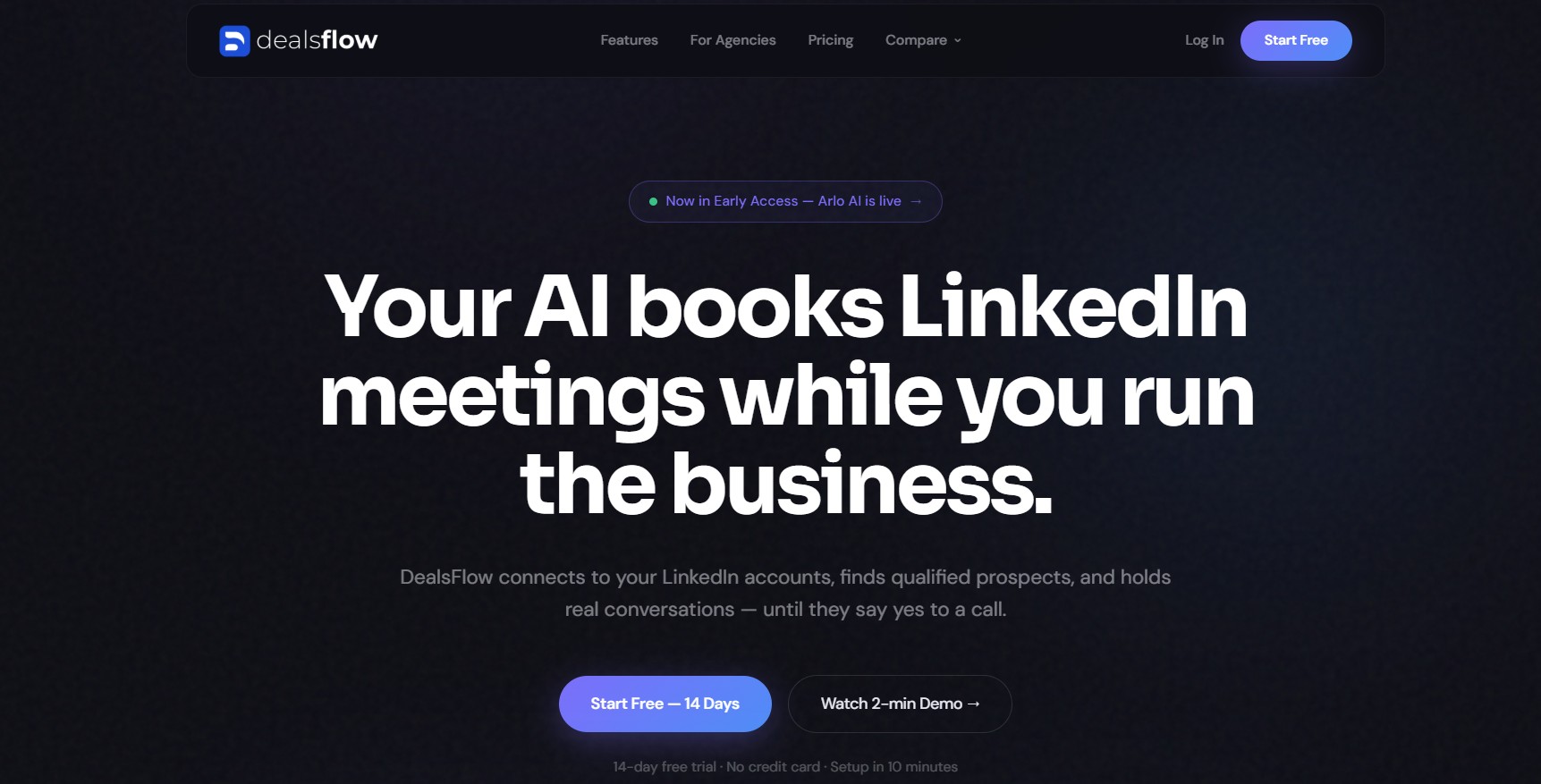
DealsFlow is an AI-native LinkedIn outreach platform built around one core idea: the AI handles the conversation, not just the send.
Most tools in this category stop at the sequence layer. LGM sends the connection request, the follow-up, the second follow-up. Then a reply comes in and the platform hands it back to a human. DealsFlow built Arlo specifically to handle what happens next. Arlo reads the reply, assesses the context, and continues the conversation — responding to objections, answering questions, and booking meetings directly on the calendar. The platform describes it this way on its own FAQ: “Unlike tools that stop, Arlo reads the reply. If it’s a positive response, Arlo moves to book a call. If it’s an objection, Arlo provides a professional rebuttal. You can intervene at any time, but Arlo is designed to handle the ‘middle-of-funnel’ work for you.”
That’s not a feature LGM has. It’s not a feature most tools have. And for teams running outbound at volume — agencies managing multiple client accounts, SDR teams that can’t staff every inbox — that gap matters.
On the infrastructure side, DealsFlow uses distributed cloud execution with randomized human-like timing and hard daily limits aligned to LinkedIn’s current safety thresholds. Multiple LinkedIn accounts connect from a single dashboard, which makes it practical for agencies switching between clients without the login chaos.
Key Features:
- Arlo AI engine handles post-reply conversations autonomously, including objection handling and meeting booking
- Multi-account dashboard for managing multiple LinkedIn profiles from one view
- AI Lead Research built into the platform
- Unlimited campaigns across all plans
- Cloud-based execution with LinkedIn safety limits baked in
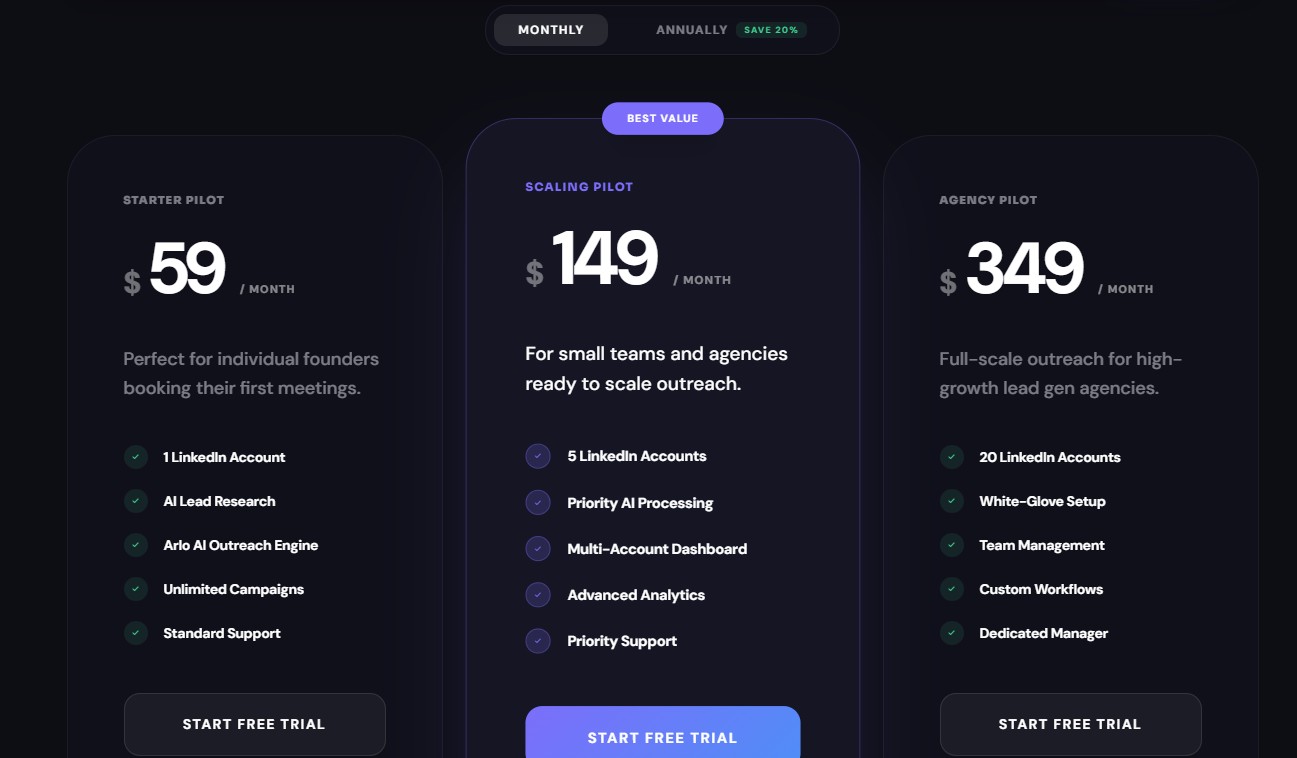
Pricing (Annual billing): Starter Pilot $49/month (1 LinkedIn account), Scaling Pilot $129/month (5 LinkedIn accounts), Agency Pilot $299/month (20 LinkedIn accounts). Monthly billing runs $59, $149, and $349 respectively. 14-day free trial, no credit card required.
Best for: SDR teams and lead gen agencies that want the full outreach loop — first message to booked meeting — running without human intervention in the reply loop.
Where it falls short: DealsFlow doesn’t ship with a built-in lead database. If you need prospecting data, you’ll pair it with a data tool like Apollo or use LinkedIn Sales Navigator for list building.
2. HeyReach
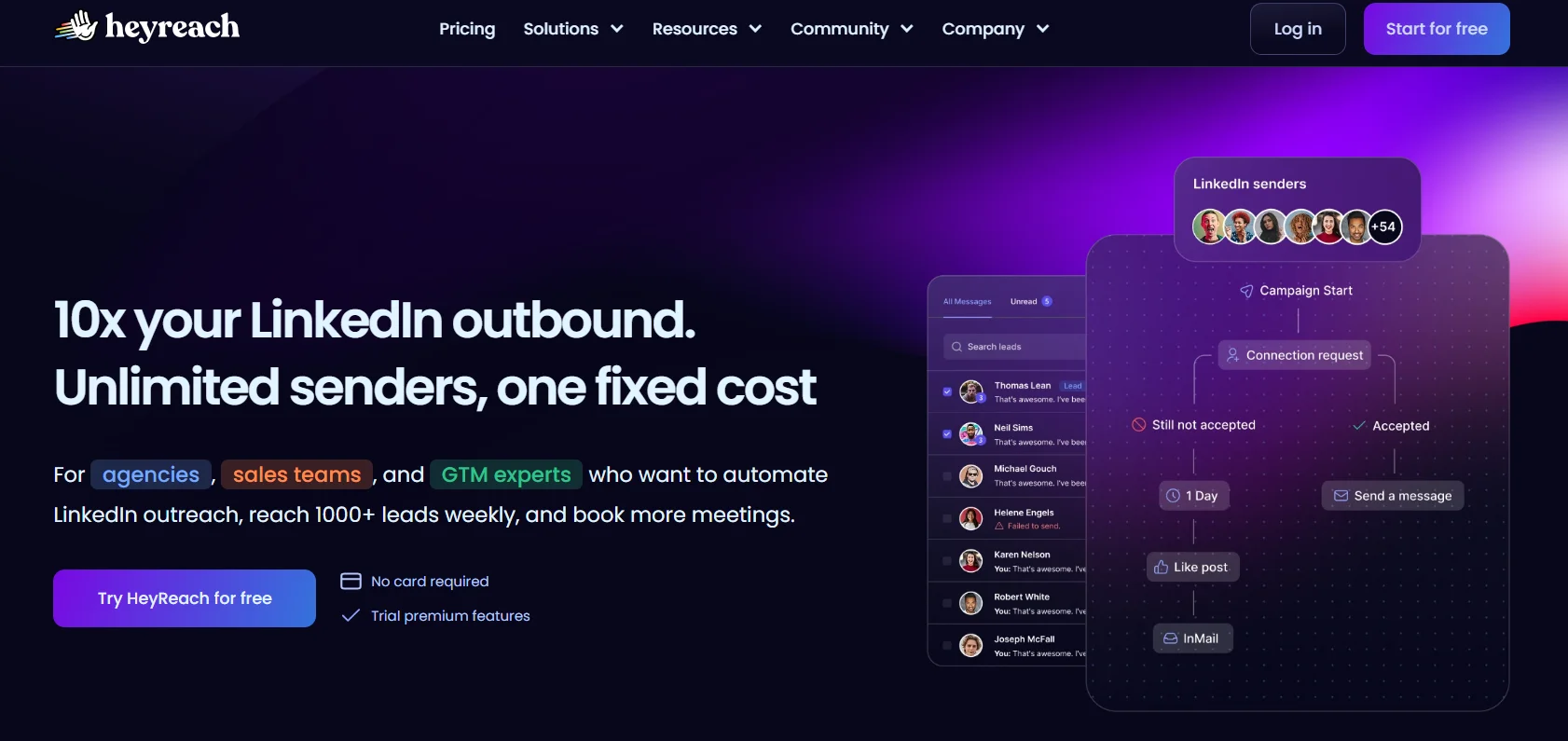
HeyReach was built to solve the multi-account LinkedIn scaling problem that LGM handles poorly. The per-identity pricing at LGM means that running 10+ LinkedIn accounts gets expensive fast. HeyReach uses a flat-fee model, which is a fundamentally different approach.
The core infrastructure is built around running LinkedIn outreach across multiple accounts simultaneously without the chaos of logging in and out or hitting per-account daily limits without coordination. Auto-rotation across accounts is native — something LGM doesn’t have. When one account hits its daily limit, HeyReach automatically shifts volume to the next account in the pool. That’s how you scale LinkedIn volume without burning accounts or paying per identity.
The unified inbox consolidates conversations from all connected LinkedIn accounts into one view, with tags, templates, and follow-up reminders. For agencies managing multiple client accounts, this is the operational layer that actually makes multi-account work manageable. Analytics surface invite rates, reply rates, and campaign performance across accounts so you can see what’s working without stitching together reports manually.
Key Features:
- Native auto-rotation across LinkedIn accounts — volume shifts automatically when one account hits daily limits
- Flat-fee pricing model regardless of how many accounts you run
- Unified inbox for all connected LinkedIn accounts with tagging and templates
- Advanced analytics dashboard covering invite rates, replies, and campaign timelines
- Agency-oriented multi-client management built into the product structure
Pricing: HeyReach uses flat-fee pricing. Exact tiers should be verified on their current pricing page, but the model is explicitly positioned as significantly cheaper than per-identity tools at volume.
Best for: Agencies managing multiple client LinkedIn accounts who need volume at scale without the per-identity cost spiral.
Where it falls short: Email is secondary here. HeyReach is a LinkedIn-first tool, and if cold email deliverability is your main concern, it’s not the right primary tool.
3. Expandi
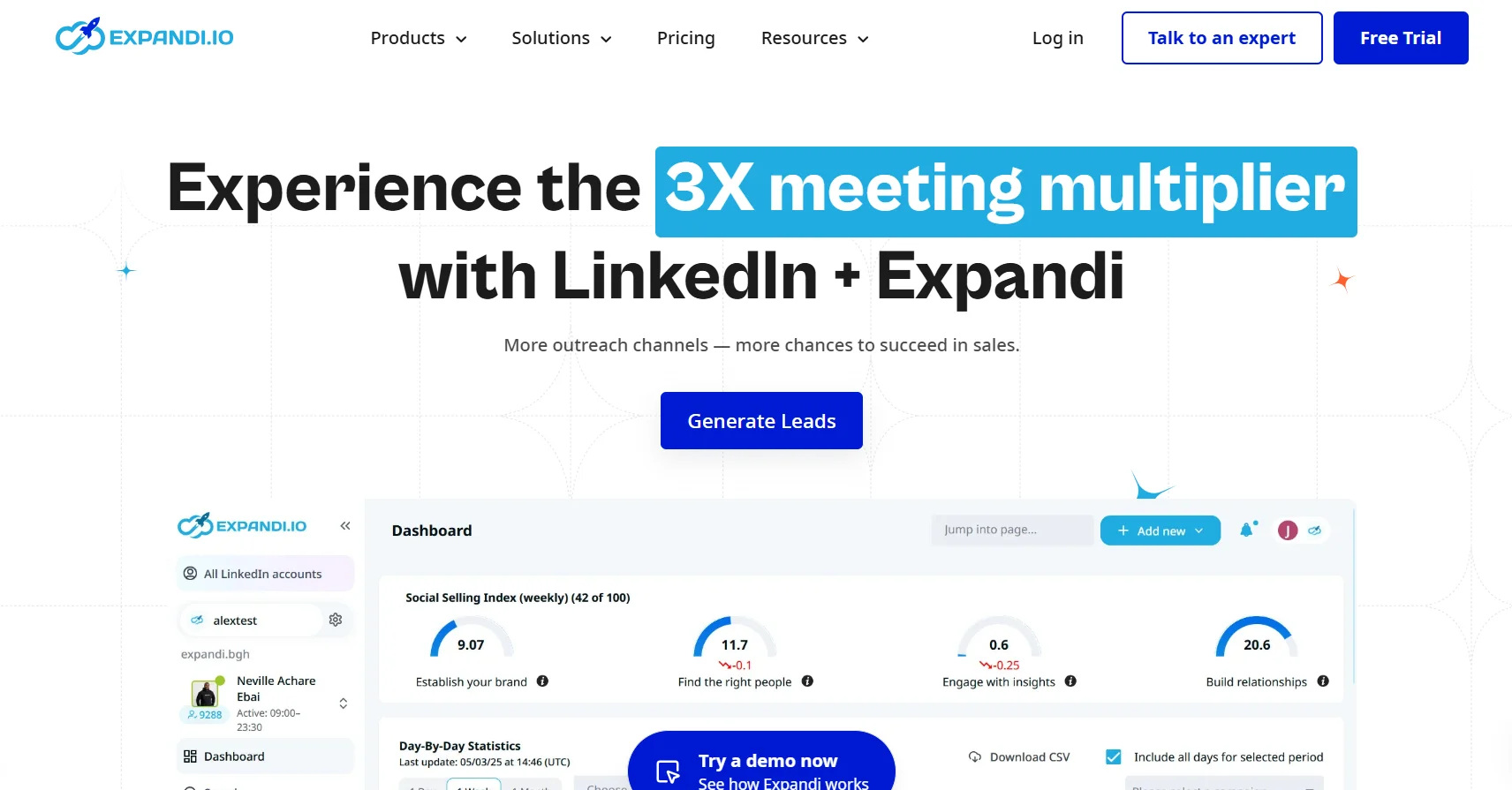
Expandi has been in the LinkedIn automation space long enough to build a reputation specifically around account safety. The pitch is cloud-based execution with dedicated IPs per account, which reduces the risk profile compared to browser extensions or shared infrastructure tools.
Beyond safety, Expandi is known for dynamic personalization that goes further than variable swapping. The image and GIF personalization features let you insert a prospect’s name, company logo, or LinkedIn profile picture into a custom image that shows up in the message. It’s a higher-effort setup, but the response rates on personalized visual outreach tend to beat plain text follow-ups with a {{first_name}} token at the top.
Sequences combine LinkedIn and email, so it covers the basic multichannel requirement without forcing you to run a separate email tool. The campaign building is more flexible than simpler tools but less complex than LGM’s visual workflow editor — which is either a feature or a limitation depending on how deep your sequences need to go.
Key Features:
- Cloud-based execution with dedicated IPs per account
- Dynamic image and GIF personalization beyond standard variable replacement
- LinkedIn plus email sequences in one campaign builder
- Campaign A/B testing for message variants
- Agency-oriented multi-account management with client separation
Pricing: Around $99/month per account. Agency pricing available for multi-account setups.
Best for: Agencies and SDR teams that want LinkedIn account safety as the non-negotiable, with dynamic visual personalization as a conversion lever.
Where it falls short: At $99/account, scaling to 10+ accounts gets expensive. HeyReach’s flat-fee model tends to win on cost at agency scale.
4. Lemlist
Lemlist is an email-first tool that has extended into LinkedIn over time. The core strength is cold email personalization and deliverability, built around Lemwarm — the email warmup tool that runs automatically to keep sender reputation healthy before and during campaigns.
The personalization capability goes further than most email tools. Dynamic text variables are table stakes. Lemlist also supports personalized images (same concept as Expandi’s approach but for email), video thumbnails that look like embedded video in the email body, and liquid syntax for conditional content that adjusts based on prospect attributes. For teams where getting someone to open and reply to a cold email is the real conversion challenge, these features matter.
LinkedIn steps exist inside Lemlist sequences, but they’re semi-automated — more of a prompted manual step than true LinkedIn automation. So if you’re looking for a tool that runs LinkedIn outreach in parallel with email at the same automation level, Lemlist isn’t that. What it is good at: teams where email is the primary revenue channel and LinkedIn is one more touchpoint in a sequence that’s primarily built for email.
Key Features:
- Lemwarm built-in email warmup across all plans
- Dynamic image, video, and conditional text personalization for email
- Multichannel sequence builder covering email, LinkedIn (semi-automated), and call steps
- Built-in lead database (lemlist database) for prospecting without a separate tool
- A/B testing for subject lines and message content
Pricing: Email Starter around $39/month, Email Pro around $69/month, Multichannel Expert around $99/month.
Best for: SDR teams where email is the primary channel and LinkedIn follow-ups add conversion lift but don’t need to run at full automation depth.
Where it falls short: LinkedIn automation is limited. If LinkedIn is your primary outreach channel, Lemlist is the wrong tool.
5. Instantly
Instantly was built specifically for teams running cold email at serious volume. The headline feature is unlimited sending accounts — you can connect as many email accounts as you want without paying per account. That’s a fundamentally different model than tools that charge per seat or per mailbox.
The deliverability infrastructure is built in. Email warmup runs automatically across connected accounts. Inbox rotation spreads volume across accounts so no single domain is sending at a rate that triggers spam filters. The AI-assisted sequence builder generates message variants and subject lines, and the analytics surface deliverability metrics — open rates, reply rates, bounce rates — at the account level so you can catch domain health issues before they kill a campaign.
Instantly also ships with Instantly Leads, a built-in B2B contact database that lets you build prospect lists without leaving the platform. For email-primary teams that have been paying separately for a data tool, this consolidation matters.
Key Features:
- Unlimited email account connections across all plans — no per-mailbox fees
- Built-in email warmup running automatically for all connected accounts
- Inbox rotation to spread volume and protect domain reputation
- AI sequence builder with message variant generation
- Instantly Leads built-in B2B database for prospecting
Pricing: Growth around $37/month, Hypergrowth around $77/month, Light Speed around $358/month.
Best for: Email-primary outbound teams running high volume who need deliverability managed automatically and don’t want to pay per sending account.
Where it falls short: LinkedIn automation is not part of Instantly’s offering. This is an email tool. Full stop.
6. Apollo.io
The LGM limitation that often gets underplayed is the lead database problem. LGM has no built-in contact database — you import your own leads. So the typical LGM stack is LGM plus a data enrichment tool, which means you’re paying for two platforms and managing two workflows. Apollo collapses that into one.
The database has over 210 million contacts and 30 million companies, with filters for industry, job title, geography, company size, technology stack, and intent signals. You can build a targeted ICP list, enrich contact data with verified emails and phone numbers, and then run sequences directly in the same platform. For teams that have been managing this as two separate processes, that consolidation alone saves meaningful time.
The outreach side covers email sequences, phone calls via built-in dialer, and LinkedIn — though LinkedIn automation in Apollo is manual step prompts, not native execution. So you’ll get a task notification to visit a profile or send a connection request; Apollo won’t do it automatically. That’s a real gap for LinkedIn-first teams. But for teams where email and phone are the primary channels and LinkedIn is one more touchpoint managed manually, Apollo’s database access plus engagement tools is a hard combination to beat at the price point.
Key Features:
- 210M+ contact database with verified emails and phone numbers
- Advanced prospecting filters including intent signals and technology stack
- Email sequences with AI-assisted personalization
- Built-in dialer for phone outreach
- CRM integrations (Salesforce, HubSpot, Pipedrive) available across plans
Pricing: Free plan available with limited credits. Basic $49/month, Professional $79/month, Organization $119/month.
Best for: Teams that are currently paying for a separate data enrichment tool and want to consolidate prospecting and outreach into one platform.
Where it falls short: LinkedIn automation is manual step prompts, not automated execution. If native LinkedIn automation is a requirement, Apollo doesn’t cover it.
7. Waalaxy
Waalaxy is the simpler, cheaper version of what LGM is trying to do. It’s French-built like LGM and covers LinkedIn plus email sequences, but the positioning is explicitly around accessibility — lower learning curve, lower price point, fewer advanced configuration options.
For solos or small teams that find LGM’s sequence builder complex and don’t need conditional branching or deep workflow logic, Waalaxy gets you to your first campaign faster. The GDPR compliance is handled at the platform level, which matters for European teams. Team features exist for managing multiple users on one account.
What Waalaxy doesn’t do well: high-volume multi-account management, advanced conditional workflows, or anything approaching agency-scale operations. It’s a simple LinkedIn plus email automation tool. That’s not a knock — it’s accurate positioning. A freelancer or two-person sales team running outbound on LinkedIn doesn’t need LGM’s complexity or LGM’s price tag.
Key Features:
- LinkedIn automation plus email sequences in one tool
- Straightforward UI with a lower setup learning curve than LGM
- GDPR compliance built into the platform
- Team management for multiple users
- Integration with CRMs including HubSpot and Salesforce
Pricing: Free plan available. Pro around €56/month, Business around €80/month.
Best for: Small teams and solos that want basic LinkedIn plus email sequences without the complexity and cost of LGM.
Where it falls short: Not built for agency-scale multi-account management. The conditional workflow logic is limited compared to LGM.
8. Dripify
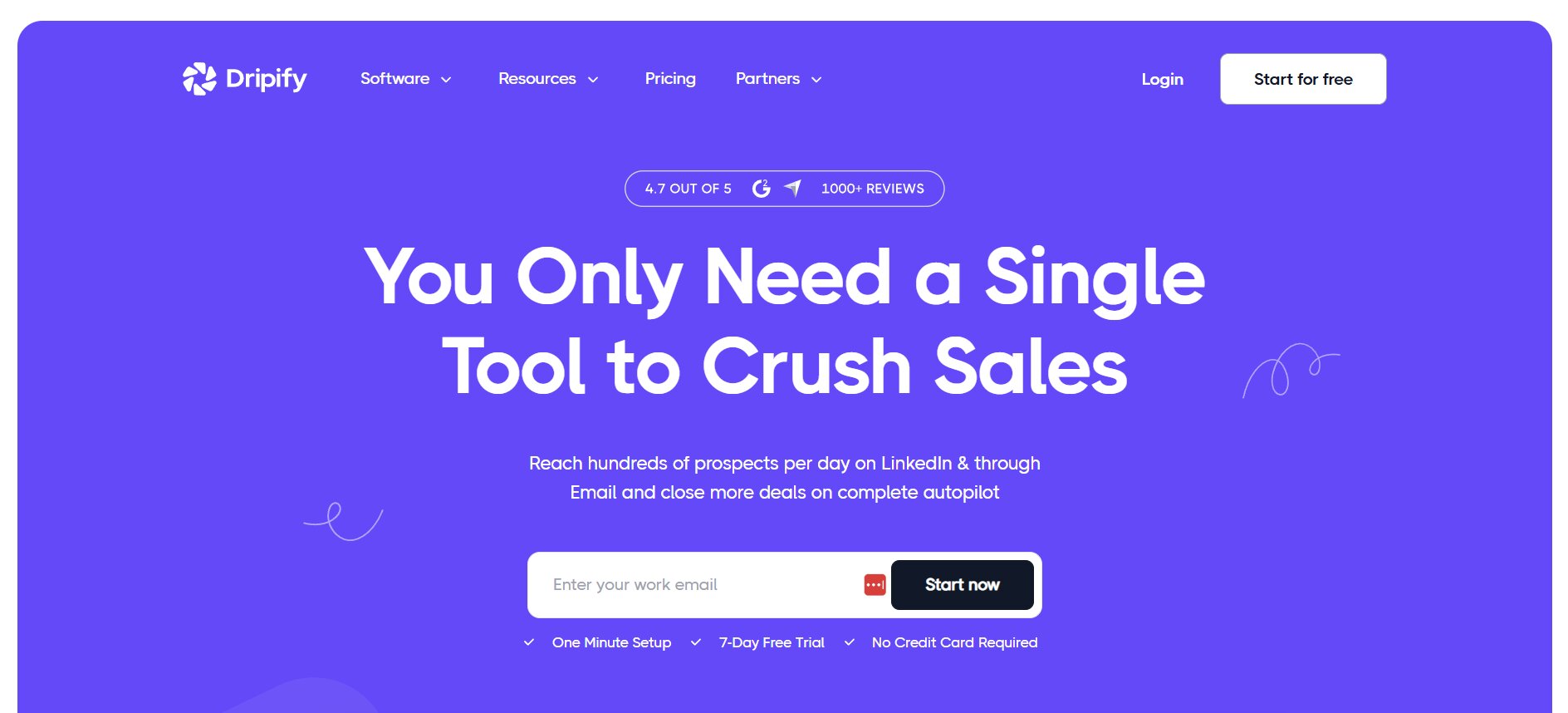
Dripify runs cloud-based LinkedIn automation with a specific focus on team management visibility that LGM’s analytics don’t match out of the box. The team dashboard shows performance per rep — invite acceptance rates, reply rates, campaign progress — so an SDR manager can actually see what’s happening across the team without manually compiling reports.
The safety infrastructure is cloud-based with activity controls, so it’s not a browser extension that ties automation to a local machine. Drip campaigns run sequentially based on prospect behavior, and A/B testing lets you run message variants to optimize without guessing. Email integration is available for multichannel sequences.
What Dripify doesn’t do: handle replies. Like most tools in this list (and like LGM), sequences stop when a prospect responds. The team dashboard and analytics layer is genuinely useful for managers running multiple SDRs, but the core conversation-to-meeting conversion still happens manually.
Key Features:
- Team management dashboard with per-rep performance visibility
- Cloud-based execution with activity controls per account
- Drip campaign sequences with A/B testing for message variants
- LinkedIn plus email for multichannel coverage
- Campaign analytics covering invite rates, reply rates, and conversion tracking
Pricing: Basic $39/month, Pro $59/month, Advanced $79/month.
Best for: SDR team leads who need per-rep performance visibility alongside safe LinkedIn automation.
Where it falls short: Reply handling is still manual. The platform stops at the send layer.
9. Saleshandy
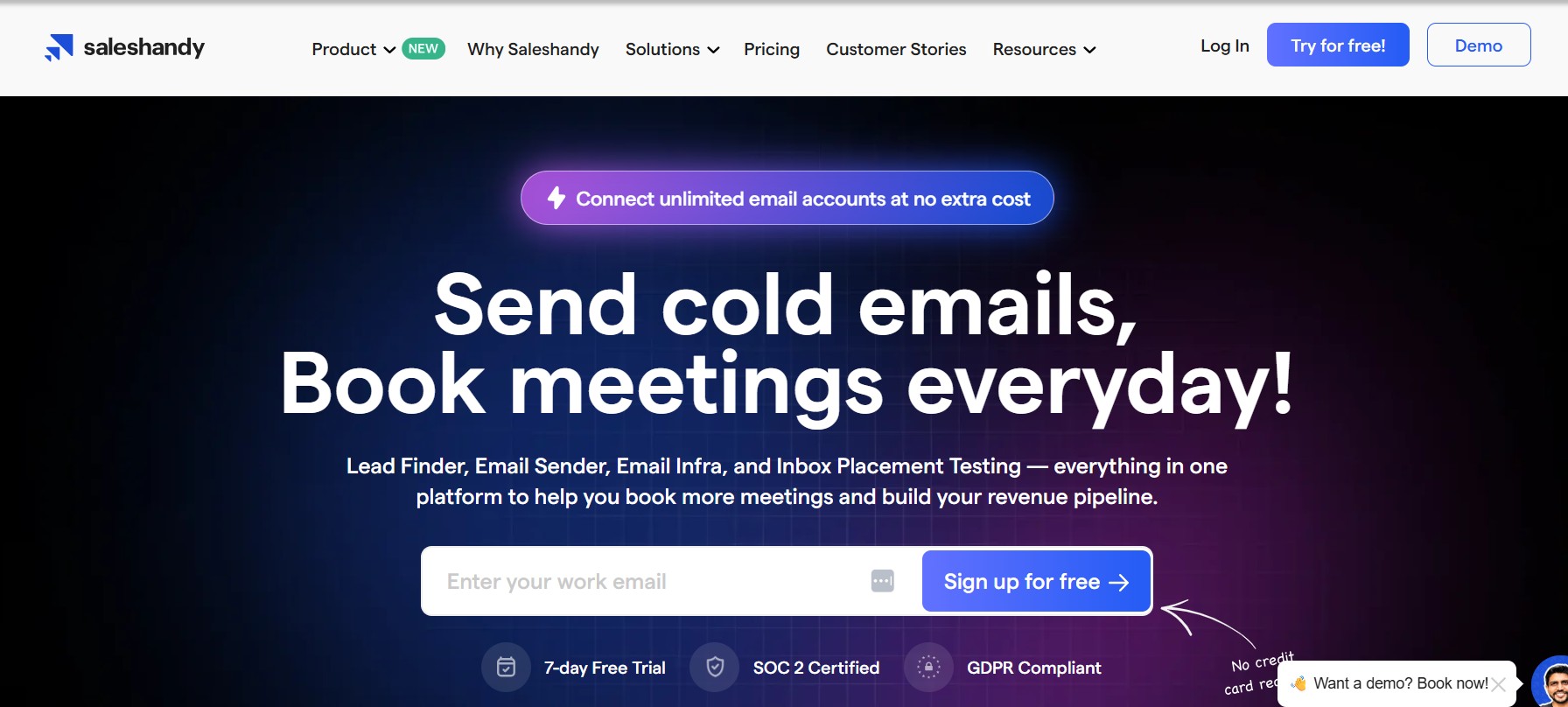
Saleshandy is a cold email platform with a pricing model that makes more sense for smaller teams and agencies than most of the tools in this category. The emphasis is on email deliverability — keeping domains healthy, sequences landing in primary inboxes, and tracking performance at a level that lets you catch issues before they compound.
Unlimited email accounts connect across plans, which removes the per-mailbox friction that shows up in other email tools. Inbox rotation distributes volume across connected accounts automatically. The built-in warmup keeps sender reputation stable. Prospect tracking shows individual engagement at the contact level, not just aggregate campaign stats.
For early-stage teams or agencies running cold email for multiple clients at a price point that doesn’t require a CFO sign-off, Saleshandy is worth looking at seriously. The tradeoff is that LinkedIn is not part of the platform.
Key Features:
- Unlimited email account connections across plans
- Built-in email warmup with automatic reputation monitoring
- Inbox rotation for deliverability protection at volume
- Prospect-level tracking showing individual engagement
- CRM integrations with HubSpot, Pipedrive, and Salesforce
Pricing: Outreach Starter around $25/month, Outreach Pro around $74/month, Outreach Scale around $149/month.
Best for: Early-stage teams and agencies running cold email at scale who need deliverability managed without paying Apollo or LGM prices.
Where it falls short: LinkedIn automation is not part of Saleshandy. If LinkedIn is in your outreach mix at all, you’ll need a separate tool.
10. Reply.io
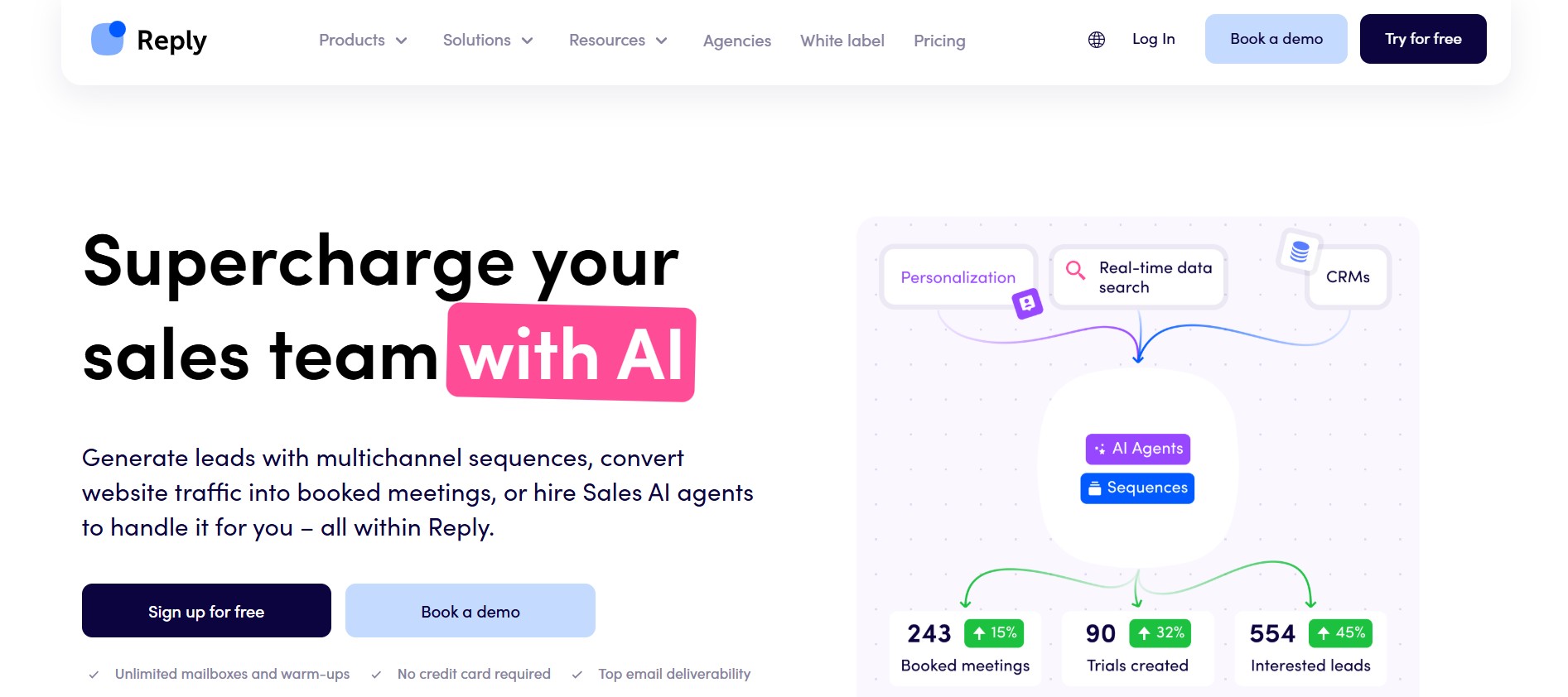
Reply.io covers more channels than almost anything else on this list. Email, LinkedIn semi-automated steps, phone calls, SMS, and WhatsApp are all available in one sequence builder. For teams that need genuine multichannel coverage — not just LinkedIn plus email — that breadth is hard to match.
The AI component is Jason, an AI SDR that can build prospect lists, generate message copy, and adapt sequences based on how prospects respond. Jason handles a meaningful chunk of the setup and iteration work that normally falls on the human building the campaign. For lean teams managing outbound without dedicated ops, that matters. Reply also handles email inbox rotation across connected accounts, which keeps deliverability stable at volume.
The honest limitation on LinkedIn is that Reply’s automation there is still semi-automated — prompted manual steps rather than fully native execution. So for LinkedIn-heavy teams, the same gap exists as with Lemlist. Where Reply wins is the breadth of channels in a single sequence and Jason’s ability to reduce the manual work of campaign setup and optimization.
Key Features:
- Multichannel sequence builder covering email, LinkedIn (semi-automated), phone, SMS, and WhatsApp
- Jason AI SDR builds prospect lists, writes messages, and adapts sequences based on replies
- Email inbox rotation for deliverability management
- AI-powered sequence optimization and A/B testing
- Integrations with major CRMs and a built-in contact database
Pricing: Email Volume plans from $49/month, Multichannel plans from $89/month, AI-powered SDR plans higher.
Best for: Teams that want genuine multichannel coverage and AI-assisted campaign management without stitching together a multi-tool stack.
Where it falls short: LinkedIn automation is semi-automated. Jason AI quality at high volume has drawn mixed reviews.
Side-by-Side Comparison
These are the five dimensions that actually matter when making this decision: whether the tool handles LinkedIn account rotation, whether AI does anything after a prospect replies, whether email warmup is included, what type of team it’s built for, and what the starting price looks like.
| Tool | LinkedIn Auto-Rotation | Post-Reply AI | Email Warmup Included | Best For | Starting Price |
|---|---|---|---|---|---|
| DealsFlow | Yes | Yes (Arlo) | No | AI conversation + agency multi-account | $49/mo (annual) |
| HeyReach | Yes | No | No | Multi-account LinkedIn scaling | Flat-fee |
| Expandi | No | No | No | LinkedIn safety + dynamic personalization | ~$99/account |
| Lemlist | No | No | Yes | Email-first multichannel | ~$39/mo |
| Instantly | N/A | No | Yes | High-volume cold email | ~$37/mo |
| Apollo.io | No (manual) | No | No | Database + outreach combined | $49/mo |
| Waalaxy | No | No | No | Simple LinkedIn + email, small teams | ~€56/mo |
| Dripify | No | No | No | SDR team management + LinkedIn | $39/mo |
| Saleshandy | N/A | No | Yes | Email deliverability at scale | ~$25/mo |
| Reply.io | No | Partial (Jason) | Yes | Multichannel + AI SDR | $49/mo |
How to Pick the Right LGM Alternative
The right tool depends almost entirely on what’s actually breaking down. Here are the four scenarios that come up most often.
If you’re an agency running 10+ LinkedIn accounts, the choice is between HeyReach and DealsFlow. HeyReach gives you the multi-account infrastructure with flat-fee pricing and a clean team dashboard where your human SDRs handle the conversations. DealsFlow gives you all of that plus Arlo handling the reply layer, which means you’re not hiring headcount to manage inboxes as you add clients. The decision comes down to whether you want humans or AI in the conversation loop after the first message.
If email is your primary channel and LinkedIn is supplementary, look at Lemlist or Instantly. Lemlist wins if you want advanced personalization and multichannel sequences with LinkedIn prompts included. Instantly wins if raw email volume and deliverability at scale are the priority and you’re connecting a lot of mailboxes.
If you don’t have a lead list and need data plus outreach in one place, Apollo is the obvious answer. You eliminate the enrichment tool from the stack, consolidate the workflow, and get intent signal data that LGM’s enrichment doesn’t touch.
If your team is small, the budget is limited, and LGM feels like more than you need, Waalaxy or Dripify are the straightforward picks. Both are cheaper, both are simpler to set up, and both cover the LinkedIn plus email basics without the operational overhead of LGM.
Conclusion
LGM is a good tool for small teams running multichannel sequences. The visual builder is genuinely useful. The LinkedIn plus email plus X coverage is more than most competitors ship. For a two-person team running a few hundred prospects through sequences, it works fine.
The problem shows up at scale. Per-identity billing compounds. No auto-rotation caps LinkedIn volume. And the whole system stops being automated the moment a prospect replies — which is, to put it plainly, the moment that matters most.
In 2026, the real line in the B2B outreach tool market isn’t between tools that have LinkedIn and tools that don’t. It’s between tools that stop at the send layer and tools that handle the conversation after. Most tools on this list are excellent at the send layer. Only one of them — DealsFlow — was built specifically to have Arlo continue the conversation, handle objections, and book the meeting without a human having to step in.
If what you want is a platform where the AI picks up after the first reply and runs the conversation to a booked meeting, that’s what DealsFlow is built for. The 14-day free trial requires no credit card, and the Starter Pilot starts at $49/month on annual billing.
FAQs
Q: What is La Growth Machine used for?
La Growth Machine is a multichannel sales automation tool that lets you run outreach sequences across LinkedIn, email, and X/Twitter from one platform. You build a sequence, import your prospect list, and the tool handles connection requests, messages, and follow-ups automatically. It’s popular with B2B sales teams and agencies that want to manage LinkedIn and email in one workflow rather than switching between separate tools.
Q: Why do people look for La Growth Machine alternatives?
A few reasons come up consistently. The per-identity pricing model gets expensive fast — five LinkedIn accounts on the Basic plan costs around €300/month, and you’re still capped at three active campaigns per identity. There’s no native account auto-rotation, so increasing LinkedIn volume means adding more identities at more cost. And like most tools in the category, LGM stops automating the moment a prospect replies — the conversation hands back to a human, which doesn’t scale well for high-volume teams.
Q: What is the best La Growth Machine alternative for agencies?
Depends on where the pain is. If the problem is cost and multi-account management, HeyReach’s flat-fee model beats LGM’s per-identity billing at agency scale and auto-rotates across accounts natively. If the problem is inbox overload from managing replies across 10+ client accounts, DealsFlow’s Arlo AI handles conversations after the first reply — including objections and meeting booking — without a human in the loop for every message.
Q: Can any of these tools handle LinkedIn replies automatically?
Most tools in this category stop at the send layer. DealsFlow is the exception. Its Arlo AI engine reads incoming replies, assesses the context, responds to objections, and books meetings directly — all without manual intervention. Most other tools, including LGM, HeyReach, Expandi, Dripify, and Waalaxy, hand conversations back to a human the moment a prospect responds.
Q: Is La Growth Machine safe for LinkedIn accounts?
LGM respects LinkedIn’s daily action limits, which reduces ban risk. But it’s not cloud-based by default in the same way purpose-built safety-first tools are. Expandi, for example, runs cloud-based with dedicated IPs per account. DealsFlow uses distributed cloud execution with randomized timing to mimic human behavior. For teams worried about account health at volume, those infrastructure differences matter.
Q: What’s the cheapest La Growth Machine alternative?
For cold email, Saleshandy starts around $25/month with unlimited email accounts. For LinkedIn plus email sequences, Waalaxy has a free plan and paid plans from around €56/month. For a tool that covers LinkedIn automation with AI-handled conversations, DealsFlow starts at $49/month on annual billing for one LinkedIn account — with a 14-day free trial and no credit card required.
Q: Do any of these alternatives include a built-in lead database?
Yes. Apollo.io ships with a database of 210M+ contacts and is probably the strongest option if you’re currently paying separately for data enrichment. Lemlist has its own lead database. Instantly has Instantly Leads. Reply.io includes a contact database as well. LGM itself has no built-in database — you import your own lists, which means most LGM users are already paying for a separate enrichment tool.
Q: Is DealsFlow better than La Growth Machine?
They solve different problems. LGM is a capable multichannel sequence tool for teams that want LinkedIn, email, and X/Twitter in one workflow and are comfortable managing conversations manually. DealsFlow is built specifically for teams that want the full outreach loop — first message through booked meeting — running with AI in the conversation layer. If you need a human to handle every reply, LGM works fine. If you want AI picking up after the first message and running the conversation to a booking, that’s DealsFlow’s core case.