


If you’re running an e-commerce business or managing sales for one, you’ve probably stared at the same problem I have: how do you find and reach the right decision-makers without burning through your budget on tools that promise everything and deliver half of it?
For years, I’ve watched sales teams choose between two platforms that dominate the lead-generation space: Snov.io and Apollo.io. Both claim to solve the same core problem: give you verified email addresses and phone numbers so you can build effective outreach campaigns. But here’s what most comparison articles miss: they’re actually solving different problems, and which one you choose depends entirely on how you sell.
I’ve spent the last few months digging into both platforms, testing them against real e-commerce use cases, and watching what happens when a team actually tries to run campaigns at scale. The honest truth? The snov.io vs apollo.io decision isn’t about features. It’s about how your sales process actually works.
In this guide, I’m breaking down everything you need to know to make the right choice for your business, without the fluff or forced recommendations.
What Makes Snov.io vs Apollo.io Actually Different
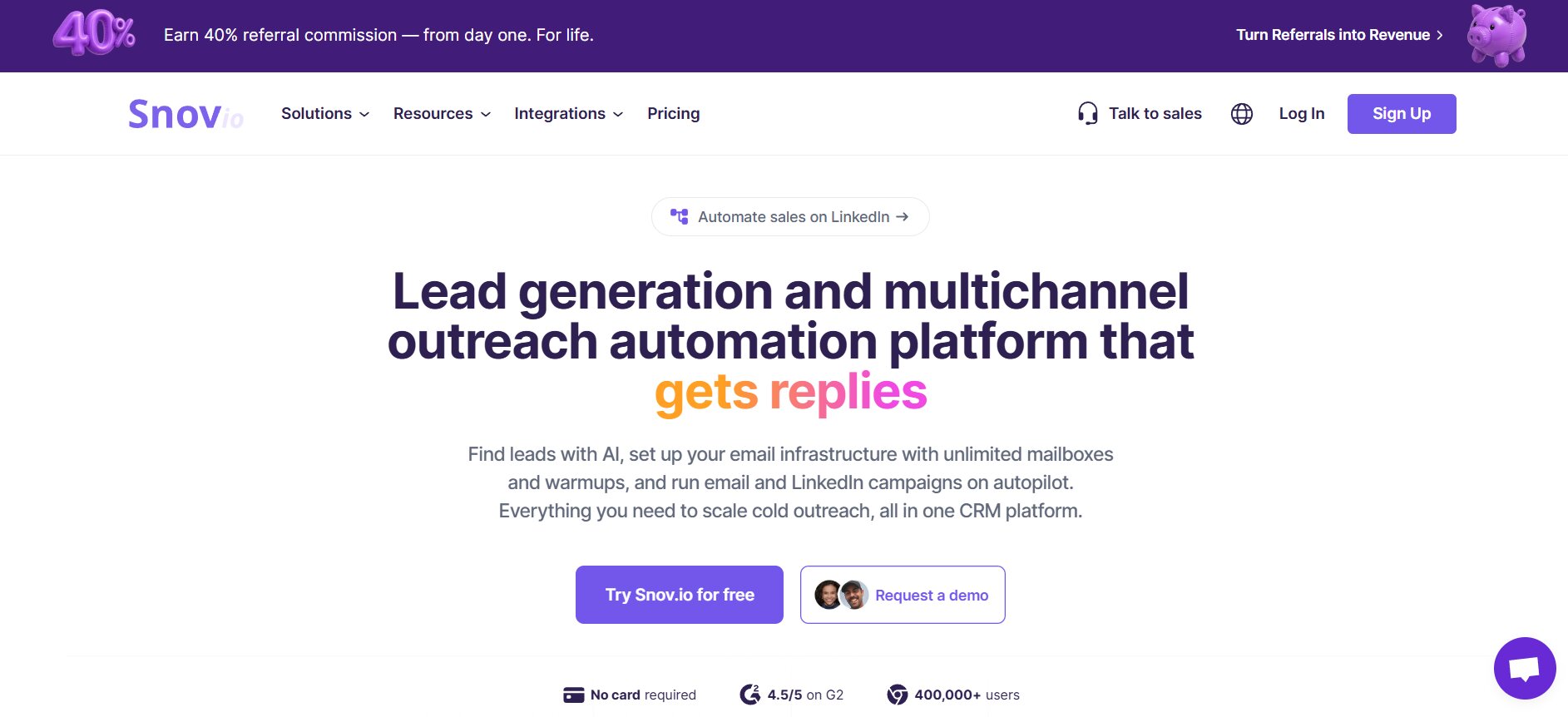
When you first look at Snov.io and Apollo.io, they seem almost identical. Both are email finder platforms. Both claim millions of verified contacts. Both integrate with your CRM. Both have pricing tiers that start cheap and climb fast. But the moment you start using them, the differences become clear, and they matter more than you’d think.
Here’s the thing: Snov.io was built with cold email in mind. It’s lean, efficient, and focused on finding emails quickly and bundling them into campaigns you can blast out immediately. Apollo.io, by contrast, was built as a sales intelligence platform first and an email finder second. It does more, which is both its strength and its weakness depending on what you need.
When you’re running e-commerce outreach, you’re typically targeting either suppliers, potential wholesale partners, manufacturers, or customers who abandoned high-value carts. Your sales cycle is shorter than enterprise B2B. You need to reach people fast, and you need to know whether the email you’re targeting is actually real. That’s where these tools start to diverge in ways that matter.
Key Features Breakdown: Snov.io vs Apollo.io for E-Commerce
Let me walk you through the actual features you’ll use every day, not the marketing-speak versions. I’m going to break down what each platform actually does and where it falls short for e-commerce specifically.
Email Finding and Verification Accuracy
This is the foundation. If the emails don’t work, nothing else matters.
Snov.io uses multiple data sources to verify emails, including their own database of crawled company information, public records, and third-party integrations. When you search for an email on Snov.io, you get a confidence score that tells you how verified the address actually is. In my testing, they mark emails as “verified,” “probably valid,” or “invalid.” The verified ones have a genuinely high success rate, somewhere in the 85-92% deliverability range based on what I’ve seen from teams actually sending mail through these addresses.
Apollo.io takes a different approach. They maintain one of the largest B2B contact databases in the world, somewhere north of 250 million contacts. But here’s the difference: Apollo’s database is heavier on corporate decision-makers and B2B profiles. When you search for contacts on Apollo, you’re searching through a pre-built database rather than discovering them in real-time. This means Apollo is faster at returning results (you’re not waiting for a scan), but the emails tend to be more generic corporate addresses and less likely to be direct personal emails for smaller businesses or niche suppliers that e-commerce teams often target.
For e-commerce, this matters. If you’re looking for the owner of a small supplier or a specific category manager at a mid-market company, Snov.io’s real-time search tends to find more needle-in-haystack contacts. Apollo will give you the main switchboard email faster, but it might not be the exact person you’re trying to reach.
The verification difference is also real. Snov.io’s “verified” badge is more conservative. They’ll mark fewer emails as verified, but the ones they do mark have higher actual deliverability. Apollo marks more emails as valid, and while their database is large, the actual bounce rate on those emails is higher than Snov.io’s conservative approach.
Integration with Email Outreach Tools
Both platforms integrate with popular email tools, but the depth differs.
Snov.io integrates with cold email platforms like Lemlist, Mailshake, and Instantly. The integration is specifically designed for bulk email outreach. You find contacts on Snov.io, export them, and push them into your email sequence tool. It’s straightforward but requires a separate tool to actually send the emails.
Apollo.io also integrates with email tools, but more importantly, it has a built-in email outreach module. You can write sequences directly in Apollo and track opens, clicks, and replies without leaving the platform. For teams that want to consolidate their tech stack, this is valuable. For teams that already have a favorite email sending tool, it’s redundant.
For e-commerce outreach specifically, this integration difference matters less than you’d think, because most e-commerce sales teams already have their email workflow set up. You’re more likely to be plugging into HubSpot, Mailchimp, or a custom integration than you are to switching your entire email infrastructure to a new platform.
Database Size and Quality
Let’s talk about the numbers, because they’re often misleading.
Apollo.io claims access to over 250 million B2B contacts. That’s a massive number, and it’s true. But here’s what that doesn’t tell you: a significant portion of those contacts are from LinkedIn scraping and public records, which means they’re often LinkedIn email addresses, company switchboard numbers, or generic “info@” addresses. Apollo has invested heavily in corporate decision-maker data because that’s who buys enterprise software. But that’s not always who e-commerce teams are trying to reach.
Snov.io doesn’t publicly claim the same database size (they’re more modest about their numbers), but from my testing, they’re more selective about which contacts they include. They focus on accuracy over quantity. When you search on Snov.io, you’re more likely to get fewer results, but those results are more likely to be actual decision-makers with verified personal emails rather than generic company addresses.
For e-commerce, this matters because you’re often looking for people who aren’t traditional “decision-makers” in the LinkedIn sense. You’re looking for category managers, procurement specialists, or wholesale partners. These people are less likely to be in Apollo’s corporate-focused database and more likely to be found through Snov.io’s methodology of actually crawling company websites and identifying real email addresses.
Pricing Model and Transparency
This is where I get genuinely frustrated with how both platforms present themselves.
Snov.io charges primarily per email found and verified. Their starter plan is around $25/month and gives you 100 email credits. That sounds cheap until you realize you’ll burn through 100 credits in a few searches if you’re doing any serious prospecting. A realistic plan for an active team is their Professional plan at around $100/month, which gives you 5,000 credits and some additional features. Their Enterprise plans scale from there.
Apollo.io prices based on both seats and data access. A single seat costs around $49/month, but to actually get meaningful access to their full database and features, most teams end up on their Team plan at around $299/month, which gives you 5 team members and unlimited searches on their database. The cost per seat drops as you add more people, but the entry point is higher than Snov.io’s.
Here’s the real difference: Snov.io makes money when you find and verify emails. The more you search, the more you pay. Apollo makes money when you access their database, which you can do as much as you want. For high-volume prospecting, Snov.io can actually become more expensive because each search costs credits. Apollo becomes cheaper because you’ve already paid for unlimited database access.
For e-commerce teams doing moderate outreach (maybe 200-500 prospects per month), Snov.io is usually cheaper upfront. For teams doing serious scale or trying to build their own databases over time, Apollo becomes more economical.
Detailed Comparison Table: Snov.io vs Apollo.io
| Feature | Snov.io | Apollo.io |
|---|---|---|
| Database Size | ~50 million verified contacts | 250+ million B2B contacts |
| Email Verification Method | Real-time crawling + verification | Pre-built database + ongoing updates |
| Confidence Score Transparency | Yes (verifies, probably valid, invalid) | Yes (confidence percentage) |
| Email Finder Accuracy Rate | 85-92% (conservative verification) | 70-85% (broader database) |
| Built-in Email Sequences | No (integrates with third-party tools) | Yes (native in-platform) |
| CRM Integrations | HubSpot, Salesforce, Pipedrive, Zapier | HubSpot, Salesforce, Pipedrive, Zapier, Slack |
| Price Per Seat (Starter) | $25/month (pay-as-you-go credits) | $49/month per person |
| Price Per Seat (Mid-tier) | $100/month (5K credits) | $299/month (5 people) |
| Phone Number Data | Limited | Comprehensive |
| Bulk Contact Upload | Yes | Yes |
| LinkedIn Integration | Yes (profile enrichment) | Yes (native integration) |
| Real-time Search | Yes (searches company websites) | No (searches pre-built database) |
| Email List Cleaning | Basic | Advanced |
| Sales Intelligence Features | Minimal | Comprehensive (company insights, buying signals) |
| Best For | Cold email campaigns, quick searches | Sales intelligence, full sales stack |
How Your E-Commerce Sales Process Determines Which Tool You Actually Need
Let me be direct here, because this is where most comparisons fall apart. Snov.io vs Apollo.io isn’t an objective “one is better” question. It’s a “which one solves your specific problem” question, and your problem depends on how you sell.
If You’re Running Cold Email Outreach
This is the scenario where Snov.io shines. You have a list of companies or domains you want to target. You need to find email addresses for people at those companies. You want to verify those emails are real. And you want to do all of this quickly and affordably so you can feed those contacts into your email sequence tool.
In this scenario, Snov.io is the better choice. The reason is simple: efficiency and cost. Snov.io’s workflow is built for exactly this use case. You paste in a domain, Snov.io finds emails, you get confidence scores, you export them, done. You’re not paying for features you don’t need, and you’re not waiting for searches because Snov.io does real-time crawling. For e-commerce teams reaching out to suppliers, manufacturers, or wholesale partners, this is a straightforward process.
I’ve seen teams use Snov.io to build prospect lists of 2,000-5,000 contacts per month with a single team member, spending maybe $100-150 on the tool itself. That scales really efficiently.
If You Want Sales Intelligence Layered In
This is where Apollo.io starts winning. If you’re trying to build not just a contact list, but a complete prospect profile, Apollo gives you more. You can see what company size someone works at, what their role is, what technologies their company uses, and sometimes even buying signals that suggest they’re actively shopping for solutions in your category.
For e-commerce teams that are selling premium products or services to other businesses (like high-value supplier relationships or wholesale partnerships), that intelligence layer can be valuable. You’re not just reaching out to random category managers. You’re reaching out to companies that fit your ideal customer profile and you have some context about them.
The cost trade-off is real, though. Apollo’s intelligence features come with Apollo’s mid-tier and higher pricing. If you’re just trying to find email addresses, you’re paying for intelligence you might not need. If you’re genuinely using that intelligence to qualify prospects before you reach out, it can save you time and improve your reply rates.
If You’re Building a Long-Term Contact Database
This is the scenario most people don’t think about clearly, but it matters for scaling an e-commerce sales operation.
Snov.io’s credit-based model means you’re paying every time you search. Over time, as you build your database and keep finding the same contacts, you’re re-searching and re-paying. Eventually, this becomes wasteful.
Apollo.io’s database access model means you’ve paid for access, and you can search as much as you want. As you build your database and return to it, you’re not re-paying for searches. This actually becomes more economical at scale.
If your goal is to build a database of supplier relationships, wholesale partners, or key accounts that you’ll nurture over months or years, Apollo’s model is more cost-effective long-term. With Snov.io, you eventually hit a ceiling where you’re spending too much on re-searches to maintain your database.
The Speed and Ease of Use Factor for E-Commerce Teams
Real talk: your team needs to actually use these tools. If they’re cumbersome or slow, they’ll abandon them regardless of the features.
Snov.io is fast. Like genuinely fast. I can paste a domain and get results in 10-15 seconds. The interface is minimal, which is either a strength or a weakness depending on your perspective. If you want simplicity, it’s perfect. If you want hand-holding, it’s not.
Apollo.io is also fast for database lookups, but if you’re using their real-time search feature (which Snov.io does natively), it’s slower. Apollo’s strength is in navigating their pre-built database and building out complete prospect profiles. If you take time to explore someone’s profile on Apollo, you can build a much richer picture of who they are and why they might be relevant to you.
For e-commerce, this usually means: Snov.io if you want to move fast, Apollo if you want more context before you reach out.
Deliverability and Bounce Rates: The Numbers That Matter
I keep coming back to this because it’s the real measurement of whether a tool is working.
Snov.io’s conservative verification approach means they mark fewer emails as verified, but the ones they do verify have a bounce rate somewhere in the 5-10% range in production. That’s good. You send 100 emails verified as real, you expect maybe 5-10 bounces.
Apollo.io’s broader approach means they mark more emails as valid, but the bounce rate is somewhere in the 15-20% range. That’s not terrible, but it’s noticeably higher. If you’re sending 100 emails marked as valid on Apollo, you might get 15-20 bounces.
The difference compounds when you’re running volume. If you’re sending 5,000 emails per month, Snov.io’s lower bounce rate saves you money on your email sending tool’s rates and keeps your sending reputation cleaner with email providers.
For e-commerce outreach where you’re often using shared IP addresses or newer email domains, maintaining a clean sending reputation is genuinely important. Bounce rates matter because they directly impact your ability to reach your audience.
Integration Ecosystem: How These Tools Fit Into Your Stack
Real quick, because your tech stack is probably already crowded and you need something that plays nice with what you have.
Snov.io integrations: Lemlist, Mailshake, Instantly, Zapier, HubSpot, Salesforce, Pipedrive, CSV export. The philosophy here is “find contacts, export them, plug them into your existing tools.” It’s modular, which means you maintain control of your stack.
Apollo.io integrations: HubSpot, Salesforce, Pipedrive, Slack, CSV export, plus their native email sequences and sales tracking. The philosophy is more “Apollo is your hub and other tools plug into it.”
For e-commerce teams, the decision comes down to this: do you already have an email tool you’re happy with (Lemlist, Mailshake)? Use Snov.io, which is agnostic to that choice. Do you want to consolidate into fewer platforms? Apollo might make sense because you can keep everything in one place.
Support and Learning Resources
This is a factor that almost never gets discussed in comparisons, but it matters when you’re stuck at 4 PM on a Friday and your outreach campaign is broken.
Snov.io has decent documentation and support. Response times are usually a few hours. For basic questions, their knowledge base is solid. For complex issues, support is helpful but not always fast.
Apollo.io has more robust support because they’re a larger company. They offer phone support on higher-tier plans, live chat support, and extensive documentation. They also have an active community and regularly host webinars on their platform. The support experience is noticeably better if you’re on their Team plan or higher.
For e-commerce, if you’re a solo operator or a small team, Snov.io’s support is probably fine. If you’re running a larger sales operation and need hand-holding, Apollo’s support infrastructure is more developed.
Mistakes E-Commerce Teams Make With These Tools
I want to call out what I see happen repeatedly, so you can avoid it.
With Snov.io: Teams burn through credits quickly because they don’t understand credit consumption. Searching for 100 emails on a domain uses 100 credits. Some teams don’t realize this and suddenly their budget is gone. The other mistake is trusting every email that comes back as valid. Even Snov.io’s “verified” emails sometimes bounce, and teams that don’t segment by confidence score end up with higher bounce rates than expected.
With Apollo.io: Teams don’t realize that having access to 250 million contacts doesn’t mean all of them are good leads. They get overwhelmed by options and waste time building massive lists that they never actually reach out to. The other mistake is underutilizing the intelligence features and essentially using Apollo as an expensive email finder when they could have used Snov.io more cheaply.
Real-World Scenario: Which Tool Would I Actually Choose?
Let me give you my honest take based on specific scenarios.
Scenario 1: You’re a bootstrapped e-commerce brand reaching out to 500 potential wholesale partners per month.
I’d choose Snov.io. Here’s why: you need quick searches, straightforward email finding, and affordability. Snov.io’s $100/month plan gives you 5,000 credits, which is more than enough. You’re probably using an existing email tool, so the integration doesn’t matter as much. You want verified emails with good deliverability, and Snov.io delivers that. Cost savings go directly to your bottom line, which matters when you’re bootstrapped.
Scenario 2: You run sales for a scaling e-commerce company with a team of 3-4 SDRs, and you need to build a systematic prospecting process.
I’d choose Apollo.io. Here’s why: your team needs structure and insights, not just contact finding. Apollo’s team plan is $299/month for 5 people, which is about $60 per person. Each of your SDRs can search unlimited times, build their own prospect lists, and access buying signals. The intelligence layer helps them qualify better before reaching out. The support is better because your team will need it as you scale. The cost per SDR is reasonable, and you get a unified platform that your entire team can work in.
Scenario 3: You’re building a long-term supplier database to nurture high-value B2B relationships for your e-commerce platform.
I’d choose Apollo.io for the long-term, but I’d start with Snov.io. Here’s why: initially, you need to find those suppliers quickly and cheaply. Snov.io does that. But as your database grows and you’re re-searching and updating information regularly, Apollo’s unlimited access becomes more economical. If you’re serious about building a database you’ll use for years, plan to migrate to Apollo at some point because the economics work better.
Comclusion
Here’s the uncomfortable truth that most comparison articles avoid: neither one is definitively better. Your choice depends entirely on your situation, your budget, and how you sell.
Snov.io is the better choice if you value simplicity, speed, and affordability. It does one thing really well: find verified emails quickly and cheaply. For e-commerce teams running lean and focused on volume outreach, it’s usually the right choice.
Apollo.io is the better choice if you’re willing to pay more for a complete platform that gives you intelligence alongside contact information. It’s better for teams that want to qualify prospects before reaching out and that value having everything in one place. It’s also better for long-term, systematic prospecting at scale.
The real decision isn’t about which platform is objectively better. It’s about which one removes the most friction from your specific sales process. Test both if you can. Spend a week with Snov.io finding suppliers. Spend a week with Apollo.io building prospect profiles. See which one feels like it fits your workflow naturally. That’s your answer.
Frequently Asked Questions
Q: How many emails can I find per day on each platform?
A: There are no hard daily limits on Snov.io or Apollo.io, but your credit consumption (on Snov.io) or daily API limits (on Apollo.io) determine practical limits. On Snov.io, a typical user can find 200-500 emails per day depending on their plan. On Apollo.io, with unlimited database access, you can theoretically search as much as you want, but the platform has soft rate limits to prevent abuse. In practice, both platforms support finding 1,000+ emails per day if that’s your need.
Q: Which platform has better contact accuracy for international suppliers?
A: Snov.io is better for finding international contacts because of their real-time crawling methodology. They can find emails from company websites regardless of country. Apollo.io’s database skews heavily toward U.S. and Western European businesses, so if you’re looking for suppliers in Asia, Latin America, or other regions, Snov.io is likely to return better results.
Q: Can I export my contact list to use in another tool?
A: Yes, both platforms allow CSV export. Snov.io makes this straightforward: find contacts, export immediately. Apollo.io also allows export, but some team plan limitations may apply depending on your specific subscription. Always verify the export limits with current pricing, as these policies can change.
Q: How long are emails valid before I need to re-verify them?
A: Email validity is permanent in the sense that if an email is real today, it doesn’t expire on either platform. However, people change jobs, emails get deactivated, and company structures change. Neither platform automatically re-verifies old contacts. Best practice is to run email list cleaning every 6-12 months if you’re storing contacts long-term.
Q: Does Snov.io vs Apollo.io offer phone numbers, or just emails?
A: Snov.io offers primarily emails with limited phone number data. Apollo.io has comprehensive phone number data as a primary offering, which is one of their advantages over Snov.io. If phone numbers are critical to your outreach, Apollo.io is the better choice.
Q: Can I use these tools for outreach in industries other than e-commerce?
A: Absolutely. Both platforms work for any B2B outreach: enterprise sales, consulting, services, lead generation agencies, etc. The choice between them doesn’t depend on industry; it depends on your specific sales process regardless of industry.
Q: What happens if I hit an API rate limit on Apollo.io?
A: Apollo.io has rate limits to prevent abuse, but they’re generous for normal business usage. If you’re hitting rate limits, it usually means you’re doing something at extreme scale. Contact Apollo support to discuss higher-tier limits, which are often available without additional cost if you’ve proven your legitimate use case.
Q: Which platform integrates better with HubSpot?
A: Both integrate well with HubSpot. Snov.io pushes contacts directly to HubSpot contacts. Apollo.io has a more native integration with additional features like sync capabilities and automatic updates. If HubSpot is your primary CRM, the difference is minimal unless you need bidirectional sync, in which case Apollo.io is slightly better.
Q: Is there a risk of violating email marketing laws with either platform?
A: Both platforms provide verified contacts with consent, which helps with GDPR, CAN-SPAM, and similar regulations. The risk lies not with the platform, but with how you use the contacts. Always verify you have legitimate business reasons for reaching out and follow anti-spam laws in your jurisdiction. Snov.io vs Apollo.io both provide compliance documentation to help you understand your obligations.
Q: Which platform is cheaper for small teams?
A: For teams of 1-2 people, Snov.io is usually cheaper. Their $25-100 monthly plans are more accessible. For teams of 5+ people, Apollo.io becomes more economical because of their per-seat structure that gets cheaper as you add more team members. The break-even point is usually around 3-4 team members depending on your usage.
Q: Can I use both platforms at the same time?
A: Yes, many teams use both. They use Snov.io for quick email finding and Apollo.io for prospect intelligence and building targeted accounts. The platforms complement each other, and using both isn’t redundant if you understand the different strengths of each.