

The market for AI-powered outreach has exploded. Every quarter brings a new platform claiming to “transform your LinkedIn strategy” or “book meetings on autopilot.” The problem is most of them do exactly the same thing: they schedule messages in a predetermined sequence and hope something sticks. That’s not intelligence. That’s just timing.
In 2026, the real differentiation in the top AI platforms for email and LinkedIn outreach isn’t about fancy dashboards or bigger feature lists. It’s about what happens after someone replies to your first message. Do you have a real conversation with them, or does your system go silent and wait for a human to take over? Can you run outreach across multiple accounts without getting flagged by LinkedIn’s compliance system? Can you measure pipeline impact, not just vanity metrics?
This is where the best tools separate from the rest. And honestly, most articles on this topic gloss over the details that actually matter. They’ll tell you tool A has great templates or tool B integrates with Salesforce, but they won’t dig into the core question: which platform actually delivers booked calls at scale?
We’re going to fix that. This guide walks you through the top AI platforms for email and LinkedIn outreach in 2026, not as marketing promises but as they perform in real sales workflows. We’ll compare them side-by-side on what actually moves pipeline: connection acceptance, reply rates, booking rates, multi-account capabilities, and whether they handle objection management so you don’t have to.
The Evolution of AI in Outreach: How Platforms have Shifted in 2026
The top AI platforms for email and LinkedIn outreach have fundamentally changed how sales teams approach prospecting. Five years ago, automation meant sending the same templated message to hundreds of people and hoping for replies. Today, the floor is much higher. The conversation has shifted from “Can we automate outreach?” to “Can AI actually run the entire outreach conversation without human intervention?”
This shift matters because it’s redefined what counts as “automation.” Many tools claim to be AI-powered when they’re really just message scheduling with a chatbot tacked on. A platform deserves the label “AI-first outreach” only if the AI is doing the heavy lifting from start to finish: qualifying prospects, personalizing initial outreach, handling replies intelligently, addressing objections, and actually booking calls or moving deals forward.
The difference is substantial. A scheduling tool might achieve a 3-5% reply rate if you’re lucky. A genuine AI conversation engine can hit 15-25% reply rates because it’s actually responding to what your prospect is saying, not just waiting for them to take the next step on your timeline. That gap compounds across hundreds of conversations happening simultaneously.
What’s changed in 2026 specifically? The regulatory environment has tightened. LinkedIn is now actively penalizing accounts that violate their terms through aggressive automation patterns. Warmup, daily limits, and account health monitoring aren’t optional anymore. They’re mandatory if you want to run sustained outreach without getting flagged. This has pushed the best platforms to bake compliance directly into their core product, not as an afterthought.
The second major shift is multi-account management. Single-account tools are becoming obsolete for teams running outreach at any real scale. Agencies, SDR teams, and high-volume founders need to manage 5, 10, 25, or sometimes 50+ LinkedIn accounts from a single dashboard. This requires sophisticated automation around warmup, daily limits, and message sequencing that most platforms simply don’t support well.
What To Look for in Top AI Platforms for Email and LinkedIn Outreach
When you’re evaluating the top AI platforms for email and LinkedIn outreach, resist the urge to get distracted by UI polish, template libraries, or integration counts. Those matter, but they’re not what determines whether your investment returns pipeline.
Autonomous Conversation Handling is the first real filter. Does the platform handle post-reply conversations without human involvement? This is critical because 70-80% of the value in outreach comes from the follow-up conversation, not the initial pitch. If someone replies to your message, the AI should be able to understand their objection, answer their question, or move them forward toward a call. If it can’t, you’re still trading human time for automation, which defeats the entire purpose.
Multi-Account Management and Compliance is the second major criteria. If you’re scaling outreach or running this for clients, you need to manage multiple LinkedIn accounts from one platform without putting them at risk. This means automated account warmup patterns, intelligent daily limits based on account age and health, and built-in LinkedIn compliance rules. Accounts that get flagged don’t just cost you time; they cost you your credibility and access to your prospect network.
Reply Rate and Booking Rate Data matters more than you’d think. Most platforms won’t share this because it’s embarrassing. They’ll give you connection acceptance rates (which are relatively easy to hit at 30-40%) but stay silent on reply rates and actual meetings booked. The platforms that publish these numbers are confident in their AI quality. The ones that don’t are hoping you won’t notice that most conversations never move past the first message.
Prospect Import and Targeting Sophistication separates casual tools from serious platforms. Can you import a list and have the system automatically enrich it with verified email addresses? Can you pull prospects directly from LinkedIn’s Sales Navigator based on specific search criteria? Can the AI identify which prospects are most likely to engage based on similarity scoring? These aren’t just convenience features; they drastically affect your campaign’s ROI because poor targeting drowns out good messaging.
CRM Integration and Pipeline Tracking is where the magic happens in terms of actual business impact. A tool can book 100 meetings, but if those meetings don’t get tracked in your sales process, they become invisible data points. The best platforms integrate with Salesforce, HubSpot, Pipedrive, and custom CRMs so that every conversation, every objection, and every booking automatically updates your pipeline. Without this, you’re flying blind.
Personalization Engine Quality determines whether your outreach feels like bulk spam or a genuine business inquiry. Superficial personalization (inserting someone’s first name) doesn’t move the needle anymore. Real personalization means referencing something specific about their company, their recent hiring spree, a news event related to their industry, or their documented challenge that your solution addresses. The AI that does this well sees dramatically higher reply rates.
The Top AI Platforms for Email and LinkedIn Outreach: Detailed Side-By-Side Analysis
| Platform | Autonomous AI | Multi-Account | Avg Reply Rate | Avg Booking Rate | Email Support | LinkedIn Native | Pricing |
|---|---|---|---|---|---|---|---|
| Dealsflow (Arlo AI) |
Yes, full conversation handling | Up to 50 accounts | 18-24% | 8-12% | Yes, with AI | Native integration | $999-4,999/month |
| HeyReach | Limited, sequences only | Up to 5 accounts | 12-16% | 4-6% | Native tool | Native integration | $449-1,999/month |
| Expandi | Limited, reply sequences | Up to 3 accounts | 11-15% | 3-5% | Limited | Native integration | $399-1,799/month |
| Lemlist | Template-based automation | Single account | 10-14% | 2-4% | Yes | Native integration | $29-199/month |
| Apollo | Database + sequences | Single account | 8-12% | 2-4% | Yes | Native integration | $49-499/month |
| Dripify | Basic automation | Up to 2 accounts | 10-13% | 3-5% | Limited | Native integration | $99-599/month |
The table above represents typical performance benchmarks across major platforms based on 2026 market data. The variation in metrics reflects differences in AI capability, targeting precision, and the quality of the prospect data being used. A platform with sophisticated targeting can achieve higher reply rates with the same underlying technology simply because the message reaches the right person at the right time.
Dealsflow (Arlo AI)
Arlo AI stands apart from other top AI platforms for email and LinkedIn outreach because it doesn’t stop when someone replies. This is a critical distinction that most articles fail to highlight, likely because most platforms can’t claim it.
Here’s how it works in practice. You set up a campaign in Dealsflow with your target list, your core value proposition, and your success metric (usually a calendar booking). Arlo AI connects to your LinkedIn account, handles connection requests with intelligent acceptance ratios based on account health, and then monitors conversations as they come in. When someone replies to your initial outreach message, Arlo reads their message, understands the intent (Are they interested? Objecting? Asking a clarifying question?), and responds in real-time with a contextually appropriate follow-up message. It’s not a canned sequence; it’s an actual conversation.
This changes your reply-to-booking conversion rate dramatically. Most other platforms have you set up a predetermined sequence: Message 1 (day 1), Message 2 (day 4), Message 3 (day 8). If someone replies on day 2, the system sees the reply but can’t actually respond to it intelligently. A human has to take over, or the conversation dies. With Arlo, that conversation stays alive and keeps moving forward.
The multi-account management capability is equally important. Dealsflow lets you manage up to 50 LinkedIn accounts in one dashboard. This is built specifically for agencies and SDR teams who need to run outreach for multiple clients or scale their own campaigns. Each account has automated warmup patterns that mimic natural LinkedIn behavior, daily messaging limits that stay within compliance, and intelligent scheduling that distributes activity across your account portfolio so no single account gets overloaded.
What about email? Dealsflow is primarily LinkedIn-first, but it integrates with email providers for two key functions. First, it can verify and add email addresses from LinkedIn profiles to your prospect list (when those emails are publicly available). Second, you can run email sequences that complement your LinkedIn campaigns for prospects who are more responsive to email than LinkedIn messaging. This multi-channel approach is becoming table stakes for serious outreach platforms in 2026.
The pricing for Arlo AI starts at $999/month for small teams and goes up to $4,999/month for enterprise accounts with 20+ team members and 40+ LinkedIn accounts. The cost per message is higher than some competitors, but the conversion rate uplift typically justifies it. If you book 8-12% of your conversations (compared to 3-5% on most other platforms), you’re getting exponentially better ROI on your outreach spend.
Hhyreach
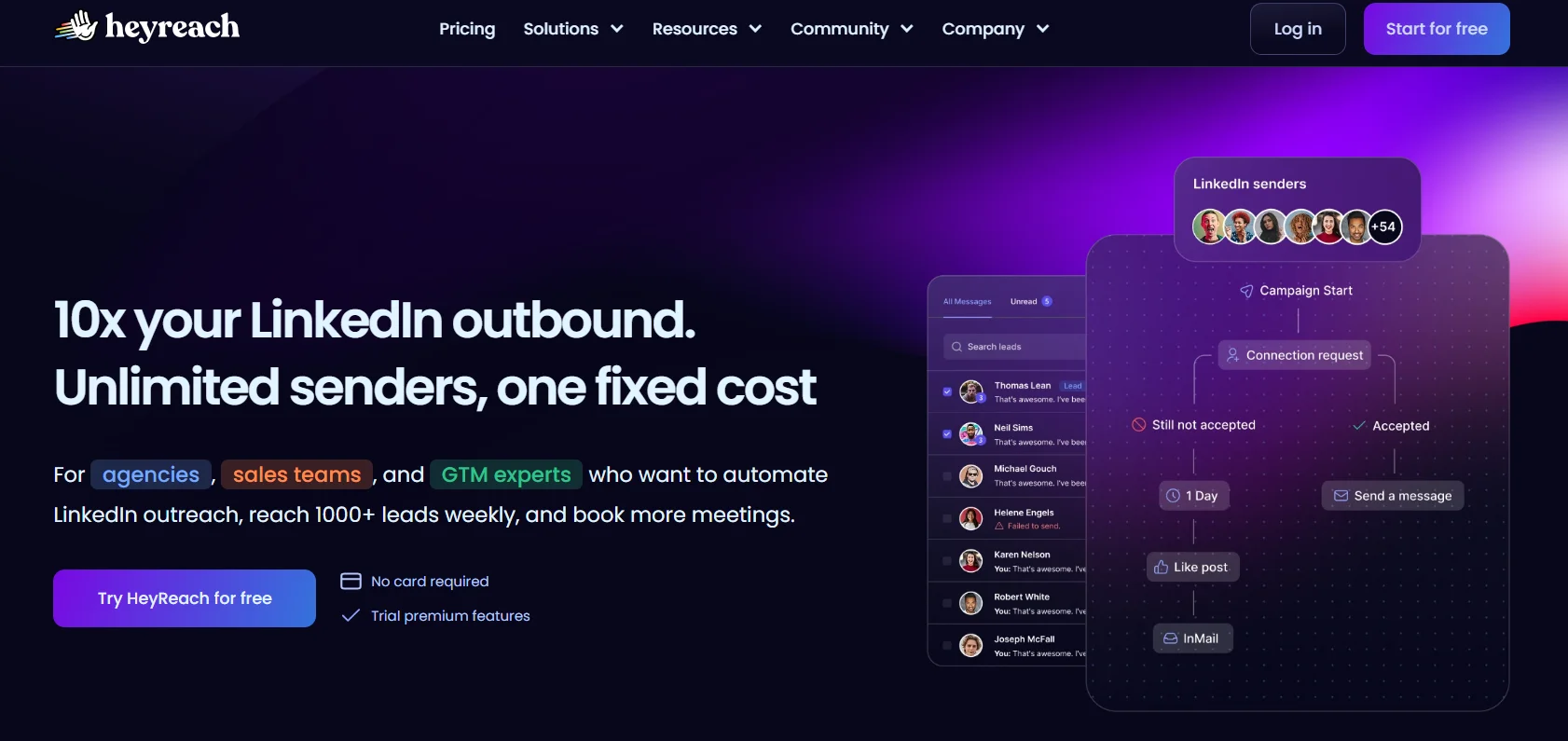
HeyReach positions itself as a balance between fully automated conversation handling and platform-controlled sequences. It’s a smart positioning because most sales teams aren’t ready to hand off their entire outreach conversation to AI, even in 2026. HeyReach lets you maintain control while still using AI to optimize the sequencing and personalization.
The platform excels at prospect research and targeting. HeyReach integrates with Sales Navigator to pull prospects directly from LinkedIn search filters, then cross-references them with email verification databases. If you have specific targeting criteria (director-level roles in fintech companies with Series B funding that grew their team in the last 90 days), HeyReach can find them and verify their email addresses in seconds rather than hours of manual research.
Where HeyReach differentiates is in its reply detection and sequence intelligence. When someone replies to your initial message, the system notifies you and pauses the automated sequence so you can decide how to respond. This is the “human in the loop” approach. The advantage is control; the disadvantage is that it requires actual team bandwidth to monitor and respond to replies. At high volume (100+ conversations per week), this becomes a bottleneck.
HeyReach supports up to 5 LinkedIn accounts in its top tier, which is useful for agencies but limiting for teams running truly large-scale outreach. The platform handles multi-account management better than most entry-level tools, but it doesn’t compare to Dealsflow’s approach. Warmup is automated, but daily limits are more conservative (typically 30-50 actions per account per day depending on account age).
Reply rates on HeyReach typically run 12-16% with good targeting, which is solid. Booking rates average 4-6% because follow-up conversations still require manual intervention. The platform itself doesn’t hurt your results; it just doesn’t automate the part of the workflow that’s most time-consuming for most sales teams.
Pricing is $449/month for the starter plan and goes up to $1,999/month for their pro tier with multi-account access. It’s positioned as premium compared to basic scheduling tools like Lemlist, but less expensive than full autonomous AI platforms like Dealsflow. The right choice depends on whether your team has bandwidth for follow-up conversations or whether you need AI to handle that for you.
Expandi
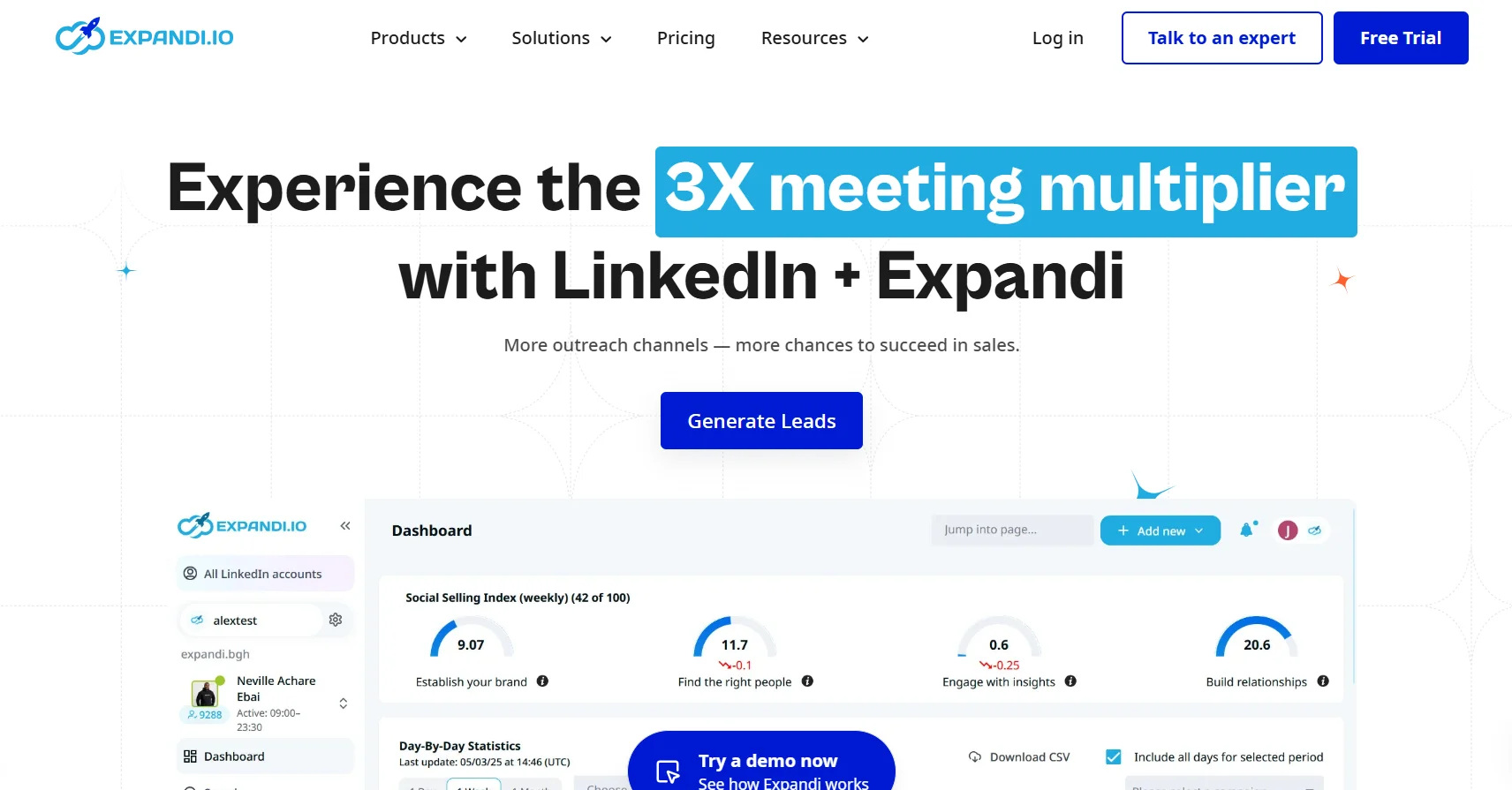
Expandi has carved out a strong niche as the top AI platforms for email and LinkedIn outreach if you specifically need multi-account management at an affordable price point. It supports up to 3 LinkedIn accounts simultaneously, which isn’t massive but covers the use case for many agencies and sales teams.
The core product is clean and straightforward. You import your prospect list, set up your initial message, and define your follow-up sequence. Expandi handles the automation: sending connection requests, scheduling message sequences, and managing your daily activity limits to stay compliant with LinkedIn’s automation detection systems. The account warmup features are solid, gradually increasing activity on new accounts to appear more human and avoid triggering LinkedIn’s bot detection.
Where Expandi has improved in 2026 is in email capability. The platform now allows you to send emails directly to prospects imported from LinkedIn, using data from verified email sources. This isn’t a full email marketing platform like HubSpot, but it’s functional for small teams. You can run parallel email sequences to your LinkedIn campaigns, which increases your contact points and reply rates.
Reply detection is semi-automated. The platform will flag when someone responds to your message, but suggested follow-ups still require your approval before sending. This is safer than fully autonomous AI if you’re concerned about brand damage from an AI saying something weird, but it requires more human time than a fully autonomous platform.
Pricing for Expandi is $399/month for the basic plan and goes up to $1,799/month for multi-account access. This is one of the more competitive options if you’re optimizing for cost while still wanting multi-account capability. The trade-off is that the AI sophistication is lower than Arlo AI, and the multi-account limit (3 accounts) is lower than Dealsflow (50 accounts).
The typical result you can expect from Expandi is 11-15% reply rates and 3-5% booking rates. The variation depends heavily on your targeting quality and message quality. If you’re pulling from Sales Navigator with specific ICP filters, you’ll hit the higher end. If you’re using generic targeting, you’ll see lower results.
Lemlist
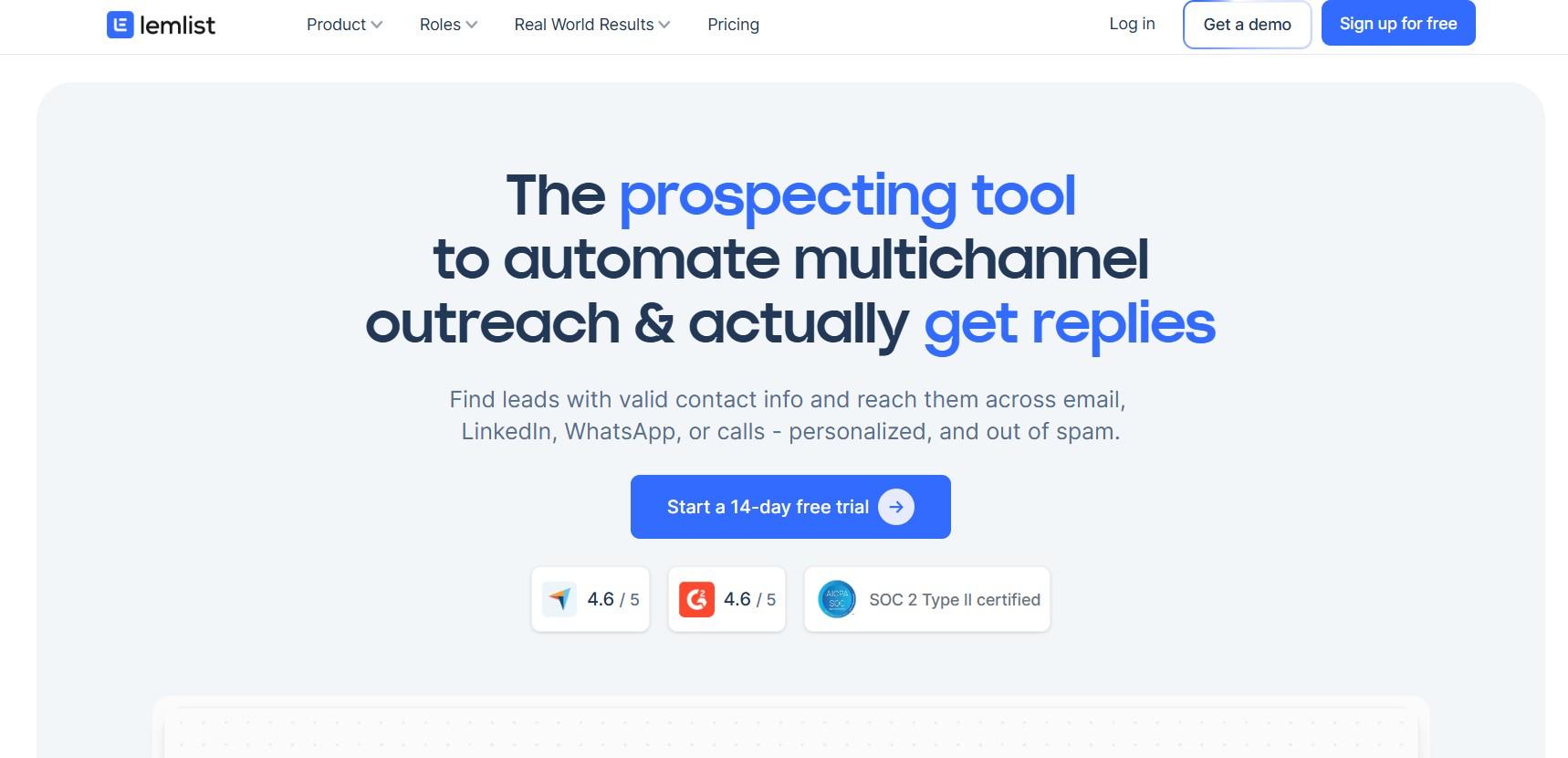
Lemlist has built a strong brand as a top AI platforms for email and LinkedIn outreach specifically for email-first outreach with LinkedIn as a secondary channel. The platform is optimized for multi-touch campaigns where email is the primary contact method and LinkedIn is used for initial targeting and occasional additional touchpoints.
The platform’s greatest strength is its template library. Lemlist has thousands of pre-built email and LinkedIn message templates organized by industry, use case, and ICP. If you’re new to outreach or you’re running campaigns under time pressure, the template library cuts weeks off your campaign setup. The templates are written by experienced copywriters and tested across millions of emails, so they’re proven to work at scale.
Lemlist’s personalization engine is clever and goes beyond simple name insertion. The platform lets you add dynamic fields based on prospect attributes: company name, recent funding round, industry growth data, hiring activity. The personalization is variable, meaning you can craft messages that reference specific data points about each prospect. This drives higher open rates and reply rates compared to generic bulk email.
The email deliverability infrastructure is where Lemlist really shines. Email bounce rates, spam filtering, and inbox placement are notoriously difficult to get right, and Lemlist has invested heavily here. The platform uses your existing email domain and applies proper authentication (DKIM, SPF, DMARC) automatically. This keeps your sender reputation clean and ensures your emails actually reach the inbox rather than spam folders.
One limitation to note: Lemlist is optimized for single-account management. You can run LinkedIn outreach through the platform, but it’s designed as a secondary channel, not the primary driver. If your strategy is multi-account LinkedIn outreach at scale, Lemlist isn’t the best fit. If your strategy is multi-touch email-first campaigns with LinkedIn as a warm-up or follow-up channel, it’s exceptional.
Reply rates on Lemlist average 10-14%, which is solid for email campaigns. The booking rate (2-4%) is lower because the platform doesn’t include autonomous conversation handling or CRM integration that would move opportunities through your sales process automatically. You still need a sales team to take meetings and close deals.
Pricing is one of the most affordable in this list: $29/month for starter and up to $199/month for the professional tier. This makes it accessible for small teams, consultants, and individual founders testing outreach strategies. The affordability combined with the template library makes it a popular choice for people just getting started with systematic outreach.
Apollo
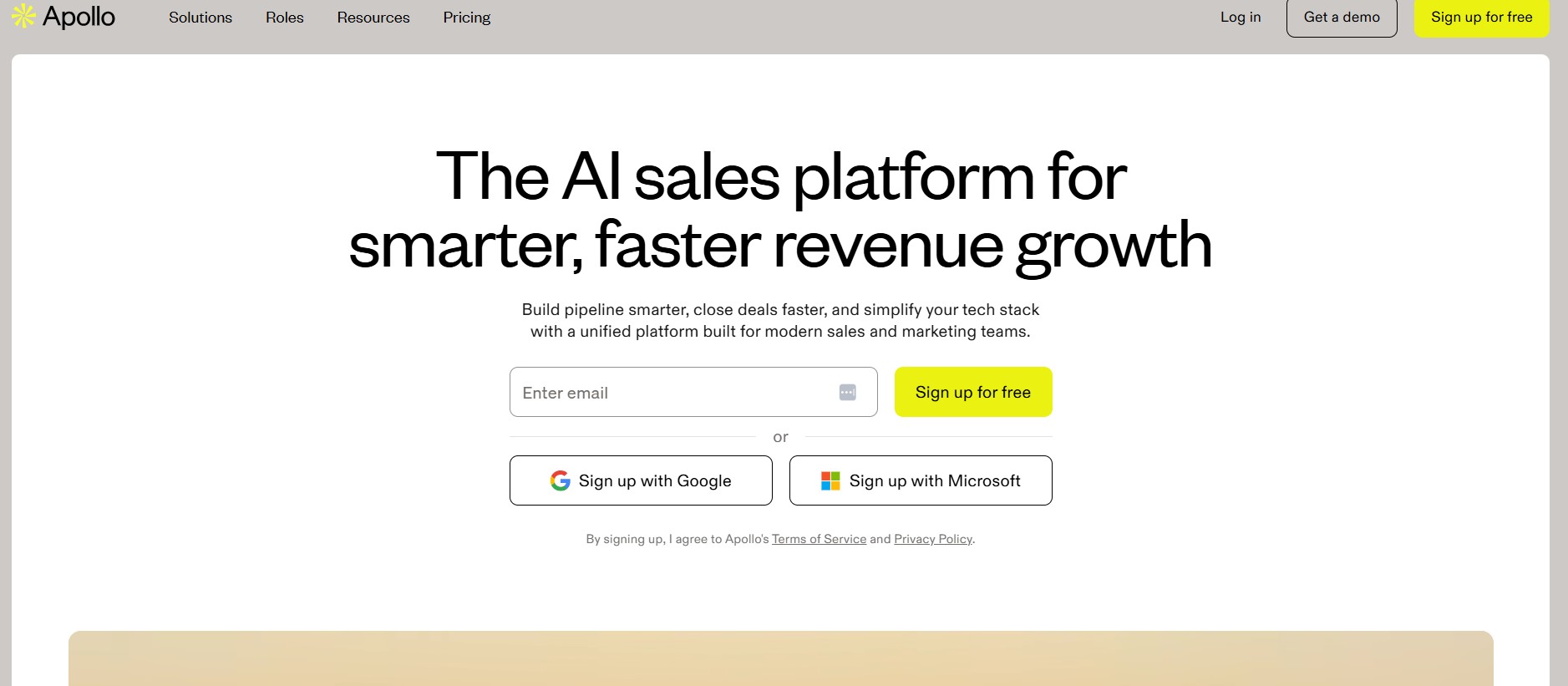
Apollo takes a different approach than most top AI platforms for email and LinkedIn outreach: it leads with the prospect database rather than campaign automation. The value proposition is “we find the right people, then we help you contact them at scale.”
The Apollo database contains contact information for 250+ million B2B professionals globally. This is verified data: email addresses, phone numbers, LinkedIn profiles, company information, and firmographic data. Unlike LinkedIn Sales Navigator, which requires manual searching, Apollo lets you upload your target company list and automatically pull all matching contacts with email addresses and company metadata. This is a massive time-saver for account-based marketing campaigns where you’re targeting specific companies or industries.
The outreach automation in Apollo is straightforward and reliable. You can run email sequences, LinkedIn message sequences, or combinations of both. The platform handles tracking (opens, clicks, replies) and gives you the option to use AI-suggested follow-ups or create your own. The AI isn’t autonomous in the sense that Dealsflow is; it’s more about suggesting next steps that a human then approves.
Email deliverability in Apollo is solid but not quite at Lemlist’s level. Apollo provides the infrastructure, but email performance depends heavily on your own sender reputation and email domain setup. If you’re not experienced with email authentication, Lemlist is probably the easier choice. If you’re already experienced, Apollo gives you more control.
One of Apollo’s strengths is integration depth. The platform connects to Salesforce, HubSpot, Pipedrive, and dozens of other CRMs. When someone replies to your email sequence, that reply and the conversation history automatically sync to your CRM. This keeps your pipeline clean and ensures no lead falls through the cracks due to platform switching.
The multi-account limitation is a real constraint if you’re running outreach at scale. Apollo handles single-account outreach very well but doesn’t have the multi-account architecture that some competitors offer. This makes it better for individual SDRs or sales teams running outreach from one centralized email account rather than distributed teams with their own email addresses.
Booking rates with Apollo typically run 2-4%, which is on the lower end. This isn’t Apollo’s fault; it reflects that the platform is more of a prospecting and database tool than a conversion-focused conversation AI. If your bottleneck is finding the right people to contact, Apollo solves that. If your bottleneck is converting conversations to meetings, you’d pair it with additional tools.
Pricing for Apollo starts at $49/month for their basic database access and goes up to $499/month for their enterprise plan with unlimited email and LinkedIn outreach. This is on the affordable end for enterprise-grade database access, though the outreach features themselves are basic compared to specialized platforms.
Dripify
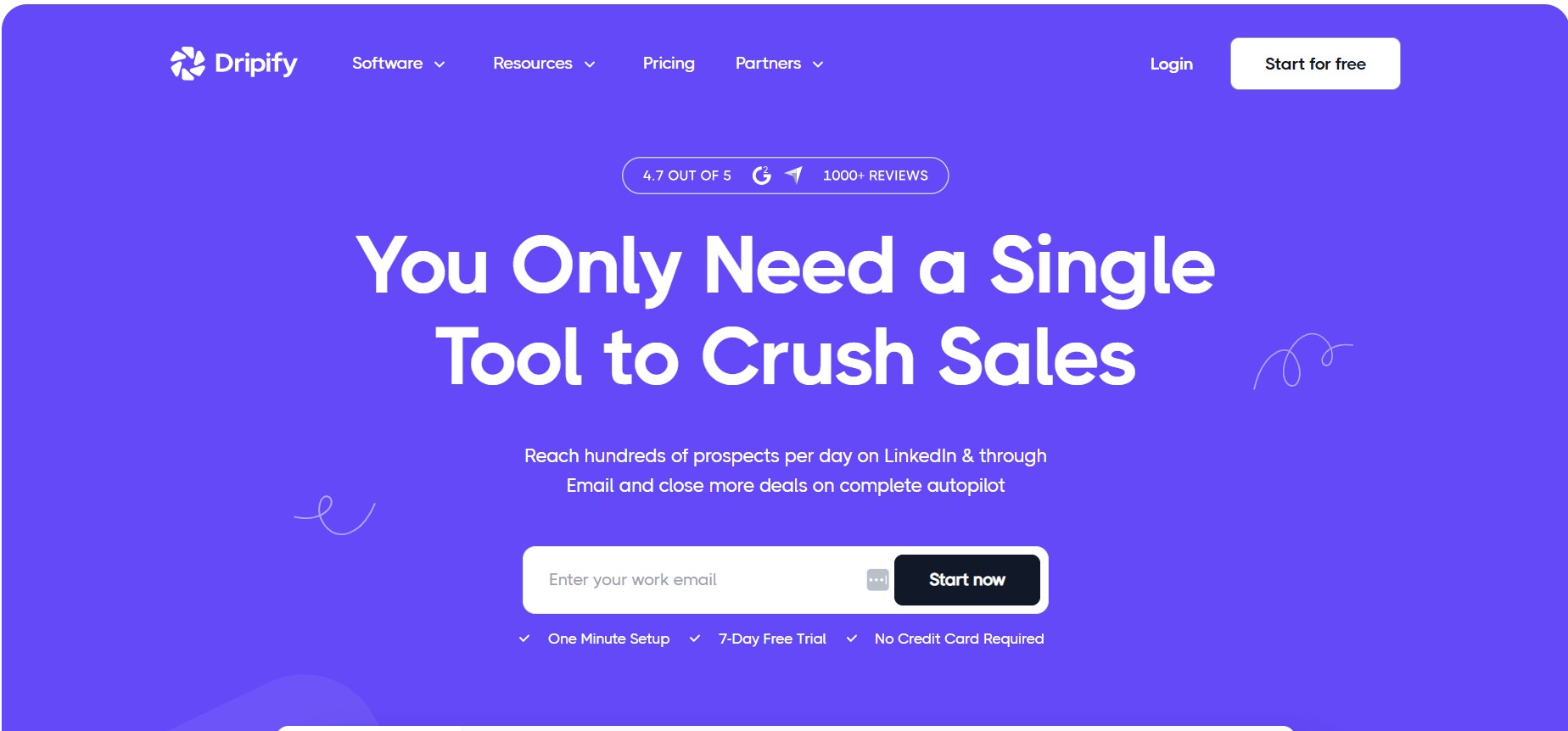
Dripify competes in the top AI platforms for email and LinkedIn outreach category as the lightweight, cost-effective option for teams that want multi-account capability without enterprise-level complexity or pricing. The target customer is usually an agency or SDR team that needs straightforward automation and basic multi-account management.
The core features are exactly what you’d expect: connection request automation, message sequencing, reply detection, and multi-account management (up to 2 accounts in the base plans, up to 5 in their agency tier). The platform is stable and reliable, with no major complaints about LinkedIn compliance issues or account flags. This matters more than people realize; many cheaper tools are aggressive with automation and get accounts suspended regularly.
Account warmup on Dripify is automated and more conservative than some competitors, which actually works in your favor if you’re managing multiple accounts. The daily activity limits are set to keep accounts under the radar, prioritizing account longevity over raw message volume. If you’re running campaigns for clients or across multiple teams, reliability matters more than edge-case speed.
Email capability on Dripify is limited. The platform can send emails to prospects you’ve imported, but it doesn’t integrate with email verification databases the way HeyReach or Apollo does. You have to manually add email addresses to your prospect list or import them from another source. This isn’t a deal-breaker for LinkedIn-focused outreach, but it limits the platform’s utility if email is part of your strategy.
The biggest limitation with Dripify is that it’s relatively static once you set it up. You configure sequences, it runs them, and you get replies. But the AI is minimal. There’s no autonomous conversation handling, no sophisticated personalization engine, no targeting intelligence that learns from your reply data. It’s a solid tool for straightforward outreach, not a next-generation AI platform.
Reply rates on Dripify average 10-13%, which is respectable. Booking rates run 3-5%, in line with basic automation platforms. The tool itself isn’t limiting your results; the limitation is your own targeting, messaging, and follow-up strategy.
Pricing is $99/month for single-account plans and up to $599/month for multi-account agency plans. This is genuinely affordable if you’re just getting started, though the feature set is basic compared to higher-tier platforms. The main value proposition of Dripify is “do one thing reliably at a low price,” which appeals to cost-conscious teams.
Direct Email Platforms Vs. Linkedin-Native Platforms: How To Choose
A common mistake when evaluating the top AI platforms for email and LinkedIn outreach is treating email and LinkedIn as interchangeable channels. They’re not. They serve different purposes in your outreach workflow, and the best platforms for each are different.
LinkedIn native platforms (HeyReach, Expandi, Dealsflow, Dripify) are optimized for the behavior of LinkedIn messaging. They understand LinkedIn’s algorithm, connection acceptance rates, message limits, compliance rules, and the psychology of how people respond to LinkedIn messages. They’ve baked in warmup patterns that mimic natural LinkedIn behavior and daily limits that keep your accounts safe. If someone is on LinkedIn multiple times a day, they’re more likely to reply to your LinkedIn message than your email.
Direct email platforms (Lemlist, Apollo) are optimized for email deliverability, authentication, reputation management, and the psychology of email open and click behavior. They’ve invested in DKIM, SPF, DMARC setup, spam filtering evasion, and best practices that keep your sender reputation clean. If someone doesn’t check LinkedIn much but checks email frequently, email is your better channel.
The reality is that your best prospects probably use both channels, just not equally. Your strategy should reflect that. For decision-makers in busy roles (executives, VPs, founders), email might be more effective because it arrives in a channel they actively monitor. For individual contributors or teams that work on LinkedIn daily, LinkedIn messaging might hit them faster and feel more contextual.
This is where the multi-channel approach becomes powerful. Platforms like Dealsflow that integrate both LinkedIn and email, or frameworks where you use HeyReach for LinkedIn and Lemlist for email in parallel, let you test both channels and optimize based on your specific ICP’s behavior. You’ll probably find that one channel produces higher reply rates for your specific audience, and you can then double down on that.
The financial implication: if you’re choosing between a specialized LinkedIn platform and a specialized email platform, factor in your overall campaign cost. A $999/month LinkedIn platform that books 8-12% of conversations at 18-24% reply rate can be cheaper per booked meeting than a $199/month email platform that books 2-4% at 10-14% reply rates. The platform cost is only one variable; the efficiency of the channel is the bigger one.
Compliance, Account Safety, And The LinkedIn Risk Factor In 2026
This section matters because most articles comparing the top AI platforms for email and LinkedIn outreach completely ignore the compliance and account safety dimension. They focus on features and reply rates but skip the part where your campaign machine gets shut down because LinkedIn flagged your account for automation.
In 2026, LinkedIn has tightened its enforcement considerably. The platform actively penalizes accounts that use aggressive automation: sending hundreds of connection requests per day, running unsophisticated sequences, using third-party bot detection evasion, or sending messages that violate their marketing policies. If you violate their terms, you face several escalating consequences: temporary messaging restrictions, reduced reach on your content, account limitation (preventing new connections for weeks), or complete account suspension (which locks you out entirely).
The platforms that take this seriously have built compliance directly into their product architecture. Dealsflow, for example, implements automatic account warmup (starting new accounts with 5-10 connection requests per day, increasing gradually to 40-50 per day as the account ages), intelligent daily limits (adjusting based on account health and engagement), and built-in rules to detect when an account is at risk. If your account gets flagged, the platform automatically reduces activity to help you recover.
Other platforms take a different approach: they set conservative limits by default and tell you it’s your responsibility to stay compliant. This is fine if you’re cautious, but it also means slower results. A platform that limits you to 20 connection requests per day per account across 5 accounts won’t scale to generating 1,000+ monthly conversations. You need higher limits to reach that volume, which requires sophisticated warmup and account health monitoring.
Here’s the thing most people miss: account suspension is not just a compliance headache. It’s a catastrophic business interruption. If you’ve been building relationships on a LinkedIn account for three years and it gets suspended, you lose all that credibility history. Contacts can’t find you. You can’t reach out to new prospects. You’re starting from zero on a new account, which means weeks of warmup time before you’re back to normal activity levels.
This is why the platforms with the strongest compliance track records are worth the premium pricing. Dealsflow’s aggressive approach to account safety (conservative warmup, proactive daily limits, health monitoring) reduces your account suspension risk to near-zero. HeyReach and Expandi have solid compliance records but don’t go quite as far. Cheaper platforms like Dripify are safe but leave optimization on the table.
The lesson: when comparing top AI platforms for email and LinkedIn outreach, ask about account suspension rates, how the platform handles account health monitoring, and what happens when LinkedIn starts restricting your account. The platforms that have direct experience managing high-volume accounts for multiple clients will have thoughtful answers. The ones that haven’t will give you generic responses about “following LinkedIn’s terms.”
Measuring Real Roi: From Booking Rate To Pipeline Value
The final critical dimension when evaluating the top AI platforms for email and LinkedIn outreach is tying platform metrics to real business outcomes. Platforms will show you reply rates and booking rates, but those are lagging indicators. What you actually care about is pipeline value and closed deals.
Here’s the math most people miss. If you run a campaign to 1,000 prospects at a 20% reply rate (200 replies), a 10% booking rate on replies (20 meetings booked), and a 30% deal close rate on those meetings, you generate 6 closed deals. If your average deal value is $50,000, that’s $300,000 in revenue from 1,000 outreach attempts. The campaign cost at $999/month for Dealsflow is invisible in that context.
But that math falls apart if your platform is giving you meetings with the wrong people. This is where targeting and personalization matter. A 20% reply rate from a poorly targeted list isn’t as valuable as a 15% reply rate from a precisely targeted list if the second list is full of actual decision-makers. The booking-to-close conversion rate will be 5-10x higher because you’re actually talking to people who can buy.
This is where CRM integration becomes non-negotiable. Platforms like Apollo, HeyReach, and Dealsflow that sync conversation data, objections, and meeting bookings directly to your CRM let you measure the complete funnel. You can see that Platform A booked 20 meetings but only 2 turned into closed deals, while Platform B booked 12 meetings with 5 closed deals. That’s the real comparison.
The hidden cost of cheap platforms is that they give you meeting metrics without context. You book meetings, your sales team shows up, and the meetings go nowhere because you were targeting the wrong person or solving a problem they don’t have. Without visibility into this, you keep investing in the same broken process.
To properly evaluate ROI, set up tracking for: (1) outreach volume by platform, (2) reply rate, (3) meetings booked, (4) meeting attendance rate (did the person actually show up), (5) qualified meetings (did the person actually need what you were selling), (6) closed deals. This data will show you which platform is actually driving revenue, not just which one has the best vanity metrics.
Implementation Strategy: Choosing Your Platform And Rolling It Out
Once you’ve settled on which of the top AI platforms for email and LinkedIn outreach is the right fit for your team, the implementation matters. A powerful platform used wrong generates no results. A simpler platform used right beats it soundly.
Start with targeting. Most teams rush into building sequences and configuring campaigns before they’ve thought through their ideal customer profile. You’re better off spending two weeks to define exactly who you want to reach (role, company size, industry, use case) than rushing to launch with vague targeting. Precise targeting is force multiplication for any platform. It’s also the biggest differentiator across teams using the same tool.
Build your first campaign small. Don’t launch to your full database. Pick 100-200 prospects and run a complete campaign to them: initial outreach, follow-up sequences, meeting bookings if you can, and closed deals if possible. This gives you data on what actually works for your ICP and messaging, without risking account suspension if something goes wrong with your automation.
Document your results obsessively. Capture reply rate, booking rate, no-show rate, sales conversation quality, and closed deals. This data becomes your playbook. If you’re seeing 8% booking rate on one message variation and 3% on another, that’s a signal. Scale the winner and kill the loser. Without measurement, you’re just guessing.
Gradually expand volume. Once your first 100-prospect campaign is validating (reply rate above 10%, booking rate above 3-5%, positive feedback from your sales team), expand to 500 prospects. Then 2,000. Each 10x expansion is an opportunity to optimize before pushing further. Scaling too fast is how you blow up your account health and get flagged by LinkedIn.
Involve your sales team early. The platform’s job is generating meetings. Your sales team’s job is converting meetings to deals. If your sales team hates the quality of meetings you’re booking, you need to change your targeting or messaging, not your platform. Feedback loop between outreach and sales makes the entire system better. Most teams skip this step and wonder why they can’t convert.
Conclusion
The top AI platforms for email and LinkedIn outreach in 2026 have fractured into specialized categories, and the right choice depends on what you’re optimizing for. If you need autonomous conversation AI that can handle the full prospect journey without human intervention, Dealsflow’s Arlo AI is the answer. If you need a balance between AI optimization and human control, HeyReach gives you that. If you need affordable multi-account management, Expandi and Dripify deliver. If you’re email-first, Lemlist’s template and deliverability infrastructure is unmatched. If you lead with prospecting and data, Apollo’s B2B database is the foundation.
The platforms are good. Some are genuinely exceptional. But the platform is 30% of your results. The other 70% comes from targeting precision, message quality, follow-up discipline, and sales team execution. You can have the best AI in the world, but if you’re reaching the wrong people with the wrong message, none of it matters.
Start with the platform that aligns with your channel preference (email vs. LinkedIn), your budget, and your team size. Run a small pilot campaign to 100-200 prospects and measure everything: reply rate, booking rate, deal quality. Use that data to optimize your targeting and messaging before you scale. Once you’ve proven the model works, expand volume gradually while monitoring account health and sales team feedback.
The next step is simple: pick one platform from this list that matches your situation, set up a 100-prospect test campaign this week, and measure your actual reply rate and booking rate against the benchmarks in this guide. That real data will tell you if the platform is working for your specific business, and if it’s not, you’ll know within two weeks rather than two months of wasted spend.
Frequently Asked Questions
Q: Which of the top AI platforms for email and LinkedIn outreach is best for a small team with a limited budget?
A: Lemlist if you’re email-first and budget is your primary constraint. It’s $29/month and has solid email templates. Apollo if you need a B2B database plus outreach. Dripify if you need multi-account LinkedIn management on a budget. None of them are as powerful as Dealsflow, but they’ll get you started without massive expense. Once you’re consistently booking 10+ meetings per month, upgrade to a more powerful platform.
Q: Do I need multi-account LinkedIn management?
A: Only if you’re running outreach for multiple clients or across different teams internally. If you’re a solopreneur or a small sales team with one centralized email address, single-account tools like Apollo or Lemlist are sufficient. If you’re an agency running campaigns for 5-20 clients, you absolutely need multi-account capability. It scales your operations dramatically.
Q: What’s the realistic booking rate I should expect?
A: If you’re using basic tools with average targeting: 2-4%. If you’re using sophisticated platforms with good targeting and messaging: 5-8%. If you’re using AI conversation platforms with precise targeting and personalization: 8-15%. The ceiling depends on your ICP and messaging quality, not just the platform.
Q: Should I choose email or LinkedIn for my outreach?
A: Test both. If your ICP spends more time on LinkedIn than email, LinkedIn wins. If they’re buried in email and never check LinkedIn, email wins. Most B2B professionals check both, so the real answer is “whichever you can execute better.” Pick the channel where you can get targeting and messaging right, and master that first.
Q: How do I avoid getting my LinkedIn account flagged?
A: Use platforms with built-in compliance features (Dealsflow, HeyReach, Expandi). Start conservative on new accounts (10-20 connection requests per day) and increase gradually over weeks. Monitor your connection acceptance rate; if it drops below 25%, slow down. Don’t buy or use fake accounts. Don’t send spam-like messages. Don’t use your automation to bypass LinkedIn’s UI. Follow these rules and your account will be fine.
Q: What about LinkedIn Sales Navigator integration?
A: Most platforms integrate with Sales Navigator, which lets you pull prospects directly from LinkedIn based on search filters. This is powerful because you’re targeting people LinkedIn itself has identified as matching your ICP. The downside is that Sales Navigator has a learning curve and requires investment ($40-100/month). Worth it if you’re being precise with targeting; waste of money if you’re not.
Q: Can I run multiple platforms simultaneously?
A: Yes, but it’s more work. You’d typically use one platform for LinkedIn (like Dealsflow) and another for email (like Lemlist) to keep your channels separate and avoid duplicate outreach to the same prospects. Or you’d use different platforms for different client campaigns if you’re an agency. The complexity isn’t worth it for most teams; pick one and master it first.
Q: How long does it take to see results?
A: If you launch on a Monday, you’ll see replies by Wednesday-Friday (LinkedIn). If you launch email, you’ll see opens within hours and replies by the next day. But meaningful data (is this working or not working) takes 2-4 weeks because you need enough sample size to see patterns. Give any platform at least 500 outreach attempts before deciding if it’s working.
Q: What happens to my data if I switch platforms?
A: All the platforms mentioned here let you export your contact lists, conversation history, and meeting notes. You won’t lose data; you’ll just need to reconfigure your campaigns in the new platform. The switch typically takes a week of setup work. This is why starting with precise targeting and good messaging is important; you can take those and apply them anywhere.
Q: Should I hire a freelancer to manage my outreach platform?
A: Only if you understand outreach well enough to brief them on what success looks like. A freelancer who doesn’t understand your ICP, your sales process, or your value proposition will run campaigns that generate low-quality meetings. If you’re just starting with outreach, run the first campaign yourself so you understand what works. Then you can brief someone else to run future campaigns.
Q: Which platform integrates best with Salesforce?
A: Apollo, HeyReach, and Dealsflow all have solid Salesforce integrations. Your choice depends on whether you’re prioritizing database (Apollo), email/LinkedIn balance (HeyReach), or autonomous conversation AI (Dealsflow). All three will get meeting data into Salesforce reliably.