


Cold email in 2026 is a fundamentally different game than it was just two years ago. Gmail and Microsoft have both tightened enforcement on bulk senders, spam filters now evaluate engagement signals far beyond open rates, and average B2B reply rates have dropped to between 1% and 4% across the industry. The era of blasting thousands of generic emails and expecting meaningful returns is over. Today, the teams booking meetings consistently are the ones sending fewer, smarter, better-personalized emails — and they’re using tools that can support that approach at scale.
Woodpecker has been a trusted name in cold email automation since 2015. It built its reputation on deliverability, simplicity, and doing the fundamentals well. For a specific type of user — a small team running email-only outreach with predictable volume — it still holds up. But for most B2B sales teams, agencies, and SDR operations trying to scale in 2026, Woodpecker’s limitations have become hard to ignore. Its prospect-based pricing caps volume unpredictably, it has no built-in lead database, LinkedIn outreach requires a paid third-party integration, and there is no AI-driven prospecting or personalization built into the core product. Teams that need modern outreach infrastructure are actively looking for alternatives that close these gaps without blowing the budget.
This guide covers the 6 best Woodpecker alternatives for cold email outreach in 2026. Each tool is compared on features, pricing, deliverability, and which type of team it genuinely fits best — based on verified pricing data, published user reviews, and documented product capabilities.
Why Are Teams Moving Away From Woodpecker in 2026?
Woodpecker is not a bad tool. It holds a 4.4/5 rating on G2, and users consistently praise its deliverability, its intuitive interface, and its straightforward campaign management. For small teams running simple, email-only outreach, those qualities matter. But the cold email landscape in 2026 demands more than what Woodpecker was originally built to deliver, and the gaps have become impossible to work around without stacking additional paid tools on top of a Woodpecker subscription.
Here is where the friction actually shows up for teams trying to scale.
Restrictive Sending Limits and Prospect Caps
Woodpecker uses a “contacted prospects” pricing model. Instead of charging per user or per email sent, it charges based on how many new prospects you add to a campaign each billing cycle. On the Starter plan, that cap sits at 500 prospects per month. As one verified G2 reviewer noted directly: “Each plan limits the number of prospects you can have. Sometimes you have just one client who wants to contact a large number of prospects for a single campaign, and the plan restrictions make that difficult.”
For context, most active SDRs need to contact 500 to 1,000 new prospects per week, not per month. The Growth plan raises the cap to 3,000 prospects per month at $84 per month. The Scale plan, which allows up to 10,000 prospects per month, jumps to $903 per month on annual billing. Competing tools like Saleshandy and Instantly offer unlimited or far higher contact volumes at a fraction of that cost.
No Built-In AI Prospecting or Lead Database
Woodpecker does not include a built-in B2B lead database. Every contact list must be sourced externally and imported manually. In 2026, when tools like Saleshandy include access to 830 million verified B2B profiles and Lemlist includes a 450 million+ contact database as part of their core subscriptions, requiring users to pay separately for a data provider is a meaningful disadvantage. For teams without an existing data contract, this is an immediate additional expense before a single email is sent.
LinkedIn Automation Requires a Paid Third-Party Tool
Woodpecker does not include native LinkedIn automation. To add LinkedIn outreach to a Woodpecker workflow, users must integrate with Dux-Soup, a third-party tool that carries its own subscription cost of approximately $55 per month. Competitors including Lemlist, Reply.io, and others have built LinkedIn outreach natively into their platforms at no additional fee. This means a Woodpecker user who wants email plus LinkedIn outreach is realistically paying $127 or more per month before accounting for a data provider — a cost structure that becomes difficult to justify.
No Intent-Based or Signal-Driven Outreach
Woodpecker sends to every prospect on a list equally. There is no buyer intent layer, no website visitor identification, and no mechanism to prioritize prospects who are actively researching solutions or showing signs of in-market behavior. In a landscape where the average cold email reply rate has dropped to between 1% and 4%, the teams still generating pipeline are the ones sending fewer, better-timed messages to prospects who are actually ready to engage. Woodpecker’s architecture does not support that approach.
Pricing Gets Expensive as You Scale
The per-prospect billing model creates a compounding cost problem at scale. Woodpecker pricing for meaningful outreach — Growth-level volume plus a LinkedIn integration — runs approximately $127 to $168 per month for a single SDR, before a data provider. Teams that need email rotation for deliverability (which deliverability experts recommend using 2 to 3 sending accounts per SDR) pay additional per-slot fees. According to a detailed pricing analysis published in February 2026, properly equipping a single SDR on Woodpecker can approach $168 to $252 per month when best practices for sending infrastructure are followed — a price point comparable to far more capable platforms.
Quick Comparison
| Tool | Best For | Starting Price | Unlimited Inboxes | Built-in Database | AI Features | Free Trial |
|---|---|---|---|---|---|---|
| DealsFlow | Agencies & sales teams wanting AI-native outreach | $49/mo (annual) | ✅ | ✅ | ✅ | ✅ |
| Saleshandy | High-volume teams on a budget | $25/mo | ✅ | ✅ 830M+ contacts | ✅ | ✅ |
| Instantly.ai | Fast scaling with unlimited inboxes | ~$37/mo (annual) | ✅ | ✅ 450M+ contacts | ✅ | ✅ |
| Smartlead | Agencies managing multi-client campaigns | ~$33/mo (annual) | ✅ | ❌ | ✅ | ✅ |
| Lemlist | Multichannel + visual personalization | ~$63/mo per user (annual) | ❌ | ✅ 450M+ contacts | ✅ | ✅ |
| Reply.io | AI-assisted multichannel sequences | $49/mo per user (annual) | ✅ | ✅ 1B+ contacts | ✅ | ✅ |
Best Woodpecker Alternatives by Use Case
If you need the best overall alternative with AI-native personalization and transparent pricing, DealsFlow is the top pick — it delivers cold email and LinkedIn outreach in one platform without requiring third-party integrations. For teams on a tight budget who need a built-in lead database and unlimited sending accounts, Saleshandy at $25 per month offers the strongest price-to-feature ratio available. Agencies managing multiple client campaigns will find Smartlead’s Unibox, white-label reporting, and unlimited mailboxes purpose-built for their workflow. Teams that need LinkedIn outreach natively integrated alongside email should evaluate Lemlist, which includes both channels plus a 450 million+ contact database. For the most advanced AI conversation automation — including an AI agent that handles prospect replies and books meetings autonomously — Reply.io leads the category, though its per-seat pricing reflects that depth.
The 6 Best Woodpecker Alternatives for Cold Email Outreach in 2026
1. DealsFlow — Best Overall Woodpecker Alternative in 2026
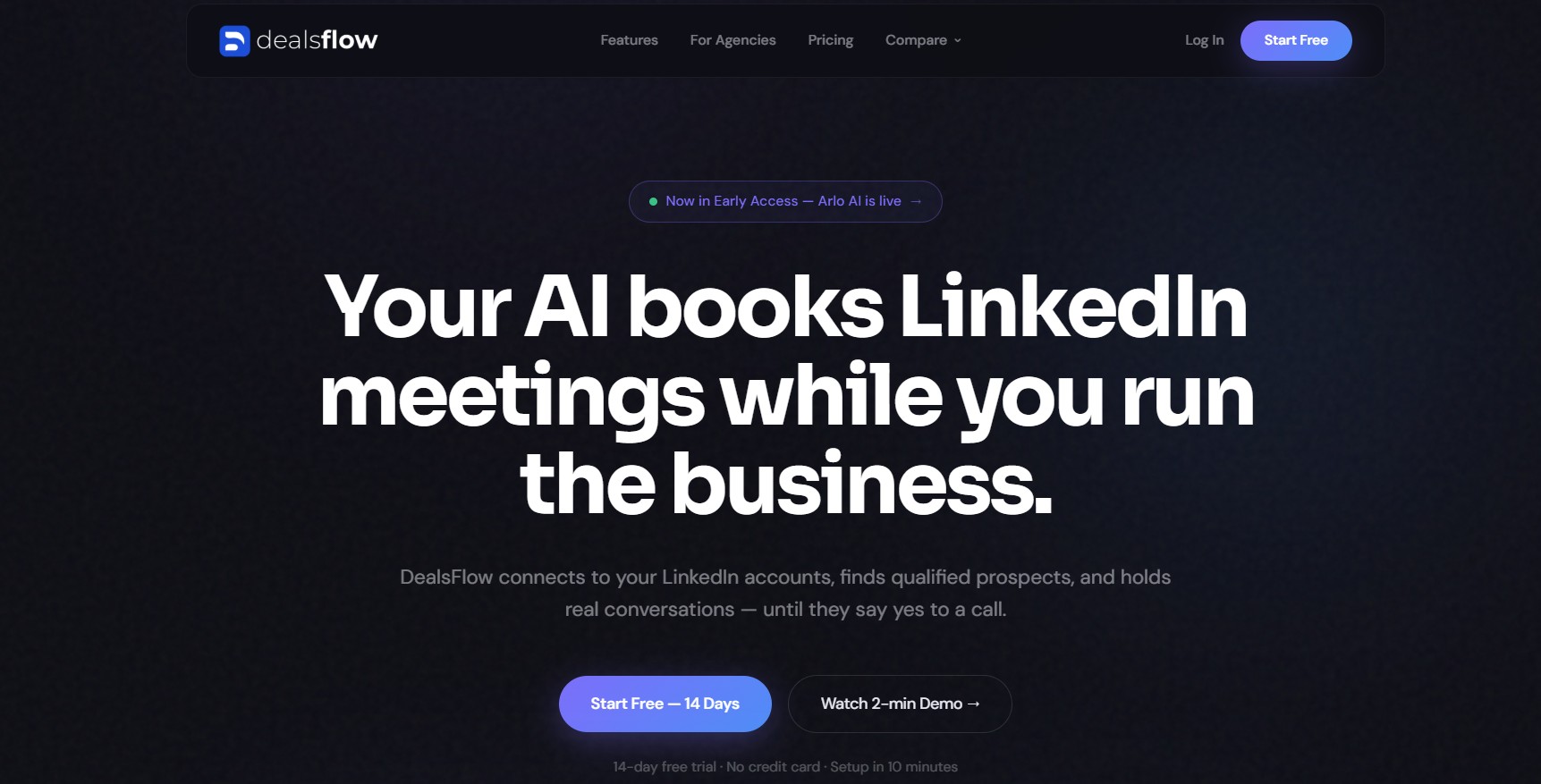
DealsFlow is an AI-native outreach platform built for B2B sales teams and agencies that have outgrown what Woodpecker can offer. Where Woodpecker requires a paid Dux-Soup integration for LinkedIn, charges per contacted prospect, and offers no built-in AI personalization, DealsFlow brings email automation, AI-driven personalization, and multi-channel outreach together in one platform with transparent, competitive pricing.
DealsFlow positions itself as a direct competitor to tools like Salesflow, and its advantage over Woodpecker is most pronounced for teams that need AI-native outreach and cleaner billing practices. For agencies and sales teams currently paying for Woodpecker plus a LinkedIn add-on plus a data provider, DealsFlow consolidates that stack.
Who Benefits Most From DealsFlow?
- Sales teams and agencies scaling cold email without per-prospect pricing that caps outreach volume unpredictably
- Teams migrating from Woodpecker who want a cleaner billing structure with no surprise add-on charges
- Outreach managers who need AI-generated personalization at scale without manual research for each prospect
- SDRs running both email and LinkedIn touchpoints from a single tool, without paying for a separate integration
Key Features of DealsFlow
- AI-native email personalization that generates contextually relevant outreach at scale, adapting messaging based on prospect data rather than relying on basic merge tags
- Multi-channel outreach combining email and LinkedIn in one workflow — without requiring a third-party tool like Dux-Soup
- Transparent, competitive pricing with no hidden add-ons or per-slot charges that inflate costs as outreach volume grows
- Automated inbox warm-up and domain health monitoring to maintain sender reputation and maximize inbox placement
- Campaign analytics covering reply tracking, open rates, and deliverability diagnostics to inform campaign optimization
- CRM-ready integrations for syncing prospect activity and pipeline data with existing sales tools
How DealsFlow Compares to Woodpecker
The most direct comparison between DealsFlow and Woodpecker comes down to three areas: pricing model, LinkedIn capability, and AI. Woodpecker’s prospect-based pricing model creates a ceiling that teams hit quickly as campaigns scale. DealsFlow’s pricing is structured to scale without that ceiling, making it more predictable for teams running consistent outbound. On LinkedIn, Woodpecker users pay extra for Dux-Soup; DealsFlow includes LinkedIn outreach natively. On AI, Woodpecker does not offer built-in AI personalization at the sequence level, while DealsFlow is built around AI-driven outreach from the ground up. For teams currently paying $127+ per month on Woodpecker plus add-ons, DealsFlow delivers more capability for comparable or lower total cost.
Pros
- AI-native personalization built into the core product — not an afterthought or add-on
- No need for third-party LinkedIn tools, reducing stack complexity and cost
- Transparent pricing with no surprise charges as outreach scales
- Clean, modern interface with fast campaign setup
- Purpose-built for agencies with multi-account management capabilities
Cons
- Newer platform relative to established tools like Woodpecker — smaller public review volume and community
- Teams migrating from Woodpecker will need to rebuild sequences, as campaign data does not transfer automatically
Pricing
DealsFlow offers a free trial. For current plan details and pricing tiers, visit dealsflow.co/pricing.
2. Saleshandy — Best Budget-Friendly Woodpecker Alternative
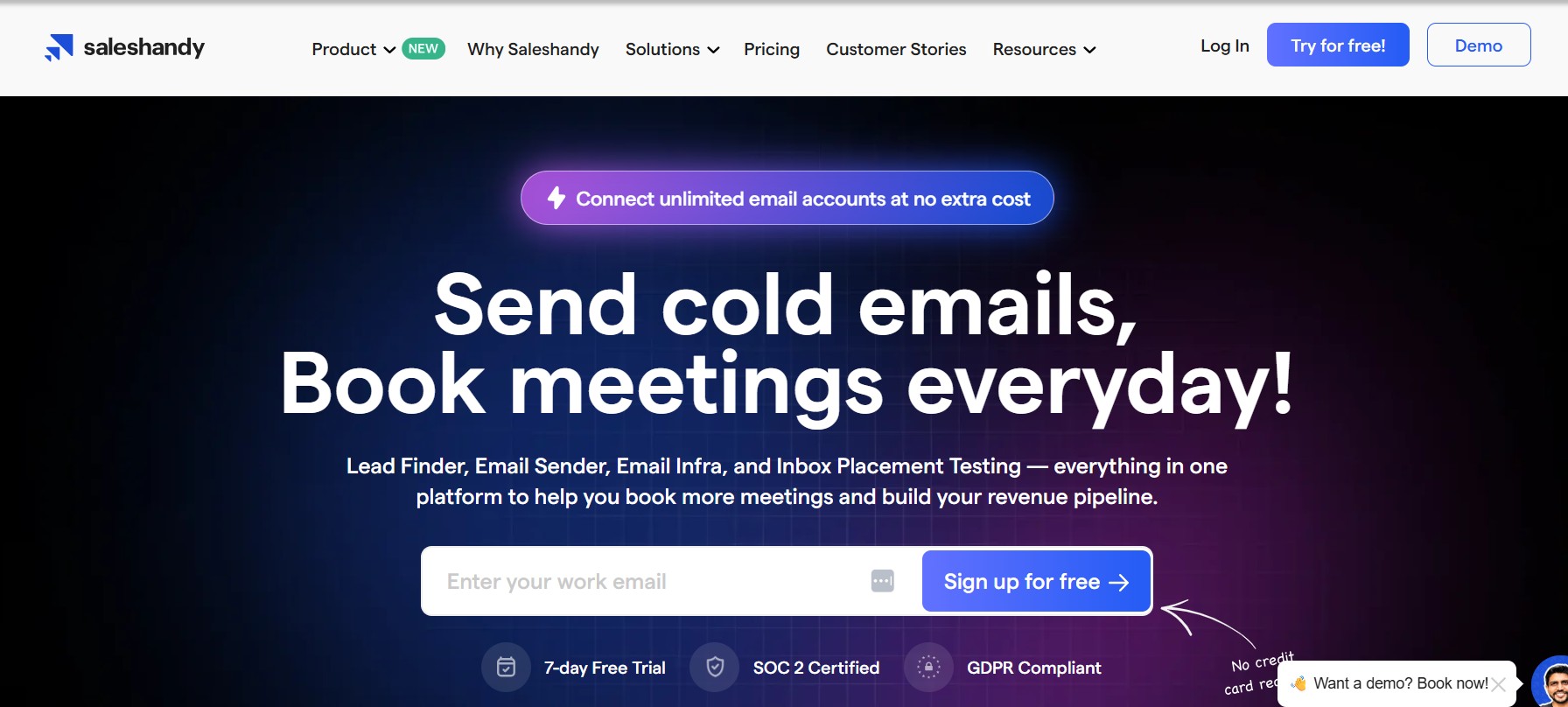
Saleshandy is the most cost-competitive tool in this comparison for teams that need meaningful scale. At $25 per month, it includes unlimited email accounts, access to an 830 million+ verified B2B contact database, an AI-powered sequence builder, and a built-in Outbound CRM — features that cost two to three times more on competing platforms. For small to mid-sized teams that need deliverability infrastructure, prospecting data, and automation without a bloated budget, Saleshandy is the strongest value proposition in the market.
Its AI Sequence CoPilot generates complete multi-step outreach campaigns from a website URL and a brief description of the target audience, reducing the time to launch a new campaign from hours to minutes. The platform has a 4.6/5 rating on G2 across more than 650 reviews and a 4.5/5 on Capterra, reflecting consistent satisfaction across team sizes.
Who Benefits Most From Saleshandy?
- Startups and small teams scaling outreach without the budget for expensive per-seat tools
- Agencies that need unlimited sending accounts without per-inbox fees that compound as client count grows
- Teams that want a single platform for lead finding, sequencing, and tracking — without paying separately for a database tool
- Solo operators validating outreach before committing to a larger stack
Key Features of Saleshandy
- 830 million+ verified B2B contact database with advanced filters for job title, industry, location, company revenue, and technographics, plus an AI lead finder that accepts natural language prompts
- Unlimited email accounts on all paid plans — no per-inbox fees regardless of how many sending addresses are connected
- AI Sequence CoPilot that generates multi-step campaigns from a URL and target description, with personalized subject lines and opening lines for each step
- Inbox Placement Test that checks where emails actually land — primary, promotions, or spam — across Gmail, Outlook, Yahoo, and other providers before a campaign goes live
- Built-in Outbound CRM with a Kanban-style pipeline for tracking every prospect’s activity, emails, replies, notes, and tasks in a unified timeline
- ESP matching and AI bounce detection that automatically pauses sending from an account if emails are rejected, protecting domain reputation
- A/B testing supporting up to 26 variants to identify which personalization and messaging approach delivers the best results
Pros
- The lowest price-to-feature ratio of any tool in this comparison — unlimited accounts and an 830M+ database at $25 per month
- Built-in database eliminates the need for a separate data provider subscription
- 7-day free trial with full feature access, no credit card required
- AI Sequence CoPilot genuinely reduces campaign setup time
- Unlimited email accounts mean costs stay flat as outreach scales
Cons
- The interface, while functional, is less polished than some premium tools
- LinkedIn automation capabilities are limited compared to platforms built specifically for multichannel outreach
- Some of the more advanced analytics features require upgrading from the base plan
Pricing
Saleshandy’s paid plans start at $25 per month. Annual billing reduces costs further. A 7-day free trial is available with full access to all features. Note that email verification for large list campaigns is available as an add-on at $79 per 25,000 recipients.
3. Instantly.ai — Best for Fast Scaling With Unlimited Inboxes
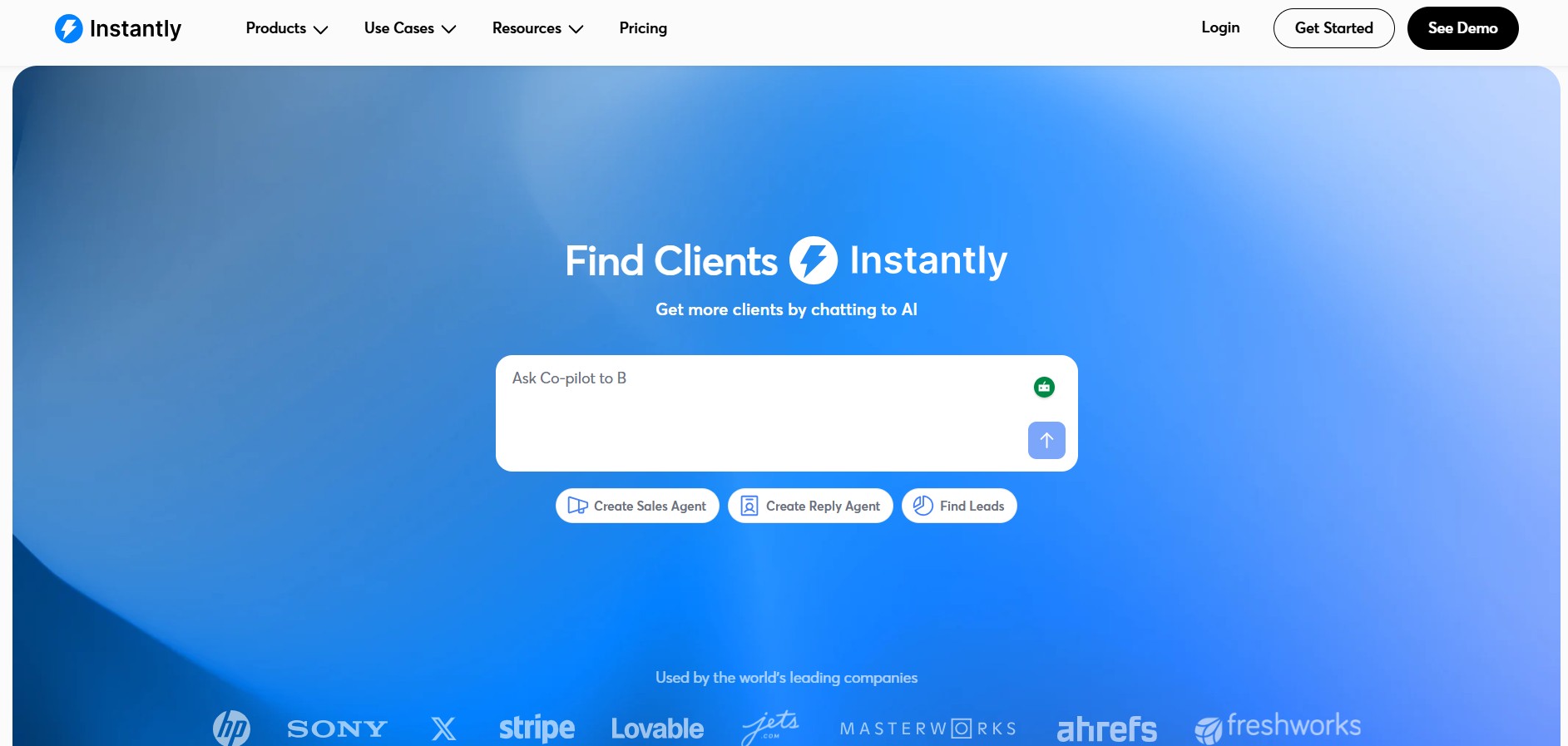
Instantly.ai built its reputation by solving the single biggest constraint that Woodpecker imposes on growing teams: inbox limits. On Woodpecker, each email account corresponds to a “slot” with its own cost structure. On Instantly, unlimited email accounts and unlimited warm-up are included from the Growth plan — at approximately $37 per month on annual billing. For teams that need to spin up sending infrastructure fast and scale without artificial ceilings, Instantly is the most direct answer to Woodpecker’s core limitation.
Instantly holds a 4.8/5 rating on G2 across more than 3,500 reviews, making it one of the most reviewed and consistently rated tools in the cold email category. Teams that have hit Woodpecker’s volume walls consistently cite Instantly as the most frictionless upgrade path.
Who Benefits Most From Instantly.ai?
- Growth-stage sales teams that need to scale inbox volume quickly without paying per account
- Cold email agencies running high-frequency campaigns across multiple domains simultaneously
- Teams transitioning from Woodpecker who have hit their monthly prospect caps and need room to grow without jumping to a $903/month plan
- Operators who want a clean, fast interface with minimal setup time between signing up and sending their first campaign
Key Features of Instantly.ai
- Unlimited email accounts and warm-up on all paid plans — the core feature that differentiates Instantly from Woodpecker’s slot-based model
- Automated inbox rotation across multiple sending domains, distributing sending volume intelligently to protect domain reputation and maximize deliverability
- AI-powered email writing and sequence suggestions that generate outreach copy and multi-step sequence structures from prompts
- Built-in lead database with 450 million+ contacts and advanced filtering, available on higher-tier plans
- Clean, beginner-friendly UI with fast campaign setup — users can launch a first campaign in under 30 minutes
- Real-time deliverability analytics and campaign monitoring covering open rates, reply rates, bounce rates, and inbox placement trends
- A large warm-up network that builds sender reputation quickly, reducing the ramp-up period before full-volume sending
Pros
- Truly unlimited inboxes — the most scalable sending infrastructure at this price point
- Fast warm-up network cuts ramp-up time significantly compared to manual warm-up approaches
- Clean, intuitive UI — one of the lowest learning curves in the category
- Strong deliverability reputation supported by a large, active user community
- Competitive pricing starting at approximately $37 per month on annual billing
Cons
- Advanced features including the full lead database and enrichment capabilities are gated behind higher-tier plans
- Email-first platform — LinkedIn and other channel automation is more limited compared to multichannel specialists
- Customer support quality can vary depending on plan tier and issue complexity
Pricing
Growth plan: approximately $37 per month (billed annually). Hypergrowth plan: approximately $78 per month (billed annually), which includes expanded lead data access and higher sending limits. Monthly billing is available at higher rates. A free trial is available.
4. Smartlead — Best Woodpecker Alternative for Agencies
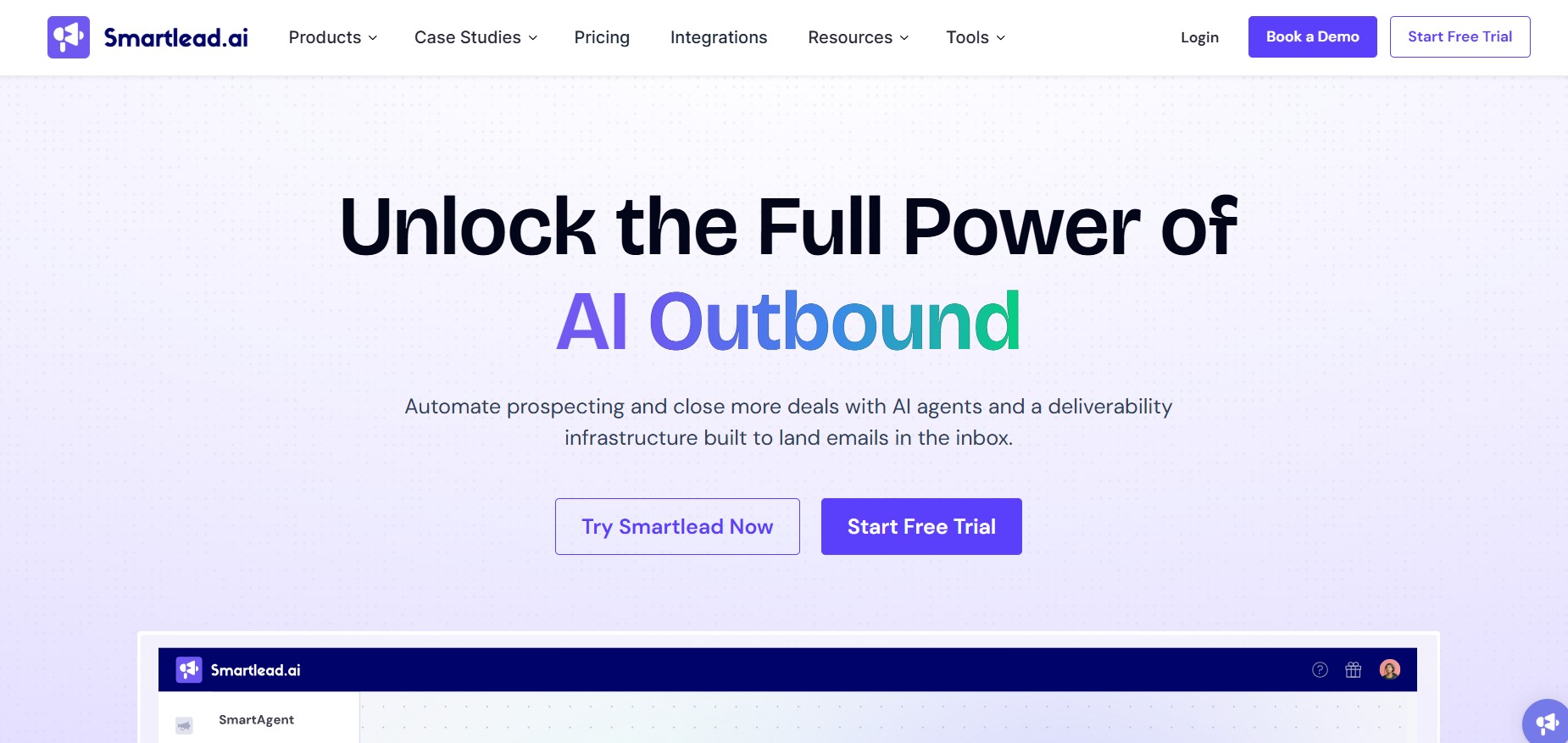
Smartlead was built specifically for the workflow problems that agencies running cold email at scale encounter. Managing multiple client accounts, tracking replies across dozens of inboxes, producing client-facing reports without manual export work, and maintaining deliverability across hundreds of sending domains — Smartlead addresses each of these as core product requirements, not add-ons. Trusted by over 31,000 businesses, it is one of the most widely adopted cold email platforms for agency operations in 2026.
Its Unibox feature — a centralized master inbox that consolidates replies from all campaigns, all clients, and all sending accounts — is frequently cited by agency users as the single feature that makes managing high-reply-volume operations viable. White-label reporting lets agencies present branded performance data directly to clients without screenshots or manual spreadsheet work.
Who Benefits Most From Smartlead?
- Cold email agencies managing multiple client accounts who need a centralized view of all campaign activity
- Sales teams running high-volume, multi-inbox campaigns that need deep deliverability controls and automated warm-up
- Operations teams that want to manage hundreds of sending domains from a single dashboard without manual domain maintenance
- Agencies that need to deliver white-label reports to clients without building custom reporting infrastructure
Key Features of Smartlead
- Unlimited mailboxes with automated warm-up on all plans — no per-inbox fees and no warm-up limits regardless of how many accounts are connected
- Unibox — a master inbox that consolidates all client replies, campaign responses, and conversation threads in one centralized, searchable workspace, eliminating the need to log into multiple inboxes
- White-label reports for agencies presenting branded campaign performance data to clients
- AI-powered personalization and conditional sequences that adapt follow-up messaging based on whether a prospect opened, clicked, or replied to previous emails
- Multi-channel capability including LinkedIn, SMS, and email automation available on higher plans
- Advanced deliverability tooling including CNAME management, SPF checker, DMARC checker, email verifier, blacklist monitoring, and bounce rate calculator — all accessible from within the platform
- SubSequences based on lead intent signals, allowing campaigns to branch intelligently based on how prospects respond
Pros
- Unlimited inboxes and warm-up from day one — genuine infrastructure for agencies and high-volume operations
- The Unibox is best-in-class for managing high reply volumes across multiple clients
- White-label capability makes it the most agency-ready tool in this comparison
- Deep deliverability controls give technical users fine-grained management over domain health
- Strong community support and active product development — trusted by 31,000+ businesses
Cons
- No built-in B2B prospect database — contact lists must be sourced and imported from a third-party tool
- The interface has a steeper learning curve than simpler tools like Instantly or Saleshandy
- Some advanced features, including multi-channel steps and the most granular deliverability controls, require upgrading to higher-tier plans
Pricing
Basic plan: approximately $33 per month (billed annually) with 2,000 active leads and 6,000 emails per month. Pro plan: approximately $79 per month (billed annually) with 30,000 active leads and 150,000 emails per month. Custom plans are available for enterprise and high-volume agency operations. A free trial is available.
5. Lemlist — Best Woodpecker Alternative for Multichannel Outreach
Lemlist pioneered visual personalization in cold email — personalized images, videos, and GIFs inserted dynamically into outreach sequences — and has since built out a complete multichannel platform that includes native LinkedIn automation, a built-in calling capability, and a 450 million+ contact database. For teams where standing out in a crowded inbox is a strategic priority, and for organizations that need email and LinkedIn to work together in a single sequenced workflow, Lemlist is the most feature-complete option in this comparison.
It holds a 4.5/5 rating on G2 with more than 260 reviews, and a 4.6/5 on Capterra with over 380 reviews. Users consistently cite its personalization capabilities and multichannel flexibility as differentiating strengths.
Who Benefits Most From Lemlist?
- Sales teams that run combined email and LinkedIn sequences and need both channels managed from one platform without a third-party LinkedIn add-on
- Outreach teams for whom visual differentiation — personalized images, videos, and landing pages — is part of the campaign strategy
- Companies that want a built-in lead database so they can find, qualify, and contact prospects in one tool
- Teams that want to layer calling into outreach sequences alongside email and LinkedIn
Key Features of Lemlist
- 450 million+ contact database with waterfall enrichment and verified email finding, allowing teams to prospect and launch campaigns without a separate data subscription
- Personalized images, videos, and GIFs inserted dynamically into cold emails, making outreach visually distinct from standard text-based campaigns
- Native LinkedIn automation — no third-party integration required — supporting connection requests, profile visits, direct messages, and InMail steps within multi-channel sequences
- Multi-channel sequences combining email, LinkedIn touches, and calling in a single workflow, with conditional logic to branch based on prospect behavior
- Chrome extension for adding prospects directly from LinkedIn into Lemlist campaigns while browsing, removing manual import steps
- AI-powered icebreakers and custom merge tags that analyze prospect information to generate personalized opening lines at scale
- A/B testing, custom tracking domains, and deliverability monitoring across all campaign types
Pros
- Most advanced visual personalization of any tool in this comparison — personalized images and videos are genuinely differentiated
- Truly multichannel — email, LinkedIn, and calling are natively integrated, not bolted on through third-party tools
- The 450 million+ database removes the need for a separate data provider for most use cases
- Large, active community with an extensive library of tested templates and sequence structures
- Strong deliverability tooling including warm-up, custom tracking domains, and monitoring built into the platform
Cons
- Per-seat pricing gets expensive quickly for larger teams — the Email Pro plan starts at approximately $63 per month per user, and multichannel plans run approximately $87 per user per month on annual billing
- Email account limits per seat can restrict high-volume sending for teams with many active campaigns
- The depth of features creates a higher learning curve than simpler email-only tools
- A 5-person team on the multichannel plan pays approximately $315 to $435 per month on annual billing, which is the highest cost structure in this comparison at team scale
Pricing
Email Pro plan: approximately $63 per month per user (annual billing). Multichannel Expert plan: approximately $87 per month per user (annual billing). Monthly billing rates are higher. A free trial is available.
6. Reply.io — Best Woodpecker Alternative for AI-Assisted Outreach
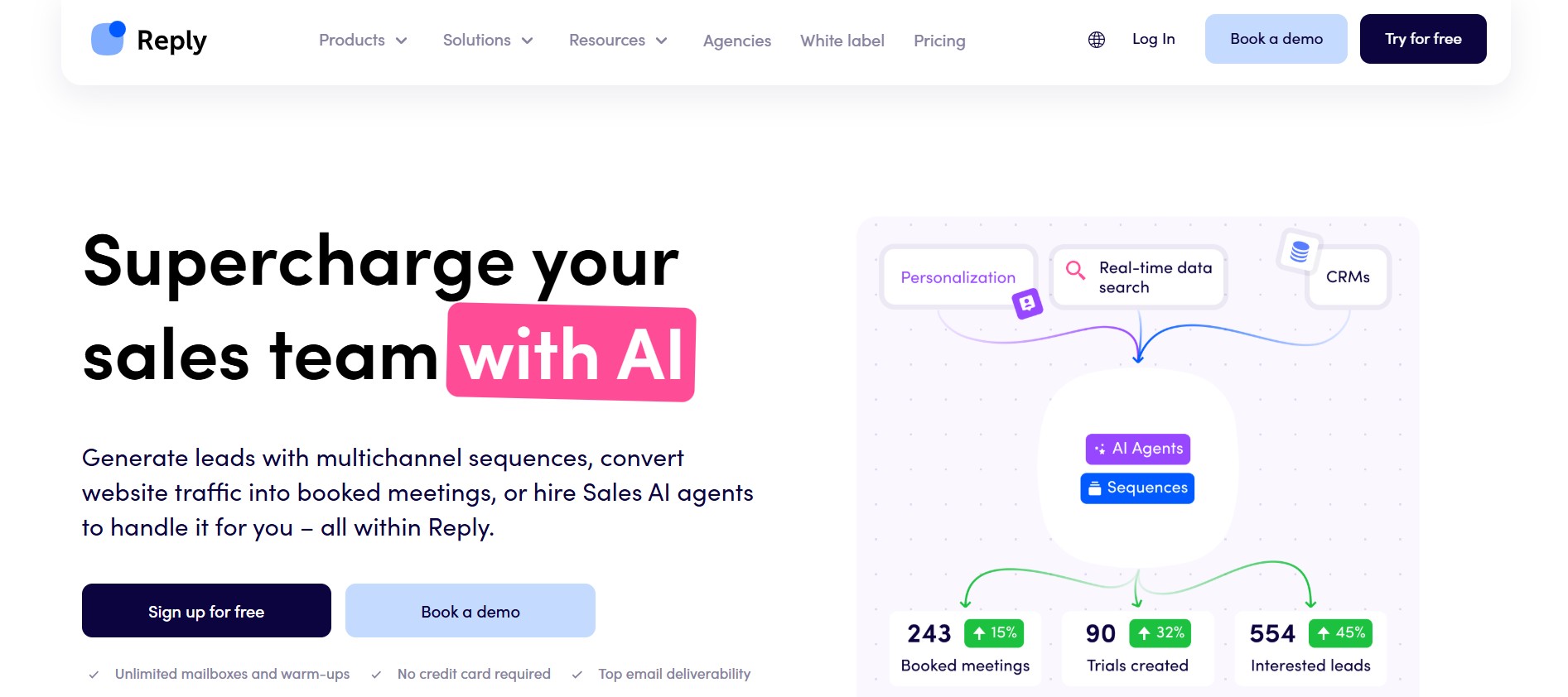
Reply.io is the most AI-forward tool in this comparison. It has been serving B2B sales teams since 2014 and has evolved from a multichannel sales engagement platform into a full AI-assisted outbound system anchored by Jason AI — an AI agent that researches prospects, generates personalized outreach copy, handles incoming responses, qualifies leads from replies, and books meetings on the sales team’s behalf. For teams that want to automate not just the sending mechanics but the entire top-of-funnel conversation workflow, Reply.io is the most mature and capable option available at this price point.
It holds a 4.6/5 rating on G2 across more than 1,300 verified reviews, and its multichannel sequencing is frequently cited as one of the most polished implementations in the category.
Who Benefits Most From Reply.io?
- Mid-market sales teams that want AI to handle early-stage prospect conversations — qualifying leads and booking meetings without manual SDR involvement at each step
- SDR teams looking to reduce the manual follow-up workload through AI automation that can handle replies, reschedule requests, and objection responses
- Teams running multichannel outreach who need a unified platform for email, LinkedIn, phone calls, and SMS in a single sequenced workflow
- Agencies managing multiple client outbound programs who need strong CRM integration, white-label capability, and scalable team management
Key Features of Reply.io
- Jason AI — an AI SDR agent that learns the sales team’s ICP, product, and messaging strategy, then runs multichannel outreach autonomously, personalizes each touchpoint with prospect-specific context, handles replies, and books meetings directly to the calendar
- Multichannel sequences combining email, LinkedIn automation, phone calls, SMS, and WhatsApp steps in a single drag-and-drop sequence builder with conditional branching logic
- A/B testing for subject lines, email copy, and full sequence variants, with performance tracking across all variants
- B2B contact database with access to over 1 billion global contacts and live data credits for finding and enriching prospects without leaving the platform
- CRM integrations with Salesforce, HubSpot, Pipedrive, and Cooper CRM, with bidirectional sync that automatically logs all email, LinkedIn, and call activity back to CRM records
- Unlimited email warm-up included with each connected mailbox, plus a full anti-spam and deliverability suite covering domain authentication, inbox placement monitoring, and reputation management
- API access and Zapier integration for connecting Reply.io to a broader sales and marketing technology stack
Pros
- Jason AI is genuinely capable at handling the reply-to-booking workflow — it manages scheduling complexity, handles objections, and responds naturally enough that prospects engage
- True multichannel in one platform — email, LinkedIn, calls, SMS, and WhatsApp are all natively supported
- Bidirectional CRM sync works reliably with Salesforce and HubSpot, eliminating manual data entry for sales teams
- Holds a 4.6/5 G2 rating with 1,300+ reviews, reflecting consistent user satisfaction across team types
- Transparent tiered pricing with entry-level email plans starting at $49 per month
Cons
- Per-seat pricing at the multichannel tier ($89 per user per month) adds up quickly for larger teams — a 5-person team pays over $5,300 per year on annual billing before Jason AI
- Jason AI SDR is a separate, significantly more expensive tier starting at $500 per month, making the full AI-SDR capability a significant budget commitment
- No intent-based or signal-driven prioritization — sequences run on fixed schedules rather than being triggered by real-time buying behavior
- LinkedIn automation relies on browser-based methods, which carries inherent compliance considerations that teams should evaluate before deploying at scale
- Steeper learning curve than simpler tools — the interface has multiple navigation sections and can feel complex during initial setup
Pricing
Email Volume plan: from $49 per month (annual billing) for 1,000 active contacts and 5,000 emails per month. Multichannel All-Inclusive plan: from $89 per user per month (annual billing) covering email, LinkedIn, calls, and SMS. Agency plans start at $166 per month. Jason AI SDR plans start at $500 per month. A 14-day free trial is available.
How to Choose the Right Woodpecker Alternative for Your Team
The right tool depends on three practical questions: How much volume do you need? Do you need LinkedIn alongside email? And how much of your outreach process do you want automated beyond the sending mechanics?
If You’re a Solo Sender or Small Team on a Budget
Start with Saleshandy or DealsFlow. Saleshandy’s $25 per month plan includes unlimited email accounts and an 830 million+ contact database — features that eliminate the need for two separate subscriptions on day one. DealsFlow offers AI-native personalization and LinkedIn outreach in one platform, making it the stronger choice if LinkedIn is part of the outreach strategy and predictable pricing matters.
If You’re an Agency Managing Multiple Clients
Smartlead or DealsFlow are the purpose-built choices. Smartlead’s Unibox, white-label reporting, and unlimited mailboxes are designed specifically for agencies managing high volumes across multiple client accounts. DealsFlow similarly offers multi-account management with transparent pricing that does not penalize agencies as client count grows.
If You Need LinkedIn Outreach Alongside Email
Lemlist or Reply.io both include native LinkedIn automation without requiring a third-party integration. Lemlist is the better fit for teams focused on personalized, visually differentiated outreach with a large contact database included. Reply.io is the better fit for teams that want AI to handle the conversation workflow across channels, not just the sending mechanics.
If Scaling Volume Is Your Primary Goal
Instantly.ai or Smartlead are the volume-first choices. Both include unlimited inboxes and automated warm-up from their entry plans. For teams that have hit Woodpecker’s prospect caps and need room to grow without a massive price jump, Instantly’s $37 per month Growth plan is the most direct upgrade path.
If AI and Intent-Based Outreach Is a Priority
DealsFlow or Reply.io lead with AI as a core feature. DealsFlow is built around AI-native personalization from the ground up, making it the more accessible choice for teams that want intelligent outreach without enterprise pricing. Reply.io’s Jason AI handles the full top-of-funnel conversation workflow, but at a significantly higher price point that fits established sales teams with proven outbound motion better than startups still validating their ICP.
Conclusion
Woodpecker remains a competent email-only tool for teams running simple, low-volume outreach with predictable prospect counts. For that specific use case, its deliverability focus and straightforward interface still hold value. But the cold email market in 2026 has moved decisively in a direction that Woodpecker was not built to support: AI-driven personalization, unlimited sending infrastructure, native multichannel capability, and built-in prospect databases have become the baseline expectation, not premium features.
The six alternatives in this guide each address those gaps in different ways. DealsFlow leads as the best overall alternative — it consolidates email and LinkedIn outreach, applies AI-native personalization, and delivers transparent pricing that scales without the prospect cap frustrations Woodpecker users encounter. Saleshandy is the strongest choice on pure cost-per-feature, offering the best value for budget-conscious teams. Smartlead is purpose-built for agencies. Instantly.ai is the most frictionless path to unlimited sending scale. Lemlist wins on multichannel capability and visual personalization depth. Reply.io is the most advanced option for teams that want AI to drive the entire outbound conversation, not just automate the sending.
Before committing to any platform, take advantage of the free trials each tool offers. Set up a real campaign, connect a real inbox, and evaluate how the tool actually performs in your workflow — not just how it looks in a feature comparison.
Frequently Asked Questions
1. What is the best overall alternative to Woodpecker in 2026?
DealsFlow is the best overall Woodpecker alternative for teams that need AI-native personalization, transparent pricing, and native LinkedIn outreach without paying for a third-party integration. It consolidates what most teams currently accomplish with Woodpecker plus Dux-Soup plus a data provider into a single, more cost-efficient platform.
2. Is Woodpecker still worth using in 2026?
For small teams running simple, email-only outreach with predictable monthly volume that stays within Woodpecker’s prospect caps, it remains a functional choice with solid deliverability. However, any team that needs LinkedIn automation, a built-in lead database, AI personalization, or unlimited sending accounts will find Woodpecker’s limitations require additional paid tools that raise the total cost significantly above competing all-in-one alternatives.
3. Which Woodpecker alternative is cheapest for agencies?
Smartlead at approximately $33 per month (annual billing) and Saleshandy at $25 per month offer the best value for agency-scale outreach. Smartlead includes unlimited mailboxes, automated warm-up, and white-label reporting — the three features agencies need most — from its base plan.
4. Does Woodpecker have a free plan?
Woodpecker does not offer a permanent free plan. It provides a 7-day free trial capped at 50 contacted prospects. By comparison, most alternatives in this guide — including DealsFlow, Saleshandy, Instantly.ai, Smartlead, Lemlist, and Reply.io — offer free trials with access to core features.
5. Which tool is best if I need LinkedIn outreach included?
Lemlist and Reply.io both include native LinkedIn automation — connection requests, profile visits, direct messages, and InMail — without requiring a separate third-party tool. DealsFlow also supports LinkedIn outreach natively. All three are meaningfully less expensive than maintaining a Woodpecker subscription alongside a Dux-Soup integration once the combined monthly cost is calculated.
6. Can I migrate my Woodpecker campaigns to another tool easily?
Most cold email platforms accept CSV imports of prospect and contact lists, making list migration straightforward. The sequences themselves — email steps, timing logic, and follow-up conditions — will need to be rebuilt in the new platform, as sequence data is not universally portable. Platforms like Saleshandy and Instantly.ai both offer fast onboarding paths with guided setup that most teams complete within a few hours.